.png)
.png)
.png)
.png)
The Quiet Shift Happening in Space Science
Space exploration has entered a new phase. For decades, missions focused on mapping surfaces and taking distant measurements. Today, the goal is far more ambitious: finding evidence of hidden processes that may support life—or once did.
Future missions are no longer asking what does this world look like?
They are asking what is happening beneath it—and why does it matter to us?
From icy moons to ancient asteroids, scientists are preparing to investigate environments that could hold answers to questions humanity has asked for centuries.

Why Water Is Still the Biggest Clue
Water remains the strongest indicator scientists have when searching for habitable environments. But the search has evolved.
Instead of looking only for oceans, researchers are now focused on:
- Subsurface water trapped beneath ice
- Chemical signatures left behind by ancient liquid environments
- Water interacting with minerals in ways that produce energy
These interactions matter because on Earth, similar processes support life deep underground, far from sunlight.
If they occur elsewhere, it suggests life-friendly chemistry may be far more common than once believed.
The Push to Look Beneath the Surface
Many future missions are designed to see what cannot be seen directly.
New instruments can:
- Detect heat anomalies beneath thick ice
- Identify salts and minerals formed by liquid water
- Sense faint magnetic signals caused by underground oceans
These tools allow scientists to study worlds that appear frozen and inactive on the surface—but may be chemically alive below.
This shift has redefined what counts as a “habitable” environment.

The Mission That Will Lead the Next Decade
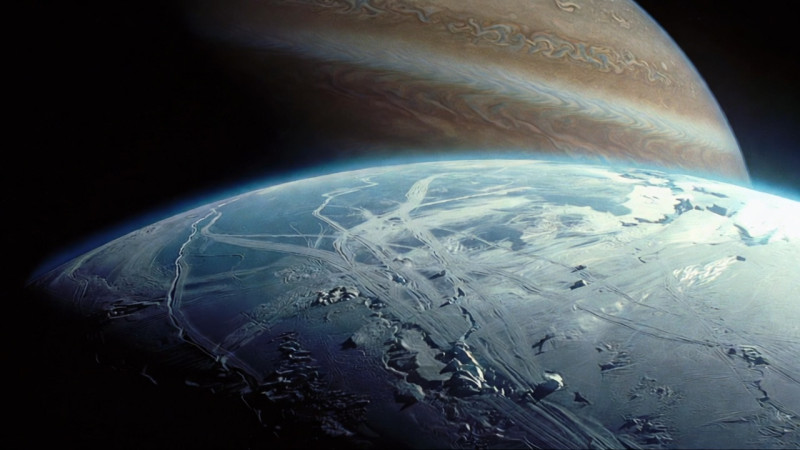
One upcoming mission stands out for both timing and potential impact: Europa Clipper.
Europa, a moon of Jupiter, is believed to contain a global ocean beneath its icy shell, holding more water than all of Earth’s oceans combined.
The mission’s goals are precise:
- Confirm the depth and salinity of Europa’s ocean
- Analyze surface cracks where water may have reached the surface
- Study chemistry that could support life
Europa Clipper will not search for life directly—but it will determine whether the conditions required for life truly exist right now.
That distinction matters. It turns speculation into testable science.
What Scientists Hope to Find—And What They Fear
The most anticipated discoveries are not dramatic organisms or obvious signs of life. Instead, scientists are watching for subtler signals:
- Chemical imbalances that suggest energy flow
- Organic molecules altered by water interaction
- Evidence of long-term stability rather than brief activity
At the same time, there is caution.
If these environments turn out to be chemically quiet, it would challenge assumptions about how easily life emerges—even with water present.
Either result reshapes our understanding of the universe.

Why These Discoveries Affect Earth
These missions are not just about distant worlds. They help answer questions about our own planet’s past.
Asteroids and icy moons preserve conditions similar to those present during Earth’s early formation. Studying them may reveal:
- How water first arrived on Earth
- Why life took hold here but not elsewhere (so far)
- Whether Earth’s history is rare—or typical
In short, looking outward helps explain how unusual—or ordinary—we truly are.
The Unexpected Is the Real Target
History shows that the biggest breakthroughs rarely come from planned outcomes.
Past missions discovered:
- Active geology where none was expected
- Complex chemistry in extreme environments
- Entirely new classes of planetary behavior
Future missions are designed with flexibility for this reason. Instruments are prepared to detect anomalies scientists cannot yet define.
Those anomalies may end up being the most important findings of all.
Why This Moment Matters
For the first time, technology has caught up with curiosity.
Sensors are more sensitive. Data returns are faster. Mission lifespans are longer. And scientists are asking better questions.
The next decade will likely determine whether life-supporting environments are rare exceptions—or a common feature of the cosmos.
Either answer will change how humanity sees its place in the universe.
And that’s why these missions matter now.
Author: Ronald Kapper