.png)
.png)
.png)
.png)
By Ronald Kapper
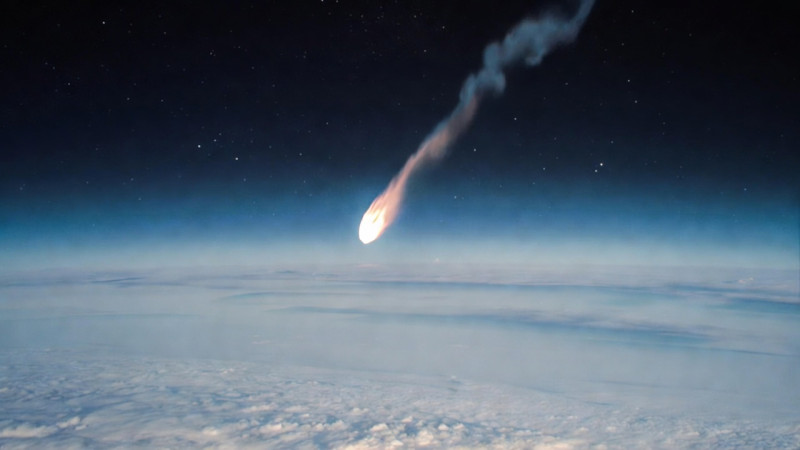
It arrived like a cut in the sky. A bright, high-speed blip tracked by radar and infrared, descending through layers of atmosphere with a motion that didn’t match any known aircraft or meteor. Then it vanished. No debris. No fireball. No follow-up trace. The time-stamped sensor logs stopped showing any return path. For pilots, ground controllers and backyard astronomers who watched the feeds, the moment felt less like an event and more like a rupture — a straight line into a locked silence that left questions roaring louder than answers.
Incidents like this sit at the strange intersection of hard data and deep unease. They are not shaky videos with shaky witnesses; they are tracked anomalies recorded on instruments meant to map and measure things that move through our sky. That difference — sensor-grade tracking versus grainy cellphone footage — is why these cases ignite conversation across forums, news feeds, and scientific mailing lists. When high-fidelity instruments register an object entering atmosphere and then stop, people stop treating it as a curiosity and start treating it as a problem.
The technical oddities are easy to list yet hard to explain. Observers describe sudden decelerations that don’t produce heat signatures expected from atmospheric friction, abrupt course changes at high altitude, and sensor cross-reads that don’t match any aircraft transponder or known natural event. In one widely discussed military recording, objects were seen moving with apparent intent near populated airspace before disappearing into cloud layers and sensor noise — not exploding or burning up, but simply ceasing to register. That form of disappearance is what turns a one-off sighting into a story that spreads.
Why does this kind of report explode on Discover feeds and in Reddit threads? Because it layers three fears into one: proximity, credibility, and mystery. Proximity — because the object passed through regions where planes fly and people live. Credibility — because the recording came from trained operators using calibrated equipment. Mystery — because the trail ends unexpectedly. Add to that the human habit of filling gaps with sweeping possibilities, and you have the perfect combustible mix for online virality. When people read that an object was tracked entering our air and left no trace, they instinctively imagine doors opening between what we see and what we don’t. That hint suggests more than a lone anomaly; it suggests hidden domains of reality operating alongside our own. (I use that phrase to describe the implication without labeling it with a sci-fi term.)
Skeptics and scientists rightly press for caution. Instrument errors, atmospheric ducting, misidentified aircraft, and rare but known meteor events can all produce baffling signatures. The history of aerial anomalies is littered with cases where better data later revealed prosaic causes. Good science demands data release, independent replication and open methods. That said, repeated incidents where multiple sensors display similar odd behavior — and where official responses are measured or quiet — push reasonable people to demand deeper transparency and analysis.
There are also national-security stakes. Military planners worry less about “aliens” and more about unknown objects behaving unlike anything in the airspace — especially when those objects traverse sensitive zones or demonstrate capabilities that outstrip known technology. Unidentified entries that leave no debris could mean something operating at the edge of detection: a stealth probe, a novel drone, or some system that exploits gaps in our sensor network. That uncertainty is a vulnerability. It’s why former officers and analysts increasingly call for serious, public study rather than private dismissal.
The narrative tension that fuels shareable headlines also carries a subtler psychological charge: the sense that our everyday environment may overlap with layers we cannot easily test. If a tracked object can move into our atmosphere and then stop being detected without the expected physical signs, what else might be happening around us that we simply do not detect? The idea is chilling because it doesn’t require a full explanation to be terrifying — it only needs the suggestion that something slips in and out of the map we trust. That cognitive itch is irresistible online; it drives clicks, comments, and long threads that try to diagram the unshowable.
If you want sensible next steps rather than rumor, here they are: release full sensor logs, open the data to independent analysis, and coordinate cross-disciplinary investigations that include atmospheric physicists, radar engineers and oceanographers where relevant. Until that happens, these cases will remain headline magnets — and the gap between recorded data and public clarity will be filled by speculation. For readers who scan and move on, that gap is a story’s fuel. For the people working with the raw numbers, it is a technical puzzle and a national concern.