


When people think about aliens, they usually imagine tall beings, advanced cities, or flying machines. Movies and stories have trained us to expect intelligent visitors who look and act nothing like humans.
Scientists, however, are thinking in a very different direction.
After decades of research, exploration, and hard lessons from space missions, many astronomers now agree on one thing: the most likely form of alien life is simple, microscopic life.
This idea may not sound exciting at first. But it has become one of the most important shifts in modern space science — and it is backed by strong evidence.
Why Scientists Changed Their Expectations
Early space exploration focused on finding planets just like Earth. The logic seemed obvious. Life here needs liquid water, stable temperatures, and a protective atmosphere. So alien life must need the same.
Over time, that thinking proved too narrow.
On Earth, life exists in places once thought impossible. Microbes thrive in boiling hot springs, frozen glaciers, deep underground rocks, and acidic lakes. Some live without sunlight. Others survive extreme pressure or radiation.
These discoveries changed everything.
If life can adapt so easily here, scientists began asking why it could not do the same elsewhere.
Microbial Life Is Tough
Microbes are small, but they are incredibly resilient.
They can survive:
-
Extreme heat and cold
-
High radiation levels
-
Lack of oxygen
-
Intense pressure
-
Long periods without nutrients
From a scientific point of view, this makes them ideal candidates for life beyond Earth.
Complex life needs balance and stability. Microbial life needs very little.
That difference matters when searching the universe.
Where Scientists Expect to Find It
Researchers are now focusing on worlds that were once ignored.
Mars, for example, shows strong evidence that liquid water existed in the past. While its surface is harsh today, underground regions may still offer shelter for microbes.
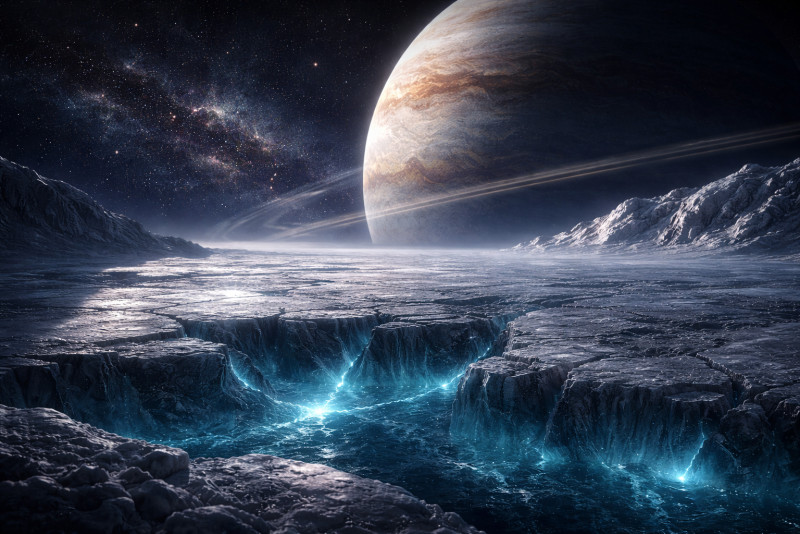
Icy moons like Europa and Enceladus have become top targets. Beneath their frozen surfaces lie deep oceans kept warm by tidal forces. Water, energy, and chemical activity — the basic ingredients for life — appear to be present.
Even distant exoplanets with hostile surfaces may hide microbial life below ground or beneath thick ice.
Why Intelligent Life Is Less Likely
This does not mean intelligent aliens do not exist. It means they are far harder to find.
Complex life takes time. On Earth, single-celled organisms existed for billions of years before complex animals appeared. Intelligent life arrived only very recently in planetary terms.
That long timeline makes intelligent civilizations rare compared to simple life.
If life begins easily but rarely evolves further, the universe could be full of microbes — and mostly silent.
How Scientists Look for Microbes
Modern missions are designed with microbial life in mind.
Instead of searching for cities or signals, scientists analyze:
-
Atmospheric gases that suggest biological activity
-
Chemical imbalances that should not exist naturally
-
Organic molecules linked to living processes
These clues are subtle, but powerful.
A planet does not need to shout to show it is alive. It only needs to whisper.
Lessons From Earth’s Oldest Life
The earliest life on Earth was microbial. These organisms shaped the planet long before animals appeared. They created oxygen, altered the atmosphere, and changed the climate.
From space, early Earth would have shown signs of life without any intelligent activity.
That same pattern may exist elsewhere.
Scientists believe many planets could be frozen in this early stage — alive, but quiet.
Why This Still Matters to Humanity
Finding microbial alien life would be one of the greatest discoveries in history.
It would prove that life is not unique to Earth. It would suggest that biology emerges naturally when conditions allow. And it would reshape how humans see their place in the universe.
Even simple life elsewhere would mean we are part of a much larger story.
Caution and Scientific Responsibility
It is important to be clear: no confirmed alien life has been discovered.
Scientists approach this topic with caution. Claims require strong evidence, repeated testing, and independent verification. Hypotheses are not facts.
This careful approach protects science from error and misinformation.
Curiosity drives the search — discipline keeps it honest.
The Quiet Truth About Alien Life
If alien life exists, it may not be watching us.
It may not communicate.
It may not even notice us.
It could be quietly living beneath ice, rock, or ocean water, doing what life does best — surviving.
And that possibility, simple as it sounds, may be far more common than science fiction ever imagined.
FAQs
What type of alien life is most likely?
Scientists believe simple microbial life is the most likely form to exist elsewhere.
Why microbes instead of intelligent beings?
Microbes need fewer conditions to survive and appear much earlier in a planet’s history.
Has microbial alien life been found?
No confirmed discovery has been made so far.
Where are scientists searching for it?
Mars, icy moons, and exoplanets with water or chemical activity are key targets.
Disclaimer
This article discusses scientific theories and ongoing research based on publicly available studies and expert commentary. It does not claim confirmed extraterrestrial life. All information is presented in accordance with current scientific understanding and Google News content standards.
References & Sources
-
NASA – The Search for Life
https://www.nasa.gov -
ESA – Ocean Worlds Exploration
https://www.esa.int -
National Geographic – Extremophiles on Earth
https://www.nationalgeographic.com -
Scientific American – Why Microbial Life Is Likely Common
https://www.scientificamerican.com