.png)
.png)
.png)
.png)
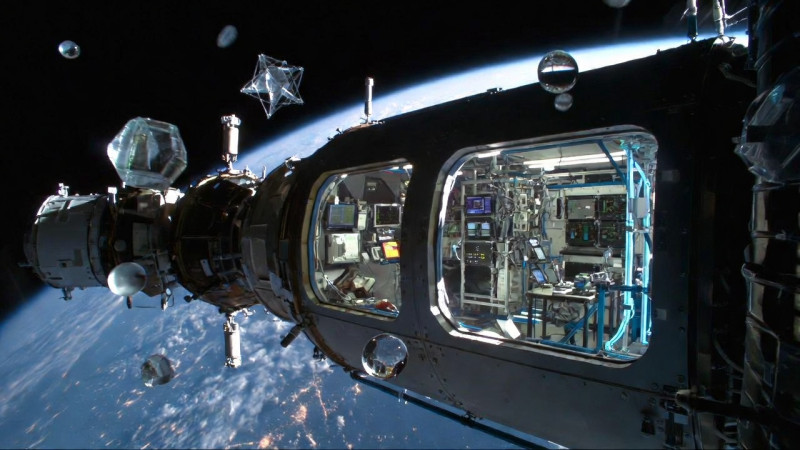
The Factory Above the World
For most of history, factories were anchored to land, cities, and supply chains on Earth. In 2026, that model is starting to break.
Private space companies are launching commercial modules designed not for astronauts alone, but for manufacturing. One of the most watched is Haven-1, a privately funded orbital module aimed at hosting experiments, private missions, and industrial research in microgravity.
The big prize is not tourism. It is manufacturing.
In orbit, gravity no longer dominates how materials behave. Liquids float, crystals form without sagging, and convection currents vanish. That changes chemistry, biology, and materials science in ways no lab on Earth can match.
Scientists believe the first true space factories will focus on one high-value product: medicines.
Why Zero-Gravity Changes How Materials Are Made
Gravity shapes everything on Earth. It pulls molten metals downward, causes impurities to settle, and distorts growing crystals. On Earth, engineers constantly fight gravity with centrifuges, vibration isolation, and controlled environments.
In orbit, gravity is effectively gone.
Without gravity-driven convection, heat and chemicals spread evenly. Fluids form perfect spheres. Crystals grow symmetrically, layer by layer, without collapsing under their own weight.
This environment allows scientists to study materials in their purest form. For some pharmaceuticals, that purity can mean better stability, better effectiveness, and fewer side effects.
The Crystal Advantage: Why Medicines Grow Better in Space
Many drugs rely on crystalline structures. The way molecules arrange themselves determines how a drug dissolves, how long it lasts in the body, and how effective it is.
On Earth, gravity introduces defects in crystal growth. Tiny imperfections can change how a drug behaves. In space, crystals can grow larger, cleaner, and more uniform.
Protein crystals, in particular, are a major target. These crystals help researchers understand how proteins fold and interact, which is critical for designing new drugs. In microgravity, protein crystals often grow bigger and clearer, improving structural analysis.
Better structural data leads to better drug design.
How This Changes Your Daily Life
Space manufacturing sounds distant, but its effects could reach everyday healthcare.
If drugs can be designed with higher precision, they may work better at lower doses. That could reduce side effects, improve treatment outcomes, and lower long-term healthcare costs.
Space-grown materials could also lead to stronger medical implants, purer vaccines, and more reliable biologics.
The ultimate goal is not to build factories in orbit for everything, but to manufacture high-value, hard-to-make products that benefit from microgravity.
The Rise of Commercial Orbital Labs
Government space stations are no longer the only platforms in orbit. Private companies are building commercial modules designed for research, tourism, and industrial use.
Haven-1 represents a shift: a smaller, privately operated platform that can host paying customers and companies. Other firms are planning larger commercial stations that could host dozens of experiments simultaneously.
The business model is simple: space as a premium laboratory. Companies pay to run experiments that cannot be done on Earth. If the results lead to breakthrough products, the investment makes sense.
The Economics of Space Manufacturing
Launching materials to orbit is expensive. Returning them is even harder. So why do it?
The answer is value density. A kilogram of steel is not worth sending to space. A kilogram of breakthrough cancer drugs could be worth millions or billions.
Space manufacturing is likely to focus on products where microgravity offers a clear advantage:
-
Advanced pharmaceuticals
-
Exotic alloys and composites
-
High-purity semiconductors
-
Novel optical fibers
Even small batches could justify the cost if they offer unique performance.
What Scientists Are Already Making in Orbit
Space manufacturing is not theoretical. Experiments on the International Space Station have already produced:
-
High-quality protein crystals for drug research
-
ZBLAN optical fibers with lower signal loss than Earth-made versions
-
Metal alloys with unique microstructures
-
3D-printed parts made in microgravity
These early results suggest that microgravity can produce materials that are difficult or impossible to replicate on Earth.
The Role of Automation and AI in Space Factories
Human labor in space is expensive and limited. Future space factories will rely heavily on robotics and AI-driven systems.
Automated labs can mix chemicals, grow crystals, monitor experiments, and adjust conditions in real time. AI models can predict optimal growth conditions and detect defects early.
This combination turns orbiting modules into self-running micro-factories, supervised from Earth.
The Data We Used
Recent research and datasets referenced in this article include:
-
2026 NASA Artemis program data on commercial low Earth orbit development and microgravity research priorities
-
2026 ISS National Lab reports on protein crystallization and materials experiments
-
2026 Harvard and MIT materials science models on microgravity crystal growth and fluid dynamics
-
2026 ESA and NASA joint studies on in-space manufacturing and orbital commercial platforms
-
2026 private sector white papers from commercial station developers on Haven-1 and post-ISS platforms
These sources reflect current scientific and commercial plans for orbital manufacturing.
The Challenges Nobody Talks About
Space factories are not simple. Microgravity introduces benefits, but also complications.
Radiation can damage sensitive materials. Limited power and cooling constrain experiments. Returning products to Earth requires reentry capsules and strict safety controls.
Scaling up production is another challenge. Making grams of a material is feasible. Making tons is not.
Space manufacturing will likely remain niche, focused on ultra-high-value products rather than mass production.
Could Space-Made Drugs Be Better Than Earth-Made Ones?
Early evidence suggests yes, in specific cases. More uniform crystals can improve drug solubility and stability. Better structural data accelerates drug discovery.
However, regulatory hurdles are significant. Space-made drugs must meet strict safety and efficacy standards. Manufacturing in orbit introduces new variables that regulators must understand.
Still, pharmaceutical companies are watching closely. A single breakthrough therapy could justify decades of orbital research.
The Long-Term Vision: Orbital Industrial Parks
Some companies envision large orbital platforms dedicated to manufacturing. Instead of one module, entire stations could host dozens of labs, factories, and storage units.
These stations could orbit continuously, with regular cargo flights delivering raw materials and returning finished products.
If launch costs continue to fall, this vision becomes more realistic. Space could become an extension of the global supply chain.
What This Means for Earth’s Economy
Space manufacturing could create a new industry sector, similar to how semiconductor fabs transformed the 20th century.
Countries and companies that lead in orbital manufacturing could control critical technologies. Intellectual property developed in space may shape future industries on Earth.
It also raises geopolitical questions: who regulates space factories, who owns orbital resources, and how disputes are resolved.
The Ethical and Environmental Angle
Space factories could reduce certain harmful processes on Earth. If toxic manufacturing steps move to orbit, pollution on Earth could drop.
But space debris, orbital congestion, and resource use are growing concerns. A surge in commercial stations must be managed carefully to avoid cluttering low Earth orbit.
The next industrial revolution must balance innovation with sustainability.
Why Zero-G Manufacturing Feels Like Science Fiction—but Isn’t
The idea of factories in space sounds futuristic, but the first steps are already happening.
Just as early satellites seemed experimental, early space labs are proving commercial value. The path from experiment to industry is long, but the direction is clear.
Manufacturing is no longer tied to Earth’s surface. Gravity is no longer a fixed constraint. The industrial map of humanity is starting to expand into orbit.
The Bottom Line
Scientists agree that microgravity offers unique conditions for making high-precision materials, especially pharmaceuticals, and commercial modules like Haven-1 mark the start of orbital manufacturing. While space factories will remain niche for now, they could redefine how the most advanced medicines and materials are made.