.png)
.png)
.png)
.png)
Disclaimer: This article discusses scientific research and historical analysis regarding the importance of electricity in modern infrastructure. It examines hypothetical scenarios for educational purposes and does not predict or promote real-world disasters.
Electricity is so deeply embedded in daily life that most people rarely stop to think about it. Lights switch on instantly. Refrigerators keep food fresh. Phones charge overnight while people sleep. Hospitals operate life-saving machines, and millions of computers quietly power the global internet. All of these systems depend on electricity.
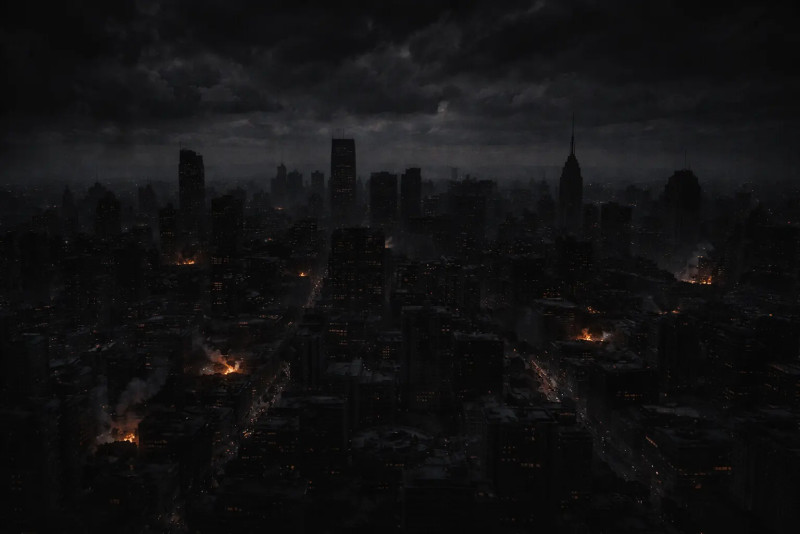
But imagine a world where electricity suddenly disappears. Not just a temporary blackout affecting one city, but a long-term or global loss of electrical power. Homes would go dark, communication networks would collapse, and modern systems that keep society functioning would begin to fail one by one.
This raises a question that scientists and infrastructure experts occasionally study: how long could civilization survive without electricity?
The answer depends on several factors, including how widespread the outage is and how long it lasts. Modern society relies heavily on electrical systems, and many of them would begin failing within hours or days. Yet human communities are adaptable, and civilization would not vanish instantly. Instead, the world would gradually shift into a very different way of living.

The First Minutes After Electricity Disappears
If electricity suddenly stopped worldwide, the effects would be immediate. Traffic lights would shut down, causing confusion on busy roads. Elevators in office buildings and apartments would stop moving. Subways and electric trains would halt mid-route.
Communication systems would begin failing as well. Most cellular towers rely on electricity and only have battery backups designed to last a few hours. Once those batteries run out, mobile networks begin to shut down.
Many workplaces would be forced to stop operations instantly. Offices, factories, and retail stores all depend on electricity for computers, machinery, and lighting. Even modern banking systems rely heavily on power to process transactions and maintain digital records.
Within minutes, it would become clear how deeply electricity is connected to everyday life.

The First Day: Cities Begin to Feel the Pressure
During the first 24 hours without electricity, daily routines would quickly become difficult. Grocery stores would experience sudden demand as people rush to buy food and supplies. Electronic payment systems would stop working, meaning cash would become the only reliable form of payment.
Refrigeration would begin failing in homes and stores, causing perishable food to spoil. Gas stations would also stop pumping fuel because most pumps require electricity to operate.
Water systems would face serious challenges as well. Many cities rely on electrically powered pumps to maintain water pressure and move water through pipelines. Without electricity, some urban areas could begin losing water service within hours.
Hospitals would still operate using backup generators, but these generators depend on limited fuel supplies. They are designed to support short emergencies, not long-term outages.
By the end of the first day, the absence of electricity would already be disrupting basic services.

Three Days Later: Supply Chains Start Collapsing
Modern civilization depends on complex supply chains that operate almost invisibly. Every day, trucks transport food and medicine across highways. Ships carry goods across oceans. Warehouses use automated systems to manage millions of products.
Nearly all of these systems depend on electricity in some way.
Within about three days of a prolonged blackout, supply chains would begin to break down. Refrigerated storage facilities would stop working, causing large quantities of food to spoil. Warehouses would struggle to operate without computerized systems.
Cities are especially vulnerable to supply disruptions. Many urban areas keep only a few days’ worth of food available in stores. Once those supplies run out, shortages could begin appearing quickly.
Without electricity to power transportation networks and logistics systems, delivering fresh supplies becomes extremely difficult.
The First Week: Water and Sanitation Problems
By the end of the first week, sanitation systems could begin failing in some regions. Wastewater treatment plants rely on electricity to process sewage and maintain safe water quality.
If these systems stop working, untreated waste could enter rivers and water supplies. This creates serious health risks and increases the chance of disease outbreaks.
Clean water and sanitation are two of the most important foundations of modern civilization. When those systems begin breaking down, the consequences can be severe.
In densely populated cities, maintaining hygiene without modern infrastructure becomes extremely challenging.
The First Month: Agriculture and Food Production Slow Down
Electricity is also essential for modern agriculture. Farms depend on electric irrigation pumps, refrigeration systems, machinery, and transportation networks.
While crops might still grow naturally, harvesting and transporting them becomes far more difficult without machinery and fuel distribution.
Food processing plants would also shut down because their equipment relies on electrical power.
Within a month, many regions could begin experiencing significant food shortages. Urban areas would likely face the most severe challenges because they rely heavily on food delivered from distant farms.
Communities would need to adapt quickly by finding alternative ways to produce and distribute food locally.

Communication Networks Fade Away
One of the most dramatic consequences of losing electricity would be the collapse of global communication systems.
The internet is supported by enormous data centers that require constant power to operate. Television networks, radio stations, and satellite ground systems also depend heavily on electricity.
Many facilities have backup generators, but those generators require fuel. Once fuel supplies run out, communication networks would begin disappearing.
Without digital communication, sharing information becomes much harder. News, emergency instructions, and coordination between regions would slow dramatically.
Civilization would suddenly lose the instant connectivity that defines modern life.
Transportation Systems Without Electricity
Transportation systems would face major disruptions as well. Air travel depends on radar, navigation systems, and communication networks, all of which require electricity.
Electric trains and subways would stop operating entirely. Fuel refineries also rely on electricity, meaning gasoline production would eventually stop.
Even vehicles that still have fuel would become difficult to maintain once supply chains collapse.
Transportation would gradually return to slower, simpler methods. Travel between distant regions could become rare.
Healthcare Systems Under Stress
Healthcare systems are among the most electricity-dependent parts of modern society. Hospitals rely on power for surgical equipment, life-support machines, diagnostic devices, and refrigeration for medicines.
Backup generators can keep hospitals running for a limited time, but they require steady fuel supplies.
If electricity remains unavailable for weeks or months, medical infrastructure would face severe challenges. Temperature-sensitive medicines such as vaccines could spoil. Blood storage and laboratory equipment would stop functioning.
Providing advanced medical care would become increasingly difficult.

Could Civilization Continue Without Electricity?
Despite these challenges, human civilization would not disappear overnight. People lived for thousands of years before electricity became common in the late nineteenth century.
Communities would begin adapting by using simpler technologies and local resources.
Small towns and rural regions might transition more easily because they already rely more on agriculture and local production. Large cities, however, would face greater difficulties due to their dependence on complex infrastructure.
Over time, societies could shift toward smaller, localized economies similar to earlier historical periods.
What History Teaches Us
History provides some examples of large-scale power outages, although none have lasted long enough to fully test civilization’s resilience.
One of the most notable incidents occurred in 2003 when a massive blackout affected the northeastern United States and parts of Canada, leaving about 50 million people without electricity. Transportation systems shut down, businesses closed, and cities struggled to maintain order.
Another example occurred during the 2021 Texas winter storm, when millions of people lost power for several days due to extreme weather and infrastructure failures.
These events lasted only days, yet they revealed how quickly modern life can be disrupted without electricity.
A prolonged outage lasting months or years would present far greater challenges.
Rebuilding Power and Infrastructure
If electricity disappeared for an extended period, rebuilding power systems would become one of humanity’s highest priorities.
Early solutions might involve mechanical technologies such as water wheels, windmills, and small hydroelectric generators. Over time, communities could rebuild local electrical grids using renewable energy sources.
However, restoring modern global infrastructure would take time. Power grids are among the most complex systems humans have built.
Experts suggest that rebuilding large-scale electrical networks from scratch could take decades depending on available resources and technical knowledge.

The Deeper Lesson
Electricity is often taken for granted, yet it quietly supports nearly every system that modern society depends on.
Clean water systems, hospitals, transportation networks, food supply chains, and communication infrastructure all rely on electrical power.
Without it, civilization would not instantly collapse, but the world would change dramatically.
Communities would adapt, but life would become far simpler and more localized than it is today.
Conclusion
So how long could civilization last without electricity?
Modern industrial society would likely begin struggling within days and face serious disruption within months if power were not restored. Cities would experience shortages of food, water, and medical supplies.
However, human civilization itself would probably continue. Communities would adapt and develop new systems for survival, much as societies did before electricity became widespread.
The real lesson is not about collapse, but about dependence. Electricity quietly powers the systems that make modern life possible.
If it vanished, the darkness would reveal just how important energy is to the functioning of civilization.
Frequently Asked Questions
Could the entire world lose electricity at once?
A total global blackout is extremely unlikely. However, certain events such as severe solar storms or major infrastructure failures could disrupt large power grids.
How long would food supplies last during a blackout?
Most cities maintain only a few days of food in stores. Without transportation and refrigeration, shortages could appear within three to five days.
Would the internet stop working without electricity?
Yes. Data centers, communication cables, and network infrastructure require electricity to operate.
Did civilizations exist before electricity?
Yes. Human civilizations existed for thousands of years before electricity became widespread in the late 1800s.
Could renewable energy help restore power?
Yes. Wind, solar, and hydropower systems could help rebuild smaller electrical grids over time.
References and Sources
U.S. Department of Energy – Electric Grid and Infrastructure Studies
https://www.energy.gov
U.S. Energy Information Administration – Electricity Explained
https://www.eia.gov/energyexplained/electricity
National Academies of Sciences – Infrastructure Resilience Research
https://www.nationalacademies.org
Federal Emergency Management Agency – Power Outage Preparedness
https://www.ready.gov/power-outages
Smithsonian Institution – History of Electricity and Power Systems
https://www.si.edu