.png)
.png)
.png)
.png)

For most of human history, death was considered a simple boundary. One moment a person was alive, and the next moment life had ended.
Modern science is revealing something far more complex.
Researchers studying the biology of dying cells have discovered that the process of death does not happen instantly. Instead, it unfolds over time, sometimes across minutes or even hours at the cellular level.
In controlled laboratory experiments, scientists have found ways to interrupt or slow down certain forms of cell death, particularly a type known as necrosis.
This has led to a fascinating and deeply philosophical question.
If the body’s cells are temporarily paused between life and death, what happens to human consciousness during that gap?
The idea has sparked growing interest among neuroscientists, critical care doctors, and researchers studying the biology of dying.
Understanding Necrosis and Cellular Death
Before exploring the idea of a “necrosis pause,” it helps to understand what necrosis actually is.
Cells in the human body die in several different ways.
One of the most well-known forms is apoptosis, often described as programmed cell death. This is a controlled and natural process that removes damaged or unnecessary cells.
Necrosis, however, is different.
Necrosis occurs when cells die due to trauma, lack of oxygen, toxins, or severe injury. Instead of shutting down in an orderly way, the cell’s structure breaks apart, releasing its contents into surrounding tissue.
For decades, scientists believed necrosis was completely uncontrolled and impossible to stop once it began.
But recent research has challenged that assumption.
Scientists have discovered that certain pathways leading to necrotic cell death can sometimes be interrupted or slowed under experimental conditions.
This is where the idea of a “necrosis pause” begins to emerge.

How Scientists Have Slowed Cell Death in the Laboratory
In the past decade, several breakthroughs have shown that cell death processes are more flexible than previously believed.
Researchers studying ischemia, the damage caused when organs lose blood supply, discovered that some dying cells can be rescued if oxygen and nutrients are restored quickly enough.
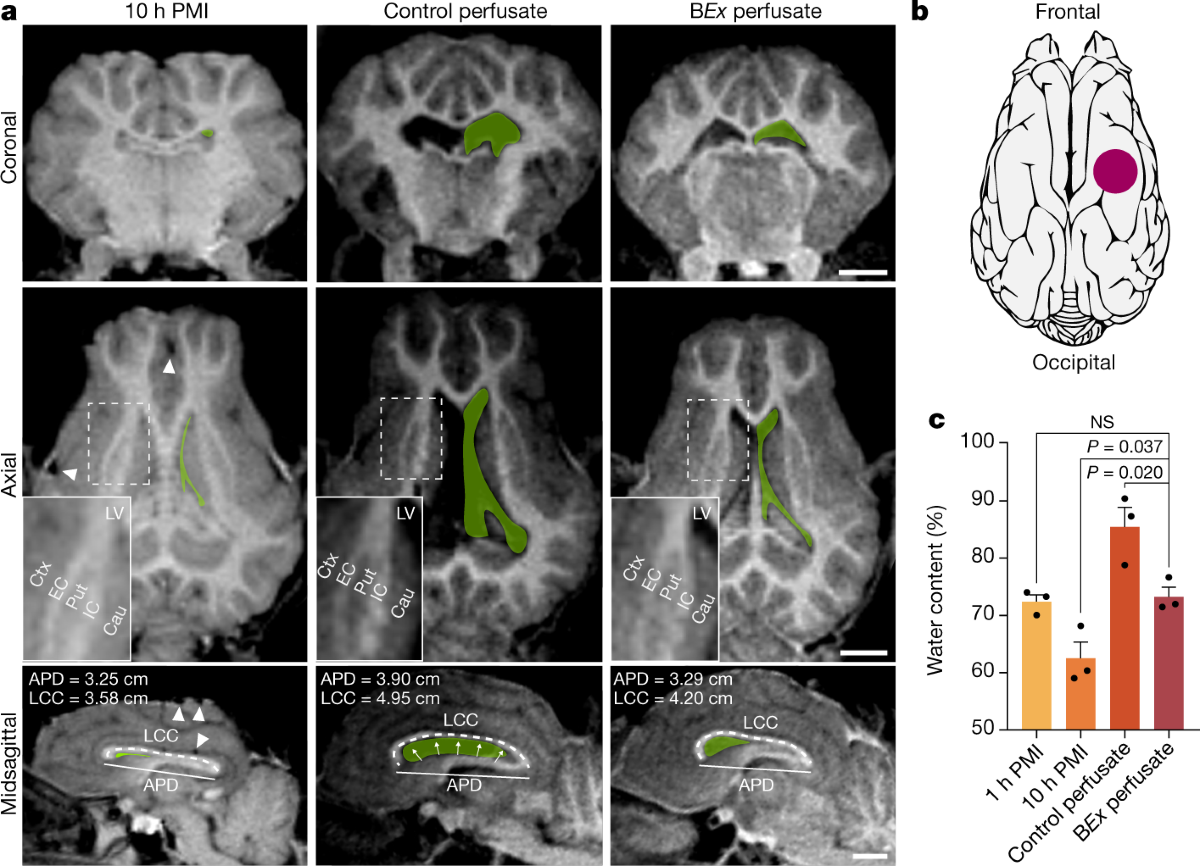
One striking example came from experiments involving pig brains.
In 2019, researchers from Yale University restored cellular activity in pig brains that had been removed from the body for several hours. While the brains did not regain consciousness, scientists observed that many cells resumed metabolic activity.
The study demonstrated that brain cells can survive longer after death than previously believed, especially if circulation and oxygen delivery are restored under controlled conditions.
Another line of research focuses on molecules that block specific pathways responsible for necrosis.
In laboratory experiments, scientists have used chemical inhibitors to delay necrotic cell death, giving cells time to recover from stress.
These discoveries suggest that the boundary between life and death may not be as sharp as once thought.
Instead, there may be a biological window where recovery is still possible.
The Mysterious Gap Between Life and Death
This leads to one of the most intriguing questions in modern neuroscience.
If the body is temporarily in a state where cells are damaged but not fully dead, what is happening inside the brain?
The brain is the organ responsible for consciousness, memory, and awareness.
For consciousness to exist, neurons must maintain electrical activity and communication with each other.
When oxygen stops reaching the brain, this activity begins to collapse.
But it does not disappear immediately.
Studies of cardiac arrest patients show that brain activity can persist for several minutes after the heart stops.
In some cases, bursts of electrical activity appear even after clinical death has been declared.
Scientists are still trying to understand what these signals represent.
Brain Activity Observed Near the Moment of Death
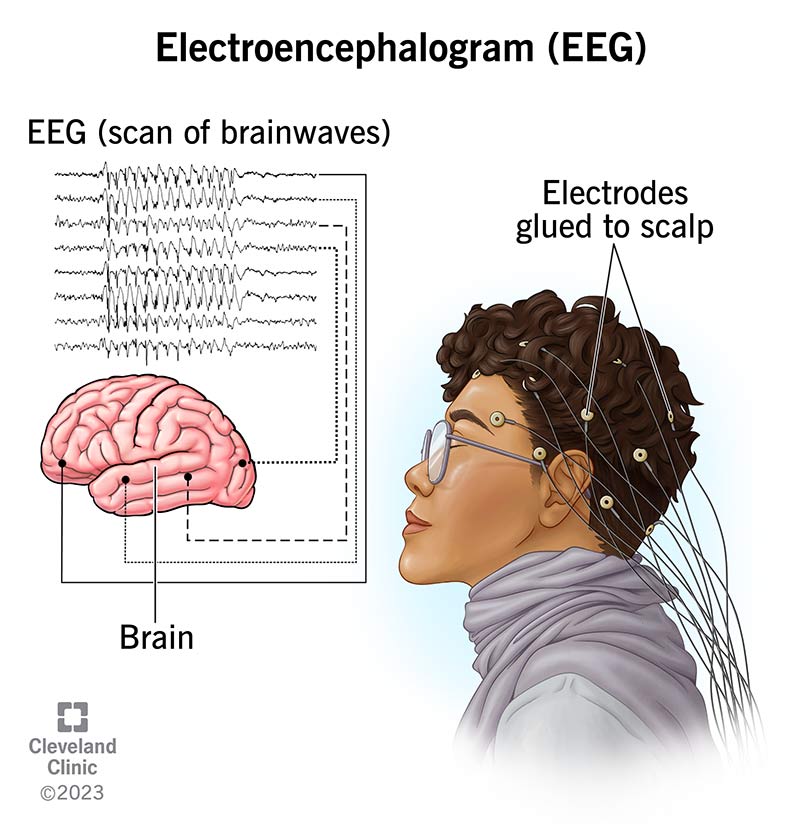
Recent studies using electroencephalography (EEG) have revealed surprising patterns in the dying brain.
In several cases, researchers observed sudden spikes of high-frequency brain waves shortly after the heart stopped beating.
These waves resemble patterns normally associated with conscious awareness or vivid perception.
Some neuroscientists believe this surge may represent the brain’s final attempt to restore order as oxygen levels collapse.
Others suggest it could explain certain near-death experiences reported by patients who were later revived.
Although these findings remain under investigation, they suggest the brain may remain active for longer than previously believed.
Could Consciousness Persist in a Biological “Pause”?
If scientists can slow cellular death, it raises a profound possibility.
There might be a moment when the body is suspended between life and irreversible death.
During this interval, some brain cells might still be functioning.
But the question remains: would a person be conscious?
At present, scientists do not have a clear answer.
Consciousness depends on extremely complex networks of neurons working together. Even small disruptions can cause unconsciousness.
For example:
-
anesthesia shuts down conscious awareness
-
severe trauma can instantly cause blackout
-
oxygen deprivation quickly leads to loss of consciousness
Because of this, many researchers believe that most people likely lose awareness quickly once blood flow stops.
However, the precise timing remains uncertain.
Suspended Animation and Emergency Medicine
The concept of slowing death is not limited to laboratory research.
Some medical teams are already experimenting with temporary suspended animation techniques.
In certain emergency trauma cases, doctors have used rapid cooling to lower a patient’s body temperature dramatically.
By cooling the body, metabolism slows down, reducing the damage caused by oxygen loss.
This approach, sometimes called emergency preservation and resuscitation, gives surgeons additional time to repair severe injuries.
Patients can remain in this state for short periods before being gradually rewarmed and revived.
Although still experimental, the technique demonstrates that life processes can sometimes be paused and restarted under controlled conditions.
What This Means for the Future of Medicine
If scientists continue to learn how to pause cell death, it could transform several areas of medicine.
Possible future applications include:
Improved treatment for stroke and heart attacks
Doctors may gain more time to restore blood flow before brain damage occurs.
Organ preservation for transplantation
Donor organs could remain viable for longer periods.
Advanced trauma care
Doctors might temporarily slow biological processes in critically injured patients.
Exploration of suspended animation
Long-term preservation of living tissue may eventually become possible.
These developments remain experimental, but the progress made in recent years is remarkable.
A Philosophical Question About Human Awareness
Beyond the medical possibilities lies a deeper question.
If science can delay the moment when cells truly die, the traditional definition of death may need to be reconsidered.
Historically, death was declared when the heart stopped beating.
Later, medical standards shifted to brain death, meaning irreversible loss of brain function.
But as research continues, scientists are discovering that some biological processes continue long after circulation stops.
This raises fascinating questions about the final moments of consciousness.
The human brain may experience a brief window of activity even after life appears to have ended.
Why Scientists Are Proceeding Carefully
Despite the excitement around these discoveries, researchers emphasize that the idea of pausing death remains extremely limited.
Laboratory experiments involve isolated cells or controlled animal models.
Reviving a human brain after extended death remains far beyond current medical capabilities.
Scientists stress that these studies are intended to better understand cellular biology and improve medical treatment, not to reverse death itself.
Ethical considerations are also extremely important.
Any research involving the boundary between life and death must follow strict scientific and ethical guidelines.

The Mystery Remains
The question of what happens to consciousness during the final moments of life remains one of the deepest mysteries in science.
Researchers are gradually learning how cells die and how that process might be slowed.
But consciousness is far more complex than any single cell or molecule.
Even with modern technology, the brain still holds many secrets.
For now, the idea of a “necrosis pause” offers a glimpse into how life and death may exist on a spectrum rather than a single moment.
And within that spectrum lies one of the most fascinating questions humanity has ever asked.
What happens in the quiet gap between life and death?
Scientific Disclaimer
The concept described as a “necrosis pause” refers to experimental observations in laboratory studies where certain cellular death pathways can be slowed or interrupted.
These experiments do not mean that human death can currently be paused or reversed, nor do they demonstrate that consciousness persists after death.
Research in this field is ongoing, and many questions remain unanswered. The findings are primarily intended to improve medical understanding of cell injury, organ preservation, and critical care treatment.
FAQs
What is necrosis?
Necrosis is a form of cell death caused by injury, lack of oxygen, toxins, or trauma. It often leads to damage in surrounding tissues.
Can scientists actually pause cell death?
In laboratory experiments, scientists have found ways to slow or interrupt certain cellular pathways involved in necrosis, but this is limited to controlled research conditions.
How long can the brain remain active after the heart stops?
Studies suggest brain activity may continue for several minutes after cardiac arrest, although consciousness is usually lost quickly.
What was the Yale pig brain experiment?
In 2019, researchers restored some cellular activity in pig brains several hours after death using a special circulation system.
Could suspended animation become real in the future?
Some experimental medical techniques already use cooling to slow metabolism in trauma patients, but long-term suspended animation remains a theoretical concept.
Reference Sources
https://www.nature.com/articles/d41586-019-01216-4
https://www.nature.com/articles/s41586-019-1099-1
https://www.scientificamerican.com/article/can-we-delay-cell-death/
https://www.ninds.nih.gov/health-information/disorders/brain-death
https://www.ncbi.nlm.nih.gov/books/NBK430916/
https://www.livescience.com/brain-activity-after-death