.png)
.png)
.png)
.png)
From the crushing depths of the Pacific’s trenches to the rugged seafloor, scientists have uncovered discoveries that defy what ocean researchers once thought possible. New data emerging in 2025 suggests that life — and entire communities of organisms — exist in places long believed too extreme for thriving ecosystems. These discoveries aren’t subtle surprises; they rewrite sections of marine biology textbooks and force experts to rethink the limits of life on Earth.
A Surprise at the Bottom of the World
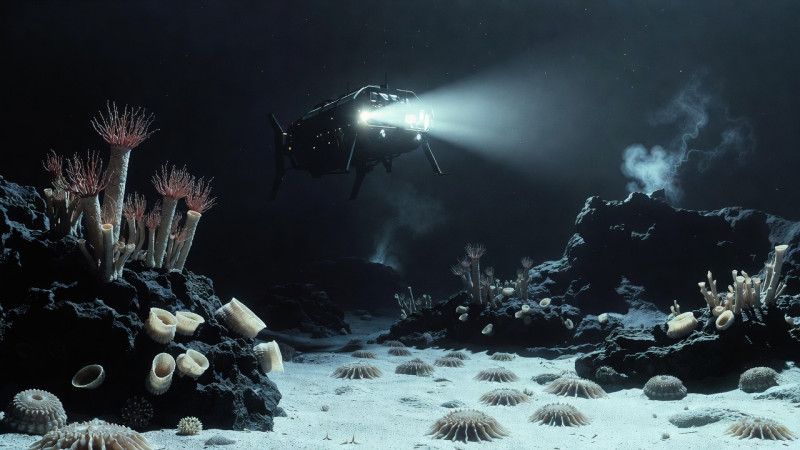
In an expedition completed in the summer of 2025, a crew aboard the Chinese submersible Fendouzhe reached the seafloor of deep Pacific trenches — locations more than 31,000 feet (9,500 meters) beneath the surface — with cameras, lights, and sensors designed for one of the harshest environments on the planet. Instead of barren rock and sediment, the team encountered fields of tube worms, white molluscs, sea cucumbers, and other marine life thriving in total darkness. ScienceAlert
Scientists expected cold, life-sparse plains. What they found were entire ecosystems supported not by sunlight but by chemical energy rising from the seabed — a process called chemosynthesis. ScienceAlert This energy source is similar to what powers life near hydrothermal vents, but never before had such extensive communities been observed so deep inside trench ecosystems.
These discoveries were documented in a peer-reviewed journal and published in 2025, making them among the most significant deep-sea findings of the year. ScienceAlert
Something That Shouldn’t Exist
For decades, scientists believed that the hadal zone — the deepest reaches of the ocean beyond 6000 meters — was largely barren, with organisms surviving mostly on organic material drifting down from the surface. But the latest trench data upends that belief. At depths reaching over 9,500 meters, researchers recorded not only single organisms but dense communities living off methane and hydrogen sulfide seeping from the seafloor. sdu
The scale of the biological communities was breathtaking. Video footage released with the scientific report shows clusters of tube worms standing upright on the seabed, clusters of bivalves and molluscs, and diverse invertebrates moving in and out of view in an otherwise pitch-black world. This suggests the existence of stable energy sources deep underground — data that “shouldn’t exist” according to long-held scientific assumptions. sdu
Why This Changes Everything
These findings are groundbreaking for several reasons:
-
Energy Source Surprises:
Scientists once thought that most of the deep ocean’s life relied on dead material falling from upper layers of the ocean. The discovery of ecosystems sustained by chemical energy production opens a new window on how life can exist independently of sunlight.