.png)
.png)
.png)
.png)
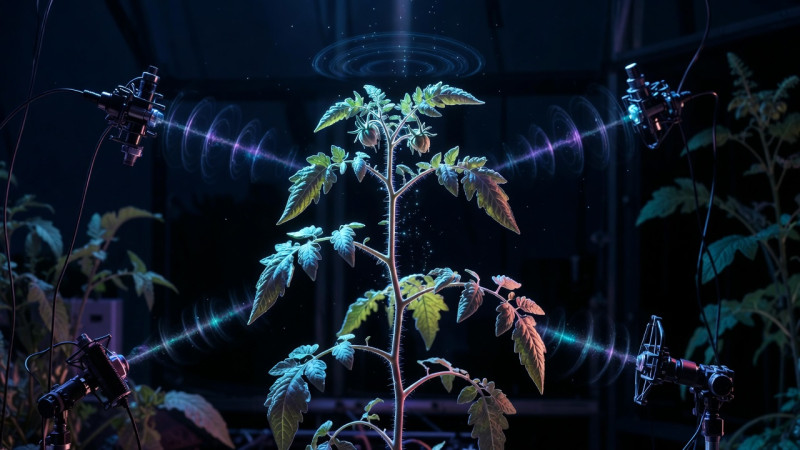
Scientists Can’t Explain Why Plants Emit Sounds When Stressed
If you’ve ever looked at a drooping houseplant and thought, “This thing is suffering,” science is now adding a twist that sounds like science fiction: stressed plants can emit faint, rapid clicking noises—at ultrasonic frequencies humans can’t hear.
The discovery is real, recorded in controlled conditions and published in peer-reviewed research. But the headline mystery remains: why do plants make these sounds, and are they just mechanical “pops”… or something closer to a biological alarm system?
The moment this went from rumor to recorded fact
A major spike in attention came when researchers documented airborne ultrasonic emissions from plants experiencing stress such as dehydration and physical damage. The work was reported widely after publication in Cell in late March 2023, when the findings were discussed across science outlets and institutional summaries. EurekAlert!+3Cell+3Nature+3
Incident date (publication timing): The peer-reviewed paper appeared in Cell around March 30, 2023 (the same window when major science coverage and press material were released). Cell+2Nature+2
Incident time: Scientific journals and press releases typically timestamp by publication day rather than a single universal “time of day,” and the sources reporting it do not consistently list an exact hour. Cell+1
What scientists actually recorded
In the experiments, researchers recorded plants (notably tomato and tobacco) under different conditions—healthy vs. stressed—using sensitive microphones designed to detect ultrasonic frequencies. The stressed plants produced more clicks and pops than unstressed plants, and the sounds could be recorded from a distance (not only by touching the plant). Cell+2PubMed+2
One widely reported detail: a single stressed plant could emit dozens of clicks per hour, while healthy plants were comparatively quiet.