.png)
.png)
.png)
.png)
The USS Nimitz “Tic Tac” Encounter: The Navy Intercept That Refuses to Fade
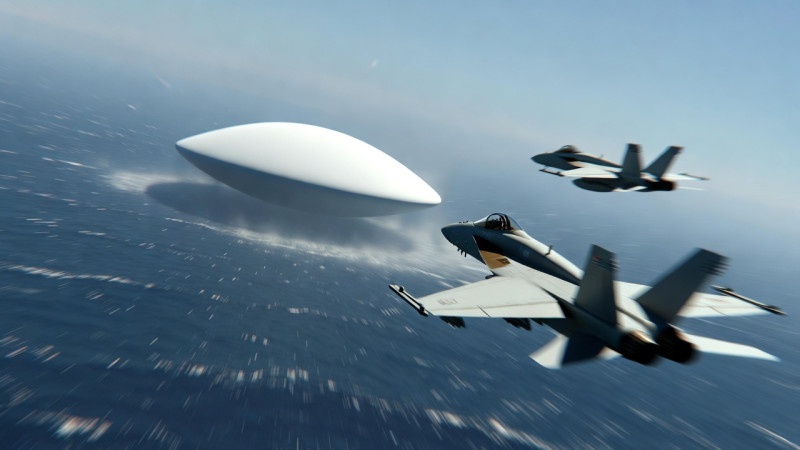
On Sunday, November 14, 2004, off the Pacific Ocean near Southern California, a U.S. Navy training day turned into one of the most talked-about aerial mysteries of the modern era: the USS Nimitz “Tic Tac” encounter.
This wasn’t a lone eyewitness on a beach with a shaky camera. The story involves a U.S. carrier strike group, multiple aircraft, shipborne radar, and later—most importantly—official U.S. government release and confirmation of related video. That last part is why this incident keeps coming back, year after year, no matter how tired the internet gets of the word “UFO.” U.S. Department of War+1
A strange track becomes a real-world intercept
Reporting around the incident has long pointed to unusual radar activity detected from ships in the strike group, including the USS Princeton, with crews allegedly tracking odd returns in the days leading up to the visual encounter. One detailed breakdown of the incident timeline—based on an “official report” said to have been associated with the Pentagon’s earlier UAP work—describes objects detected across multiple days in mid-November 2004. The War Zone
Then the mystery stopped being “something on a screen.”
According to that same detailed account, the situation sharpened at around 10:00 AM local time on Nov. 14, 2004, when the Princeton requested help from an E-2C Hawkeye to search a patch of sky using its radar. Soon after, a pair of Navy jets were vectored toward the contact. The War Zone
The pilots: “Tic Tac,” white, featureless, and fast
Retired Navy Cmdr. David Fravor—then the commander of a strike fighter squadron embarked with the USS Nimitz Carrier Strike Group—has consistently described an object that looked like a white, oblong “Tic Tac”: no wings, no visible engines, no tail, no obvious exhaust. Multiple aircrew members in two aircraft were involved in the intercept sequence described in reporting on the event. CBS News+1
The same detailed War Zone report says the object was seen low over the water, near a visible disturbance—described as frothing or “boiling” seas—before the object moved in ways that struck experienced aviators as unusual. The War Zone
It’s crucial to keep the language honest: pilots reported what they perceived, but perception alone doesn’t identify a craft’s origin or technology. Still, what makes the Nimitz story gripping is that the visual description wasn’t the only piece. This incident sits at the intersection of human testimony and reco