.png)
.png)
.png)
.png)
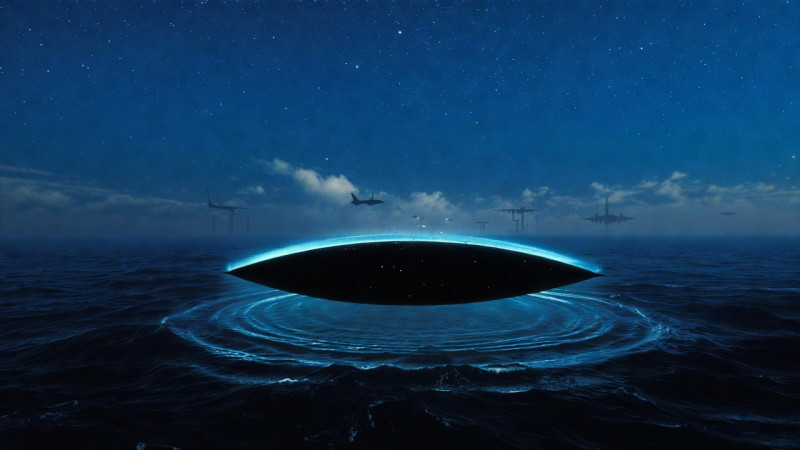
What Technology Could Explain Craft With No Propulsion?
A pilot sees something streak across the sky, stop hard, then slide sideways like it’s on rails—no flame, no smoke trail, no engine glare. Radar shows a fast-moving target. Infrared gets a blob. The story spreads: “No propulsion.”
That phrase is the spark. Because in aviation, propulsion usually leaves fingerprints—heat, exhaust, prop blur, shock diamonds, noise. So when those cues are missing, it feels like a rule of nature got switched off.
But “no visible propulsion” isn’t the same as “no propulsion.” It can also mean the propulsion was hidden, misunderstood, or never there in the first place—a sensor effect, an optical trap, or even an electronic trick.
To keep this grounded, it helps to anchor the conversation to a few hard dates that shaped the modern UAP debate:
-
Nov. 14, 2004: the USS Nimitz “Tic Tac” encounter timeframe often cited in UAP discussions.
-
Apr. 27, 2020: the U.S. Department of Defense formally released three historical Navy UAP videos (“FLIR1,” “GIMBAL,” “GOFAST”). Wikipedia
-
Jun. 25, 2021: ODNI’s preliminary UAP assessment noted some reports describing movement “without discernible means of propulsion.” Director of National Intelligence
-
Sept. 14, 2023 (10 a.m. EDT briefing): NASA discussed its independent study team report and called for better data. NASA+1
-
Mar. 6–8, 2024: AARO’s historical record report was cleared/released, stating it found no empirical evidence of off-world technology in the cases it reviewed. U.S. Department of War+1
So what tech could explain “propulsionless” flight—without assuming aliens? Here are the most realistic buckets.
1) The simplest answer: the “craft” isn’t a craft
A surprising number of “impossible” tracks come down to geometry and perception:
-
Parallax: A distant object looks like it’s racing when the observer (jet) is moving fast.
-
Zoom and gimbal effects: Sensor systems can create apparent rotation or sudden motion changes when the camera and tracking system shift.
-
No depth cues over water: Over the ocean, it’s easy to misjudge range and speed—your brain has fewer reference points.
This is why NASA emphasized the need for standardized, high-quality data and careful interpretation.