

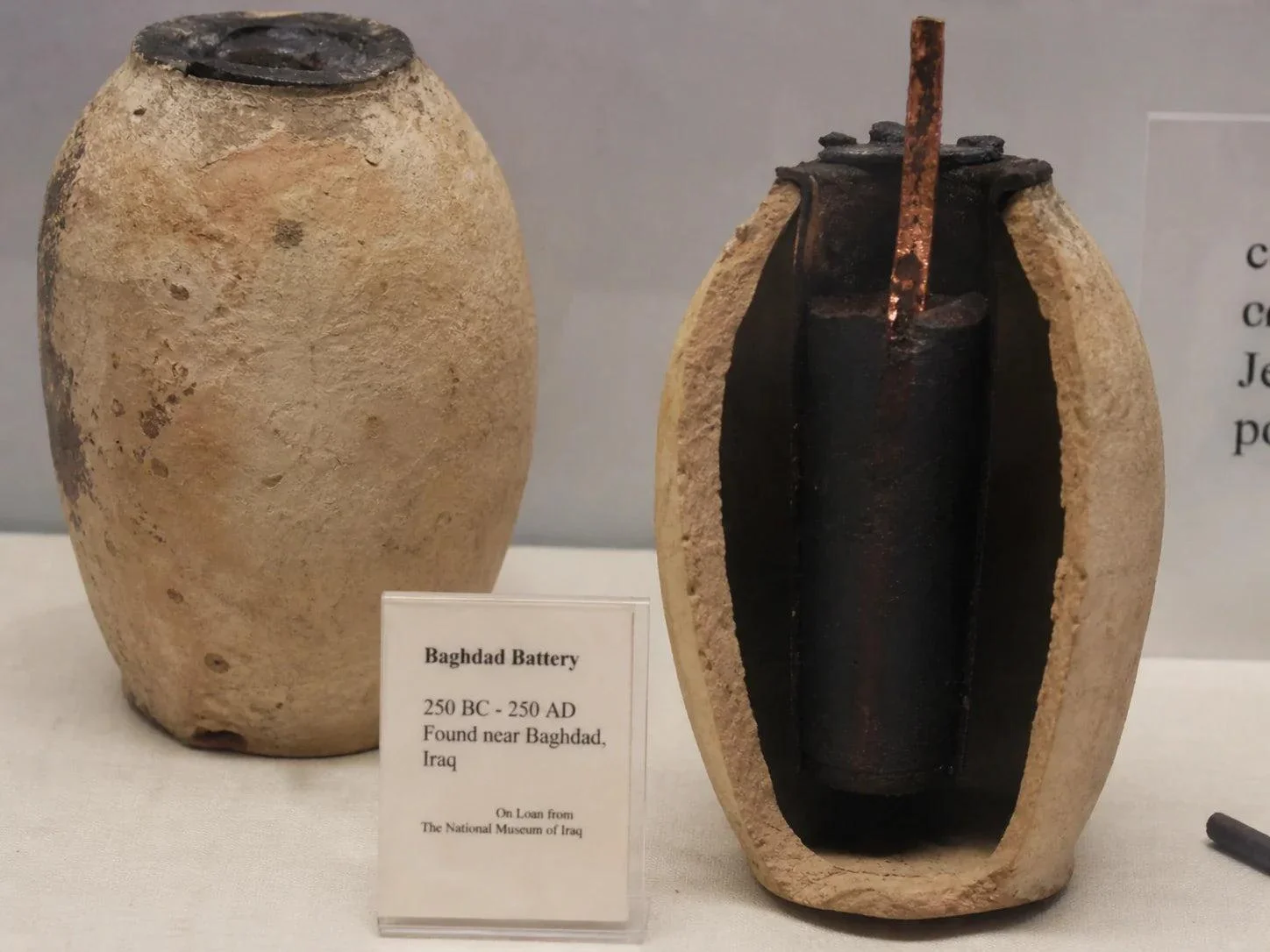
For nearly a century, a small clay jar discovered near Baghdad has sparked one of archaeology’s most fascinating debates. At first glance, it looks unimpressive—a ceramic vessel containing a copper cylinder and an iron rod. Yet this modest artifact has inspired theories ranging from ancient electricity to forgotten scientific knowledge that may have existed nearly 2,000 years before the invention of the modern battery.
Known today as the Baghdad Battery, the object has become a symbol of humanity’s enduring fascination with lost technologies and unexplained artifacts. Was it truly an ancient electrical device? Or is it simply a misunderstood object whose purpose has been exaggerated over time?
The answer remains uncertain. But the mystery offers a remarkable window into the world of ancient Mesopotamia, one of the most influential civilizations in human history.
A Civilization That Changed the World
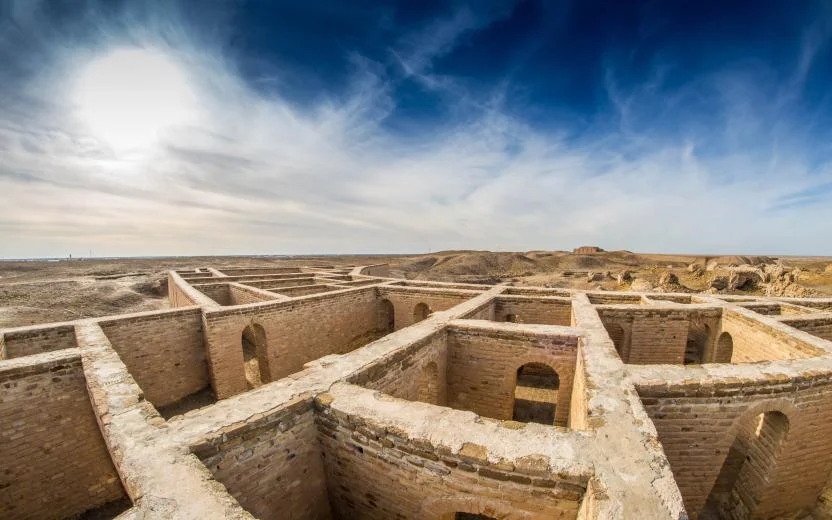
Long before the rise of Greece and Rome, Mesopotamia flourished between the Tigris and Euphrates rivers in what is now Iraq.
Often called the “Cradle of Civilization,” Mesopotamia gave the world some of its earliest cities, writing systems, legal codes, mathematical concepts, and astronomical observations. The Sumerians, Babylonians, Assyrians, and later the Parthians and Sasanians built societies whose innovations still influence modern life.
These ancient peoples developed sophisticated irrigation systems, recorded celestial events with remarkable precision, and created vast libraries of clay tablets. Their understanding of engineering and metallurgy was impressive for the time.
Against this backdrop, the discovery of the Baghdad Battery raises an intriguing question:
Could the people of ancient Mesopotamia have experimented with electricity centuries before modern science formally understood it?
The Discovery That Started the Debate
The story begins in 1936 when artifacts were reportedly uncovered at Khujut Rabu, an archaeological site near Baghdad.
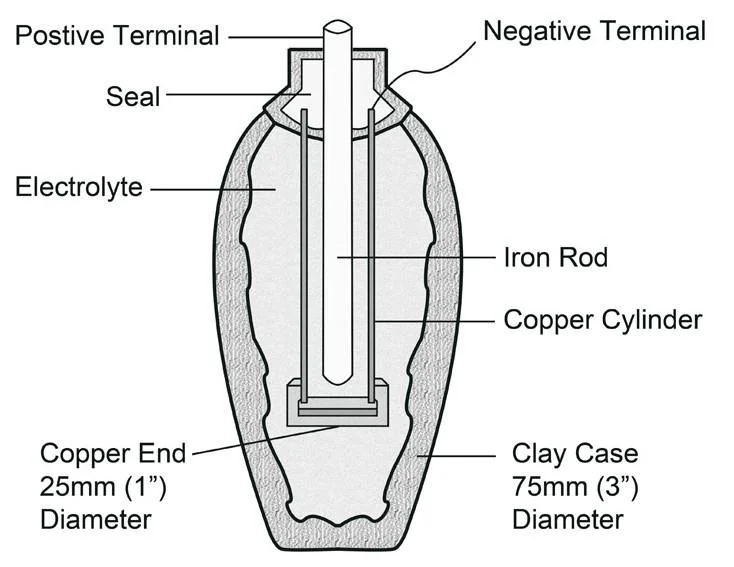
Among the discoveries was a small clay jar approximately 14 centimeters tall. Inside the vessel was a rolled copper cylinder containing an iron rod. The components were sealed with bitumen, a naturally occurring petroleum product widely used in ancient Mesopotamia.
German archaeologist Wilhelm König, who later examined the artifacts, proposed a remarkable possibility. He suggested the arrangement resembled a simple galvanic cell—a device capable of generating electricity through a chemical reaction between different metals.
The idea was revolutionary.
If the jar had been filled with an acidic liquid such as vinegar, grape juice, or another electrolyte, it could theoretically produce a small electrical current.
The object soon became known worldwide as the Baghdad Battery.
How Could It Work?
The basic principle behind a battery is surprisingly simple.
When two different metals are placed in an acidic solution, electrons move from one metal to the other, creating an electrical current.
The Baghdad Battery contains exactly the kind of materials capable of generating such a reaction:
- A copper cylinder
- An iron rod
- A ceramic container
- A seal that could have held liquid inside
Modern reconstructions have repeatedly demonstrated that replicas of the device can generate measurable voltage when filled with acidic substances. Some experiments have produced between 0.5 and 2 volts per cell.
Even the television program MythBusters famously constructed replicas and demonstrated that multiple units connected together could generate enough electricity to perform simple electrochemical tasks.
From a purely scientific standpoint, the concept works.
But archaeology is not simply about what could work.
It is about what actually happened.
And that distinction lies at the heart of the controversy.
The Ancient Electricity Theory
Supporters of the battery hypothesis argue that the design is too specific to be accidental.
Some researchers believe the device may have been used for:
Electroplating Metals
One of the most popular theories suggests the battery generated electricity used to deposit thin layers of precious metals onto jewelry or decorative objects.
Electroplating is widely used today to coat metals with gold, silver, or other materials.
If ancient Mesopotamians discovered a primitive version of this process, it would dramatically alter our understanding of technological history.
Medical Applications
Others have proposed that the jars may have been used for therapeutic purposes.
Throughout history, many cultures experimented with natural electrical phenomena, including electric fish.
Some researchers have speculated that a mild electrical current might have been applied for pain relief or ritual healing.
Religious Ceremonies
Another possibility is that the device produced unusual visual effects, such as bubbles generated through electrolysis.
For people unfamiliar with electricity, such reactions may have appeared mysterious or supernatural.
This has led some researchers to wonder whether the jars played a role in temple rituals or sacred ceremonies.
What the Skeptics Say
Despite its popularity, the ancient battery theory faces significant challenges.
In fact, most archaeologists remain unconvinced.
The primary problem is the lack of supporting evidence.
If Mesopotamians had developed practical electrical technology, archaeologists would expect to find additional clues, including:
- Electrical conductors
- Wires
- Connected battery arrays
- Written descriptions
- Electroplated artifacts
So far, none of these have been conclusively identified.
Many experts argue that demonstrating a replica can generate electricity does not prove the original object was intended for that purpose.
After all, many combinations of metals and acidic liquids can accidentally produce voltage.
That does not necessarily mean their creators understood electrochemistry.
Alternative Explanations
Several alternative theories have emerged over the years.
Scroll Containers
Some archaeologists believe the vessels were designed to store sacred texts or rolled parchment.
Similar containers have been discovered elsewhere in the region. The copper cylinder may have served as a protective housing rather than an electrical component.
Ritual Objects
Another interpretation suggests the jars were connected to magical or religious practices.
Studies examining similar finds have proposed that they may have been used in rituals involving prayers, curses, or protective spells.
Mesopotamian cultures placed great importance on supernatural protection. Containers buried within structures were sometimes believed to guard buildings against harmful forces.
Storage Vessels
Some researchers suggest the objects simply served practical storage purposes.
Without clear evidence of electrical use, a mundane explanation remains entirely possible.
The Lost Context Problem
One of the biggest obstacles to solving the mystery is that crucial information may be gone forever.
Modern archaeology depends heavily on context.
Knowing exactly where an artifact was found, what surrounded it, and how it was positioned often provides clues about its purpose.
Unfortunately, documentation surrounding the Baghdad Battery’s discovery was limited by modern standards. Researchers continue to debate aspects of its archaeological context.
The situation became even worse in 2003 when many artifacts disappeared during the looting of Iraq’s National Museum.
Some original Baghdad Battery specimens were reportedly among the missing objects.
As a result, opportunities for modern scientific testing may have been permanently lost.
Mesopotamia’s Genuine Scientific Achievements
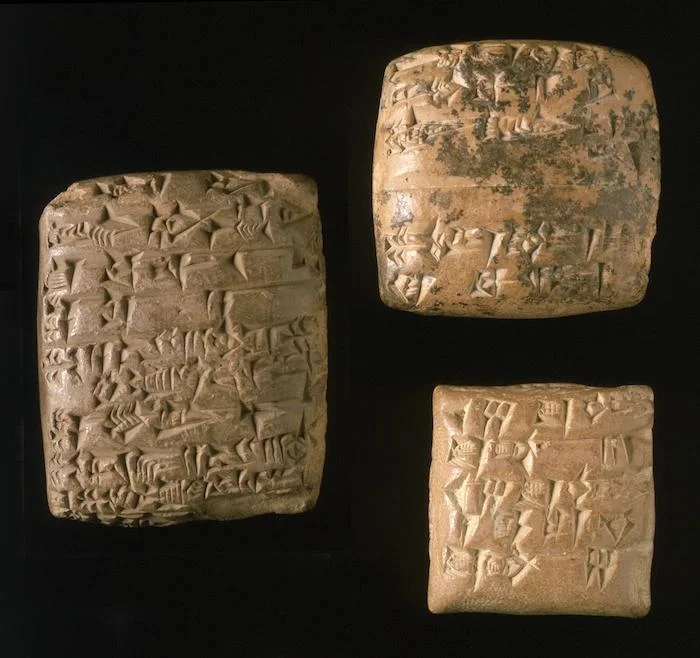
Whether or not the Baghdad Battery generated electricity, it is important not to underestimate Mesopotamian innovation.
Ancient Mesopotamians accomplished extraordinary feats without modern technology.
They developed:
- Advanced irrigation networks
- Sophisticated metallurgy
- Complex mathematics
- Detailed astronomical records
- Urban planning systems
- Written legal codes
The Babylonians could predict eclipses.
Their mathematical methods anticipated concepts later used in geometry and astronomy.
Their engineers managed large-scale agricultural systems capable of supporting major cities.
In many ways, their achievements are more impressive than speculative claims about lost electricity because they are supported by overwhelming evidence.
New Research Keeps the Mystery Alive
Although mainstream archaeology remains skeptical, new studies continue to revisit the Baghdad Battery.
Some recent researchers have argued that previous reconstructions may have overlooked important design features. One 2026 analysis suggested the artifact could potentially generate higher voltages than earlier experiments indicated by incorporating additional electrochemical mechanisms.
These findings do not prove ancient electrical technology existed.
However, they demonstrate that the debate is not entirely settled.
The Baghdad Battery remains a legitimate subject of scientific inquiry precisely because its true purpose has never been conclusively determined.
Why People Remain Fascinated
Part of the Baghdad Battery’s appeal lies in what it represents.
Humans are naturally drawn to mysteries.
We wonder whether ancient civilizations knew things that were later forgotten. We imagine hidden discoveries buried beneath deserts or lost beneath the ruins of vanished cities.
The Baghdad Battery sits at the intersection of archaeology, science, and imagination.
Unlike many sensational archaeological claims, it contains enough genuine mystery to keep experts debating while remaining grounded in a real artifact.
That combination is rare.
The Wider Mystery of Lost Knowledge
History contains many examples of knowledge disappearing.
The formula for Greek fire was lost.
The construction methods behind some ancient monuments remain debated.
Entire libraries vanished through war and disaster.
As civilizations rise and fall, information can disappear with them.
This reality makes the Baghdad Battery particularly compelling.
Even if it was not an electrical device, it reminds us how incomplete our understanding of the ancient world remains.
Every year archaeologists uncover new evidence that reshapes accepted narratives about humanity’s past.
The next discovery in Iraq, Syria, Egypt, or elsewhere in the ancient Near East could reveal something entirely unexpected.
The Verdict: Battery, Ritual Object, or Something Else?
After decades of investigation, no definitive answer has emerged.
The evidence clearly shows that replicas of the Baghdad Battery can generate electricity. Yet there is still no widely accepted proof that ancient Mesopotamians intentionally used the artifact as a battery. Most archaeologists favor alternative explanations involving storage, ritual activity, or other non-electrical functions.
For now, the Baghdad Battery remains one of archaeology’s most intriguing unsolved puzzles.
Perhaps future discoveries will finally reveal its purpose.
Or perhaps the truth disappeared long ago with lost records, destroyed artifacts, and forgotten traditions.
Until then, the small clay jar from ancient Mesopotamia continues to challenge assumptions about the past—and reminds us that history still holds secrets waiting to be uncovered.
Sources
- Smithsonian Museum Conservation Institute: https://mci.si.edu/node/1230025
- HISTORY: https://www.history.com/articles/baghdad-battery
- British Museum research on ancient metallurgy
- Journal of Near Eastern Studies
- Archaeological studies of Parthian and Sasanian Mesopotamia