
Scientists Test an Experimental Drug That Could Protect People With Celiac Disease From Gluten Damage
An experimental drug called ANB033 has produced encouraging early results in people with celiac disease, with a small clinical trial reporting reduced intestinal damage following gluten exposure. The findings could point towards a future treatment that helps protect the gut—but much more research is needed before patients can rely on it.
For someone living with celiac disease, eating a slice of ordinary bread is not simply a dietary choice. Even a small amount of gluten can trigger an immune reaction that damages the lining of the small intestine.
That makes everyday activities—from eating at restaurants to sharing meals with friends—potentially stressful. Although a strict gluten-free diet remains the main treatment, avoiding gluten completely can be difficult because contamination can occur during food preparation or manufacturing.
Now, researchers are investigating whether a medicine could help protect the intestine from the consequences of gluten exposure.
The experimental drug ANB033 has attracted attention after an early-stage clinical trial involving just 32 participants with celiac disease reportedly found reduced gluten-induced intestinal damage. The results, reported in October 2026, offer an intriguing possibility: could a targeted medicine eventually provide an additional layer of protection for people who must avoid gluten?
The findings are promising, but the trial is small, and ANB033 remains experimental. It is not evidence that people with celiac disease can safely return to eating gluten.
What is celiac disease, and why is gluten dangerous?
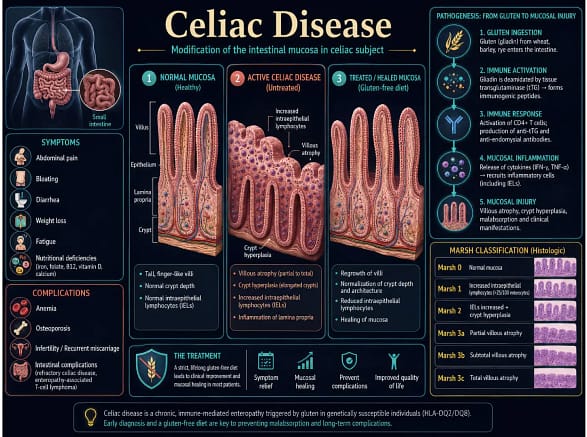
Celiac disease is an autoimmune condition in which consuming gluten triggers an abnormal immune response that damages the small intestine. Gluten is a group of proteins found in wheat, barley and rye.
In a healthy digestive system, the small intestine contains millions of tiny, finger-like projections called villi. These structures increase the surface area available for absorbing nutrients from food.
In people with celiac disease, the immune reaction to gluten can damage these villi, flattening them and reducing the intestine’s ability to absorb nutrients effectively.
The consequences can extend beyond digestive discomfort. People may experience diarrhoea, abdominal pain, bloating and fatigue. Some develop iron-deficiency anaemia, nutritional deficiencies, weakened bones or other complications associated with impaired nutrient absorption.
Celiac disease is not the same as a wheat allergy or non-celiac gluten sensitivity. It involves an autoimmune process that can cause measurable intestinal injury, sometimes even when symptoms are mild or absent.
At present, the established treatment is a strict, lifelong gluten-free diet. Avoiding gluten allows the intestinal lining to heal in many patients, although recovery varies and accidental exposure remains a challenge.
That is the problem researchers hope ANB033 might eventually help address.
How does ANB033 work?

ANB033 is an experimental antibody-based treatment being developed by First Tracks Biotherapeutics. Rather than breaking down gluten in food, it targets the immune system’s response to it.
The drug blocks CD122, a component shared by receptors for two immune-signalling molecules: interleukin-2 (IL-2) and interleukin-15 (IL-15).
These signalling pathways help regulate the activity, survival and multiplication of certain immune cells. In celiac disease, IL-15 is particularly important because it contributes to the abnormal immune activity associated with damage to the intestinal lining.
By interfering with CD122 signalling, ANB033 is designed to reduce the activity of immune-cell populations involved in inflammation and tissue injury. The goal is to limit the damage triggered when a person with celiac disease consumes gluten.
This approach differs from treatments that attempt to break gluten proteins into smaller fragments or prevent gluten from interacting with the immune system.
Instead, ANB033 targets part of the body’s response to gluten.
However, the immune system performs many essential functions, including defending against infections. That means researchers must carefully evaluate whether suppressing these pathways can provide intestinal protection without causing unacceptable side effects.
The drug’s effectiveness and safety will need to be confirmed in larger and longer clinical trials.
What happened in the 32-person clinical trial?
On October 12, 2026, First Tracks Biotherapeutics announced encouraging preliminary results from the first cohort of its Phase 1b trial. The results were reported in subsequent medical news coverage that week.
The efficacy analysis included 32 participants: 17 received ANB033 and 15 received a placebo. Participants received three injections under the skin at two-week intervals.
They then underwent a controlled 14-day gluten challenge, consuming approximately 6 grams of gluten daily—roughly equivalent to the amount in two slices of bread. The challenge was conducted as part of the research protocol, with investigators assessing symptoms and examining intestinal tissue.
The researchers evaluated several measures of intestinal injury, including the ratio of villus height to crypt depth. This measurement helps indicate how well the intestinal lining’s absorptive structures have been preserved.
The results showed a significant difference between the treatment and placebo groups. The average change in the villus-height-to-crypt-depth ratio was −0.17 in the ANB033 group, compared with −0.66 in the placebo group. The difference between the groups was statistically significant.
Researchers also found that the density of intraepithelial lymphocytes—immune cells within the intestinal lining that can increase during celiac-related inflammation—rose in the placebo group but did not show the same increase in those receiving ANB033.
The company also reported fewer worsening gastrointestinal symptoms among treated participants. Only 6% of the ANB033 group needed permitted medication to relieve symptoms during the challenge, compared with 47% of the placebo group.
These findings suggest that the drug may have protected against some of the intestinal injury and symptoms associated with controlled gluten exposure.
But the study was small and short, and the results announced so far are preliminary company-reported findings. They are not yet sufficient to establish how well ANB033 will work in the wider celiac population.
Does this mean people with celiac disease can eat bread again?
Not yet—and this is the most important point for patients.
The trial deliberately exposed participants to gluten under controlled research conditions to test whether ANB033 could reduce the resulting damage. It was not designed to establish that people can safely abandon a gluten-free diet in everyday life.
Even if a medicine reduces intestinal injury, it may not eliminate it completely. Researchers also need to understand whether protection persists over time, whether repeated gluten exposure causes cumulative damage and whether the treatment works across different patient groups.
The drug is still experimental and is not an established treatment for celiac disease. People should continue following their prescribed gluten-free diet unless their treating clinician advises otherwise as part of appropriate medical care.
What happens next?
First Tracks Biotherapeutics has indicated that it plans to advance ANB033 into a late-stage celiac disease trial in 2027. A second cohort is also investigating whether the drug can support intestinal healing in patients who already have intestinal damage. Preliminary results from that cohort were anticipated in the first quarter of 2027.
These studies will be important for determining whether the early findings can be reproduced in larger groups and whether the treatment offers meaningful benefits over longer periods.
Scientists must also monitor potential adverse effects associated with altering immune signalling. The first cohort did not reveal a new safety signal in the company’s preliminary report, but a study of this size cannot reliably detect every uncommon or delayed complication.
If further trials confirm both effectiveness and acceptable safety, ANB033 could eventually become an additional treatment option for people with celiac disease. It might help reduce damage from accidental gluten exposure or contribute to a broader strategy for managing the condition.
For now, the evidence supports cautious optimism rather than a promise of dietary freedom.
The prospect of protecting the intestine from gluten without relying on avoidance alone would represent a meaningful advance for people living with celiac disease. But the next stage of research must establish whether that protection is durable, safe and effective enough to change everyday medical care.
Until then, the gluten-free diet remains the foundation of treatment—and ANB033 remains a promising candidate that scientists still need to test.
Editorial note: The reported results are preliminary and company-announced. ANB033 remains investigational; the findings do not establish that gluten is safe for people with celiac disease.


