
For centuries, the idea of designing a “perfect human” belonged to science fiction.
Today, the conversation is no longer theoretical.
Advances in gene-editing technology, particularly the powerful DNA-editing system known as CRISPR, have pushed humanity into a new scientific era. Researchers can now modify genetic code with remarkable precision, raising hopes for curing diseases once considered untreatable.
But alongside those hopes lies a troubling possibility.
If gene editing continues to evolve rapidly, scientists may eventually gain the ability to enhance physical strength, intelligence, disease resistance, or even lifespan. In theory, those changes could alter the human genome in ways that persist across generations.
And that leads to a disturbing question.
Could attempts to engineer a “better” human accidentally create a genetically distinct population — a new subspecies of humanity?
The idea sounds dramatic, but it is a question that geneticists, ethicists, and policymakers are increasingly debating.

What CRISPR Actually Is
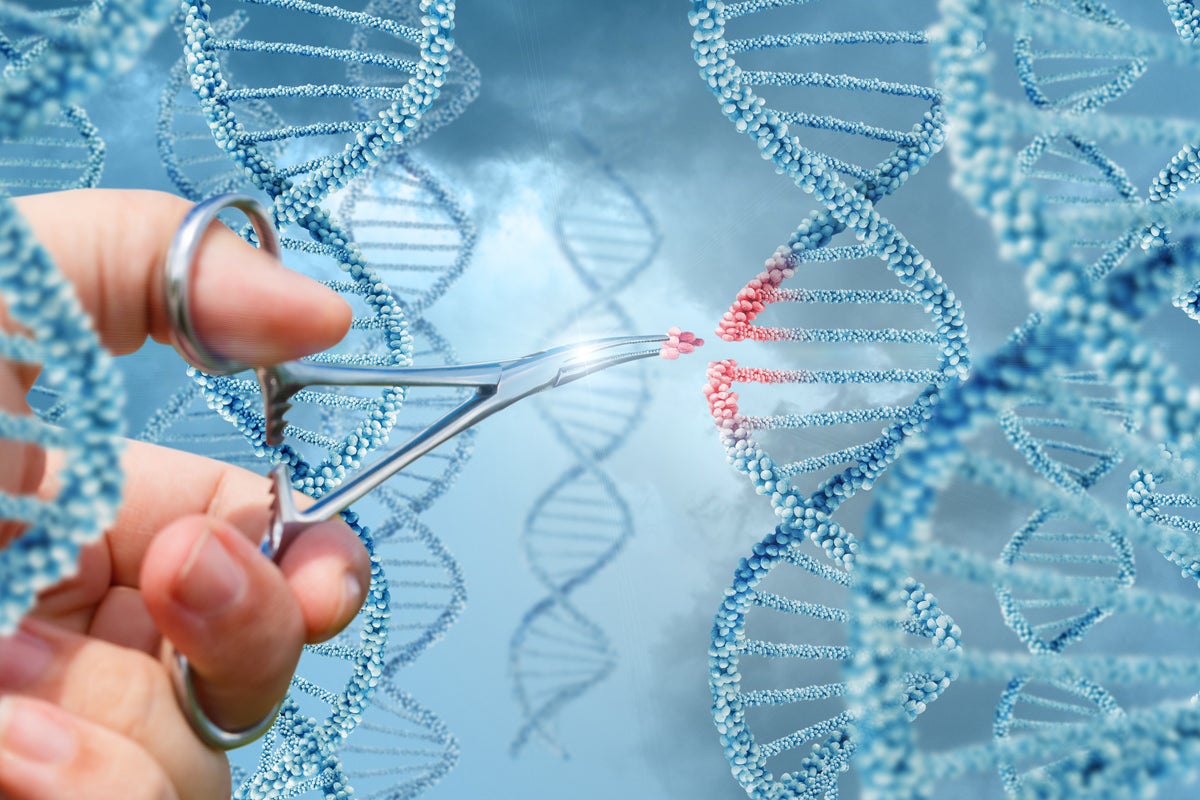
CRISPR, short for Clustered Regularly Interspaced Short Palindromic Repeats, is a tool that allows scientists to cut and modify DNA with extraordinary precision.
Using a protein called Cas9 and a small piece of guide RNA, researchers can target a specific genetic sequence and edit it directly.
Compared with earlier genetic engineering methods, CRISPR is faster, cheaper, and far more flexible. Scientists can remove harmful mutations, insert new genetic instructions, or alter existing genes.
Because of this power, CRISPR has rapidly transformed genetics research across medicine, agriculture, and biotechnology.
Many researchers believe the technology could eliminate certain inherited diseases in the future.
However, editing human DNA — particularly DNA that can be passed to future generations — opens the door to complex ethical dilemmas.
The Moment the World Realized the Risks
The debate about CRISPR took a dramatic turn in 2018 when a Chinese scientist announced the birth of the first genetically edited babies.
The researcher used CRISPR to alter the embryos’ DNA in an attempt to make them resistant to HIV infection. The announcement shocked the scientific community and triggered immediate global condemnation.
Many scientists argued that the experiment was reckless and unethical. The technology was still too new, and the long-term effects of the edits were unknown.
The experiment also crossed a critical line.
The genetic changes were heritable, meaning they could be passed down to future generations.
This event forced scientists and governments around the world to confront a new reality: human gene editing was no longer hypothetical.

Germline Editing: The Most Controversial Frontier
The greatest ethical concerns surrounding CRISPR focus on germline editing.
This involves modifying DNA in embryos, sperm, or eggs so that the genetic change becomes permanent in a family line.
Unlike gene therapy that treats an individual patient, germline edits affect future generations who cannot consent to the modification.
Many countries have strict regulations or bans on such research because of these concerns.
The fear is not just about safety.
It is also about the direction humanity might take if gene editing becomes widespread.
From Disease Prevention to Human Enhancement
Most scientists agree that gene editing could offer extraordinary medical benefits.
CRISPR may eventually help treat conditions such as:
-
sickle cell disease
-
cystic fibrosis
-
inherited blindness
-
certain forms of cancer
But once the technology exists, the temptation to go beyond medical treatment may be difficult to resist.
Parents might one day want children with:
-
stronger immune systems
-
higher intelligence
-
enhanced physical abilities
-
slower aging
This concept is often referred to as human enhancement.
And that is where the ethical debate becomes far more complicated.
Human enhancement technologies could fundamentally reshape society and the human species itself.

The Possibility of Genetic Stratification
One of the biggest fears surrounding human genetic enhancement is the creation of genetic inequality.
If gene editing becomes expensive or limited to wealthy groups, it could lead to a society divided not only by wealth but also by biology.
Some people might possess enhanced genetic traits while others remain unmodified.
Over time, those differences could grow more pronounced.
In extreme scenarios, scientists worry that the human population could split into genetically distinct groups.
While such an outcome would likely take many generations, it raises serious questions about the future of human identity.
Could Gene Editing Create a New Human Subspecies?
Biologically speaking, a subspecies forms when populations of the same species develop significant genetic differences while remaining capable of reproduction.
If genetic engineering became widespread in some populations but not others, long-term divergence could theoretically occur.
This does not mean CRISPR will automatically create a new species.
But the possibility of artificially accelerated human evolution is now part of serious scientific discussions.
Some experts warn that altering the human genome too aggressively could produce unintended biological consequences.
CRISPR is extremely precise, but it is not perfect.
Studies show that off-target mutations — unintended genetic changes — can occur during editing.
Those changes might introduce new health risks or unpredictable traits.
The Dark Side of “Designer Humans”
The phrase “designer babies” has become a symbol of the ethical debate surrounding CRISPR.
Critics worry that once genetic enhancement becomes possible, social pressure could push parents toward choosing specific traits for their children.
In that world, natural human diversity might gradually shrink.
Certain genetic traits could become socially preferred, while others might be viewed as undesirable.
This possibility raises concerns about discrimination and the definition of what it means to be human.
Some scholars argue that genetic engineering could even reinforce harmful ideas about biological superiority.
Why Many Scientists Are Urging Caution
Despite the excitement around CRISPR, many researchers stress that human gene editing must proceed carefully.
The human genome is extraordinarily complex.
Even small genetic changes can interact with other genes in unpredictable ways.
One gene might influence multiple biological functions, meaning altering it could produce unexpected side effects.
Because germline edits affect future generations, mistakes could propagate through family lines indefinitely.
For this reason, scientists emphasize the importance of international oversight and strict ethical guidelines.
The Medical Promise That Keeps Scientists Moving Forward
Despite the risks, CRISPR also holds enormous potential to reduce human suffering.
Clinical trials are already exploring gene editing treatments for several diseases.
Some early studies suggest that gene-editing therapies may help reduce cholesterol levels or treat rare genetic disorders.
The goal of most researchers is not to create “perfect humans,” but to remove harmful genetic mutations from the population.
Still, the same technology capable of curing disease could also be used for enhancement.
That dual-use potential makes CRISPR one of the most powerful — and controversial — scientific tools ever developed.
A Global Debate About Humanity’s Future
The question of how far gene editing should go is now the subject of intense debate among scientists, ethicists, and governments.
International organizations, including the World Health Organization, are developing frameworks to guide the responsible use of genome editing.
The challenge is balancing scientific progress with ethical responsibility.
Too many restrictions could slow medical breakthroughs.
Too few could open the door to dangerous experimentation.
The decisions made in the next few decades may shape the future of the human species itself.

Scientific Disclaimer
CRISPR gene editing is still an evolving technology, and many of its potential applications remain experimental. Current research focuses primarily on treating disease rather than enhancing human traits.
Most countries have strict regulations limiting or banning heritable human gene editing. The concept of engineering a “perfect human” remains largely theoretical and raises significant ethical, medical, and societal concerns.
The discussion presented here reflects ongoing scientific debate rather than established scientific practice.
FAQs
What is CRISPR?
CRISPR is a gene-editing technology that allows scientists to modify DNA with high precision.
Can CRISPR cure diseases?
Researchers are exploring CRISPR treatments for several genetic diseases, and some early clinical trials have shown promising results.
What are designer babies?
Designer babies refer to children whose genetic traits are intentionally selected or modified before birth.
Is human gene editing legal?
Many countries restrict or ban germline gene editing because the changes would affect future generations.
Could gene editing create a new human species?
Most scientists believe this is unlikely in the near future, but widespread genetic enhancement could theoretically influence human evolution over long periods.
Reference Sources
https://www.labiotech.eu/in-depth/crispr-cas9-review-gene-editing-tool/
https://pmc.ncbi.nlm.nih.gov/articles/PMC6342697/
https://www.genome.gov/about-genomics/policy-issues/Genome-Editing/ethical-concerns
https://www.frontiersin.org/journals/medicine/articles/10.3389/fmed.2025.1595213/full
https://pmc.ncbi.nlm.nih.gov/articles/PMC12014773/
https://www.who.int/health-topics/human-genome-editing

