FDA Approves First Sanfilippo Syndrome Type A Treatment
The U.S. Food and Drug Administration has approved the first treatment for Sanfilippo syndrome type A, a rare inherited brain disease that strikes children who at first develop normally. On September 17, 2026, the agency approved Fayuvi (rebisufligene etisparvovec-hopf), a one-time gene therapy from Ultragenyx Pharmaceutical, for children with the condition, also known as mucopolysaccharidosis type IIIA (MPS IIIA). The Cure Sanfilippo Foundation says the agency granted standard full approval, which is a higher bar than the accelerated pathway used for some rare-disease drugs.
For families, the news ends a long wait. Until now, there was no FDA-approved therapy designed to change the course of the disease, and care focused on managing symptoms.
What is Sanfilippo syndrome type A?
Sanfilippo syndrome is a group of four lysosomal storage diseases. Each is caused by a missing or deficient enzyme, which allows complex sugar molecules to build up inside cells. According to Nationwide Children's Hospital, type A affects the brain and spinal cord and is the most severe of the four. It is considered ultrarare, affecting about 1 in 70,000 live births.
The condition is caused by mutations in the SGSH gene, according to The Medicine Maker. Without a working copy of the gene, cells cannot make sulfamidase, the enzyme that breaks down a molecule called heparan sulfate. The molecule accumulates in the body and brain, and over time children lose cognitive, language and other developmental abilities.
The pattern is what makes the disease so painful for families. Children often seem healthy in infancy, then plateau and decline during the years when most children are learning to talk, play and explore. The FDA's own announcement describes the disease as progressively damaging the brain and nervous system. The Cure Sanfilippo Foundation calls it a progressive, fatal neurodegenerative disease.
How Fayuvi works
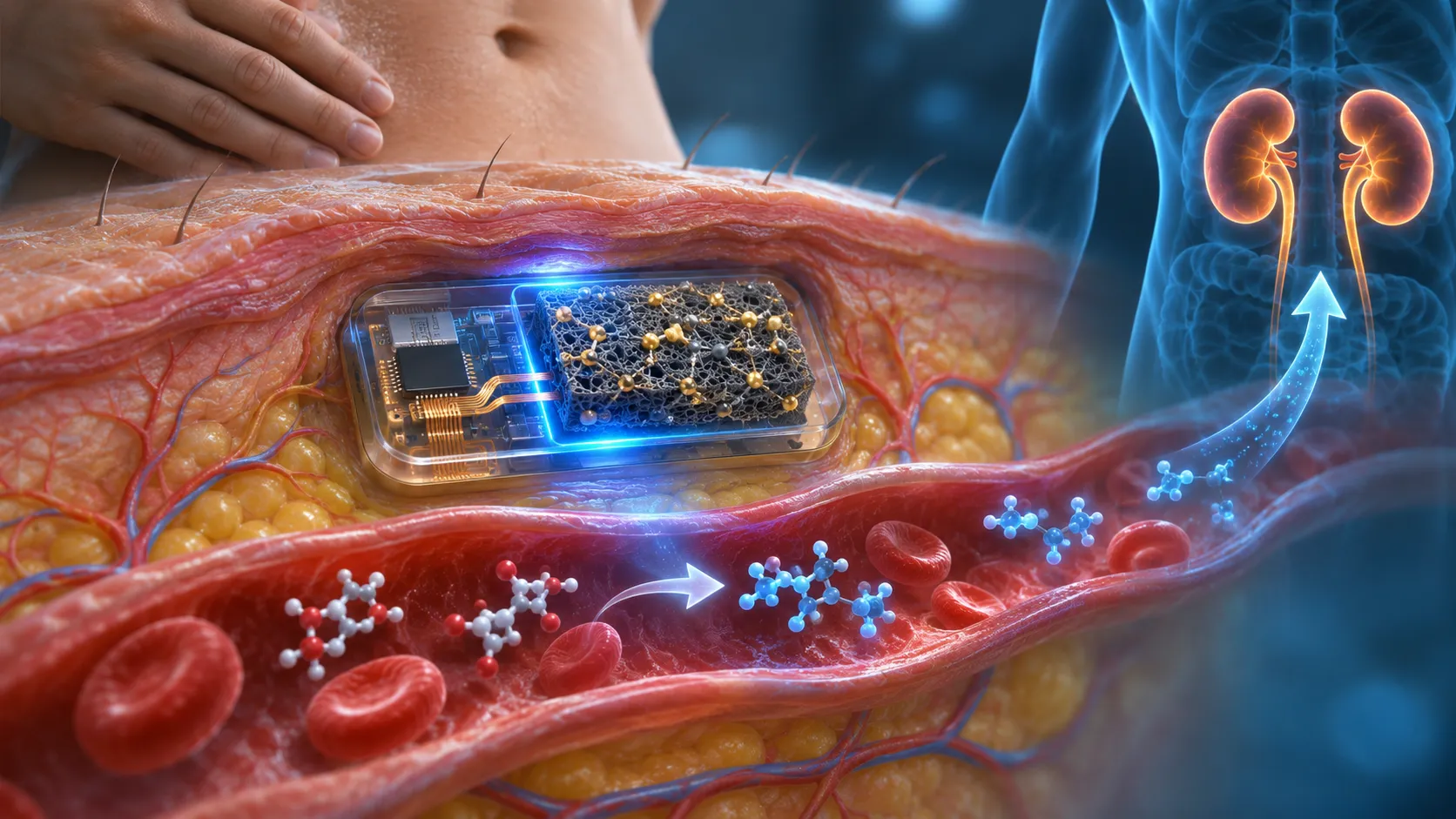
Fayuvi takes a different approach from managing symptoms. It is a single intravenous infusion that uses a modified, non-infectious virus called adeno-associated virus serotype 9 (AAV9) to carry a working copy of the SGSH gene into the patient's cells. With that gene in place, cells can produce sulfamidase, allowing heparan sulfate to be broken down properly and reducing its harmful buildup, the FDA explains.
AAV9 is notable because it can reach the central nervous system. CGTlive describes Fayuvi as a one-time AAV9 gene therapy. In the FDA release, Megha Kaushal, acting deputy director of the agency's Office of Therapeutic Products, said the approval shows that systemic AAV9 gene delivery can reach the central nervous system at therapeutic levels in children.
The approval covers pediatric patients with MPS IIIA. The Medicine Maker adds that the therapy is indicated for the neurological manifestations of the disease in children with preserved neurodevelopmental function. In practice, that points toward treating children early, before significant loss of skills.
What the clinical evidence shows
The approval rests on a modest but carefully framed body of evidence. The FDA says the drug was evaluated in an open-label, single-arm, multicenter study, meaning every child received treatment and there was no placebo group. The study measured changes in cognitive scores between ages 2 and 5.
Because the disease is so rare, running a traditional placebo-controlled trial is extremely difficult. Researchers instead compared treated children with an untreated "natural history" group. According to WebMD, 17 treated children were compared with 27 untreated children who were not part of the study. The treated children averaged 22 months old, with ages ranging from 3 to 33 months.
The FDA reports that treated children maintained or improved their cognitive function compared with the untreated group, a meaningful departure from the expected pattern of plateau and decline. AJMC notes that the comparison used the modified intention-to-treat population of 17 patients against an external, comparable group of untreated patients.
There is also biological evidence. The Medicine Maker, citing the prescribing information, reports that cerebrospinal fluid heparan sulfate levels fell after treatment. At 24 months, 15 of 16 evaluated patients maintained a reduction of at least 50 percent.
The design has limits. Without a randomized control arm, comparisons with historical data can be affected by differences between the groups. The FDA nonetheless concluded that the benefit was clear enough to support full approval, and it granted the therapy Orphan Drug, Fast Track and Breakthrough Therapy designations along the way.
Safety, risks and treatment requirements
Like other gene therapies, Fayuvi comes with important warnings. According to the FDA, the most common adverse reactions, occurring in more than 5% of patients, were:
- Increased liver enzymes (AST)
- Nausea and vomiting
- Fever
- Decreased appetite
- Decreased white blood cell and platelet counts
- Increased amylase
The most notable safety warning is the risk of thrombotic microangiopathy (TMA), a condition involving damage to small blood vessels. The FDA also notes a potential long-term risk, shared with other AAV-based gene therapies, that the inserted genetic material could integrate into the genome and potentially lead to tumor development.
Treatment is tightly structured. Fayuvi must be given in a healthcare setting equipped to manage infusion reactions. Every patient receives corticosteroids starting one day before the infusion and continuing for at least eight weeks afterward. Doctors also order regular blood tests before and after treatment to monitor liver function and blood counts.
WebMD adds practical guidance for parents. Vaccines should be avoided for 30 days before treatment and while the child is taking steroids, so families should review vaccination schedules with their care team. For three months after infusion, small amounts of the treatment vector can pass out of the body through bodily fluids and waste, which calls for hygiene precautions at home.
A long road to approval
The approval comes after a decade of work. Kevin Flanigan, MD, director of the Jerry R. Mendell Center for Gene Therapy at Nationwide Children's, whose team led the first clinical trial of a systemic gene therapy for this disorder, said the road was long and that the first study participant was dosed in 2016. The therapy was developed at the Abigail Wexner Research Institute at Nationwide Children's, and Nationwide Children's says Fayuvi is the first approved commercial product for Andelyn.
The same research center has a history in the field. Its researchers led the first phase 1 trial of gene therapy for spinal muscular atrophy type 1 and the first phase 1 study of a systemic gene therapy for Duchenne muscular dystrophy, which led to the 2023 approval of Elevidys.
For the families who took part in early trials, and the patient organizations that pushed for progress, the decision is a validation. FDA officials also framed the approval as a broader milestone. Karim Mikhail, director of the agency's Center for Biologics Evaluation and Research, said the approval is a step forward for children and families and for the promise of gene therapy in devastating rare diseases.
What families and clinicians should know
The approval is a beginning rather than a finish line. Several practical questions remain.
Who is eligible. The indication points to children with preserved neurodevelopmental function, and the trial mainly involved very young patients. Older children who have already lost significant skills may not fit the approved use, so families should discuss eligibility with a metabolic or neurology specialist.
Access and cost. The sources reviewed for this article did not report a price. Ultragenyx has said it is working closely with treatment centers and payers to support families through the gene therapy journey, according to the Cure Sanfilippo Foundation, and that the approval is a first step toward making the treatment available to families around the world. Insurance coverage for one-time gene therapies is often complicated, so early conversations with treatment centers and payers will matter.
Long-term follow-up. Because the study was open-label and relatively small, long-term data will be important. The theoretical tumor risk and the need for monitoring mean children who receive the therapy will likely be followed for years.
Other forms of the disease. Fayuvi applies only to type A. Sanfilippo syndrome also includes types B, C and D, which involve different enzymes and remain without an approved treatment.
What comes next
For a community that has waited decades, the approval brings a treatment where there was none, along with clear trade-offs. The therapy targets the underlying cause of the disease, but the evidence comes from a single-arm study, the risks are real, and the long-term picture is still developing.
Families considering treatment should talk to a specialist team about eligibility, timing, monitoring and support. The FDA's orphan drug, Fast Track and Breakthrough Therapy programs, all applied to this therapy, are designed to speed development of treatments for serious conditions, and this approval shows how they can work in an ultrarare disease.
For a disease that once offered families only watchful waiting, the approval of Fayuvi is a milestone, and researchers will now watch closely to see how well it changes children's lives over time.
This article is for informational purposes only and is not medical advice. Families should consult qualified clinicians about diagnosis and treatment.

One Injection of Kylo-11 Reduced a Major Heart Disease Risk Marker by Up to 97% for 48 Weeks
Read story →
Blood Test for 13 Cancers: Inside the New NHS Trial
Read story →
Common Pesticide Linked to 2.5 Times Higher Parkinson's Risk
Read story →