
Researchers recently identified dozens of strange X-ray sources inside nearby galaxies that don’t fit current models.
For decades, astronomers believed they had a fairly good understanding of the brightest X-ray objects in the universe. Black holes devouring matter, neutron stars pulling gas from companion stars, and white dwarfs triggering powerful outbursts all leave distinctive fingerprints in X-ray light.
Then something unexpected appeared.
Hidden inside nearby galaxies were dozens of mysterious objects emitting X-rays unlike anything researchers had cataloged before. They weren’t behaving like known black holes. They didn’t resemble ordinary neutron stars. They didn’t neatly fit into existing categories of white dwarf systems.
Even more puzzling, these objects seemed to be shining most strongly in a part of the electromagnetic spectrum that astronomers have historically struggled to observe.
The discovery has introduced a new class of cosmic objects known as hypersoft X-ray sources, and their existence could help solve several long-standing mysteries in astrophysics. Scientists found a total of 84 of these strange sources across six nearby galaxies while analyzing data from NASA’s Chandra X-ray Observatory.
The finding has sparked excitement because it challenges assumptions about how some of the universe’s most energetic systems operate.
A Discovery Hidden in Plain Sight
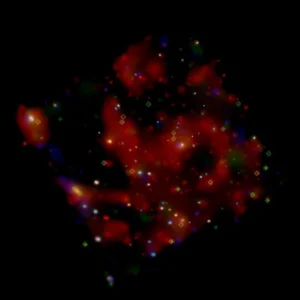
Astronomical discoveries are often associated with new telescopes and groundbreaking technology. In this case, the breakthrough came from revisiting old observations.
Researchers examined years of archived data collected by NASA’s Chandra X-ray Observatory. Instead of searching for bright, powerful X-ray emitters, they focused on the faintest and softest X-ray signals available.
What they found was surprising.
Certain objects appeared clearly in the lowest-energy X-ray images but seemed to vanish when astronomers looked at higher-energy X-rays. This unusual behavior immediately distinguished them from familiar X-ray sources.
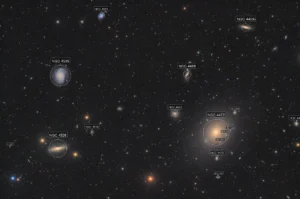
After analyzing six nearby galaxies, researchers identified 84 examples of these objects. They were found in both spiral galaxies such as Andromeda (M31) and the Pinwheel Galaxy (M101), as well as in several elliptical galaxies.
The fact that these sources appeared in different galactic environments suggested they were not isolated anomalies.
Something entirely new seemed to be hiding among the stars.
What Does “Hypersoft” Mean?
To understand why astronomers are excited, it helps to understand how X-ray astronomy works.
X-rays come in different energy ranges. Many well-known cosmic sources emit relatively energetic X-rays that are easy for observatories to detect.
Hypersoft X-ray sources are different.
They emit almost exclusively at the lowest X-ray energies detectable by Chandra. In some cases, they produce little or no radiation at higher X-ray energies. This extreme softness is what earned them their name.
Imagine listening to a symphony where every instrument suddenly disappears except the deepest, faintest notes. That’s essentially what astronomers observed.
Instead of producing a broad range of X-ray energies, these objects seem concentrated at one unusual end of the spectrum.
This behavior is difficult to explain using conventional models.

The Invisible Ultraviolet Connection
The mystery deepens when researchers consider what these X-rays imply.
The lowest-energy X-rays sit next to extreme ultraviolet radiation on the electromagnetic spectrum. Because of this relationship, scientists believe hypersoft X-ray sources may actually be generating enormous amounts of ultraviolet energy.
Unfortunately, ultraviolet radiation presents a major observational challenge.
Hydrogen and helium gas absorb much of this radiation before it can travel across space and reach telescopes. As a result, astronomers have long been partially blind to this region of the spectrum.
The hypersoft X-ray sources may therefore represent an entire population of energetic cosmic objects that remained hidden simply because their primary radiation cannot easily be observed directly.
In other words, astronomers may have discovered only the visible tip of a much larger cosmic iceberg.

Why Scientists Didn’t Find Them Earlier
One of the most intriguing aspects of the discovery is how long these objects escaped detection.
Modern astronomy has mapped countless galaxies and cataloged millions of celestial objects. Yet these sources remained unnoticed for decades.
Several factors contributed to this oversight.
First, the X-rays they emit are extraordinarily soft and difficult for instruments to detect. Second, much of their likely ultraviolet output is absorbed by interstellar gas. Third, many of the objects appear to vary in brightness over time, making them even harder to identify consistently.
Researchers suggest that current observations probably represent only a fraction of the true population.
There may be many more hypersoft X-ray sources waiting to be discovered in nearby galaxies and perhaps even within the Milky Way itself.
So What Are These Things?
At the moment, nobody knows for certain.
That uncertainty is what makes the discovery so compelling.
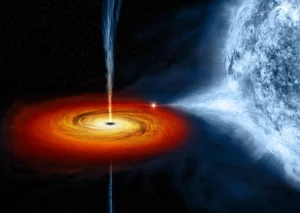
Astronomers believe the objects likely involve compact stellar remnants such as black holes, neutron stars, or white dwarfs interacting with companion stars. Matter pulled from the companion star becomes extremely hot and releases energy before ultimately falling onto the compact object.
The challenge is that none of the standard models fully explain the observed behavior.
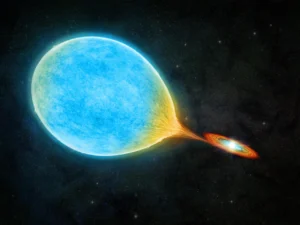
Some researchers suspect that many hypersoft sources may be accreting white dwarfs—dense stellar cores left behind after Sun-like stars die.
Others may involve neutron stars or black holes operating under unusual physical conditions.
The possibility that multiple types of objects are being grouped together under the hypersoft category cannot yet be ruled out.
For now, hypersoft X-ray sources remain one of astronomy’s newest mysteries.
A Possible Link to Type Ia Supernovae
The discovery could have implications far beyond understanding a strange class of X-ray emitters.
One of astronomy’s most important tools is the Type Ia supernova.
These stellar explosions are so consistent in brightness that astronomers use them as “standard candles” to measure cosmic distances. Observations of Type Ia supernovae helped reveal that the expansion of the universe is accelerating, leading to the discovery of dark energy.
Despite their importance, scientists still debate exactly how some Type Ia supernovae ignite.
Hypersoft X-ray sources may offer clues.
If some of these objects involve white dwarfs steadily accumulating matter from companion stars, they could represent systems approaching the conditions necessary for a Type Ia explosion.
By studying hypersoft sources before an explosion occurs, astronomers may finally gain a clearer picture of what triggers these crucial cosmic events.
That alone would make the discovery highly significant.
Solving Another Galactic Puzzle
The implications don’t stop there.
Astronomers have long known that gas between stars often appears more ionized than expected. Ionization occurs when electrons are stripped away from atoms.
This process influences how galaxies evolve and how efficiently they form new stars.
Current models suggest that hot stars contribute significantly to ionizing interstellar gas, but observations indicate they may not provide enough energy to explain everything researchers see.
Hypersoft X-ray sources may help fill the gap.
Their intense ultraviolet output could be providing additional energy capable of ionizing large amounts of gas throughout galaxies.
If confirmed, these objects may represent an important missing piece in understanding galactic ecosystems.
Remarkably Powerful Yet Surprisingly Cool
Another reason scientists find these objects fascinating is their unusual combination of properties.
Many hypersoft sources appear incredibly luminous.
Some radiate hundreds of thousands or even millions of times more energy than the Sun. Their luminosities can rival those of ultraluminous X-ray sources, among the brightest non-nuclear X-ray emitters known.
Yet despite their tremendous energy output, they seem relatively cool compared with most traditional X-ray sources.
This combination of high luminosity and low-energy emission is extremely unusual.
Normally, brighter X-ray sources tend to be hotter.
Hypersoft objects appear to break that expectation.
It is precisely this contradiction that makes them difficult to fit into existing astrophysical frameworks.
The Six Galaxies That Revealed the Secret

The discovery involved six nearby galaxies.
Among them were the famous Andromeda Galaxy and the Pinwheel Galaxy, both spiral galaxies rich in stellar activity. Researchers also found hypersoft sources within several elliptical galaxies containing older stellar populations.
This broad distribution is important.
If the objects appeared only in young star-forming regions, astronomers might assume they were linked to newly formed stars.
If they appeared only in older environments, another explanation would emerge.
Instead, hypersoft X-ray sources exist in both.
That suggests the phenomenon may arise from multiple evolutionary pathways.
The diversity of environments hints that nature may be producing these mysterious objects through more than one mechanism.
Could There Be Thousands More?
Perhaps the most exciting possibility is that the current sample of 84 objects represents only the beginning.
Because hypersoft X-ray sources are difficult to detect, researchers believe many have likely been overlooked.
Future observatories with improved sensitivity at low X-ray energies may reveal hundreds or even thousands more.
Advanced space telescopes could also help scientists directly study the ultraviolet environments surrounding these objects.
As observational technology improves, astronomers may discover that hypersoft X-ray sources are not rare curiosities at all.
They may be among the most common luminous compact systems in nearby galaxies.
If that turns out to be true, astronomy textbooks may need significant revisions.
A Reminder That the Universe Still Surprises Us
Modern astronomy often gives the impression that humanity has mapped the cosmos in extraordinary detail.
Yet discoveries like hypersoft X-ray sources demonstrate how much remains unknown.
These objects were hiding inside some of the nearest and most heavily studied galaxies in the universe.
They were not concealed at the edge of the observable cosmos.
They were effectively hiding in plain sight.
Their existence raises new questions about compact stars, galaxy evolution, ultraviolet radiation, supernova origins, and the overall energy budget of galaxies.
Most importantly, they remind us that scientific progress frequently emerges from unexpected observations.
Researchers were not necessarily looking for a new class of cosmic object.
They simply followed the data.
And the data pointed toward something strange.
The Mystery Is Just Beginning
The discovery of hypersoft X-ray sources may ultimately rank among the most important astrophysical findings of the decade.
At present, scientists know only a few things with confidence: these objects emit unusually low-energy X-rays, likely generate enormous amounts of ultraviolet radiation, and appear in multiple types of galaxies. Beyond that, many questions remain unanswered.
Are they white dwarfs on the brink of catastrophic explosions?
Are they exotic black hole systems operating under unfamiliar conditions?
Could they represent multiple categories of objects that happen to share similar observational signatures?
Astronomers do not yet know.
What they do know is that 84 mysterious objects have forced researchers to rethink parts of high-energy astrophysics.
In a universe filled with black holes, exploding stars, and galaxies spanning billions of light-years, it is remarkable that something entirely new can still emerge from archived observations.
The hypersoft X-ray sources shouldn’t exist according to current expectations.
Yet they do.
And understanding them may reveal some of the universe’s deepest secrets.
