What If Earth's Oceans Suddenly Became Less Salty?
What if every ocean became less salty overnight? Explore how ocean freshening could affect marine life, global currents, ecosystems and Earth's climate.
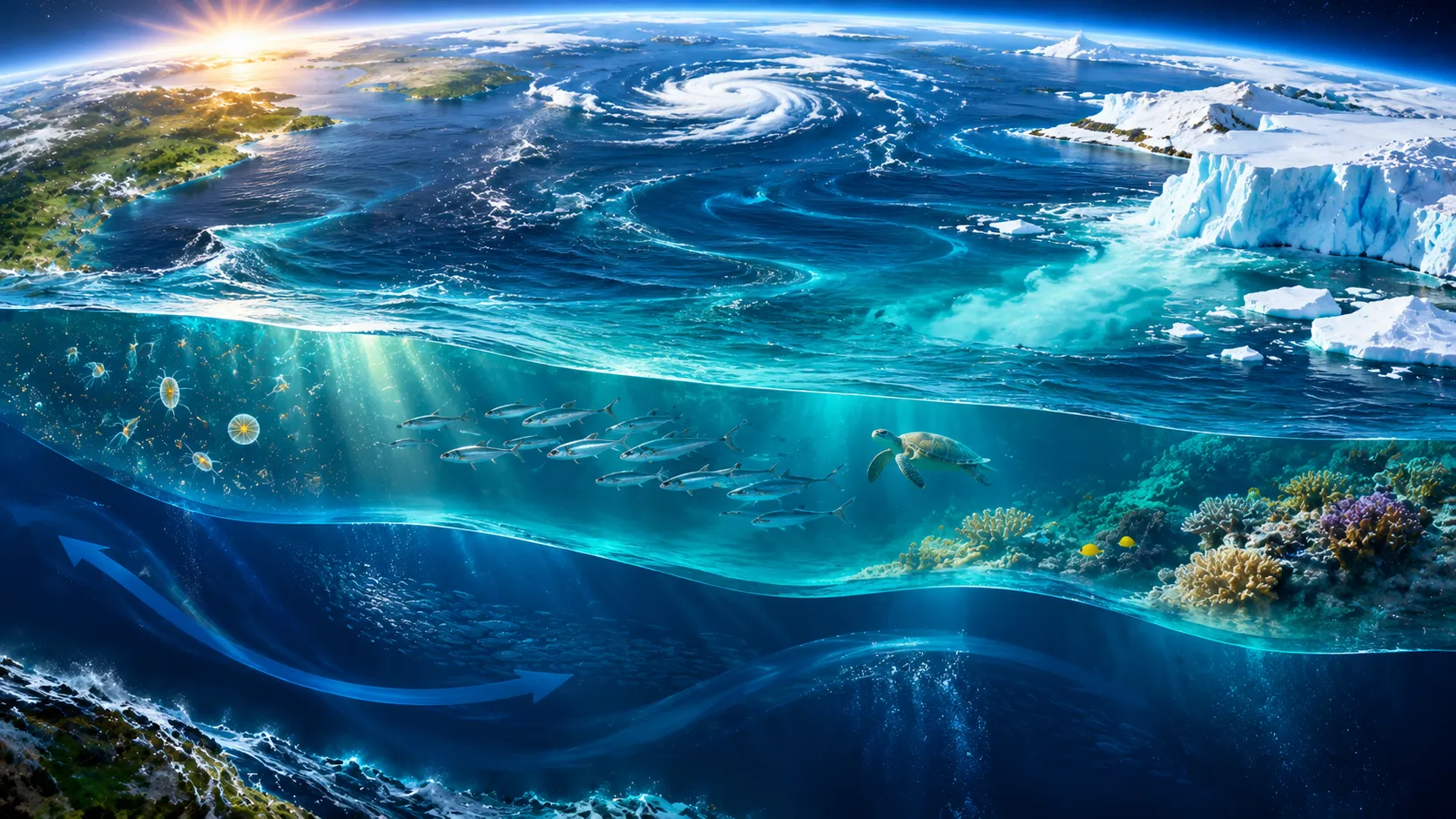
What If Every Ocean on Earth Became Slightly Less Salty Overnight?
An unexpected change in the salt content of Earth's oceans could affect marine life, underwater food chains, ocean currents and even the climate. But how much would have to change before the consequences became noticeable?
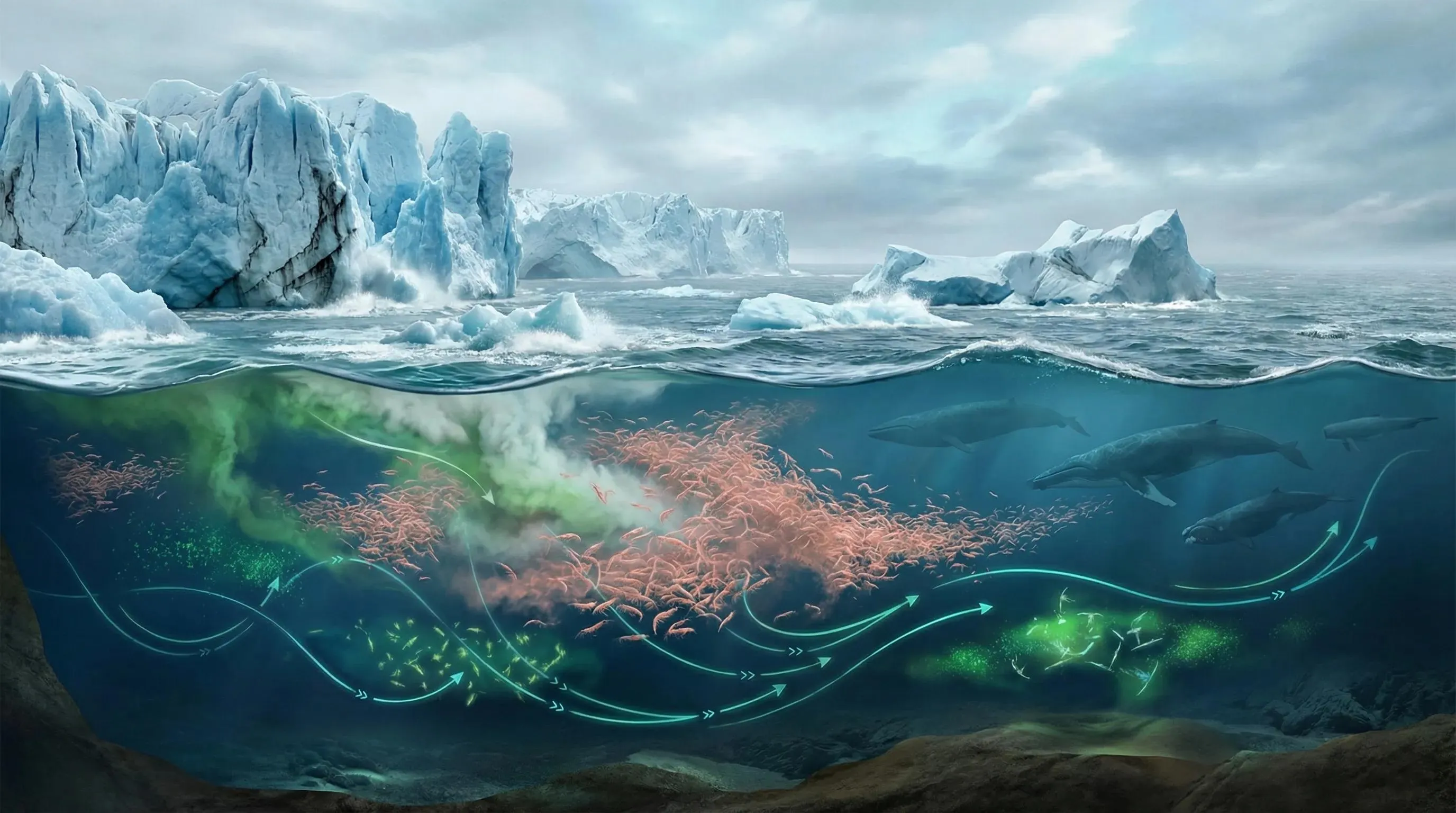
Imagine waking up tomorrow to discover that every ocean on Earth has become slightly less salty. The water still looks blue, waves continue crashing against coastlines and ships travel across the same familiar routes. Nothing appears dramatically different on the surface.
Yet beneath the waves, something important has changed.
The oceans are not simply enormous collections of water. They are carefully balanced chemical and physical systems in which even relatively small changes in salt concentration can influence water density, marine organisms and the movement of heat around the planet.
Salt helps determine how seawater behaves. It affects how easily different water masses mix, how deep water forms in polar regions and how nutrients move through marine ecosystems.
To explore this hypothetical scenario, imagine that the average ocean salinity suddenly falls by 1 per cent, from approximately 35 to 34.65 practical salinity units, with the change occurring relatively uniformly across the oceans.
That would represent an enormous addition of freshwater. It is not a realistic overnight event, but it provides an interesting scientific thought experiment.
The consequences would depend on where the freshwater entered, how quickly it mixed and how marine organisms responded.
And the biggest changes might not be visible from the beach.
Why salt is so important to the world's oceans
Seawater contains dissolved substances, including sodium and chloride ions, along with magnesium, calcium, potassium and sulphate.
Together, these dissolved materials give seawater its characteristic salinity.
The average salinity of the open ocean is approximately 35, although different regions naturally have different concentrations.
For example, areas with intense evaporation can become saltier because water leaves the ocean while most dissolved salts remain behind. Regions receiving heavy rainfall, river discharge or melting ice generally become less salty.
This distribution is not random. It is connected to the global water cycle.
NASA's ocean-observation programme uses measurements of surface salinity to investigate changes in rainfall, evaporation, freshwater runoff and ocean circulation.
Its Salinity Science Overview explains why even relatively small variations in ocean salt concentration provide important information about Earth's changing water cycle.
But salinity does something beyond recording rainfall and evaporation.
It helps determine the density of seawater, alongside temperature and pressure. That density influences how water moves vertically and horizontally through the oceans.
If every ocean suddenly became less salty, the density structure of seawater would change, potentially affecting several interconnected systems.
Ocean currents could begin behaving differently
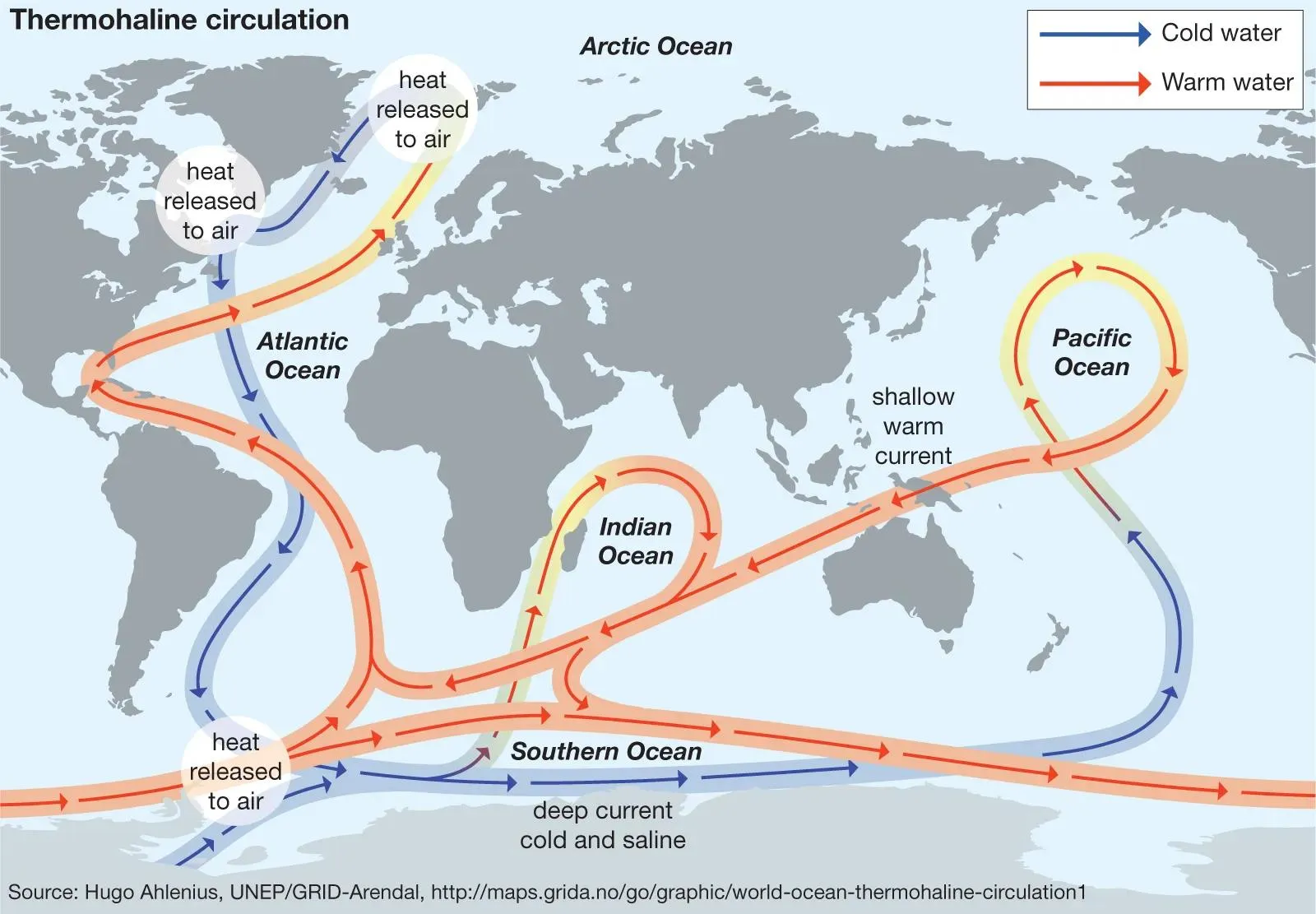
One of the most important consequences could involve the global ocean circulation system.
The ocean contains enormous currents that transport heat, freshwater, oxygen and nutrients between different regions. Some are driven primarily by winds, while others are strongly influenced by differences in temperature and salinity.
This density-driven circulation is commonly called thermohaline circulation.
In the North Atlantic, for example, relatively warm surface water travels northwards. As it releases heat into the atmosphere, it cools. In certain regions, seawater becomes dense enough to sink into the deep ocean, contributing to the formation of deep water masses.
Salt concentration plays an important role in this process.
If the North Atlantic became significantly fresher, its surface water could become less dense than it would otherwise be. Under suitable conditions, this could make sinking more difficult and influence the formation of deep water.
A worldwide reduction in salinity would not necessarily stop ocean circulation. The outcome would depend on regional temperature differences, winds, freshwater distribution and existing circulation patterns.
Nevertheless, changes in salinity could alter the strength and structure of important currents.
The NOAA explanation of ocean circulation describes how temperature and salinity differences help drive the movement of deep ocean water.
Marine animals could face an unexpected survival challenge
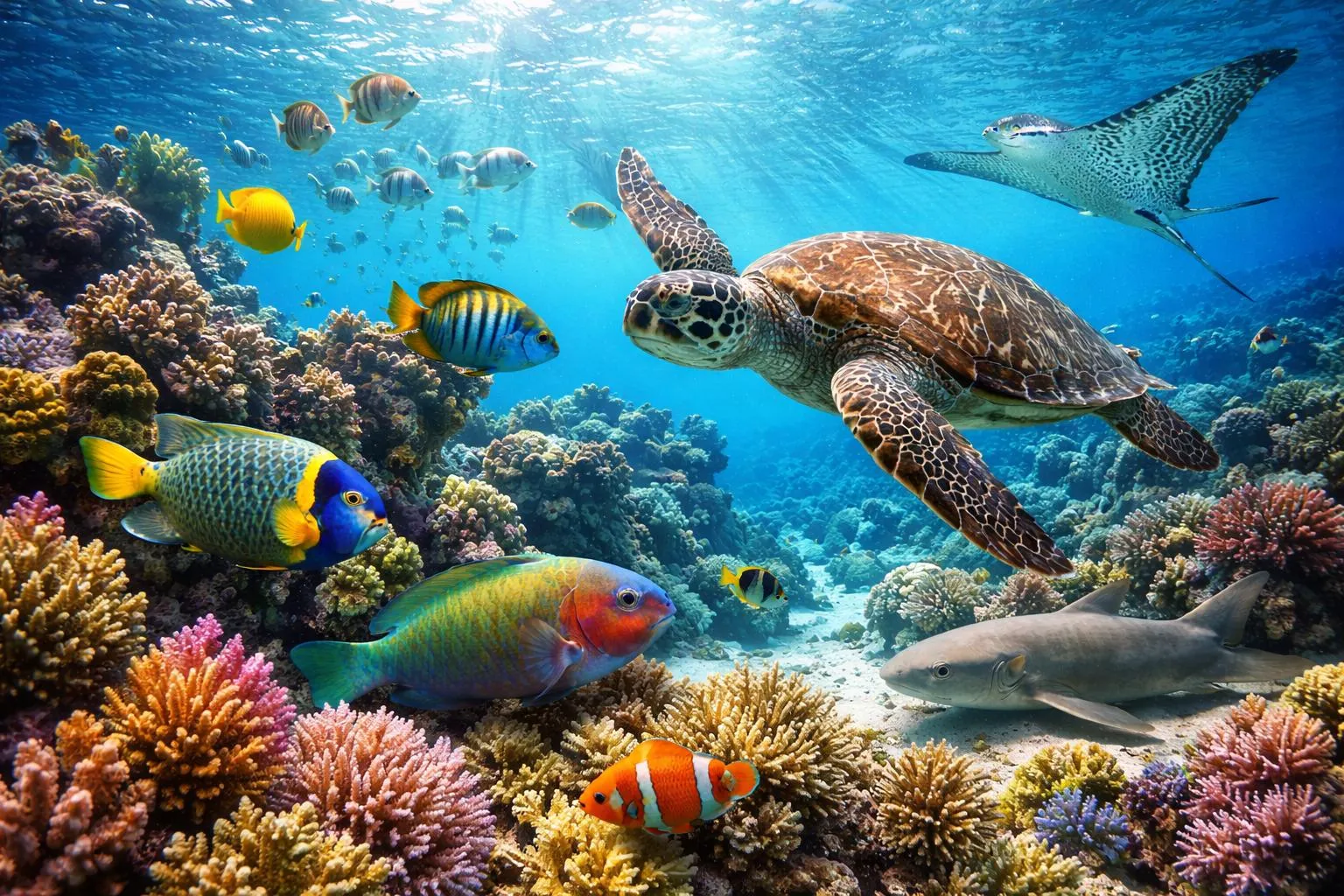
For marine organisms, salt is not just something dissolved in their surroundings. It is part of the environment they have evolved to survive in.
Every aquatic organism must manage the movement of water and dissolved salts across its cell membranes. This process is called osmoregulation.
Fish, for example, have different strategies for maintaining the correct balance of water and salts inside their bodies.
Marine bony fish generally lose water to the surrounding seawater through osmosis. They compensate by drinking seawater and actively removing excess salts through specialised cells in their gills.
If the surrounding ocean suddenly became less salty, the difference between the fish's internal salt concentration and the surrounding water would change.
More water could enter their bodies through osmosis, requiring adjustments in how they regulate fluids and electrolytes.
Some fish species can tolerate considerable changes in salinity. Others are adapted to relatively narrow environmental conditions and may struggle when those conditions change rapidly.
The same challenge could affect shellfish, crustaceans, plankton and other marine organisms.
Research published in Global Change Biology in 2023 examined how human-driven salinity changes influence marine organisms and ecosystems.
The review highlighted that salinity changes can affect physiological functions, biological communities and ecosystem processes, although the consequences vary considerably between species and habitats.
Read the research: Human-Induced Salinity Changes Impact Marine Organisms and Ecosystems.
The most vulnerable organisms would not necessarily be the largest animals. Tiny plankton and early developmental stages of marine species could also be sensitive to sudden environmental changes.
This matters because plankton forms the foundation of many marine food webs.
If certain plankton populations declined, animals that depend on them could experience food shortages. Those effects could potentially spread through larger marine ecosystems.
Coral reefs and coastal ecosystems might experience major changes
Coral reefs are among the most biologically diverse environments on Earth.
Although many reef-building corals can tolerate some natural variation in salinity, they are adapted to relatively specific environmental conditions.
A sudden change in seawater chemistry could place additional stress on corals and the microscopic algae living within their tissues.
These algae, known as zooxanthellae, provide much of the energy corals need through photosynthesis.
The relationship between corals and their symbiotic algae is already vulnerable to rising ocean temperatures, pollution and acidification.
A sudden global salinity change would introduce another environmental disturbance.
However, it is important not to assume that every coral reef would respond in the same way. The severity of the impact would depend on the magnitude of the change, local water conditions and the ability of individual species to adjust.
Coastal ecosystems could face different challenges.
Estuaries, where freshwater rivers meet seawater, naturally experience changing salinity. Organisms living there often possess adaptations that allow them to survive across a wide range of conditions.
A global shift could alter the salinity gradients that determine where certain species live and reproduce.
Some organisms might adapt, while others could be forced to move into more suitable habitats.
Could the global climate become different?
The consequences would not stop beneath the water.
Ocean currents transport enormous amounts of heat around the planet. Changes in the density of seawater can influence how heat moves between the surface and deeper ocean layers.
If a reduction in salinity changed the formation of deep water in important regions, the ocean's ability to redistribute heat could also change.
This might influence regional temperatures, rainfall patterns and atmospheric circulation over longer periods.
The Atlantic Meridional Overturning Circulation, or AMOC, is particularly important in this context.
The AMOC is a large system of ocean currents that transports warm surface water northwards and returns colder, deeper water towards lower latitudes.
Freshwater entering the North Atlantic can reduce surface-water density and influence deep-water formation. Scientists are actively studying how Greenland ice melt, precipitation and other freshwater inputs affect this circulation system.
However, a small uniform decrease in global salinity would not automatically cause the AMOC to collapse.
Ocean circulation is controlled by several interacting forces, including temperature, salinity, winds and mixing. The location and distribution of freshwater would matter enormously.
The IPCC Sixth Assessment Report examines changes in ocean circulation and the influence of freshwater input on the Atlantic overturning system.
The ocean could become more layered, changing nutrient supplies
Another less obvious consequence involves ocean stratification.
Stratification occurs when water forms layers according to differences in density. Lighter water tends to remain above denser water, limiting vertical mixing.
Freshwater is generally less dense than seawater under comparable conditions. If the surface layer became fresher, it could become more difficult for deeper water to mix with it.
This matters because deep ocean water contains nutrients such as nitrate, phosphate and silicate that support marine productivity.
When these nutrients reach sunlit surface waters, microscopic phytoplankton can use them for photosynthesis.
If stronger stratification reduced the upward movement of nutrients in certain regions, phytoplankton growth could change.
That would potentially affect everything from zooplankton populations to fish stocks and larger marine predators.
A 2025 review in Nature Reviews Earth & Environment examined changes in ocean stratification and found that global upper-ocean stratification had increased by approximately 0.8 per cent per decade since the 1960s.
The researchers identified changes in both temperature and salinity, with warming being the dominant driver of the observed global increase.
The findings demonstrate that the ocean's density structure is already changing, even without the hypothetical worldwide salinity shift considered here.
Read the research: Ocean Stratification in a Warming Climate.
Would the oceans eventually return to normal?
The oceans would not necessarily remain in their new state forever.
Earth has several natural processes that continually redistribute freshwater and dissolved salts.
Rainfall, evaporation, river discharge, sea-ice formation, melting glaciers and ocean mixing all influence salinity.
Over time, currents would redistribute the freshwater anomaly. Some regions might become saltier relative to their new starting point, while others could remain comparatively fresh.
The total amount of salt in the oceans would not simply disappear because the water had become diluted.
Much of the dissolved salt would still be present. What would have changed is its concentration relative to the amount of water.
Eventually, geological processes would also continue supplying minerals to the oceans through the weathering of rocks and other natural mechanisms.
However, restoring the previous global salinity distribution would be a much slower and more complicated process than simply waiting for ocean currents to mix the water.
The biggest question: Could marine life survive such a change?
The answer is probably yes, but not without consequences.
Marine organisms have survived substantial environmental changes throughout Earth's history. Some species can tolerate wide variations in salinity, while others depend on remarkably specific conditions.
A sudden global change would remove the opportunity for many organisms to adjust gradually.
The most immediate effects would likely involve changes in osmoregulation, local ecosystem conditions and the physical structure of seawater.
Longer-term consequences could involve altered ocean circulation, nutrient transport, marine productivity and regional climate.
The exact outcome would depend heavily on how much salinity changed and where the freshwater came from.
There is also an important scientific distinction: ocean freshening is already happening in certain regions as a consequence of changes in rainfall, ice melt and freshwater runoff. But that is very different from every ocean experiencing an identical salinity reduction overnight.
The hypothetical scenario helps illustrate how interconnected the oceans really are.
Salt may seem like a small ingredient in an enormous volume of water, but it helps control some of the planet's most important natural systems. Change that balance, and the consequences could reach far beyond the coastline.
What If Dark Matter Is Not a Particle at All? Scientists May Be Searching for the Wrong Thing
Read story →
What If Scientists Could Rebuild an Entire Lost World From a Spoonful of Ancient Soil?
Read story →
What If Time Did Not Exist Before the Universe? The Big Bang Mystery
Read story →