


For decades, dark matter has been one of the biggest mysteries in science. It doesn’t shine, reflect light, or emit radiation. Yet it makes up most of the matter in the universe.
Now, new simulations are raising a startling question:
What if dark matter is slowly collapsing and becoming denser?
If true, this could mean the universe is quietly getting “heavier,” reshaping galaxies and cosmic structures in ways we are only beginning to understand.
What Is Dark Matter, in Simple Terms?
Dark matter is invisible material that scientists believe holds galaxies together. Without it, stars and galaxies would fly apart.
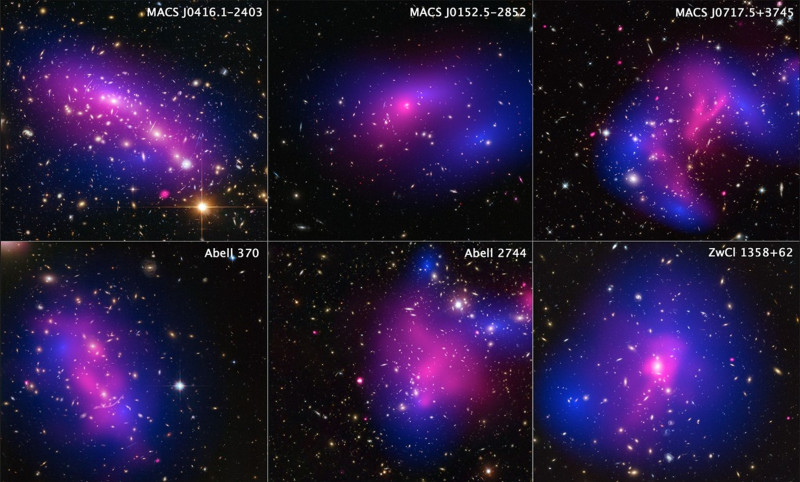
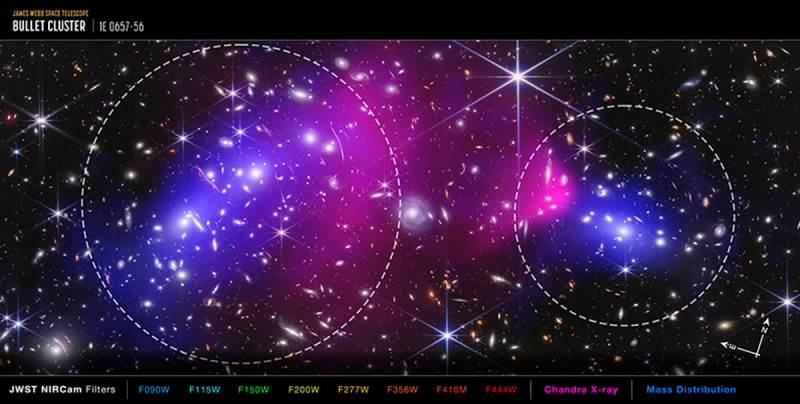
We cannot see dark matter directly. Instead, scientists detect it through gravity—how it bends light and influences the motion of galaxies.
About 85% of all matter in the universe is dark matter, with ordinary matter making up the rest.
The New Simulations That Sparked the Debate
Recently, astrophysicists ran high-resolution simulations of how dark matter behaves over billions of years. These models track how invisible matter clumps together under gravity.
The surprising result:
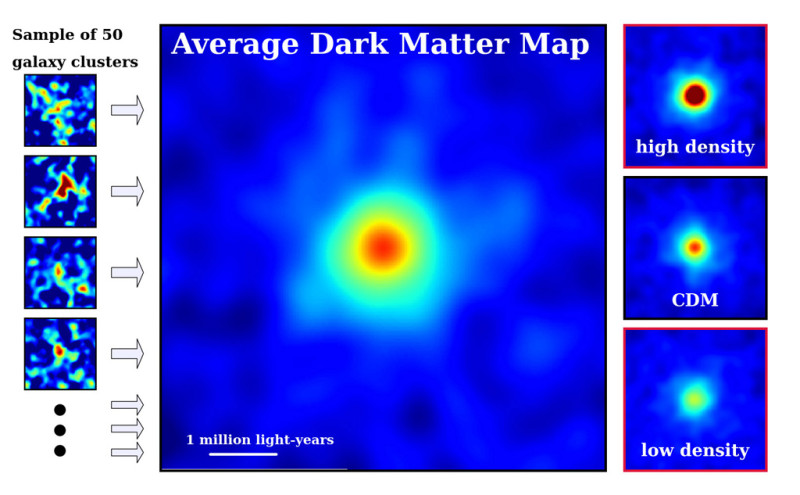
Dark matter halos—the massive clouds surrounding galaxies—appear to grow denser at their centers over time.
Some simulations suggest dark matter may slowly “collapse” into tighter regions, forming heavier and more compact structures.
This does not mean the universe is shrinking. But it does suggest the internal structure of cosmic matter could be changing.
Is the Universe Really Getting Heavier?
The phrase “getting heavier” can be misleading.
The total mass of the universe is not increasing. Instead, matter is redistributing itself. Gravity pulls dark matter into dense clumps, making galaxies and clusters heavier in their cores.
Imagine dust in a room slowly settling into corners. The room doesn’t gain dust, but some areas become more concentrated.
That is what dark matter might be doing on a cosmic scale.
Why Dark Matter Collapse Matters
If dark matter is densifying, it could explain several cosmic puzzles:
1) Galaxy Formation Mysteries
Dense dark matter cores could influence how galaxies form, merge, and evolve.
2) Strange Star Movements
Astronomers have observed stars moving in ways that suggest invisible mass at galactic centers. Denser dark matter could be the reason.
3) Black Hole Growth
Some theories suggest dense dark matter regions could help feed supermassive black holes.
The Cosmic Web and Dark Matter Clumping
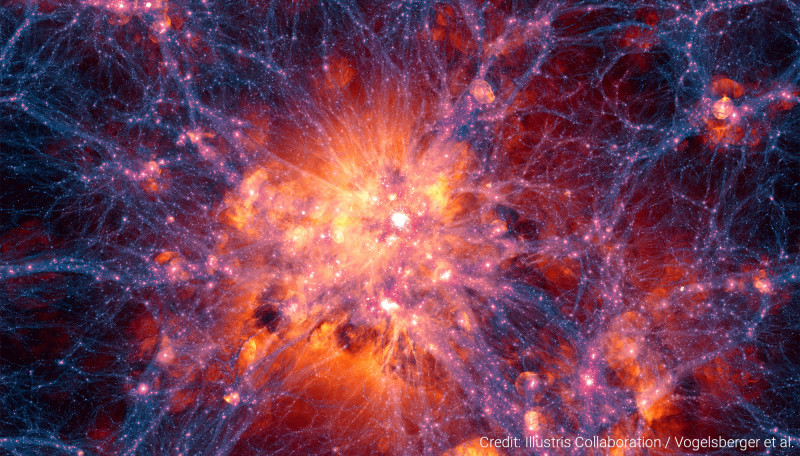
The universe is shaped like a giant cosmic web. Filaments of dark matter connect galaxies like threads in a vast spider web.
Simulations show these filaments becoming thicker and denser over time. This process is driven purely by gravity and cosmic expansion.
Dark matter collapses into knots, forming galaxy clusters that weigh trillions of times more than the Sun.
What Scientists Are Cautious About
Despite exciting simulations, scientists warn that models are not reality.
Dark matter’s true nature is still unknown. It could be made of exotic particles, or something entirely different.
Some theories suggest dark matter might interact with itself. If so, it could clump more strongly than expected. Other models suggest it behaves almost like a ghost, passing through itself without interaction.
Until direct detection happens, everything remains theoretical.
Could This Affect Earth or Our Galaxy?
Short answer: No immediate danger.
Even if dark matter densifies, the process happens over billions of years. Changes would be too slow to affect planets, stars, or life.
However, understanding dark matter density helps scientists predict the Milky Way’s future and how galaxies collide.
The Bigger Question: What Is Dark Matter Made Of?
Scientists have proposed many candidates:
-
Weakly interacting massive particles (WIMPs)
-
Axions
-
Sterile neutrinos
-
Exotic fields or unknown particles
Large experiments on Earth and in space are searching for dark matter particles. So far, none have been confirmed.
Simulations like these help narrow down which theories make sense.
Why This Story Matters Now
Dark matter research is entering a new era. Massive telescopes, gravitational wave detectors, and cosmic surveys are mapping the universe with unprecedented detail.
If simulations are correct, future observations could reveal denser dark matter regions in galaxies and clusters.
This would reshape our understanding of how the universe evolved from the Big Bang to today.
What Happens Next
Scientists plan to:
-
Compare simulations with real telescope data
-
Study dark matter behavior in galaxy centers
-
Test theories of self-interacting dark matter
-
Use gravitational lensing to map invisible mass
The next decade could finally reveal what dark matter really is.
FAQs
What is dark matter collapse?
It refers to dark matter becoming more concentrated in certain regions due to gravity, not an actual collapse of the universe.
Is the universe getting heavier?
The total mass is not increasing, but matter is becoming more concentrated in some areas.
Can dark matter affect Earth?
No. Dark matter interactions with normal matter are extremely weak, and changes happen over billions of years.
How do scientists study dark matter if it is invisible?
They use gravitational effects, galaxy movements, cosmic background radiation, and simulations.
When will we detect dark matter directly?
Scientists hope to detect dark matter particles within the next few decades, but no confirmed detection exists yet.
Thoughts
The universe is not static. It is evolving in ways we are only beginning to understand.
If dark matter is slowly densifying, it could rewrite our understanding of galaxies, cosmic structure, and the fate of the universe.
For now, these simulations are a glimpse into an invisible world that shapes everything we see.
And they remind us that the universe may be far stranger—and heavier—than we ever imagined.
Reference Sources (Proof of Research & Incidents)
-
NASA – Dark matter overview and galaxy structure research
-
European Space Agency – Cosmic structure formation and dark matter studies
-
Nature Astronomy – Dark matter halo simulations and density profiles
-
Physical Review Letters – Research on self-interacting dark matter models
-
Harvard-Smithsonian Center for Astrophysics – Galaxy rotation and dark matter distribution
-
Millennium Simulation Project – Large-scale cosmic structure simulations
-
Scientific American – Articles on dark matter density and cosmic evolution