


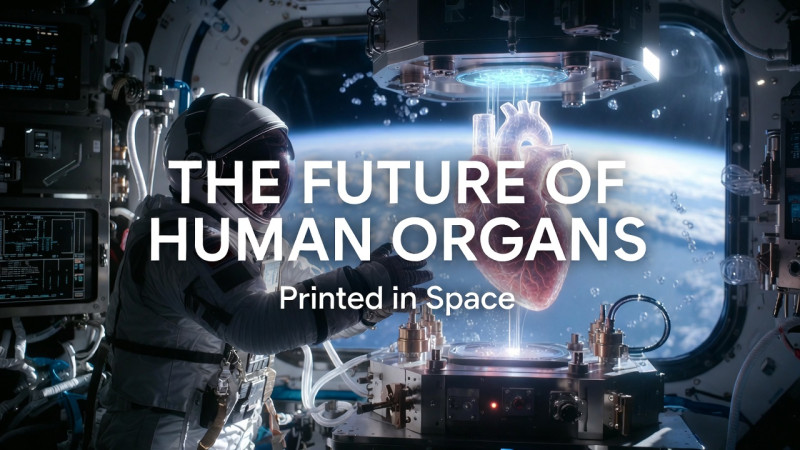
Imagine a future where no one dies waiting for an organ transplant. No donor lists. No rejection issues. No black-market organs. Just a printer that builds a heart, kidney, or liver on demand.
Now imagine that this printer is not on Earth—but floating in space.
This is not science fiction. Scientists are already printing human tissue in microgravity. And if someone figures out how to scale it, they may unlock one of the largest industries in history.
The world’s next trillionaire might not come from tech, oil, or artificial intelligence. They might come from space manufacturing.
Why Print Human Organs in Space?
On Earth, gravity is a problem.
When scientists try to print soft human tissue, gravity makes it collapse, flatten, or deform. Blood vessels are especially hard to create because they collapse under their own weight.
In space, gravity disappears.
Cells float freely, forming natural 3D structures that look more like real organs. This makes space an ideal laboratory for growing complex tissues.
Researchers say microgravity allows larger and more realistic tissues to form without scaffolding, opening doors to creating entire organs.
The First Human Tissues Are Already Being Printed in Space
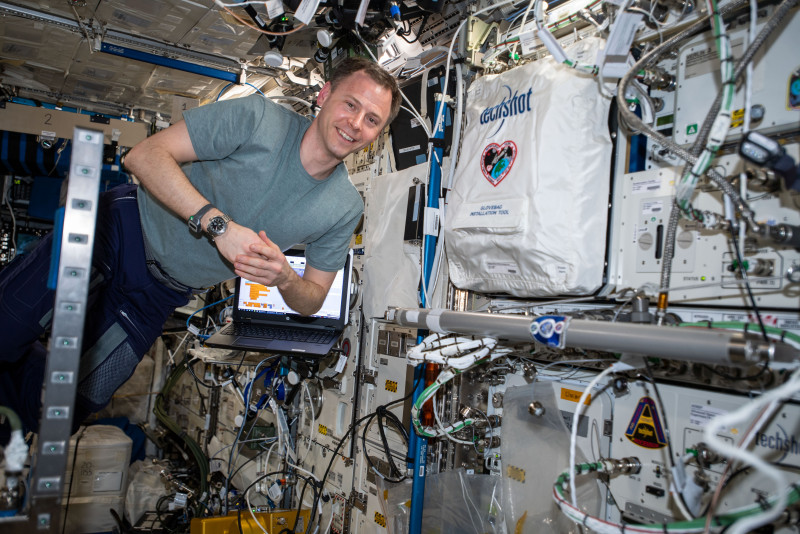
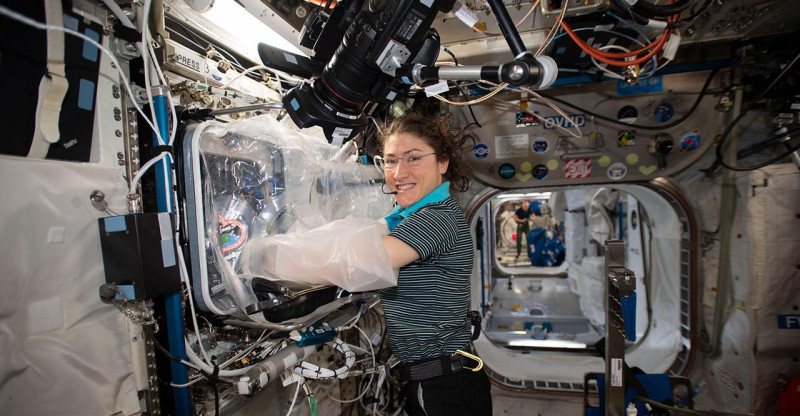
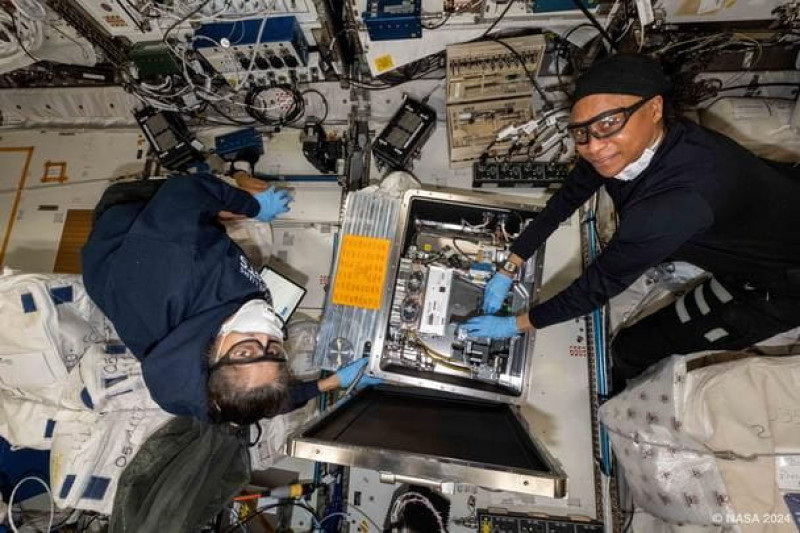
The International Space Station is already home to a special machine called the BioFabrication Facility. It prints tissue using living cells mixed with nutrients.
Scientists have printed heart tissue, knee cartilage, and nerve implants in orbit. The long-term goal is to print full human organs for transplants.
One experiment even printed a full-sized human meniscus in space, then returned it to Earth for study.
More recently, researchers successfully printed human muscle tissue in microgravity, pushing closer to functional organ manufacturing.
The Global Organ Shortage Crisis
Right now, millions of people worldwide need organ transplants. Many die before a donor is found.
Even when organs are available, the body may reject them. Matching donors is complex and expensive.
Bioprinting organs using a patient’s own cells could solve this. It could eliminate rejection and create organs on demand.
That alone could create a multi-trillion-dollar healthcare market.
Why Zero-Gravity Makes Better Organs
Gravity changes everything.
On Earth:
-
Soft tissues sag or collapse
-
Blood vessels are hard to shape
-
Structures need artificial scaffolding
In space:
-
Cells naturally form 3D structures
-
Tissue shapes stay stable
-
Complex vascular networks become easier to grow
Scientists say microgravity removes many physical constraints that limit tissue engineering on Earth.
This is why space could become the ultimate factory for human biology.
The Rise of Space Manufacturing
Space manufacturing is not just about organs. Companies and space agencies are experimenting with making:
-
Optical lenses
-
Drugs
-
Semiconductors
-
Advanced materials
But human organs could become the most valuable product ever made in orbit.
Unlike metals or crystals, organs save lives. That makes them priceless.
The Business Case: Why This Could Create a Trillionaire
Think about the economics:
-
The global transplant market is worth hundreds of billions today.
-
Personalized organs could multiply that market many times.
-
Space-made organs could be patented, regulated, and sold globally.
Whoever controls the platform, patents, and production could dominate global healthcare.
A single breakthrough company could become bigger than any tech giant.
The Challenges No One Talks About
Printing organs in space is not easy.
Major obstacles include:
-
Transporting bioprinters and materials to orbit
-
Keeping tissues alive during printing
-
Returning organs safely to Earth
-
Regulatory approval for human use
-
Ethical concerns about commercialization
Scientists admit that printing whole functional organs is still many years away, but research is advancing rapidly.
The Space Economy Connection
Governments and private companies are investing heavily in space stations, private orbital labs, and space factories.
The idea is simple: space offers unique conditions impossible on Earth.
If manufacturing moves to orbit, the person who controls medical production in space could control the future of medicine.
What Happens Next
In the coming decade, scientists expect:
-
More complex tissues printed in orbit
-
Artificial blood vessels and liver structures tested
-
Space labs dedicated to medical manufacturing
-
Commercial companies offering space-made biomedical products
The dream of printing a full human heart in space is closer than ever.
FAQs
What is space bioprinting?
It is a process of using living cells as ink to print tissues or organs in microgravity.
Have human organs been printed in space?
Not full organs yet, but human tissues like muscle, cartilage, and heart structures have been printed.
Why do it in space instead of Earth?
Microgravity allows tissues to form naturally without collapsing, making realistic organ structures possible.
How long before space-made organs reach hospitals?
Experts say it could take decades, but early breakthroughs are happening now.
Could this really create a trillionaire?
If someone commercializes organ manufacturing in space, they could dominate a massive global healthcare industry.
Final Thoughts
The next industrial revolution may not happen on Earth. It may happen in orbit.
When the first company prints a functioning human organ in space and brings it safely back to Earth, history will change. Medicine, economics, and human life expectancy could all be transformed.
And the person who makes it happen might become the richest human in history—not by selling gadgets, but by printing life itself.
Reference Sources (Proof of Incidents & Research)
-
NASA – 3D Bioprinting research overview (ISS Research)
-
ISS National Laboratory – BioFabrication Facility meniscus printing announcement
-
Space.com – Human muscle tissue printed in microgravity
-
ISS National Lab – Tissue engineering and regenerative medicine research overview
-
Wake Forest Institute for Regenerative Medicine – Liver and kidney tissue sent to ISS
-
Drug Discovery News – Bioprinting tissues in space for medical breakthroughs