


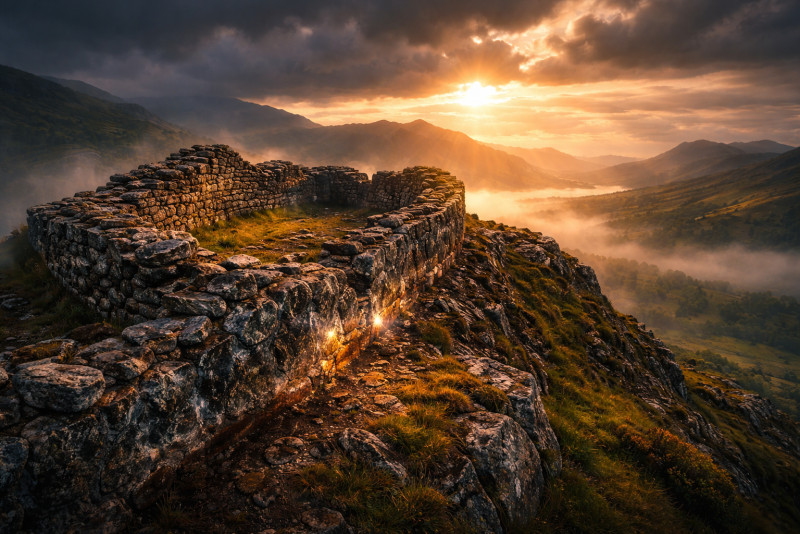
The Vitrified Forts of Scotland: When Stone Walls Turned to Glass
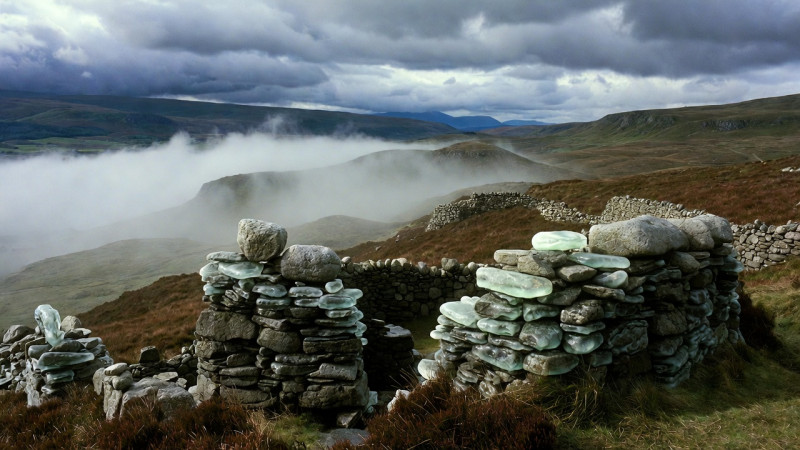
High on Scotland’s windswept hills, ancient ruins stand in eerie silence. At first glance, they look like ordinary stone forts built by Iron Age tribes. But look closer, and you’ll see something impossible: the stones are fused together, melted into glassy masses, as if the walls were exposed to volcanic heat.
These are the vitrified forts of Scotland, and they are among the strangest archaeological mysteries in Europe.
For over 250 years, scientists, historians, and explorers have tried to explain how ancient people could melt entire fort walls—without modern technology.
What Are Vitrified Forts?
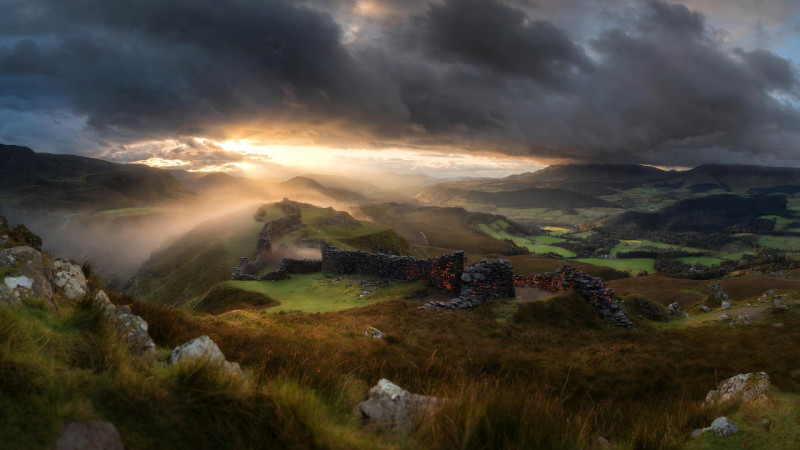
A vitrified fort is a prehistoric stone fortress where the walls have been partially melted and fused together by intense heat. When stone is heated to extremely high temperatures, minerals inside it melt and form glass-like material. This process is called vitrification.
More than 60 confirmed vitrified forts exist in Scotland, with many more across Europe. They are usually found on hilltops, where ancient people built strong defensive settlements.
Some walls are only slightly fused, while others look like solid blocks of glassy rock. The mystery is not that they burned—but why they burned.
The Discovery That Shocked Archaeology
The first detailed descriptions of vitrified forts appeared in 1777, when scholars began studying strange melted ruins in the Scottish Highlands. Since then, over 70 sites have been identified across Scotland, including famous locations like Craig Phadrig, Dunagoil, and Dunnideer.
These forts date mostly to the Bronze Age and Iron Age, roughly between 900 BCE and 900 CE.
What makes them so fascinating is that the walls were not just burned—they were burned so intensely that stone melted, something that requires temperatures above 1,000°C.
How Did Ancient People Melt Stone Walls?
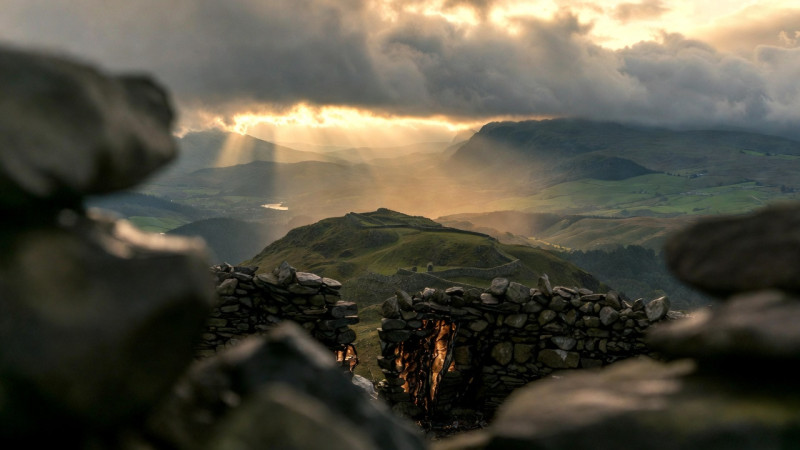
Archaeologists believe the walls were built with timber beams inside stone ramparts. When the timber burned, the heat could reach extreme levels, melting the surrounding rock and fusing it together.
When the fire cooled, the walls hardened into glassy stone blocks.
It would have taken massive amounts of wood, careful planning, and long-burning fires. This was not an accident—it was a major event.
The Biggest Mystery: Why Did They Do It?
This is where the debate begins.
Theory 1: Strengthening the Fort
Early researchers believed people melted the walls to make them stronger.
But modern studies show vitrification actually weakens stone, making it brittle. So this theory is mostly rejected today.
Theory 2: Destruction After War
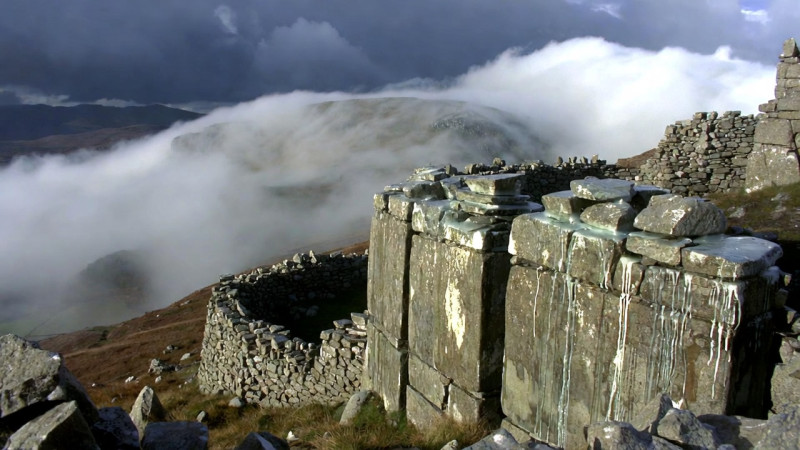
Many archaeologists think the forts were burned during attacks or deliberately destroyed after being captured.
Burning a fort could symbolize victory or prevent enemies from using it again.
This explanation fits many sites, but not all.
Theory 3: Ritual or Ceremonial Burning
Some experts believe vitrification was part of a ritual closing ceremony when a settlement was abandoned.
Imagine an entire community gathering to burn their fort as a symbolic ending. It would have been dramatic and unforgettable.
Theory 4: Accidental Fires
Another possibility is accidental burning from timber structures catching fire.
But the intense heat required makes accidental fires unlikely in most cases.
Where Are These Forts Found?
Scotland has some of the most famous vitrified forts in the world.
Notable Sites
-
Craig Phadrig near Inverness
-
Dunagoil on the Isle of Bute
-
Dunnideer in Aberdeenshire
-
Tap o’ Noth in Aberdeenshire
-
Ord Hill near North Kessock
Many are positioned on strategic hills with panoramic views, showing they were important defensive centers.
Are Vitrified Forts Unique to Scotland?
For a long time, scholars thought these strange forts existed only in Scotland. But later discoveries found similar sites in Ireland, Germany, France, and Central Europe.
Still, Scotland has the highest concentration, making it the global hotspot for vitrified fort research.
The Wild Theories and Myths
Because vitrified forts look so unusual, they have inspired wild speculation.
Some fringe theories claim:
-
Ancient people used unknown technology to melt stone
-
Lightning storms vitrified the walls
-
Ancient advanced civilizations or lost knowledge were involved
However, archaeologists strongly reject these ideas. There is no evidence of ancient super-technology or mysterious weapons.
The most accepted explanation is controlled burning using timber and massive fuel.
Why Scientists Still Study These Forts
Even today, vitrified forts remain an active research topic. Modern geologists analyze melted stone to understand temperatures, materials, and construction methods.
New studies suggest local geology affected how easily walls vitrified, meaning some forts were more likely to melt than others.
These ruins are not just mysterious—they are windows into ancient engineering, warfare, and ritual life.
The Human Story Behind the Melted Walls
Imagine living in an Iron Age fort on a Scottish hill.
One day, your community decides to abandon it. Maybe enemies are coming. Maybe resources are gone. Maybe beliefs have changed.
Then, the walls are set on fire. Flames roar for days. Stones glow red-hot. Timber collapses. When the smoke clears, the fort has turned into a fused monument.
This wasn’t just destruction. It was history written in fire.
FAQs About the Vitrified Forts of Scotland
What does “vitrified” mean?
Vitrified means turned into glass-like material by intense heat.
How old are Scotland’s vitrified forts?
Most date from the Bronze Age to the early medieval period, around 900 BCE to 900 CE.
Did ancient people intentionally melt the walls?
Most experts believe the burning was deliberate, possibly for destruction or ritual purposes.
Are vitrified forts dangerous to visit?
Many are ruins and safe to visit, but the fused stones can be fragile, so caution is advised.
Are there vitrified forts outside Scotland?
Yes, similar sites exist across Europe, but Scotland has the largest number.
Final Thoughts: Scotland’s Castles of Fire
The vitrified forts of Scotland are among the most dramatic relics of ancient Europe.
They stand as silent witnesses to firestorms that reshaped stone and history itself.
Were they burned in war? In ceremony? Or by accident?
The truth may vary from site to site, and that is what makes them fascinating.
These forts remind us that ancient people were not passive villagers—they were builders, warriors, and ritualists capable of engineering spectacles that still confuse scientists centuries later.
And as long as those glassy stones sit on Scottish hills, the mystery will continue to burn in our imagination.
References & Source Links
-
Wikipedia – Vitrified Fort overview and list of sites
https://en.wikipedia.org/wiki/Vitrified_fort -
National Geographic – Scientific explanation of vitrification
https://www.nationalgeographic.com/history/article/160303-archaeology-history-forts-vitrification -
University of Stirling Research Thesis on Scottish hillfort vitrification
https://dspace.stir.ac.uk/bitstream/1893/31667/1/Dolan%20thesis%202020.pdf -
Aberdeenshire Council Archaeology Resource on vitrified forts
https://www.aberdeenshire.gov.uk/leisure-sport-and-culture/archaeology/special-archaeology-in-the-area/vitrified-forts/ -
Amusing Planet Historical Feature
https://www.amusingplanet.com/2019/08/the-vitrified-forts-of-scotland.html