


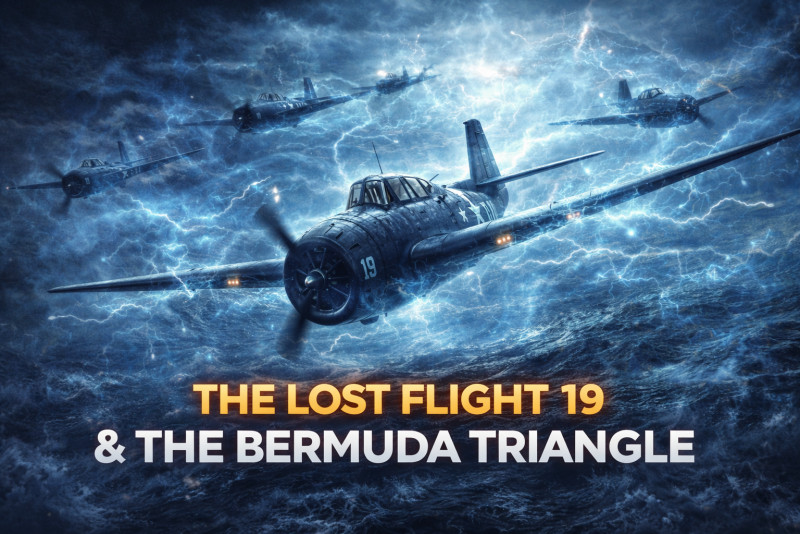
On a clear afternoon in December 1945, five US Navy torpedo bombers took off from Fort Lauderdale for a routine training run. It was supposed to be a "navigation problem"—a simple triangular flight over the Bahamas and back. But within hours, the calm Florida skies turned into a nightmare of static, spinning compasses, and panicked radio calls.
"We cannot be sure of any direction," the flight leader’s voice crackled through the speakers. "Everything is wrong... strange... the ocean doesn't look as it should."
By nightfall, all five planes—and a rescue flying boat sent to find them—had vanished without a single trace. No debris, no oil slicks, no bodies. This is the story of Flight 19, the incident that birthed the legend of the Bermuda Triangle, and the chilling theory of the "Magnetic Fog" that some believe is still out there, waiting.
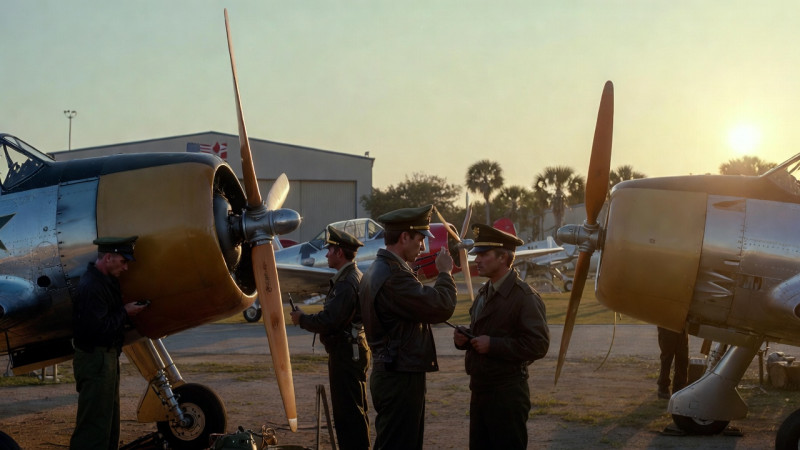
The Mission: A Routine Flight Into Oblivion
It was December 5, 1945. World War II had ended months prior. The fourteen men of Flight 19 were flying TBM Avenger bombers, rugged machines built to survive combat. Their leader, Lt. Charles Taylor, was an experienced pilot with over 2,000 flight hours.
The plan was simple: fly east for 56 miles to conduct a bombing run at Hens and Chickens Shoals, continue east for another 67 miles, turn north, and then fly back southwest to base. But somewhere after that first turn, the "science" of navigation broke down.
Taylor’s compasses stopped working. He became convinced he was over the Florida Keys—hundreds of miles from his actual position over the Bahamas. Despite the younger pilots in his squadron urging him to fly west toward the mainland, Taylor led his team further and further into the vast, open Atlantic.
The "Electronic Fog" Theory: Science or Supernatural?
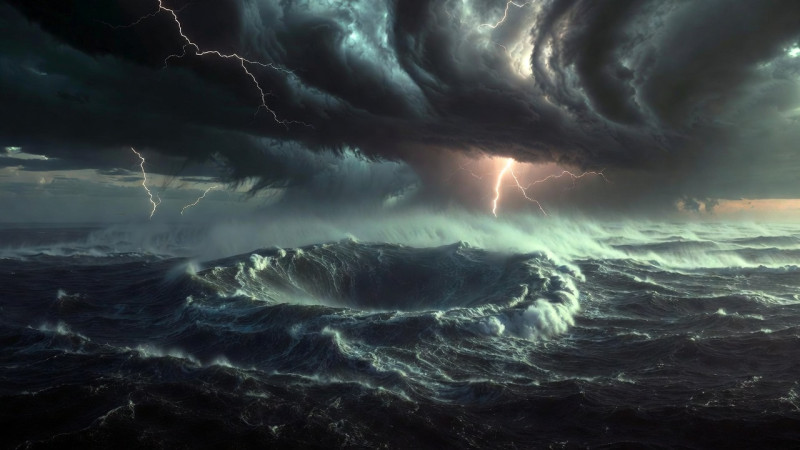
While the Navy officially blamed "pilot error" and compass failure, a more terrifying theory emerged years later, popularized by pilot Bruce Gernon. He coined the term "Electronic Fog" after his own harrowing 1970 encounter in the same region.
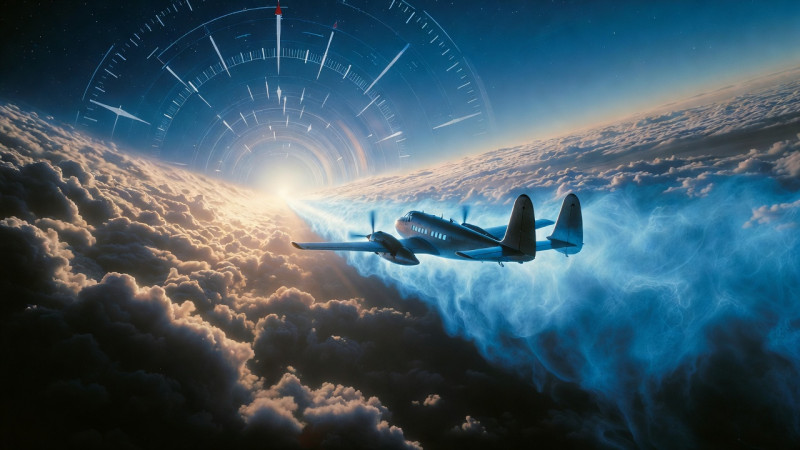
Gernon described flying through a "tunnel" of clouds that seemed to wrap around his plane like a physical entity. Inside this fog, his electronic instruments went haywire—his compass spun, his radio failed, and his GPS (later in his career) showed impossible readings. Most shockingly, Gernon claimed to have traveled 100 miles in just a few minutes, a feat that should have been physically impossible for his aircraft.
-
Magnetic Anomalies: Scientists know that the Bermuda Triangle is one of the few places on Earth where "true north" and "magnetic north" line up. This can cause sudden, confusing compass swings.
-
Atmospheric Static: Some theorists suggest that under specific weather conditions, the air becomes so charged with static electricity that it creates a "fog" that sticks to the metal skin of an airplane, effectively blinding its radar and communication systems.
If Flight 19 flew into a massive bank of this "magnetic fog," it would explain why Taylor’s compasses failed and why he felt the ocean "looked different." In his final radio transmissions, he mentioned "entering white water" and being "completely lost."
The Vanishing Rescue: The PBM Mariner
The mystery deepened when the Navy launched one of the largest air-and-sea searches in history. A Martin PBM Mariner flying boat, carrying 13 men, took off to find the lost squadron. Within 20 minutes, it too disappeared from radar.
A tanker in the area reported seeing a "fireball" in the sky at the exact time the Mariner went missing. While the Navy suspected a mid-air fuel explosion (the Mariner was known as a "flying gas tank" because of its tendency to leak fumes), the fact that six planes and 27 men vanished on a single day without a single piece of wreckage being found remains one of the most haunting facts in aviation history.
FAQs: The Flight 19 Enigma
1. Was any wreckage ever found? No. Despite searching over 300,000 square miles of ocean, not a single scrap of metal, life vest, or oil slick from Flight 19 or the PBM Mariner was ever recovered. This is extremely unusual for a ditching involving five aircraft.
2. Could "Ocean Flatulence" be the cause? One scientific theory suggests Methane Hydrate eruptions. Huge bubbles of methane gas can burst from the seafloor, instantly lowering the density of the water (sinking ships) and potentially stalling aircraft engines if the gas reaches the sky. However, there’s no geological evidence of a massive eruption on that specific day in 1945.
3. Why did the pilots follow Lt. Taylor if he was lost? Military discipline played a major role. Even though some junior pilots radioed that they should fly west, they were trained to follow their flight leader. By the time they finally turned west, they were likely too far out at sea and had run out of fuel.
4. What is the "White Water" Taylor mentioned? Some believe he was seeing the shallow sandbars of the Bahamas, which can look like "white water" from above. Others suggest it was a description of the sea state as a storm moved in, or perhaps the visual effect of the "Magnetic Fog" itself.
5. Is the Bermuda Triangle still dangerous today? Statistically, no. The number of disappearances in the region is not significantly higher than in any other heavily traveled part of the ocean. However, the unique magnetic properties and sudden, violent storms of the Gulf Stream continue to catch inexperienced pilots off guard.
The Final Takeaway: A Lesson in Human and Machine
Whether it was a tragic cascade of human errors or a brush with a rare atmospheric anomaly like "Electronic Fog," Flight 19 remains the gold standard of aviation mysteries. It serves as a chilling reminder that even with our best technology, we are still at the mercy of a vast and often unpredictable planet.
The ocean doesn't give up its secrets easily—and in the case of the "Lost Patrol," it hasn't given up anything at all.
Disclaimer: This article explores historical events and scientific theories regarding the disappearance of Flight 19. While the "Electronic Fog" theory is popular in fringe science, the official US Navy position remains that the incident was likely caused by navigational error and fuel exhaustion in deteriorating weather conditions.
Reference Links & Sources
-
National Archives: The Official Record and the Loss of Flight 19
-
Smithsonian Magazine: How the Disappearance of Flight 19 Fueled the Legend of the Bermuda Triangle
-
Naval History and Heritage Command: The Loss of Flight 19 FAQ
-
Live Science: The Science of the Bermuda Triangle: Methane Bubbles and Rogue Waves