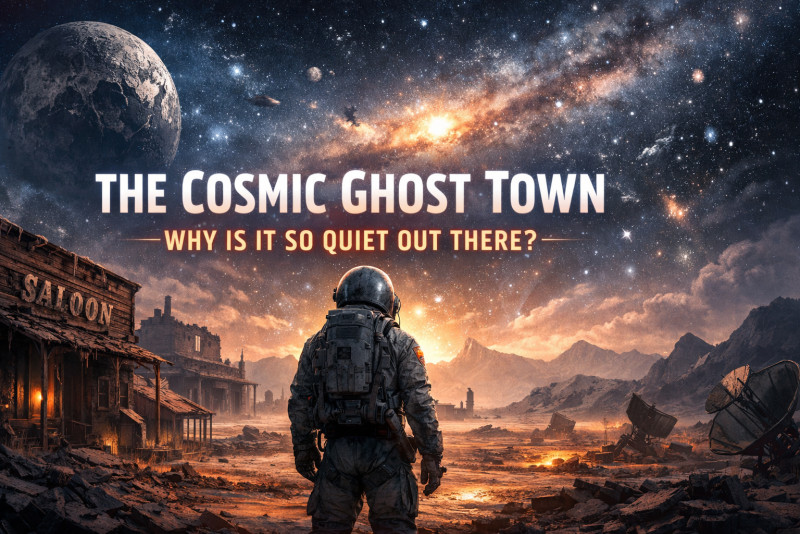
The Cosmic Ghost Town: Why Is It So Quiet Out There?
Have you ever stepped outside on a perfectly clear night, looked up at the billions of shimmering lights, and felt that sudden, prickling chill down your spine? It’s not just the cold. It’s the realization of the scale. There are an estimated 2 trillion galaxies in the observable universe. In our galaxy alone, there are up to 400 billion stars. Mathematically, the universe should be a crowded, noisy, neon-lit party of galactic civilizations.
But instead, we get nothing. No radio signals. No Dyson spheres. No "Hello, neighbor" postcards. Just a cold, deafening void.
This isn't just a curiosity for people in lab coats; it’s a terrifying existential puzzle known as the Fermi Paradox. If life is a natural byproduct of the universe, where is everyone? The answer might lie in a concept that sounds like a sci-fi horror movie title: The Great Filter. And if the theory of the "Silence of the Dead" holds true, humanity might be walking straight into a brick wall we never saw coming.
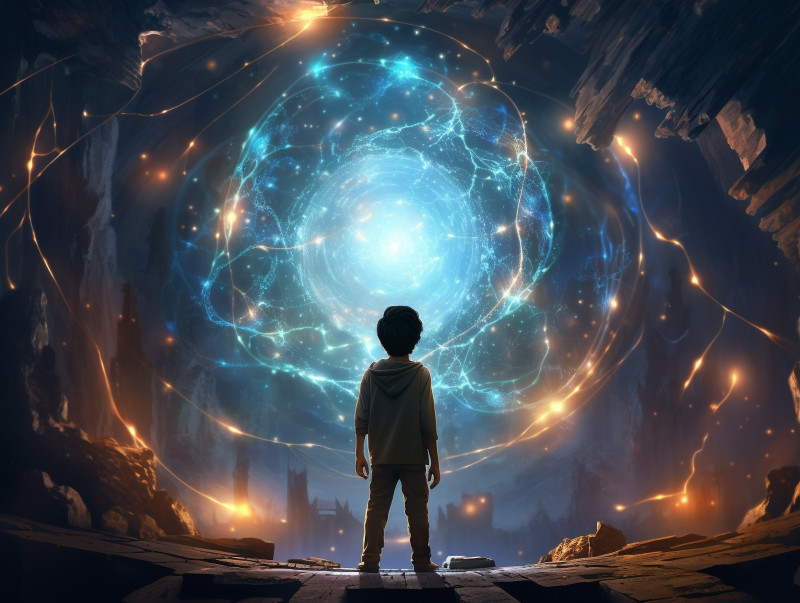
What Exactly is the Great Filter?
Imagine the evolution of life as a high-stakes obstacle course. To go from a puddle of organic "soup" to a space-faring empire, a species has to clear a dozen impossible hurdles.
-
The Spark: Non-living matter becomes a simple cell.
-
The Complexity: Simple cells become complex ones (eukaryotes).
-
The Teamwork: Single cells become multicellular organisms.
-
The Brains: Evolution favors big, tool-using brains.
-
The Tech: A species masters fire, then electricity, then the atom.
-
The Leap: Leaving the home planet to colonize the stars.
The Great Filter is the idea that at least one of these steps is so impossibly hard—so fundamentally lethal—that almost no one survives it. It’s the cosmic "You Shall Not Pass."
The Two Scary Scenarios
The big question for us—the only ones currently talking in this empty room—is: Where is the Filter?
-
Scenario A: The Filter is Behind Us. Maybe we are the "lucky ones." Perhaps the jump from single cells to complex life is so rare it only happened here. If the Filter is in our past, we are the first to make it through. The universe is ours for the taking.
-
Scenario B: The Filter is Ahead of Us. This is the one that keeps astronomers awake. If life is common, but advanced life is nowhere to be seen, it means civilizations hit a wall shortly after reaching our current level of technology.
If Scenario B is true, the "Silence of the Dead" isn't just a lack of signal; it’s a graveyard. The stars aren't quiet because they are empty; they’re quiet because everyone who reached our stage… disappeared.
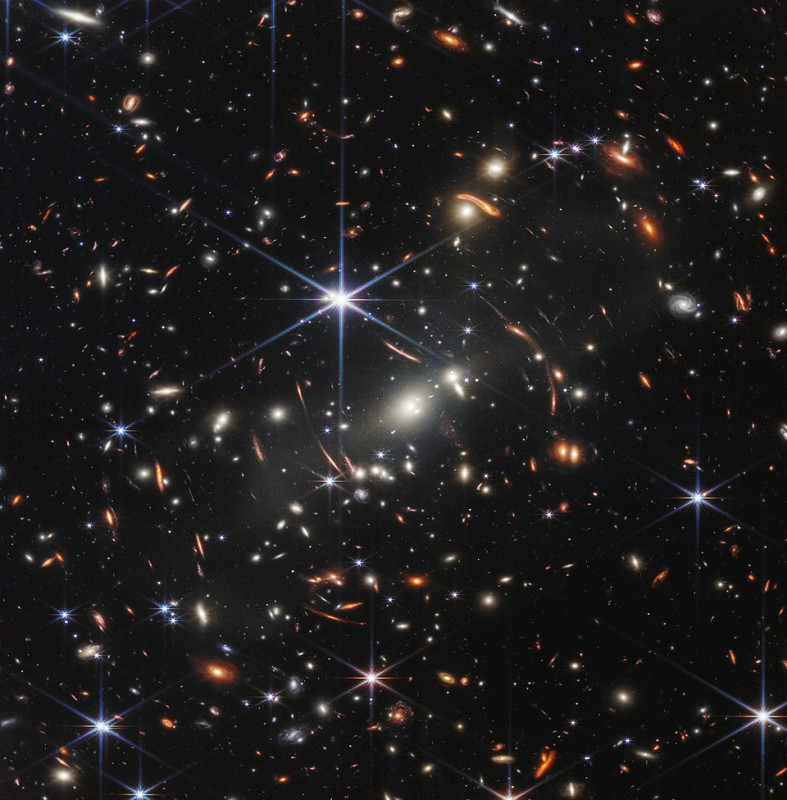
The "Silence of the Dead": Are We Looking at a Graveyard?
When we point our telescopes at distant suns, we are essentially looking back in time. We see thousands of planets that could host life. But the silence is heavy. This led to the chilling nickname: The Silence of the Dead.
The theory suggests that technological advancement carries the seeds of its own destruction. Think about it: in just the last 100 years, we’ve developed the power to split the atom, engineer viruses, and create Artificial Intelligence that could outthink us in a heartbeat.
We are like a toddler who just found a loaded handgun in the toy box. We have the "God-like" power to create and destroy, but we still have the "monkey-like" instincts of tribalism, greed, and short-sightedness.
Important Note: This article is for informational and speculative purposes regarding astrobiological theories. It does not predict a literal "doomsday" but explores the scientific and philosophical implications of the Fermi Paradox.
The Candidates for Our "Final Exam"
If the Great Filter is indeed ahead of us, what does it look like? Scientists have a few "favorites" (if you can call them that) for what might be wiping out civilizations before they can leave their solar systems:
1. The AI Singularity
As we approach 2026, the talk of Artificial General Intelligence (AGI) isn't just hype. A common theory is that once a species creates an intelligence greater than its own, it loses control. If every civilization eventually builds a "Great Filter" in the form of a super-intelligent machine that doesn't share its creator's values, it explains why no biological life survives long enough to colonize the galaxy.
2. Climate Collapse or Resource Exhaustion
Any civilization needs energy. If the transition from "dirty" energy (fossil fuels) to "clean" energy (nuclear fusion or advanced solar) takes too long, the species might wreck its own nest before it can fly away. We might be seeing a "universal bottleneck" where planets simply overheat before the inhabitants can build a ticket out.
3. Nuclear or Biological Suicide
Maybe it’s just too easy to destroy ourselves. As technology becomes cheaper, the ability for a small group of people to create a planet-killing bioweapon or trigger a nuclear winter increases. If this is a universal truth, the "Silence of the Dead" is simply the result of civilizations blowing themselves up the moment they get the chance.
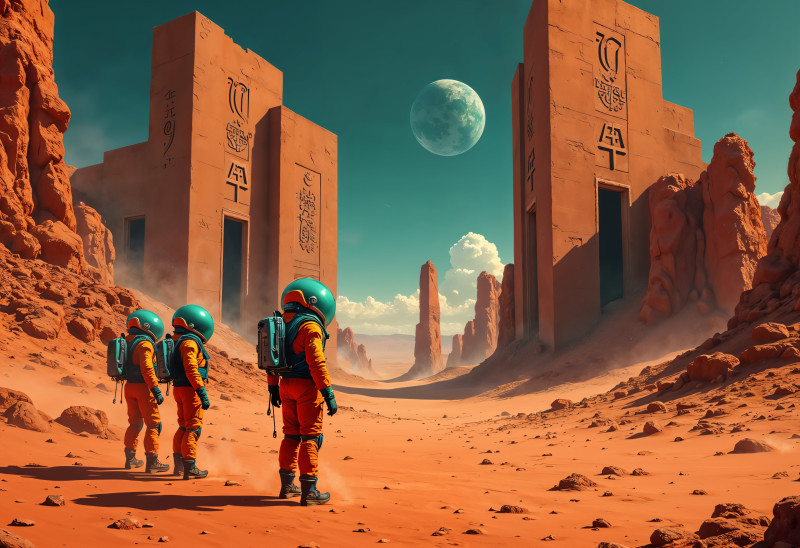
Why Finding Life on Mars Would Actually Be Bad News
This sounds counterintuitive, right? We’ve spent billions looking for a "smoking gun" of life on Mars or Europa. But according to the Great Filter theory, finding life elsewhere would be the worst news in human history.
If we find complex fossils on Mars, it proves that life starting up and evolving isn't that hard. It means the Filter isn't behind us. It means the "Wall" is still waiting for us in the future.
As philosopher Nick Bostrom famously said, "The silence of the night sky is golden... in the search for extraterrestrial life, no news is good news." If we find that the universe is teeming with simple life, it implies that the "deadly part" is still to come.
Is There Hope? Can We Break the Filter?
It’s not all doom and gloom. The Great Filter is a probability, not a destiny. For the first time in Earth’s 4.5 billion-year history, a species—us—is aware of the Filter. We can see the pitfalls.
-
Multi-planetary Living: Becoming a two-planet species (Mars and Earth) makes us much harder to kill. An asteroid or a local war wouldn't be the end of the story.
-
Technological Stewardship: If we can manage the transition to AI and advanced energy without losing our humanity, we might be the first ones to break through to the other side.
The "Silence of the Dead" might just be a call to action. It’s a reminder that our survival isn't guaranteed. We are in a race between our wisdom and our power.
FAQ: Your Questions About the Great Filter
Q: Is the Great Filter proven science?
A: No, it is a scientific hypothesis used to explain the Fermi Paradox. It’s a logical framework, but we haven't found definitive proof of "filters" on other planets yet.
Q: Does this mean aliens don't exist?
A: Not necessarily. It might mean they exist but don't live long enough to communicate, or they are "staying quiet" to avoid detection (another theory called the Dark Forest).
Q: How close are we to the Great Filter?
A: If the filter is "technological self-destruction," we are likely in the thick of it right now. The next century will probably decide if humanity survives the "Final Exam."
Q: Why would AI be a filter? A: Because an intelligence that evolves at the speed of light could quickly outpace biological evolution, potentially viewing its creators as a resource to be used or a threat to be removed.
The Verdict: The Stars are Waiting
The universe is a vast, beautiful, and terrifyingly empty place. Whether we are the first to make it through the gauntlet or the next to join the "Silence of the Dead" depends entirely on what we do in the next few decades.
We are the authors of our own story. Let’s make sure it’s a long one.