.png)
.png)
.png)
.png)
.jpg)
For decades, rumors of secret UFO files hidden inside government archives have fascinated the public.
Now those rumors are colliding with reality.
In early 2026, U.S. President Donald Trump ordered federal agencies to begin releasing classified documents related to UFOs, extraterrestrial life, and unidentified aerial phenomena (UAP). The directive instructed the Pentagon and other departments to identify and prepare files for public disclosure.
The announcement immediately reignited one of the most controversial scientific debates of the modern era.
What exactly do governments know about UFOs?
And more importantly, will the newly released files finally answer the question humanity has asked for generations: Are we alone?

But while many people expected a historic revelation, the scientific community — especially researchers connected to the Search for Extraterrestrial Intelligence (SETI) — has reacted with caution, skepticism, and in some cases frustration.
The reason is simple.
The truth behind UFO files may be far more complicated than most people expect.
Why the 2026 UFO Declassification Happened
The push for transparency around UFO sightings has been building for years.
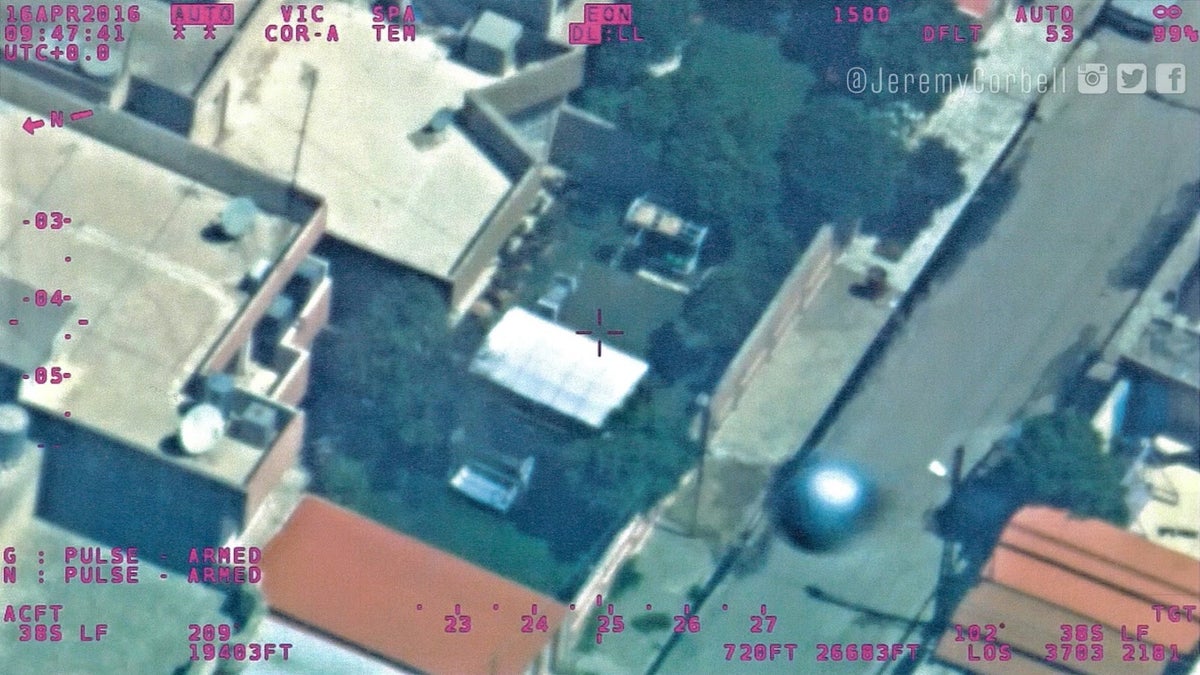
Public interest surged after U.S. Navy pilots recorded several encounters with mysterious aerial objects in the 2000s and 2010s, footage that was later released by the Pentagon.
Since then, governments have acknowledged that some sightings involve unidentified aerial phenomena that remain unexplained.
Congress responded by creating official programs to investigate these incidents.
One of those programs is the All-domain Anomaly Resolution Office (AARO), established to collect and analyze reports of unusual aerial encounters involving military personnel.
Despite hundreds of reports, investigators have repeatedly stated that no confirmed evidence of extraterrestrial technology has been found.
Still, public curiosity has continued to grow.
Trump’s 2026 order appears to be an attempt to respond to that curiosity.
The president said the decision was driven by “tremendous public interest” in UFOs and unexplained aerial sightings.

What Might Actually Be Inside the Files
The phrase “UFO files” often brings to mind dramatic images — alien spacecraft, secret crash retrieval programs, or evidence of extraterrestrial visitors.
But scientists say the reality is likely to be far more mundane.
Most UFO reports historically fall into several categories:
-
misidentified aircraft
-
atmospheric phenomena
-
weather balloons
-
drones or experimental military technology
-
sensor errors
Investigations have shown that many mysterious sightings eventually receive ordinary explanations once more data becomes available.
Still, not every case is easily solved.
A small percentage of encounters remain unexplained, which is why governments continue studying them.
Those unresolved cases are the ones likely to draw the most attention when the files are released.

The Debate Inside the SETI Community
While the public often connects UFO sightings directly with alien visitors, scientists studying extraterrestrial intelligence approach the issue very differently.
The SETI community focuses on searching for signals from distant civilizations, such as radio transmissions or unusual astronomical phenomena.
From their perspective, UFO sightings in Earth’s atmosphere are not strong evidence of alien life.
Many researchers worry that the intense attention surrounding UFO disclosures could distract from serious scientific work.
Some scientists argue that sensational claims about alien spacecraft risk undermining credible research into extraterrestrial intelligence.
Others, however, believe that the release of government files could provide valuable data.
Even if the sightings are not extraterrestrial, the information may help scientists understand unknown atmospheric physics or advanced aerospace technologies.
This disagreement is one reason the UFO disclosure debate is dividing the scientific world.
The Long History of Government UFO Investigations
The United States has been studying UFO sightings for more than seventy years.
Several official programs have examined unexplained aerial phenomena.
One of the earliest was Project Blue Book, a Cold War investigation run by the U.S. Air Force.
Later programs continued the research under different names.
In the early 2000s, the Pentagon funded the Advanced Aerospace Threat Identification Program (AATIP), which studied unusual aerial encounters reported by military personnel.
Although the program ended in 2012, reports of mysterious aerial objects continued to emerge.
These sightings eventually led to the creation of newer investigative offices and congressional hearings.
Each program has produced thousands of pages of reports, which are now part of the growing archive of government UFO records.
Whistleblowers and Controversial Claims
One reason UFO files attract so much attention is the involvement of whistleblowers.
In recent years, several former government officials have claimed that secret programs exist to recover and study unidentified craft.
One of the most widely discussed figures is former intelligence officer David Grusch, who alleged that the U.S. government possesses recovered non-human spacecraft.
Government agencies have repeatedly denied those claims, stating that no such programs exist and that no extraterrestrial technology has been confirmed.
These competing narratives — whistleblower claims versus official statements — have fueled intense speculation.
The upcoming document releases may shed more light on these disagreements.
The Cultural Obsession With UFO Disclosure
The idea that governments might be hiding alien secrets has become a major cultural phenomenon.
Books, documentaries, and television programs regularly explore the possibility of a decades-long cover-up.
A recent documentary film titled “The Age of Disclosure” features interviews with military officials and advocates who argue that governments possess hidden evidence of extraterrestrial technology.
Critics say many of these claims lack verifiable proof.
But the popularity of the disclosure movement shows how deeply the UFO mystery has captured the public imagination.
What Scientists Actually Expect to Learn
Many researchers believe the declassified files will likely contain a mixture of information.
The documents may include:
-
military radar data
-
pilot encounter reports
-
intelligence analyses
-
photographs or sensor recordings
-
historical investigation records
While some files may contain unusual observations, scientists caution against expecting dramatic revelations.
One member of a NASA advisory panel noted that no known observations require the explanation of alien visitors.
That does not mean the files are unimportant.
They may provide valuable insights into aerospace safety, surveillance technology, and atmospheric science.
Why Transparency Matters
Even if the documents do not reveal alien spacecraft, the release of UFO files still matters.
Transparency can help reduce speculation and conspiracy theories.
When information remains classified for decades, people naturally begin to imagine what might be hidden.
By releasing the files, governments may help build public trust in scientific investigations.
The data could also encourage collaboration between scientists, military analysts, and aerospace engineers.
Understanding unexplained aerial phenomena is important not just for science, but also for national security.
The Mystery That Remains
Despite decades of research, one fact remains clear.
Humanity still does not know whether intelligent life exists elsewhere in the universe.
Astronomers have discovered thousands of planets orbiting distant stars, and many of them may have conditions suitable for life.
But no confirmed evidence of extraterrestrial technology has ever been found.
The 2026 UFO file releases may add new pieces to the puzzle.
But the deeper mystery of the universe will likely remain.
For now, the search for answers continues — in observatories, laboratories, and perhaps inside newly opened government archives.
Important Scientific Disclaimer
The declassification of UFO or UAP files does not mean governments have confirmed the existence of extraterrestrial life.
Most scientific investigations have concluded that the majority of reported sightings have conventional explanations.
The purpose of releasing these documents is to increase transparency and allow independent researchers to analyze historical records.
As of now, no confirmed evidence exists that UFO sightings represent alien spacecraft visiting Earth.
FAQs
What are UFO files?
UFO files are government records related to sightings of unidentified aerial phenomena reported by military personnel, radar systems, or civilians.
Why is the U.S. government releasing UFO files in 2026?
President Donald Trump ordered federal agencies to begin identifying and releasing records due to strong public interest in UFOs and extraterrestrial life.
Has the government confirmed aliens exist?
No. Official investigations have not found evidence that UFO sightings involve extraterrestrial technology.
What is the SETI community?
SETI stands for the Search for Extraterrestrial Intelligence. Scientists in this field look for signals from alien civilizations using radio telescopes and other scientific tools.
Could UFO sightings still represent unknown technology?
Yes. Some unexplained sightings may involve experimental aircraft, atmospheric phenomena, or sensor errors.
Reference Sources
https://apnews.com/article/bafe648c8e8dfc7de1a1e90db8a1dfd0
https://time.com/7380751/us-government-ufo-alien-files-release-hegseth-update
https://www.scientificamerican.com/article/trumps-order-to-release-evidence-for-aliens-obscures-the-scientific-search/
https://www.ndtv.com/world-news/tremendous-interest-us-president-donald-trump-orders-release-of-files-on-aliens-ufos
https://en.wikipedia.org/wiki/All-domain_Anomaly_Resolution_Office
https://en.wikipedia.org/wiki/Advanced_Aerospace_Threat_Identification_Program
https://en.wikipedia.org/wiki/David_Grusch_UFO_whistleblower_claims
https://en.wikipedia.org/wiki/The_Age_of_Disclosure