.png)
.png)
.png)
.png)
.jpg)
For most people, the Sun is simply the bright star that lights up our days and keeps life on Earth warm. Yet scientists who study space weather know that the Sun also has a far more violent side. Hidden beneath its glowing surface are powerful magnetic forces capable of unleashing enormous bursts of energy. When those eruptions are directed toward Earth, they can trigger events known as solar storms.
Most solar storms pass without much notice. Occasionally they produce stunning auroras across northern skies or cause brief disruptions to radio communications. However, there is another category of solar activity that worries scientists far more. These rare but powerful events are called solar superstorms, and experts believe that one strong enough could temporarily cripple modern technological systems across the planet.
The frightening reality is that humanity has already experienced such an event once before. The difference is that the last time it happened, the world did not rely on electricity, satellites, and digital networks the way it does today.

The Day the Sun Attacked Earth
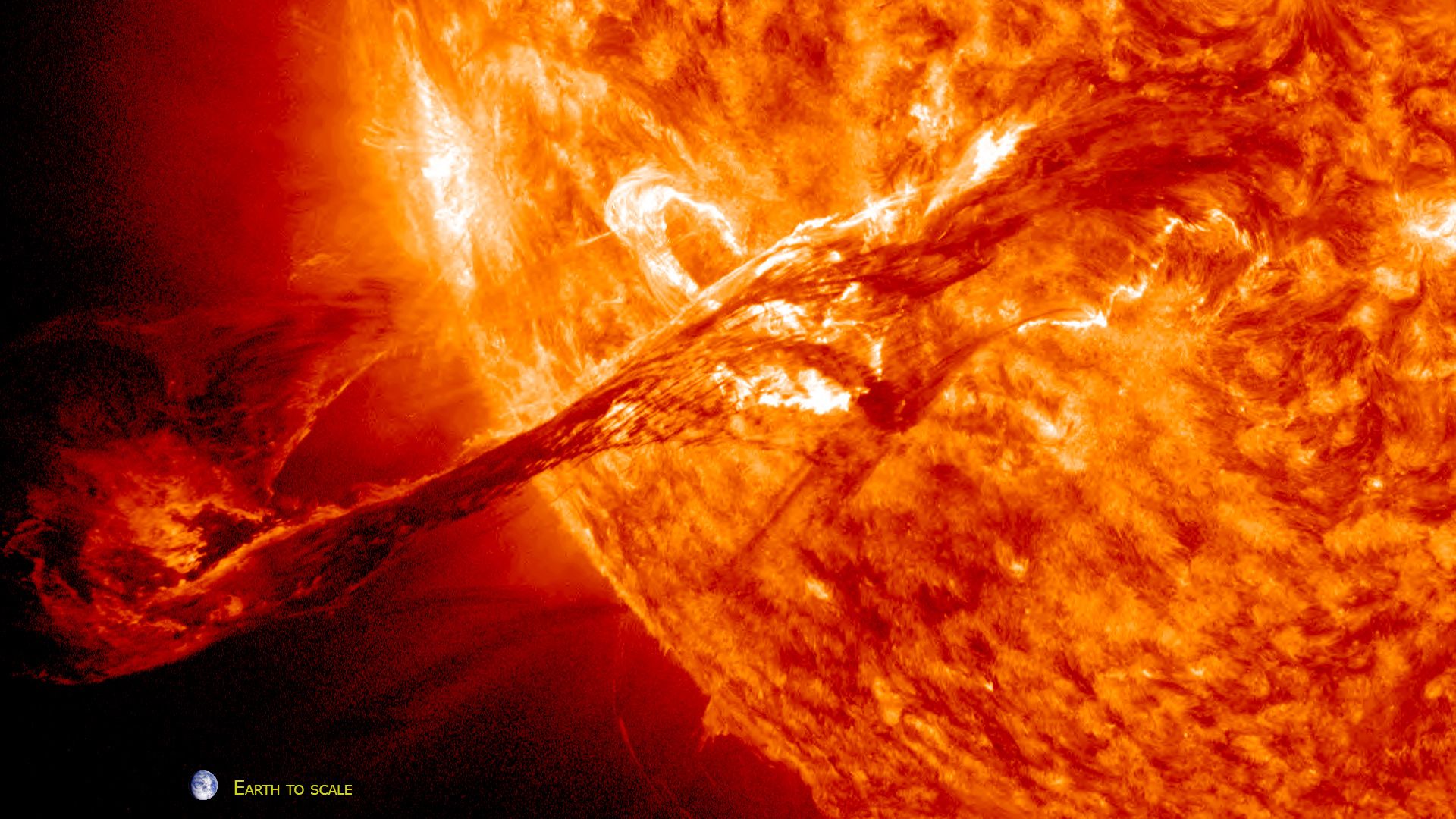
In September 1859, a British astronomer named Richard Carrington was observing the Sun when he noticed a sudden flash of light on its surface. Within hours, a massive wave of charged particles struck Earth’s magnetic field.
What followed was unlike anything people had seen before. Brilliant auroras filled the skies across North America and Europe. Witnesses reported red and green lights glowing so brightly that some people believed cities were on fire in the distance. In certain regions the auroras were so intense that newspapers could be read outdoors at night.
But the strange lights were only the beginning.
Telegraph systems, which were the most advanced communication technology of that era, began malfunctioning around the world. Operators reported receiving electric shocks from their equipment. Sparks jumped from telegraph lines, and in several cases telegraph stations caught fire.
This historic event later became known as the Carrington Event, and it remains the strongest solar storm ever recorded in human history.
At the time, the damage was limited because electrical infrastructure barely existed. If the same level of solar activity occurred today, the consequences could be far more severe.
Why the Modern World Is So Exposed
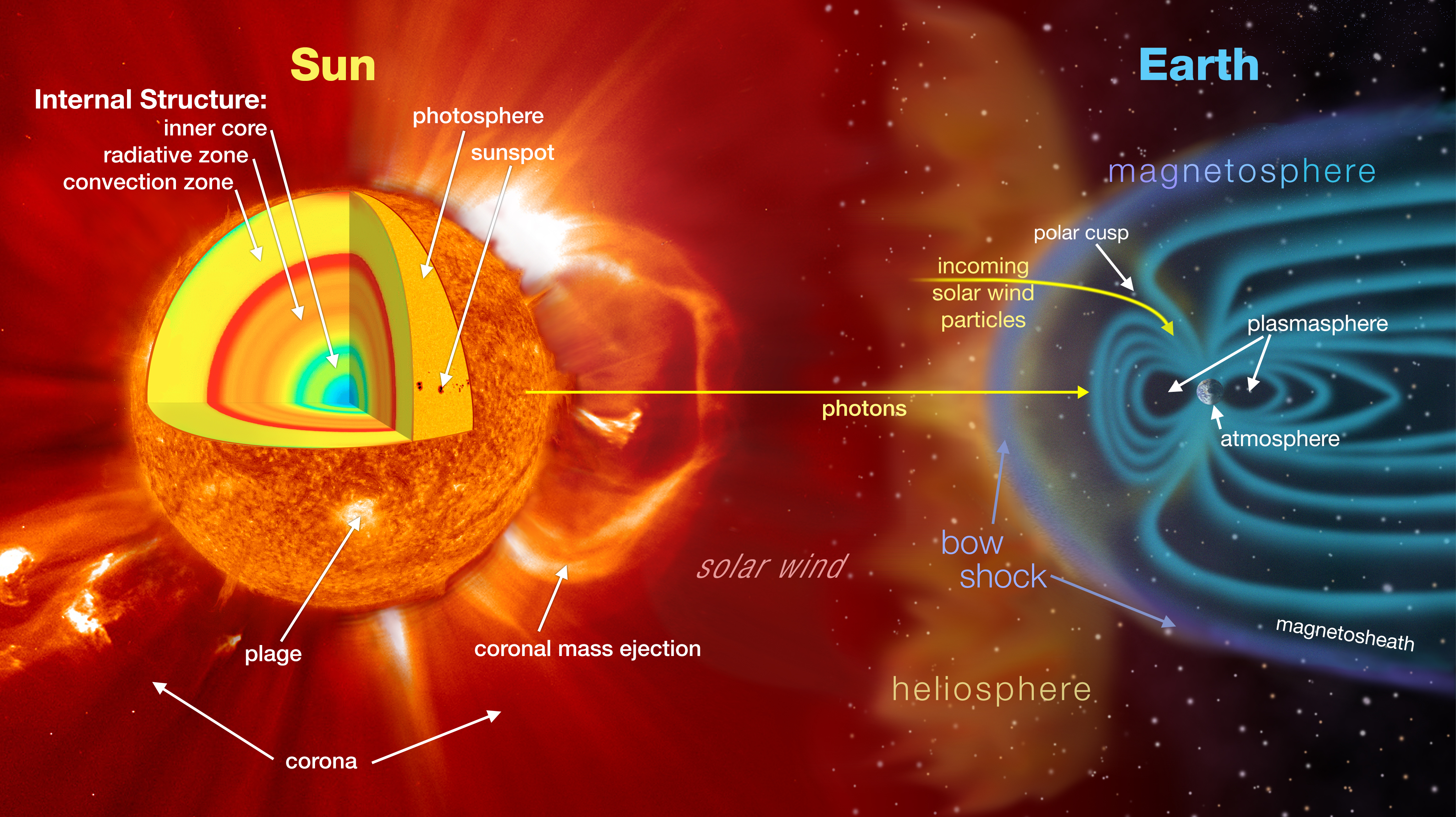
Modern civilization depends heavily on electricity and space-based technology. Every day, billions of people rely on power grids, satellite networks, navigation systems, and internet infrastructure to keep society functioning.
A solar superstorm can disrupt these systems through a phenomenon known as geomagnetic induction. When charged particles from the Sun slam into Earth’s magnetic field, they generate powerful electrical currents in long metal structures. Power transmission lines, pipelines, and communication cables can act like enormous antennas that collect this energy.
The result can be devastating.
Large electrical transformers inside power grids are particularly vulnerable. These machines are expensive, complex, and difficult to replace. A strong geomagnetic storm can overload them, causing permanent damage and forcing widespread power outages.
If enough transformers fail at once, entire regions could lose electricity for extended periods. Some experts believe that in the worst scenario, restoring power across heavily affected areas could take months or even years.
The 1989 Wake-Up Call
Although the Carrington Event remains the most powerful solar storm in recorded history, smaller storms have already demonstrated how vulnerable modern systems can be.
In March 1989, a powerful geomagnetic storm struck Earth and caused a major blackout in Quebec, Canada. Within ninety seconds, the province’s electrical grid collapsed, leaving millions of people without power for nearly nine hours.
Satellite systems also experienced disturbances, and radio communications were disrupted in several regions. Scientists later determined that the storm had generated strong electric currents within power lines, triggering the grid failure.
While this event was serious, it was still far weaker than the Carrington Event. Many researchers warn that a storm of similar magnitude today could affect far larger areas.
The Satellite Threat Above Our Heads
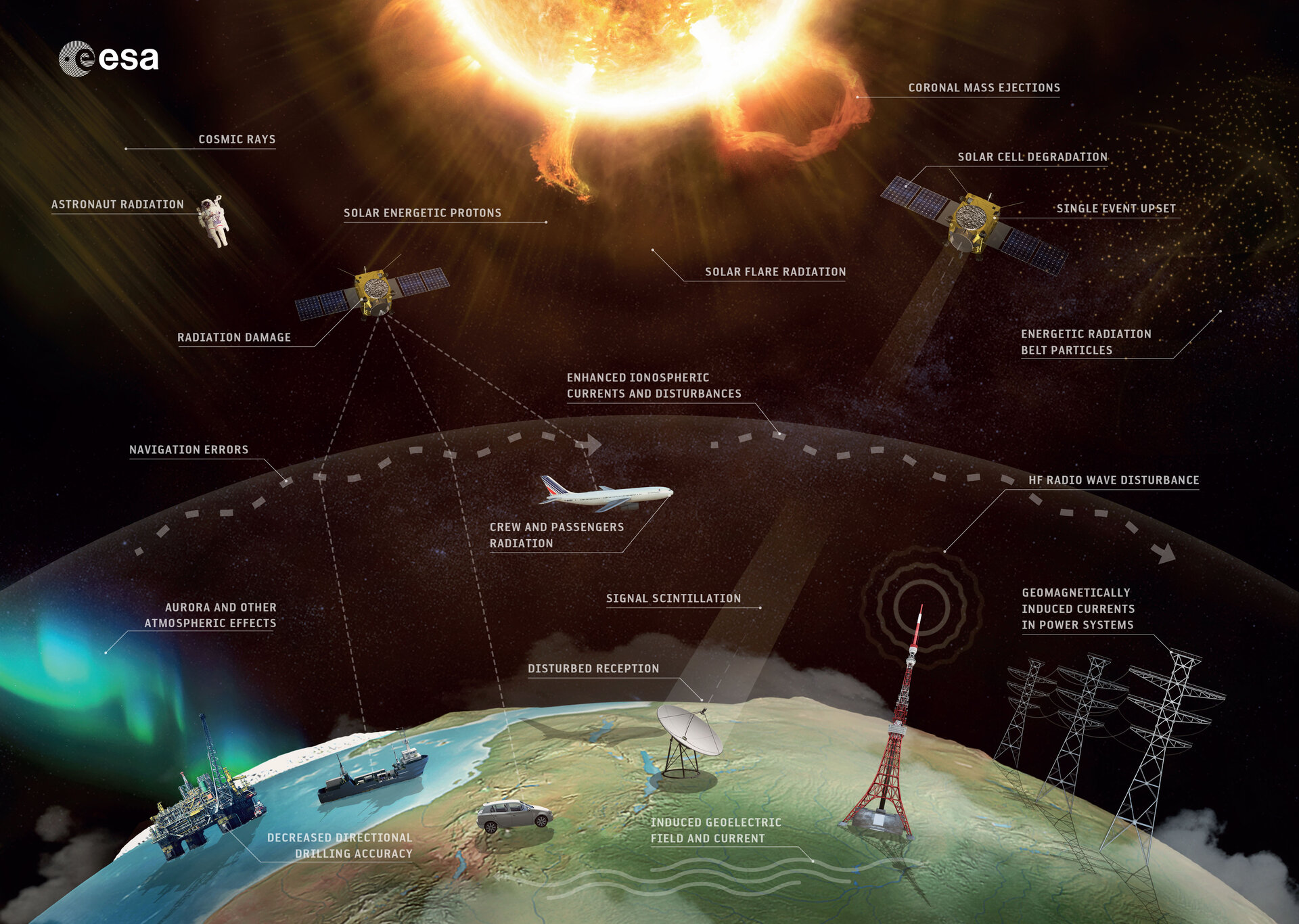
The dangers of a solar superstorm are not limited to power grids. Satellites orbiting Earth would also face significant risks.
Modern satellites are extremely sensitive to high levels of radiation. A strong solar eruption could damage onboard electronics, disrupt communications, or even cause satellites to fail entirely.
This would have ripple effects across many industries. GPS navigation could become unreliable. Weather forecasting systems might lose crucial data. Television broadcasts and global internet connections could be interrupted.
Even aircraft flying at high altitudes might face increased radiation exposure during a severe solar event.
Because modern life depends so heavily on satellite technology, disruptions in space could quickly spread into everyday life on the ground.
Could Civilization Really Be Pushed Back to the 1800s?
The phrase “back to the 1800s” is sometimes used by scientists and policymakers to illustrate how dependent society has become on electrical infrastructure.
Without electricity, many modern systems simply stop working. Water treatment plants, hospitals, financial networks, and communication systems all rely on constant power.
If a powerful solar storm were to disable large sections of the global grid, communities might face challenges that resemble life before the electrical age. Transportation systems could be disrupted, digital payment networks might fail, and communication would become difficult in affected regions.
Researchers studying space weather often emphasize that such a scenario would not necessarily destroy civilization. However, it could create severe short-term disruptions while infrastructure is repaired and replaced.

Scientists Are Watching the Sun More Closely Than Ever
Space agencies around the world now monitor the Sun continuously. Specialized satellites track solar activity and watch for eruptions that could send charged particles toward Earth.
These monitoring systems can sometimes provide early warnings ranging from several hours to a few days before a geomagnetic storm arrives.
Such warnings allow power companies and satellite operators to take protective measures. For example, some power grids can temporarily reduce load levels, while satellites may switch into protective operating modes.
While these precautions cannot eliminate all risks, they can reduce potential damage.
How Likely Is a Solar Superstorm?
Solar activity follows an approximately eleven-year cycle, during which the number of sunspots and solar eruptions rises and falls. Scientists believe that extreme solar storms occur only occasionally, but historical evidence suggests they are not as rare as once thought.
Studies of tree rings and ice cores indicate that powerful solar radiation events have occurred multiple times over the past thousand years.
Some researchers estimate that a Carrington-level storm could occur once every century or two. This means the possibility of another major solar storm within the coming decades cannot be ruled out.
Because the consequences could be so widespread, governments and space agencies continue to study the problem closely.
Preparing for the Next Big Solar Storm
Engineers and scientists are working on several strategies to reduce the risk posed by solar superstorms. Power grid operators are exploring technologies designed to protect transformers from geomagnetic currents. Some countries are also strengthening their infrastructure to better withstand space weather disturbances.
Space agencies are developing improved solar monitoring systems that can provide earlier and more accurate warnings. Researchers are also studying how solar particles travel through space in order to better predict when and where storms might strike.
Public awareness is another important part of preparation. Understanding how solar storms work can help communities respond more effectively if a major event occurs.
Frequently Asked Questions
What is a solar superstorm?
A solar superstorm is an extremely powerful eruption of energy from the Sun that can disrupt Earth’s magnetic field and affect electrical and communication systems.
Has a solar storm ever damaged Earth before?
Yes. The Carrington Event of 1859 caused telegraph failures and widespread auroras. A smaller storm in 1989 triggered a major power outage in Quebec, Canada.
Could a solar storm destroy the internet?
A very strong solar storm could damage infrastructure that supports internet connectivity, including satellites and electrical systems, which could lead to widespread disruptions.
How much warning would scientists have?
Modern monitoring satellites can often detect solar eruptions and provide warnings hours or sometimes days before the particles reach Earth.
Can humanity prevent solar storms?
Solar storms cannot be prevented because they originate from natural activity on the Sun. However, better monitoring and stronger infrastructure can help reduce their impact.

The Silent Threat from Space
The Sun has sustained life on Earth for billions of years, but it also carries the power to disrupt modern civilization in unexpected ways. A powerful solar superstorm would not resemble the disasters often seen in movies. There would be no explosion or dramatic impact. Instead, the effects would unfold quietly as electrical systems begin to fail and technology suddenly stops working.
Scientists emphasize that such an event is not cause for panic. Instead, it is a reminder of how closely connected our planet is to the powerful star at the center of our solar system.
Space weather may seem distant, but its influence can reach every corner of modern life. Watching the Sun carefully and preparing for its rare outbursts could help ensure that humanity remains ready for whatever the next solar cycle brings.
References and Sources
NASA – Solar Storms and Space Weather
https://science.nasa.gov/sun/solar-storms-and-flares/
NOAA Space Weather Prediction Center
https://www.swpc.noaa.gov
Royal Astronomical Society – The Carrington Event
https://ras.ac.uk
National Geographic – History of the Carrington Event
https://www.nationalgeographic.com/science/article/carrington-event
US National Academies – Severe Space Weather Report
https://www.nationalacademies.org