.png)
.png)
.png)
.png)
.jpg)
The Hidden Asteroid Risk — “We Might Not See It Until It’s Too Late”
For decades, astronomers have carefully watched the skies, searching for asteroids that might one day threaten Earth. Powerful telescopes scan the darkness every night, tracking thousands of space rocks moving through the solar system. Governments and space agencies often reassure the public that planetary defense systems are improving and that scientists are keeping a close eye on potential threats.
Yet behind those reassuring messages lies an uncomfortable truth that many experts openly acknowledge.
Not every asteroid can be detected early.
In fact, some of the most dangerous space rocks could remain invisible until the final hours before they reach Earth.
Scientists call this problem the “hidden asteroid risk.” It refers to objects that are difficult to detect because of their size, their dark surfaces, or the direction from which they approach our planet. In certain situations, an asteroid might appear only days or even hours before entering Earth’s atmosphere.
It may sound alarming, but history shows that this has already happened more than once.

The Day a Space Rock Exploded Over a City
On the morning of February 15, 2013, residents of the Russian city of Chelyabinsk saw a bright fireball streak across the sky. Many people initially thought it was a military aircraft or some kind of unusual meteor.
Within seconds, the object exploded high above the city.
The blast created a shockwave that shattered windows across neighborhoods and sent glass flying into buildings and streets. Hospitals quickly began treating the injured.
By the end of the day, around 1,200 people had been hurt, mostly by broken glass caused by the shockwave.
Scientists later confirmed that the explosion was caused by a previously undetected asteroid about 18 meters wide, roughly the size of a six-story building.
The object had approached Earth from the direction of the Sun, making it extremely difficult for telescopes to spot ahead of time.
The event shocked scientists because it demonstrated how a relatively small asteroid could cause widespread damage without warning.

The Giant Explosion Nobody Saw Coming
More than a century earlier, a much larger event occurred in a remote region of Siberia.
On June 30, 1908, a massive explosion flattened forests near the Tunguska River. Witnesses reported a blinding fireball crossing the sky followed by a powerful shockwave that knocked people off their feet.
When researchers eventually studied the area years later, they discovered a scene of incredible destruction.
Around 80 million trees had been flattened across roughly 2,150 square kilometers of forest.
Scientists believe the explosion was caused by an asteroid or comet fragment that exploded in the atmosphere before reaching the ground.
If that same explosion had occurred above a modern city, the results could have been devastating.
Fortunately, Tunguska occurred in a sparsely populated area.
But it remains the most powerful asteroid impact event in recorded human history.

Why Some Asteroids Are So Hard to Detect
Many people assume that modern telescopes would easily detect any asteroid heading toward Earth.
In reality, spotting these objects is extremely difficult.
Unlike stars, asteroids do not produce their own light. They can only be seen when sunlight reflects off their surfaces.
If an asteroid is small or made of dark material, it may reflect very little light, making it nearly invisible until it gets close to Earth.
Another major problem is the Sun itself.
Astronomers searching for asteroids rely on observing dark skies. But if an asteroid approaches Earth from the direction of the Sun, it can be completely hidden by solar glare.
Scientists sometimes describe this as a blind spot in our planetary defense system.
Research shows that telescopes on Earth struggle to detect objects traveling through this region of the sky.
This means some asteroids could be moving toward Earth while remaining hidden in daylight.
The Asteroids That Nearly Surprised Scientists
Several near-Earth objects in recent years have demonstrated how difficult asteroid detection can be.
One example was asteroid 2019 OK, which passed extremely close to Earth before astronomers noticed it. Scientists later explained that the object was difficult to detect because of its unusual orbit and the short period during which it was visible to telescopes.
Events like this do not mean that the asteroid detection system is failing. Instead, they highlight how challenging it is to monitor a vast solar system filled with millions of moving objects.
Even large asteroids can slip through gaps in observation if they approach from the wrong direction or reflect very little sunlight.

The Size of the Unknown Asteroid Population
Astronomers have discovered more than a million asteroids within our solar system, but that number represents only a portion of the total population.
Many smaller objects remain undiscovered.
Scientists estimate that there could be tens or even hundreds of millions of asteroids scattered throughout the solar system.
Fortunately, most of them orbit far from Earth.
However, a small percentage are classified as near-Earth objects, meaning their orbits bring them close to our planet.
These are the objects that scientists watch most closely.
How Often Do Asteroids Hit Earth?
Small meteoroids enter Earth’s atmosphere almost every day, but most burn up harmlessly before reaching the ground.
Larger asteroid impacts are far less common.
A space rock roughly one kilometer wide is estimated to strike Earth about once every 500,000 years on average.
Objects of that size could cause global environmental effects.
Much smaller asteroids, capable of destroying a city, are believed to strike Earth more frequently, perhaps once every few centuries.
Events like Tunguska and Chelyabinsk show that these mid-sized impacts are real and can occur without warning.
The Global Effort to Track Dangerous Asteroids
Space agencies are not ignoring the problem.
NASA and other organizations operate asteroid detection programs that constantly scan the sky for near-Earth objects.
One example is the NEOWISE space telescope, which uses infrared sensors to locate asteroids that might be difficult to see with traditional optical telescopes.
New missions are also being designed to improve detection.
Future asteroid-tracking spacecraft are expected to monitor regions of space near the Sun where hidden asteroids are hardest to detect.
The goal is to give humanity as much warning time as possible if a potentially dangerous object is discovered.
What Happens If an Asteroid Is Detected Late?
If scientists discover an asteroid only shortly before impact, there may not be enough time to attempt a deflection mission.
However, even a short warning could still save lives.
Emergency services could evacuate the predicted impact zone, much like preparations made for hurricanes or severe storms.
Experts believe that improved detection systems will gradually reduce the chances of a surprise impact.
But completely eliminating the risk may never be possible.
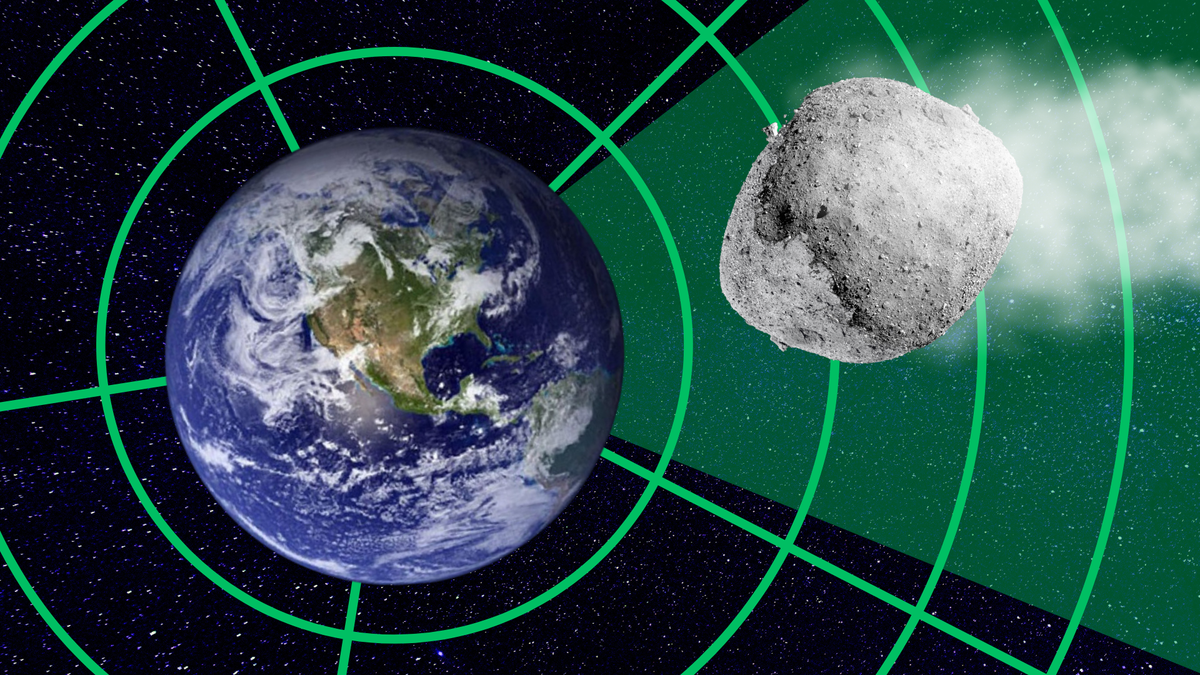
A Realistic Perspective on the Asteroid Threat
Scientists emphasize that asteroid impacts capable of global devastation are extremely rare.
The chances of a large asteroid striking Earth in any given year are very small.
However, smaller events capable of damaging a city are far more likely on geological timescales.
That is why planetary defense programs exist.
Monitoring the skies does not guarantee perfect protection, but it dramatically improves humanity’s ability to respond to potential threats.
The story of asteroid detection is not one of fear, but of preparation.
Frequently Asked Questions
Can an asteroid really hit Earth without warning?
Yes. Smaller asteroids can approach from directions that make them difficult to detect, particularly if they come from the direction of the Sun.
Has this happened before?
Yes. The Chelyabinsk meteor in 2013 exploded over Russia without prior detection and injured around 1,200 people.
Could a large asteroid destroy Earth?
Extremely large impacts are very rare. Scientists monitor the skies specifically to detect such objects decades before any potential collision.
How do scientists track asteroids today?
Astronomers use ground-based telescopes and space missions such as infrared asteroid surveys to discover and track near-Earth objects.
Is humanity able to stop an asteroid?
Recent planetary defense experiments have shown that spacecraft may be able to alter an asteroid’s orbit if it is discovered early enough.
Final Note and Scientific Disclaimer
The possibility of an undetected asteroid approaching Earth is a topic actively studied by scientists around the world. Current monitoring systems track thousands of near-Earth objects, and new technology continues to improve our ability to detect potential threats.
While surprise asteroid events are possible, experts stress that large catastrophic impacts are extremely rare. Ongoing research, observation programs, and international cooperation are designed to ensure that humanity has the best possible warning if a dangerous asteroid is discovered.
In other words, the threat exists, but so does the science working to protect our planet.
References and Sources
NASA – Near-Earth Object Observations
https://science.nasa.gov/solar-system/asteroids
NASA Jet Propulsion Laboratory – Asteroid Tracking Programs
https://www.jpl.nasa.gov/edu/resources/teachable-moment/how-nasa-studies-and-tracks-asteroids-near-and-far/
Space.com – Chelyabinsk Meteor Event
https://www.space.com/33623-chelyabinsk-meteor-wake-up-call-for-earth.html
NASA History – Tunguska Event
https://www.nasa.gov/history/115-years-ago-the-tunguska-asteroid-impact-event/
Catalina Sky Survey – Asteroid Impact Frequency
https://catalina.lpl.arizona.edu/faq/how-often-do-asteroids-strike-earth
European Space Agency – Asteroid Detection Challenges
https://www.esa.int/Space_Safety/Planetary_Defence/NEOMIR_finding_risky_asteroids_outshone_by_the_Sun