.png)
.png)
.png)
.png)
.jpg)
Humanity’s search for longer and healthier lives has taken scientists into an unexpected laboratory — outer space.
Hundreds of kilometers above Earth, astronauts aboard the International Space Station (ISS) are helping researchers study one of the most powerful technologies in modern biology: DNA editing.
Experiments in microgravity are revealing how cells repair genetic damage, how genes behave outside Earth’s gravity, and how advanced tools like CRISPR can be used in ways that were not possible on the ground.
What began as research to protect astronauts from radiation exposure during long space missions is now feeding directly into a growing field on Earth: longevity science and personalized medicine.
The discoveries being made in orbit could influence how doctors treat genetic diseases, design precision therapies, and even slow the biological processes associated with aging.
Why Space Is the Perfect Laboratory for Genetics
Earth’s gravity constantly affects how cells grow, divide, and interact.
In space, those forces disappear.
The result is a unique biological environment where researchers can isolate variables that are difficult to study on Earth.
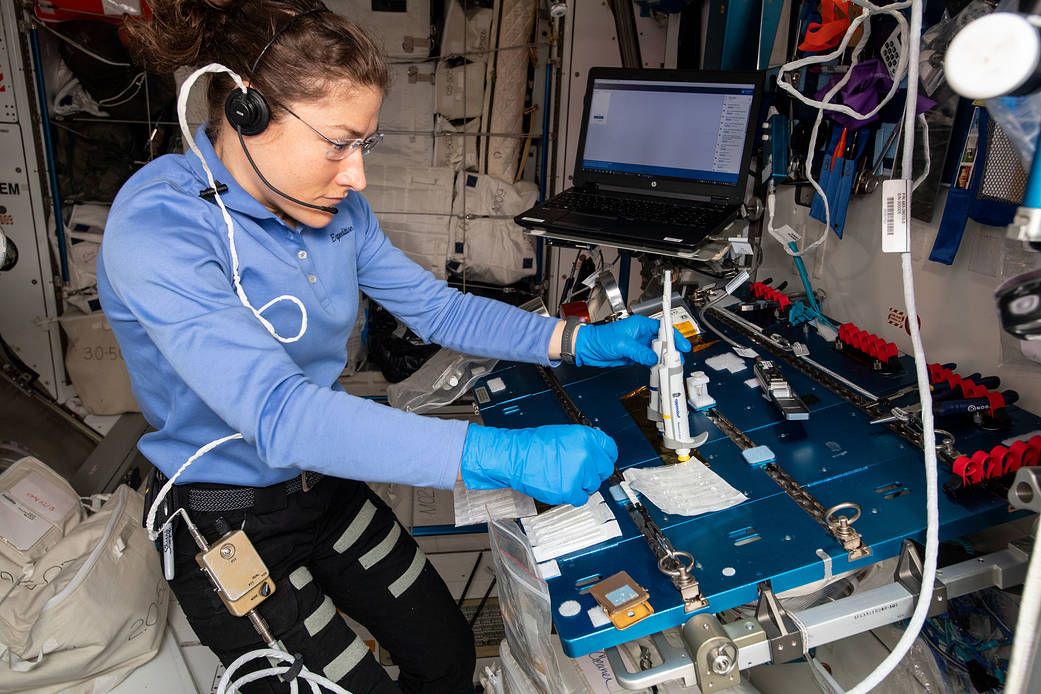
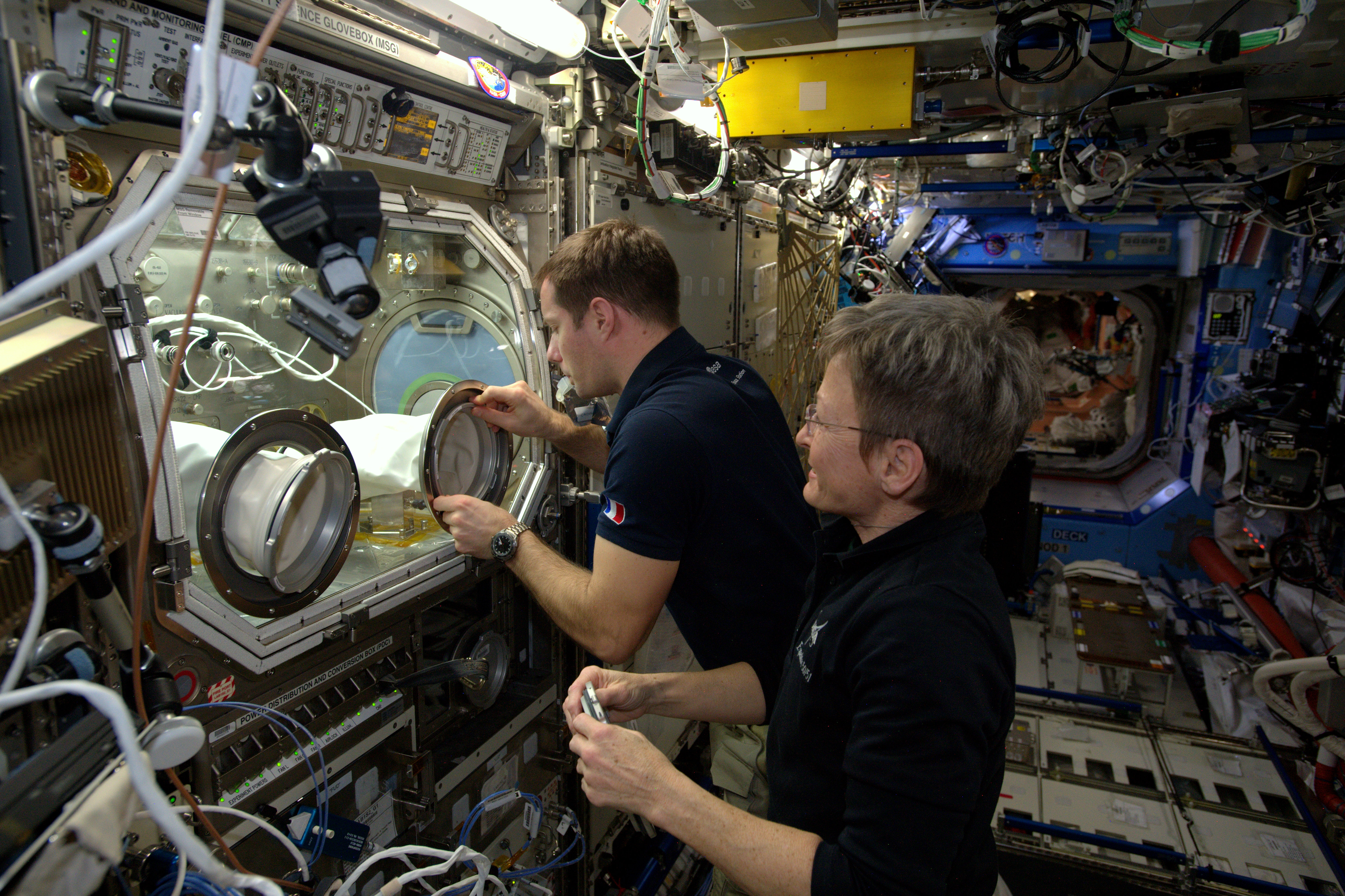
Scientists use the International Space Station as a floating laboratory where organisms — from microbes to human cells — can be studied under microgravity conditions.
Facilities such as the Biolab laboratory module on the ISS allow scientists to observe how organisms behave when gravity is removed, providing insights into biological processes from the cellular level to entire organisms.
Microgravity changes how cells grow and communicate.
This unusual environment allows researchers to observe biological reactions that would normally be hidden or altered by gravity on Earth.
The Breakthrough: DNA Editing in Space
A historic milestone in genetics occurred in 2019, when astronauts successfully performed the first CRISPR gene-editing experiment in space.
The experiment involved creating targeted breaks in the DNA of yeast cells and observing how those cells repaired the damage.
This experiment demonstrated that gene editing tools could function in microgravity.
Scientists introduced controlled damage into DNA strands and then studied how the cells repaired themselves, providing insights into the mechanisms that maintain genetic stability.
Researchers found that DNA repair processes continued to function even in microgravity conditions, a discovery that expanded the scientific toolkit available aboard the space station.
This experiment marked the first time genome editing had been successfully carried out beyond Earth.
Understanding DNA Damage in Space
Space is a hostile environment for living organisms.
Astronauts are exposed to cosmic radiation, which can damage DNA and increase the risk of cancer.
By studying how DNA behaves in microgravity, scientists hope to understand how cells repair this damage.
CRISPR technology allows researchers to create precise breaks in DNA strands, enabling them to study repair mechanisms with remarkable accuracy.
This approach is safer and more controlled than exposing cells to radiation.
The results are helping scientists understand how cells detect and repair genetic damage — knowledge that could eventually improve treatments for diseases caused by DNA mutations.
Why This Matters for Longevity Research
Aging is closely linked to DNA damage and cellular repair mechanisms.
Over time, the human body accumulates genetic errors caused by environmental stress, radiation, and metabolic processes.
These errors contribute to aging and age-related diseases.
Studying DNA repair systems in space could reveal new methods for improving the body’s natural ability to fix genetic damage.
Researchers believe that understanding these mechanisms may eventually help scientists:
-
Reduce cellular aging
-
Improve treatments for genetic disorders
-
Prevent certain types of cancer
-
Develop advanced regenerative therapies
Although these applications remain under investigation, the early findings from space-based genetic experiments are generating enormous interest within the biomedical community.

CRISPR: The Technology Driving the Revolution
CRISPR-Cas9 is often described as a molecular pair of scissors.
It allows scientists to precisely cut DNA at specific locations, enabling them to remove harmful mutations or introduce beneficial genetic changes.
In space experiments, CRISPR has been used to generate controlled DNA breaks so researchers can observe how cells repair them.
This approach provides valuable information about the biological pathways responsible for maintaining genetic stability.
The ability to perform these experiments in orbit opens the door to a new era of space-based molecular biology.
Researchers can now test genetic techniques in environments that mimic the extreme conditions humans may face during deep-space exploration.
Personalized Medicine Gets a Boost from Space
Personalized medicine focuses on tailoring medical treatments to an individual’s genetic profile.
Space research may help accelerate this approach.
Because microgravity changes how cells function, it allows scientists to observe gene activity in new ways.
These insights can help researchers understand how specific genes influence disease risk and treatment response.
For example, genetic diagnostics using CRISPR-based technology have already shown potential for detecting disease markers in microgravity environments.
If these tools continue to evolve, they could lead to portable diagnostic technologies that work both in space missions and remote locations on Earth.

The Role of Space Biotechnology Programs
Several research programs are advancing genetic science in orbit.
One of the most notable initiatives is Genes in Space, which sends biological experiments to the ISS.
The program has demonstrated that gene editing, DNA sequencing, and genetic analysis can all be conducted in microgravity.
In one landmark project, astronauts used CRISPR technology to create and repair DNA breaks in yeast cells while studying how microgravity influences the repair process.
These experiments represent a major step toward developing advanced biomedical tools for long-duration space missions.
Microgravity and Regenerative Medicine
Another promising area connected to space genetics is tissue engineering and regenerative medicine.
Scientists are exploring how microgravity can help grow complex biological tissues.
In zero gravity, delicate biological structures are easier to assemble because they are not pulled downward by gravity.
Researchers have already begun experimenting with 3D bioprinting in microgravity, which could eventually enable the creation of human tissues and organs for transplantation.
When combined with gene-editing technologies, this approach could open entirely new possibilities for repairing damaged organs or treating degenerative diseases.
Potential Impact on Future Healthcare
The connection between space research and everyday medicine may seem distant.
But history shows that technologies developed for space often find powerful applications on Earth.
Examples include satellite communication, GPS navigation, and advanced imaging systems.
Genetic research conducted in orbit could follow a similar path.
Insights gained from studying DNA repair, cellular aging, and genetic adaptation in microgravity may influence future treatments for conditions such as:
-
Cancer
-
Neurodegenerative diseases
-
Rare genetic disorders
-
Immune system dysfunction
In addition, space-based biotechnology may accelerate the development of compact genetic testing devices that can operate outside traditional laboratory settings.
Challenges and Ethical Considerations
Despite the excitement surrounding gene editing, the field also raises important ethical questions.
The ability to modify DNA — especially in humans — must be approached with extreme caution.
Past controversies involving gene editing experiments on human embryos have highlighted the need for strict oversight and ethical guidelines.
Scientists emphasize that most current research focuses on understanding biological processes, not altering human genetics.
Space-based DNA experiments are carefully controlled and conducted using microorganisms or cell cultures rather than human subjects.
Regulatory agencies and international research organizations continue to monitor the field to ensure that genetic technologies are used responsibly.

The Future of Space-Based Genetics
Space exploration is entering a new era.
With missions planned for the Moon and eventually Mars, scientists must understand how the human body adapts to long-term exposure to space environments.
DNA research will play a critical role in that effort.
Future experiments may study:
-
Long-term genetic changes in astronauts
-
Radiation-induced mutations
-
Immune system responses in space
-
Biological aging during space travel
These studies will help protect astronauts while also advancing biomedical science for people on Earth.
Conclusion
The laboratory orbiting Earth is quietly reshaping the future of medicine.
Experiments involving DNA editing in microgravity are revealing how cells repair genetic damage, how genes behave in unusual environments, and how powerful tools like CRISPR can be used beyond traditional laboratories.
The discoveries made aboard the International Space Station may one day influence how doctors treat disease, design personalized therapies, and understand the biological processes that shape aging.
While many questions remain, one thing is becoming clear.
The path toward the next generation of medical breakthroughs may lead through outer space.
Frequently Asked Questions
What is DNA editing?
DNA editing is a scientific technique that allows researchers to modify specific sections of genetic material. Tools like CRISPR enable scientists to cut or alter DNA sequences with high precision.
Why conduct DNA experiments in space?
Microgravity allows scientists to study biological processes without the influence of gravity, helping researchers observe cellular mechanisms that are difficult to detect on Earth.
Has DNA editing actually been done in space?
Yes. In 2019, astronauts performed the first CRISPR-based gene editing experiment aboard the International Space Station.
How could this research affect medicine on Earth?
Insights from space experiments may help scientists improve treatments for genetic diseases, develop personalized therapies, and better understand the biological mechanisms behind aging.
Will gene editing be used to extend human lifespan?
Researchers are still studying how genetic technologies may influence aging. Current experiments mainly focus on understanding DNA repair and cellular health rather than directly extending lifespan.
Editorial Disclaimer
This article is intended for educational and informational purposes. Scientific research involving genetic technologies and space biology is ongoing, and many findings are still under review. Medical applications based on these discoveries may require years of further study, regulatory approval, and clinical testing before becoming widely available.
Sources and References
https://www.nasa.gov/missions/station/iss-research/dna-sequencing-in-space-timeline/
https://www.space.com/dna-repair-space-station-crispr-experiment
https://issnationallab.org/iss360/history-in-the-making-student-experiment-edits-dna-with-crispr-technology-in-space/
https://www.innovationnewsnetwork.com/crispr-technology-achieves-dna-repair-in-space-for-the-first-time/14184/
https://www.sciencedirect.com/science/article/pii/S0956566323004219
https://phys.org/news/2021-08-international-space-station-dna-toolkit.html
https://journals.plos.org/plosone/article?id=10.1371/journal.pone.0253403