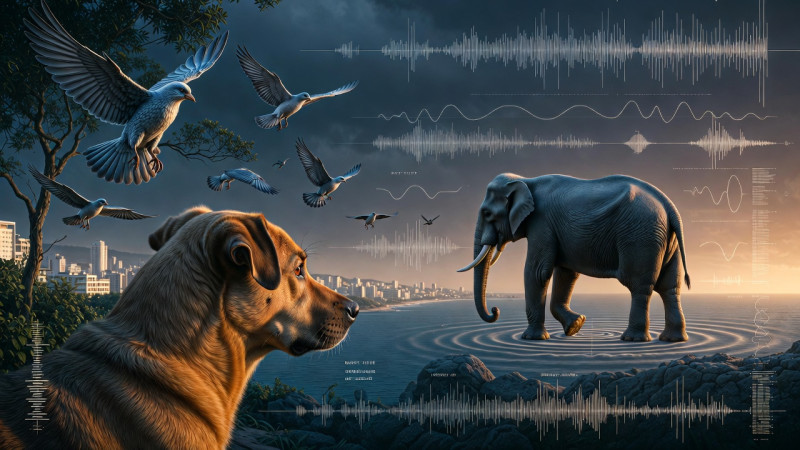
The moment the world noticed: animals moving before the wave
On December 26, 2004, the Indian Ocean earthquake struck off Sumatra at 07:58:53 local time (UTC+7), triggering the tsunami that devastated coastlines across the region. Wikipedia+2Encyclopedia Britannica+2
In the days and hours that followed, a different story raced around the world: elephants reportedly headed for higher ground, some dogs refused to go outside, and certain birds appeared to leave low-lying areas before the water arrived. A National Geographic report from early January 2005 captured the public fascination, while also stressing what was and wasn’t confirmed. National Geographic
That moment became the modern poster child for the big question people still ask after every major quake or storm: how do animals seem to know?
What animals might be sensing that humans miss
The honest answer is not as magical as it sounds—and not as settled as social media makes it look. But there are real scientific reasons animals could react earlier than humans.
1) They may detect the “silent” sounds of disaster
Many animals hear frequencies far beyond the human range. Researchers have explored whether animals respond to infrasound—very low-frequency sound waves produced by large natural events, including earthquakes and severe storms.
One research line examines how elephants, for example, might pick up low-frequency ground and air vibrations linked to big seismic events. A paper discussing possible “precursor signals” that elephants could detect around the 2004 tsunami-era quake leans heavily on physics and plausible biology, while acknowledging the evidence is often anecdotal. Bentham Open
In plain terms: animals may be listening to a channel we don’t even realize is broadcasting.
2) They can feel tiny vibrations earlier
Before destructive shaking arrives, earthquakes send P-waves—fast, initial seismic waves—followed by slower, stronger waves that cause the worst damage. Humans usually notice the strong shaking. But animals that are close to the ground (or have sensitive feet and inner-ear systems) may respond to subtle vibrations sooner.
This is one reason reports often mention snakes, rodents, and livestock behaving oddly before major quakes: they live in constant contact with the ground and react to changes quickly.
3) Chemical and electrical changes may matter
Some scientists have proposed that earthquakes can cause changes in rocks that lead to air ionization or changes in groundwater chemistry, which animals might sense through smell or irritation. These ideas are still debated, but they show why “something in the environment changed” is not an outrageous claim—it’s just difficult to verify in real time.
A scientific review on how animals might detect precursor signals notes why the results can look inconsistent: conditions vary, and not every earthquake produces the same measurable “lead-up.”
.png)
.png)
.png)
.png)