
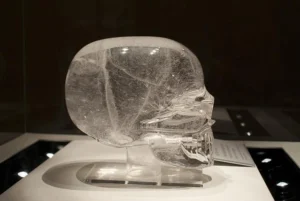
For more than a century, crystal skulls have occupied a strange space between archaeology, mythology, and popular culture. They have been described as sacred relics of lost civilizations, objects with supernatural powers, gifts from extraterrestrials, and even devices capable of storing ancient knowledge. Their legend has inspired books, documentaries, conspiracy theories, and Hollywood blockbusters.
Yet despite the fascination surrounding them, one question continues to divide believers and skeptics alike:
Are crystal skulls genuine ancient artifacts, or are they elaborate modern hoaxes?
The answer is far more complicated—and far more interesting—than many people realize.
The Birth of a Global Mystery
Crystal skulls are carved sculptures of human skulls made primarily from quartz crystal, sometimes called rock crystal. Some are clear, while others appear cloudy or milky white. They range in size from small decorative objects to life-sized human skull replicas weighing several kilograms.
Their rise to fame began during the late nineteenth century when a number of crystal skulls started appearing in museum collections and private hands. Dealers claimed these objects originated from ancient civilizations such as the Aztecs, Maya, or other pre-Columbian cultures of Central America.
The claims were extraordinary.
According to various stories, the skulls had survived for centuries or even millennia. Some were said to possess mystical powers, while others were linked to lost civilizations such as Atlantis. As the stories grew, so did public fascination.
But there was one major problem.
No archaeologist had ever discovered a crystal skull during a documented excavation.
That absence of evidence would eventually become one of the strongest arguments against their authenticity.
The Most Famous Crystal Skull of All
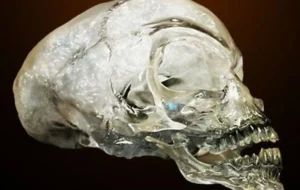
Among all known crystal skulls, none is more famous than the so-called Mitchell-Hedges Skull, often nicknamed the “Skull of Doom.”
According to a popular story, Anna Mitchell-Hedges claimed she discovered the skull in 1924 while exploring ancient Maya ruins in Belize alongside her father, adventurer Frederick Mitchell-Hedges.
The tale sounded like something straight from an adventure novel.
Hidden ruins.
Lost civilizations.
Ancient secrets.
A mysterious crystal artifact.
The story spread rapidly and helped transform the skull into a worldwide sensation.
Over time, additional claims emerged. Some people believed the skull could heal illnesses, communicate telepathically, or reveal hidden knowledge. Others suggested it had extraterrestrial origins.
However, later investigations uncovered records indicating that Frederick Mitchell-Hedges had actually purchased the skull at a Sotheby’s auction in London in 1943 rather than discovering it in Belize.
This revelation significantly weakened the legendary origin story that had helped make the skull famous.
Why Crystal Skulls Captured Human Imagination
To understand why crystal skulls became so popular, it helps to understand the era in which they appeared.
The nineteenth century witnessed a surge of interest in ancient civilizations. Archaeological discoveries were captivating the public. Museums were expanding their collections. Wealthy collectors sought exotic artifacts from around the world.
Ancient Egypt fascinated Europe.
Mayan cities were being explored.
Lost civilizations filled newspaper headlines.
Against this backdrop, crystal skulls seemed almost magical.
A perfectly carved human skull made from quartz crystal looked unlike anything most people had ever seen. Even today, many crystal skulls appear visually stunning.
The mystery surrounding them only amplified their appeal.
When an object looks ancient, mysterious, and impossible to create without advanced skills, people naturally begin searching for extraordinary explanations.
The Dealer at the Center of the Story
One figure repeatedly appears in crystal skull investigations: Eugène Boban, a French antiquities dealer active during the late nineteenth century.
Boban sold and promoted several crystal skulls while working in Mexico and later in Europe and the United States. Historical records show that one famous crystal skull appeared in his collection before eventually reaching the British Museum.
Researchers later discovered that Mexican museum experts had questioned the authenticity of at least one skull offered by Boban as early as the 1880s.
This discovery became important because it suggested skepticism about crystal skulls existed long before modern scientific testing.
If experts were questioning them in the nineteenth century, perhaps doubts about their authenticity were justified.
The Scientific Investigation Begins
For decades, arguments about crystal skulls relied largely on stories, legends, and speculation.
That changed when scientists began examining the artifacts using modern technology.
Researchers from institutions including the Smithsonian and the British Museum conducted detailed investigations using advanced imaging techniques and scanning electron microscopes.
Instead of focusing on legends, scientists focused on physical evidence.
They asked several critical questions:
- How were the skulls carved?
- What tools were used?
- Where did the quartz originate?
- Do the carving techniques match known ancient methods?
The answers would dramatically reshape the debate.
The Tool Marks That Changed Everything

One of the most significant discoveries involved microscopic tool marks.
Ancient Mesoamerican craftsmen were skilled artisans who worked with stone tools, wood tools, and natural abrasives.
Scientists examined authenticated ancient crystal objects and compared them with crystal skulls.
The differences were striking.
Several skulls showed evidence of being shaped with rotary wheels and modern polishing techniques that were unavailable to pre-Columbian civilizations. Researchers also identified traces associated with modern abrasives.
According to scientific analyses, the marks left behind looked consistent with nineteenth- and twentieth-century manufacturing methods rather than ancient craftsmanship.
For many archaeologists, this evidence was decisive.
The Quartz Problem
The material itself created another challenge for believers in ancient origins.
Researchers studying some famous skulls found evidence suggesting the quartz likely originated from places such as Brazil or Madagascar.
This posed an archaeological problem.
There is no accepted evidence that ancient Mesoamerican civilizations maintained trade networks capable of transporting large quantities of quartz from those regions.
While ancient peoples certainly traded valuable materials across great distances, the geological evidence did not fit the traditional narratives attached to the skulls.
Again, the scientific evidence appeared to point toward more recent manufacture.
The Smithsonian Skull
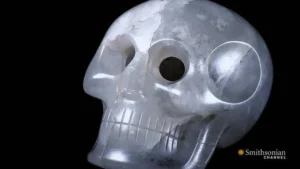
One of the most studied examples resides at the Smithsonian Institution.
The skull arrived unexpectedly in 1992 with an anonymous letter claiming it was an Aztec artifact purchased in Mexico decades earlier.
Researchers examined the object carefully.
Using scanning electron microscopy, they identified evidence that the skull had been carved using modern tools. The findings suggested it could not have originated in pre-Columbian times.
Jane MacLaren Walsh, a Smithsonian anthropologist who became one of the leading researchers on crystal skulls, concluded that the object was likely manufactured relatively recently rather than being an ancient relic.
The Smithsonian ultimately displayed the skull not as proof of an ancient mystery, but as an example of how myths and misconceptions can develop around museum artifacts.
The British Museum Skull
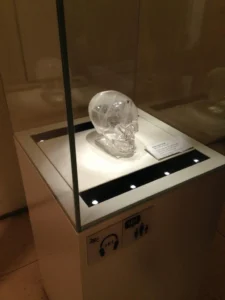
Another famous example resides in the British Museum.
For many years it was widely believed to be an ancient Aztec artifact.
However, scientific examination produced results similar to those obtained from other crystal skulls.
Researchers found evidence suggesting modern carving techniques had been used. Historical investigations also traced connections between the artifact and nineteenth-century dealers.
While debate continues regarding the exact workshop where the skull was produced, many researchers now believe it was likely created in Europe during the nineteenth century.
Could Ancient Civilizations Have Made Them Anyway?
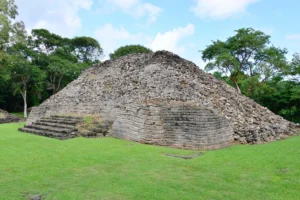
Supporters of the skulls’ authenticity often point out that ancient civilizations possessed remarkable engineering skills.
After all:
- The Maya built sophisticated cities.
- The Aztecs created monumental architecture.
- Ancient craftsmen produced extraordinary stone carvings.
Could they not have carved crystal skulls as well?
Technically, ancient artisans certainly had the capability to shape crystal.
Archaeologists have recovered authentic crystal artifacts from ancient Mesoamerican cultures.
The issue is not whether ancient people could carve crystal.
The issue is whether the specific crystal skulls known today match ancient techniques, styles, and archaeological evidence.
Current scientific analyses suggest they do not.
The Paranormal Claims
Perhaps the most intriguing aspect of the crystal skull phenomenon is the long list of paranormal claims attached to the artifacts.
Over the decades, believers have suggested that crystal skulls can:
- Store ancient knowledge.
- Heal illnesses.
- Enhance psychic abilities.
- Communicate telepathically.
- Reveal visions.
- Connect with extraterrestrial intelligences.
These claims have helped keep interest alive even as scientific evidence has challenged the skulls’ ancient origins.
However, no scientific studies have verified supernatural abilities associated with crystal skulls. Claims regarding healing powers, psychic communication, or extraterrestrial connections remain unsupported by empirical evidence.
That has not stopped enthusiasts from continuing their investigations.
For many believers, the mystery extends beyond archaeology into spirituality.
The Influence of Hollywood
Crystal skulls might have remained obscure museum curiosities if not for popular culture.
Books, television specials, and documentaries introduced them to new audiences throughout the twentieth century.
Then came a major boost.
In 2008, Indiana Jones and the Kingdom of the Crystal Skull brought the legend to millions worldwide. The film connected crystal skulls with extraterrestrials, ancient mysteries, and hidden knowledge.
Although fictional, the movie reinforced many myths already circulating in popular culture.
For countless viewers, it was their first exposure to the mystery.
The result was renewed global interest.
Why People Still Believe
Even with scientific evidence pointing toward modern manufacture, many people continue to believe crystal skulls are ancient.
Why?
Part of the answer lies in human psychology.
Mysteries are attractive.
Ancient secrets are exciting.
Extraordinary possibilities capture imagination far more effectively than mundane explanations.
A story about a lost artifact from Atlantis is naturally more compelling than a story about a nineteenth-century workshop producing tourist curiosities.
There is also a broader cultural fascination with hidden histories.
Many people suspect that important truths about humanity’s past remain undiscovered.
Crystal skulls fit neatly into that narrative.
The Possibility of Future Discoveries
Science rarely deals in absolute certainty.
While evidence strongly suggests that famous crystal skulls are modern creations, archaeology continues to evolve.
New discoveries occur every year.
Lost cities are uncovered.
Ancient technologies are reexamined.
Unexpected artifacts emerge from excavations.
If a crystal skull were someday discovered during a carefully documented archaeological excavation, the debate could change dramatically.
Such a discovery would provide evidence that currently does not exist.
Until then, researchers must rely on available data.
And that data overwhelmingly favors a modern origin for the most famous skulls.
A Mystery That Refuses to Die
The crystal skull story is fascinating not because it proves the existence of lost civilizations or extraterrestrial visitors.
It is fascinating because it reveals how myths are created.
A handful of beautiful objects appeared during an era obsessed with ancient mysteries.
Collectors wanted remarkable discoveries.
Dealers wanted rare artifacts.
Museums wanted extraordinary exhibits.
Writers wanted captivating stories.
Over time, those forces combined to create one of archaeology’s most enduring legends.
Today, scientific analysis has answered many questions surrounding crystal skulls. Modern tool marks, questionable provenance, and geological evidence have convinced most researchers that the famous skulls are not ancient treasures but relatively recent creations.
Yet the legend survives.
Perhaps that is the true power of the crystal skull mystery.
Not that the skulls hold hidden knowledge, but that they remind us how easily mystery can emerge when curiosity meets imagination. Even in an age of electron microscopes and advanced forensic science, some stories continue to captivate because they speak to something deeply human—the desire to believe there are still secrets waiting to be uncovered.


