
Imagine being buried more than 300 years ago, only for archaeologists to discover that the people who laid you to rest had taken extraordinary precautions to ensure you would never return.
A sharp iron sickle was positioned across your throat. A heavy triangular padlock was attached to your toe. And there may have been additional protective objects placed near your mouth or nose.
This sounds like something taken from a horror film, but it is the reality of an extraordinary archaeological discovery in northern Poland.
In 2022, researchers excavating a forgotten cemetery near the village of Pień uncovered the remains of a young woman whose burial arrangements appeared designed to prevent her from rising after death.
The woman, identified by researchers as Zosia, had been buried during the 17th century. Her grave was unusual enough to attract international attention, but a detailed multidisciplinary investigation published in October 2026 has now revealed more about her life, ancestry, burial and the fears that may have surrounded her death.
The most unsettling possibility is that the people who buried Zosia believed she could become a dangerous supernatural being after dying.
Archaeologists cannot establish exactly what her community believed or why she was treated this way. However, the combination of the sickle, padlock and other unusual evidence provides a remarkable window into historical fears of the dead.
A Grave That Was Designed to Keep Someone Underground
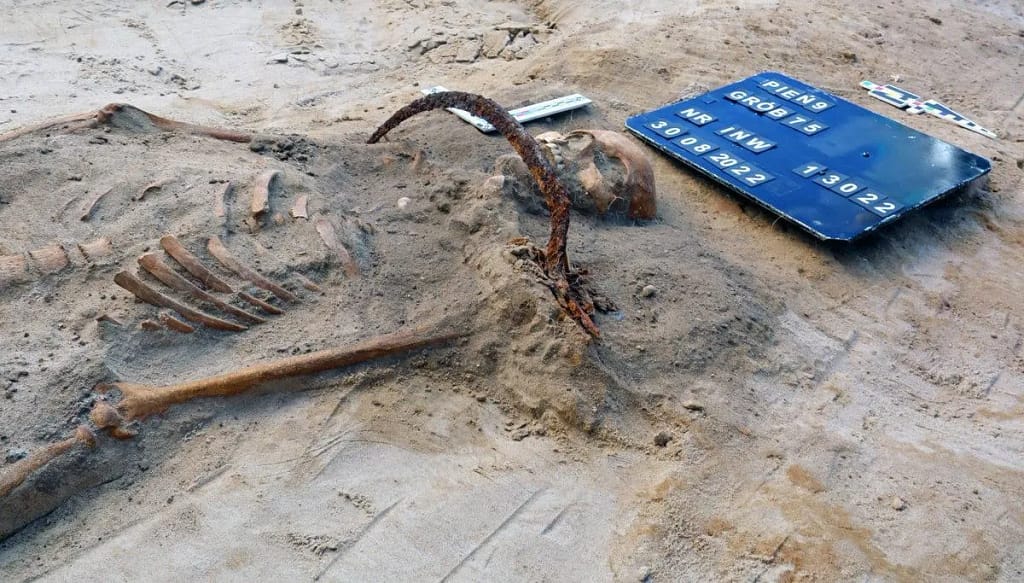
The discovery took place at a cemetery in Pień, in north-central Poland.
When archaeologists uncovered the grave in 2022, they immediately noticed something unusual about the position of the objects surrounding the skeleton.
The deceased was a young woman, estimated to have been between 17 and 19 years old.
An iron sickle had been placed across her neck, with its sharp blade facing towards her throat. The arrangement was not accidental. It appeared designed so that if the dead woman attempted to rise, the blade would injure her neck.
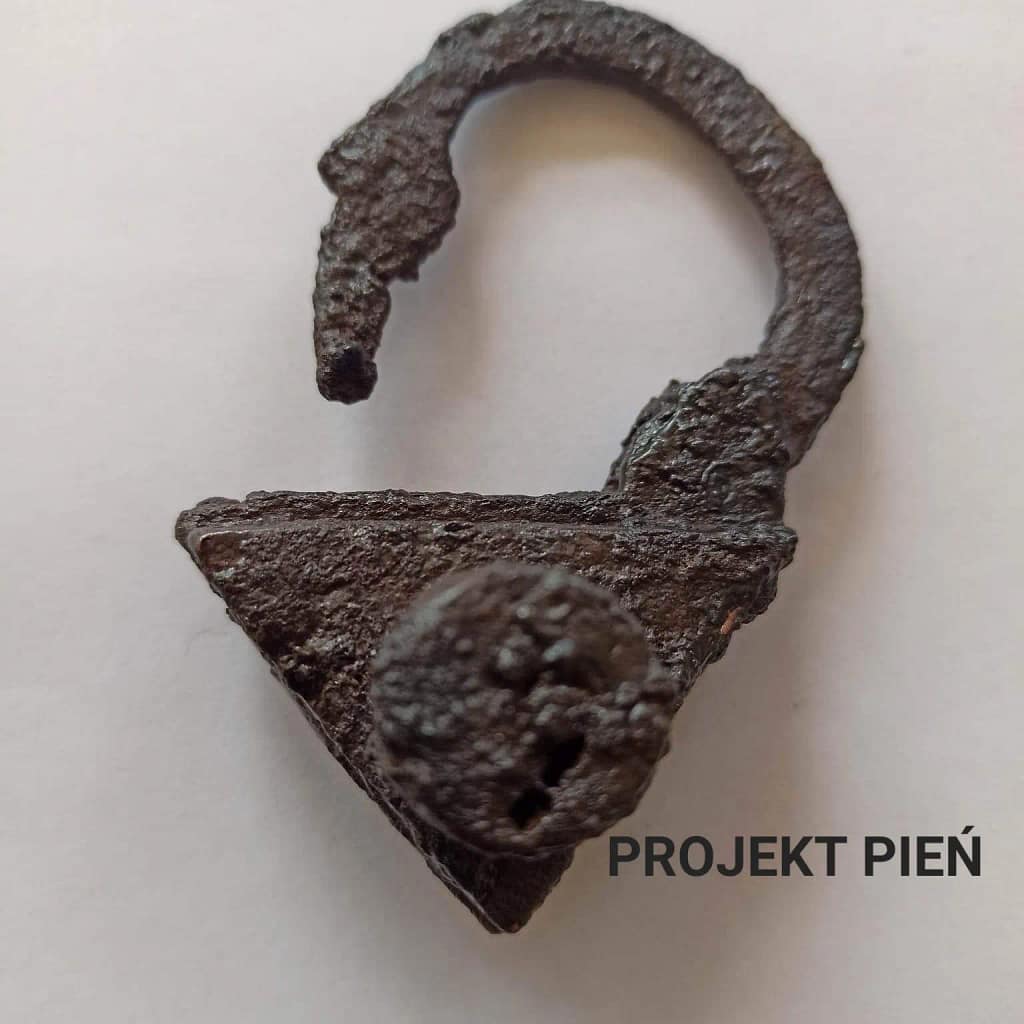
Even more unusual was a triangular iron padlock attached to the big toe of her left foot.
The two objects appeared to serve different but related purposes.
The padlock may have symbolically locked the deceased inside her grave, while the sickle acted as a physical barrier against any attempted return.
Researchers described the combination as anti-demonic or anti-vampiric burial practices.
Although the word vampire immediately brings to mind fictional creatures with fangs and a thirst for blood, historical beliefs about the undead were considerably more varied.
In parts of Eastern and Central Europe, people feared that certain deceased individuals could return as harmful spirits, spread illness, disturb communities or bring misfortune to the living.
The unusual burial of Zosia appears to reflect precisely this kind of fear.
What makes the discovery especially significant is that the researchers identified the unusual combination of a sickle and padlock in a single grave as unprecedented in the published archaeological record.
Why Was a Sickle Placed Across Her Throat?

The sickle is arguably the most disturbing object discovered in Zosia’s grave.
Today, a sickle is generally associated with agriculture. Its curved blade was traditionally used for cutting grass, harvesting crops and gathering vegetation.
But in historical folklore, sharp iron objects could also carry protective meanings.
Some communities believed that iron could repel evil spirits, supernatural beings and dangerous forces.
A sickle placed across the neck of a deceased person could serve as a safeguard against resurrection.
The logic was frighteningly simple: if the dead person attempted to sit up or escape the grave, the blade would cut into the throat.
In some traditions, similar protective practices involved placing a sickle across the body, turning the deceased face down, weighing the corpse with stones or using other objects intended to prevent movement.
The position of the sickle mattered.
It was not simply placed beside Zosia as an ordinary burial offering. Its blade faced her throat, suggesting that the object was deliberately arranged as a protective barrier.
Researchers also examined the remains of the sickle’s wooden handle. Their analysis suggested that it may have been made from birch, alder or maple.
Birch itself had protective associations in some European folk traditions, adding another possible symbolic dimension to the burial.
However, archaeologists cannot prove that every choice was based on a specific supernatural belief. The interpretation comes from the object’s placement, comparisons with other unusual burials and historical accounts of anti-demonic practices.
The Padlock That May Have Symbolically Locked the Dead Away

If the sickle was intended to prevent Zosia from physically rising, the padlock may have represented something even more symbolic.
It was attached to the big toe of her left foot.
The researchers believe this was part of the original burial arrangement rather than something added much later.
In several Eastern European folk traditions, locks and other restrictive objects were associated with preventing the dead from returning to the world of the living.
A lock could represent the closing of a boundary between life and death.
Attaching one to the body of a deceased person may have symbolised that the person’s journey was complete and that the grave should remain undisturbed.
The triangular shape of the padlock also makes it a distinctive archaeological object.
The combination of the padlock and sickle suggests that those responsible for Zosia’s burial were taking more than one precaution.
But there is an important detail hidden in the arrangement of the skeleton.
Researchers believe the grave may have been disturbed after the initial burial.
The original burial probably included the padlock. At a later stage, someone may have reopened the grave and placed the sickle across her neck as an additional measure.
If that interpretation is correct, it suggests that the people responsible for the burial may have become increasingly concerned about the possibility of the dead woman returning.
Why would they have felt the need to return to her grave?
That remains one of the most unsettling unanswered questions.
Was Zosia Feared Because She Was Different?
One of the most interesting findings from the investigation concerns Zosia’s possible background.
The researchers conducted several scientific examinations, including DNA analysis, stable isotope analysis and investigations of the objects and materials found in her grave.
The results suggested that she had a high social status and may have had some Scandinavian ancestry.
This does not prove that she was a foreigner. Genetic ancestry cannot establish where someone was born, where they grew up or how their neighbours perceived them.
Nevertheless, the possibility that she had family connections outside the local population raises an important question: could being perceived as different have contributed to the unusual treatment of her body?
The researchers consider this possibility, although they emphasise that it remains speculative.
There may have been other reasons for the burial arrangements, including the circumstances surrounding her death, local social tensions or beliefs about particular individuals.
Her burial also contained traces of expensive silk decoration, possibly associated with a head covering. This provides further evidence that Zosia may have occupied a relatively high position in society.
It creates an unusual contrast.
She may have been a person of considerable social standing, yet her burial suggests that someone feared what she might become after death.
Strange Green Marks on Her Skull Add Another Mystery

The sickle and padlock were not the only unusual features identified during the investigation.
Researchers also noticed greenish staining on parts of Zosia’s skull.
These marks may have resulted from contact with copper or a copper-containing object.
One possibility is that copper objects were placed inside her mouth or near her nose as an additional protective measure.
Why copper?
In several European folk traditions, particular metals and objects were believed to possess protective properties against supernatural forces.
Copper was sometimes associated with protection against dangerous spirits and vampiric beings.
Polish folklore includes references to supernatural creatures known as strzygi, which were believed to be capable of harming the living after death.
The researchers considered whether copper-related objects might have been used to protect the community from Zosia.
However, the precise source of the green staining has not been conclusively established.
It is also unclear whether the suspected copper objects were placed during the original burial or introduced when the grave was disturbed.
This detail makes the discovery even more fascinating because it suggests that the sickle and padlock may not have been the only precautions taken.
A Cemetery Filled With People Feared After Death
Zosia’s grave was not the only unusual burial discovered at Pień.
Archaeologists have identified other graves containing objects and body arrangements associated with protective burial practices.
One particularly striking example involved a child buried face down with a triangular padlock near the feet.
The grave was subsequently disturbed, and much of the child’s skeleton was removed, leaving mainly the lower legs and feet together with the padlock.
Other unusual burials at the site have also raised questions about why certain individuals were treated differently from the rest of the dead.
The cemetery itself presents another mystery.
Researchers have found no clear written documentation identifying it, and its location away from the village raises the possibility that it occupied ground outside the usual consecrated burial area.
It may have been a place reserved for individuals who were considered socially or spiritually problematic.
However, archaeologists cannot yet establish precisely why the cemetery was used or whether all its occupants were feared.
The pattern does suggest that Pień could provide an unusually valuable archaeological record of how 17th-century communities treated people whose deaths or identities were surrounded by uncertainty.

Why Did People in the 17th Century Fear the Dead?
To understand Zosia’s burial, it is important to consider the historical environment in which she lived.
The 17th century was a difficult period for communities across Central and Eastern Europe.
Wars, epidemics, food shortages, religious tensions and harsh environmental conditions created widespread uncertainty.
Medical knowledge was limited, and many diseases had no known explanation or effective treatment.
When several people in a community became ill or died within a short period, some individuals looked for supernatural explanations.
The dead could become convenient targets for these fears.
In certain traditions, people believed that individuals who experienced unusual deaths, died under suspicious circumstances or were considered socially different might return as harmful supernatural beings.
These beliefs were not necessarily identical across regions. Different communities had their own explanations and protective customs.
Some feared that the dead could spread disease. Others believed they could bring bad harvests, cause unexplained deaths or torment surviving relatives.
Burial rituals therefore became more than ceremonies for honouring the deceased.
In certain circumstances, they also became attempts to protect the living.
Objects such as iron sickles, padlocks, stones and coins could acquire protective meanings within these traditions.
Modern archaeology cannot determine whether supernatural beliefs were universally accepted, but unusual graves provide physical evidence that at least some people took these fears seriously.
Could Zosia Have Been Accused of Bringing Misfortune?
One of the interpretations proposed by the research team is that Zosia may have been blamed for misfortunes affecting the surrounding community.
In 17th-century Poland, disease, famine and other disasters could generate suspicion towards individuals believed to be unusual or dangerous.
The researchers suggest that Zosia may have been regarded as someone whose presence, even after death, represented a potential threat.
Her possible non-local ancestry could have contributed to perceptions of difference, although this remains unproven.
There is also the possibility that the circumstances surrounding her death played a role.
Interestingly, examinations of her skeleton have not revealed obvious traumatic injuries that would explain a violent death.
Researchers are continuing to investigate her biological remains, including DNA evidence, in an effort to learn more about her life and possible cause of death.
For now, the reason she received such an extraordinary burial remains unknown.
That uncertainty is central to the archaeological mystery.
What Modern Science Can Learn From an Anti-Vampire Burial
The discovery is more than an unusual story about historical superstition.
It demonstrates how modern scientific techniques can reconstruct details of people’s lives and the societies in which they lived.
The research team used several different methods to investigate Zosia’s grave.
Osteological analysis: Examination of her bones helped researchers estimate her age and investigate possible evidence of physical injuries or disease.
DNA analysis: Genetic investigation provided information about her biological background and ancestry.
Stable isotope analysis: Chemical signatures preserved in human remains can help researchers investigate aspects of diet and geographical mobility.
Material analysis: Scientific examination of the sickle, padlock, textiles and other materials helped establish their composition and possible origins.
Archaeological stratigraphy: Studying the soil layers and arrangement of objects helped researchers investigate whether the grave had been reopened after the original burial.
Combining these methods is important because no single technique can explain the entire burial.
A sickle might suggest a protective ritual, but archaeological context helps establish how it was positioned. DNA may reveal ancestry, but it cannot independently explain how a community viewed an individual.
The strongest interpretations emerge when different types of evidence support one another.
The Pień investigation demonstrates how archaeology, forensic science, genetics and historical research can work together to investigate questions that have remained unanswered for centuries.
The Mystery of Zosia’s Final Resting Place
More than 300 years after her burial, Zosia remains an enigmatic figure.
We know that she was a young woman, probably between 17 and 19 years old. Her burial included a padlock attached to her toe and an iron sickle positioned across her throat.
Scientific investigations suggest that she may have had Scandinavian ancestry and enjoyed relatively high social status.
There is also evidence that her grave may have been reopened, possibly so that additional protective measures could be introduced.
But the most important questions remain unanswered.
Who decided that Zosia needed to be restrained after death?
Was she feared because of her ancestry, the circumstances of her death or something that happened during her lifetime?
Did members of the community genuinely believe she could return as a supernatural creature?
And why did someone apparently return to her grave to add another layer of protection?
Archaeologists may never discover the complete answers.
What they have uncovered, however, is a remarkable physical record of a society in which the boundary between life and death could be surrounded by fear, suspicion and extraordinary rituals.
Zosia’s grave reminds us that history is not only about kings, battles and great civilisations.
Sometimes, a single unusual burial can reveal more about the fears and beliefs of ordinary people than hundreds of written records.
And somewhere beneath the soil of a forgotten Polish cemetery, the story of a young woman who was apparently not allowed to rest in peace continues to fascinate scientists more than three centuries later.




