
You are alone in your bedroom. The lights are dim, the house is quiet, and nothing appears unusual. Yet, for a brief moment, you experience an unsettling sensation: someone is standing behind you.
You turn around.
Nobody is there.
The feeling may disappear within seconds, or it may become so intense that you feel compelled to check the room, look behind the curtains or switch on every light. Some people describe it as a sensation of being watched. Others report feeling that an invisible person is standing beside their bed, following them through an empty corridor or observing them from somewhere they cannot see.
The experience can be surprisingly convincing.
For centuries, people have interpreted these sensations through the lens of ghosts, spirits, supernatural encounters and religious beliefs. But neuroscience offers another way to investigate the phenomenon.
Scientists have discovered that the human brain does not simply receive information from the outside world. It constantly predicts what is happening around the body, interprets incomplete sensory information and constructs an internal representation of the surrounding environment.
Under certain circumstances, this sophisticated system can produce something extraordinary: the sensation that another presence is nearby, even when nobody is actually there.
Researchers call this experience a sensed presence.
And understanding why it happens may reveal something fascinating about the human brain, our perception of other people and the mysterious boundary between what we experience and what physically exists.
1. The brain phenomenon scientists call a sensed presence
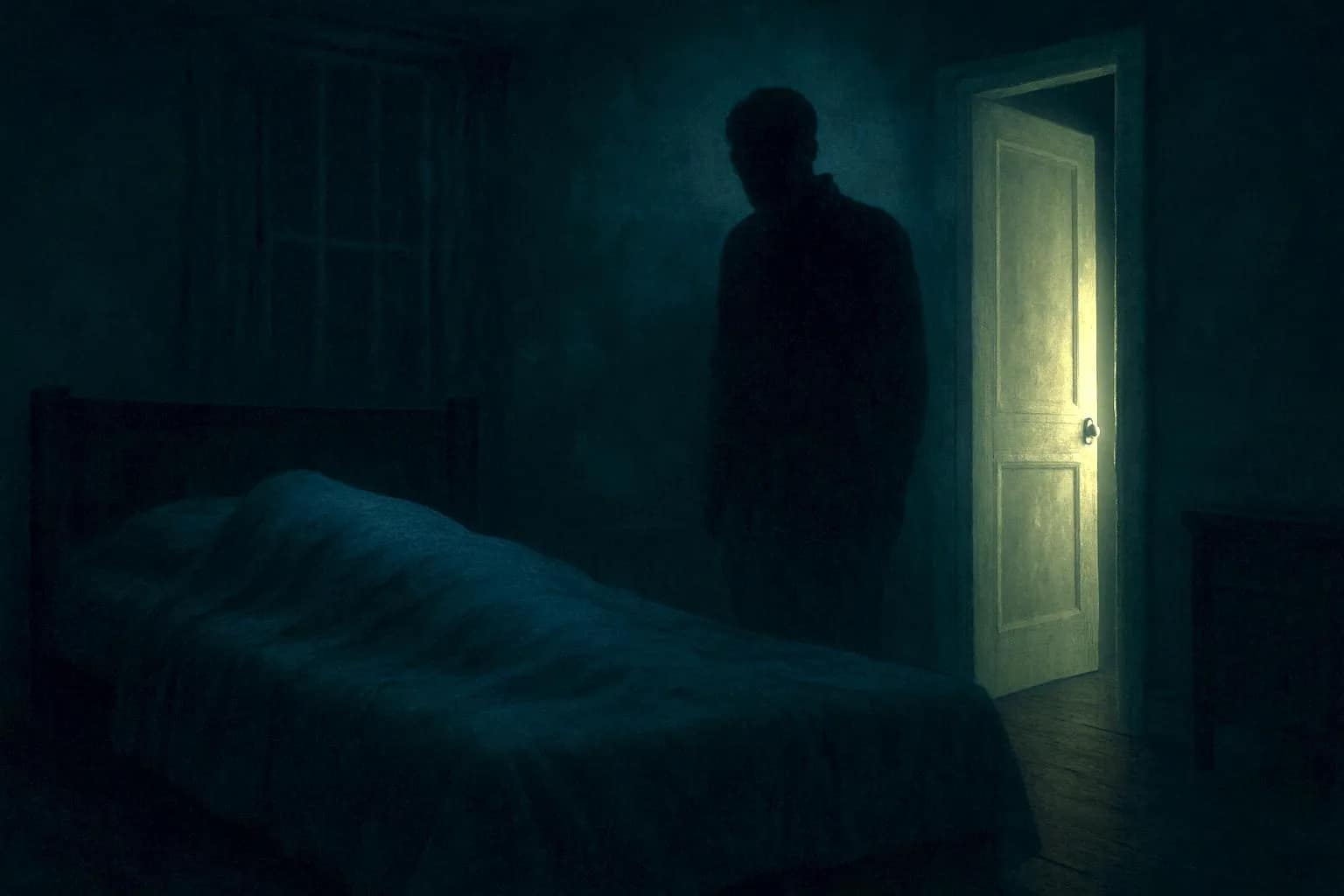
The sensation of being watched is not necessarily accompanied by a visual or auditory experience. A person may not see a face, hear footsteps or detect movement. Instead, there is a powerful internal impression that somebody is nearby.
Psychologists and neuroscientists describe this as a felt presence or sensed presence.
A 2023 review published in The Lancet Psychiatry examined the phenomenon across neurological, psychiatric and non-clinical settings. The researchers found that sensed presence can occur in people with neurological conditions, during sleep paralysis, in periods of anxiety and isolation, and even among otherwise healthy individuals.
Interestingly, the experience is not always frightening.
Some people describe the presence as comforting, familiar or protective. Others experience an indistinct figure standing behind them. In particularly distressing cases, the sensation can feel so convincing that the person believes someone is deliberately following or observing them.
The experience can vary in several ways:
-
A presence behind the body: The feeling that somebody is standing just outside the person’s field of vision.
-
An unseen observer: A conviction that someone is watching, even without any identifiable physical presence.
-
A companion sensation: The impression that another individual is walking alongside the person.
-
A presence near the bed: A sensation that someone is standing in the bedroom, particularly during the transition between sleep and wakefulness.
-
A shadow-like presence: An impression of a human-shaped figure without a clear visual image.
These experiences can feel very different from ordinary imagination. The person may intellectually understand that nobody is there while still experiencing an intense feeling that somebody is nearby.
That difference between knowing and feeling is central to understanding the phenomenon.
2. Your brain is constantly trying to detect other people
One explanation begins with an ability that has been essential to human survival for thousands of years: detecting other people.
Human beings evolved in social environments where recognizing the presence of another person could have significant consequences. Detecting someone approaching from behind, identifying a nearby companion or noticing a potential threat could influence survival.
The brain therefore developed sophisticated systems for interpreting social information.
It combines multiple signals, including:
-
Sounds and subtle changes in the surrounding environment.
-
Visual information and movement.
-
Body position and balance.
-
Touch and pressure.
-
Expectations about where other people might be.
Importantly, the brain does not wait for every piece of information before forming an interpretation.
It constantly makes predictions about what is happening and updates those predictions when new sensory information becomes available.
This process is sometimes described through predictive processing.
Imagine walking through a dark corridor. You hear a faint sound behind you, but you cannot identify its source. Your brain must decide whether it is the building settling, an animal moving or another person approaching.
When information is incomplete, expectations and emotional state can influence the interpretation.
If you are already frightened or hyper-alert, an ambiguous sound may be interpreted as evidence that somebody is nearby.
The brain may effectively produce a stronger sense of another person’s presence than the available sensory information justifies.
This does not mean the experience is imaginary in the sense of being deliberately invented. It means that perception is an active process, not a simple recording of reality.
3. The brain regions that may create the sensation of another person
One of the most fascinating discoveries in this field came from research involving a patient undergoing neurological evaluation for epilepsy.
In 2006, scientists reported in the journal Nature that electrical stimulation of a specific region of the patient’s brain repeatedly produced the sensation that another person was nearby.
The region was the temporoparietal junction (TPJ), an area involved in integrating information about the body, movement and surrounding space.
During the experiment, the patient described an unseen person positioned behind her. Remarkably, the perceived figure appeared to follow changes in her own posture.
When she changed her position, the sensation of the other person changed too.
This was an extraordinary observation because researchers could influence the experience by stimulating a particular part of the brain.
It suggested that the feeling of another person’s presence might sometimes emerge from disturbances in the brain’s representation of the body and its relationship with the surrounding environment.
The brain’s internal model of the body
Your brain continuously maintains an internal representation of where your body is positioned.
It receives information from muscles, joints, skin, balance organs and vision. These signals help you understand whether you are standing, sitting, moving or reaching for something.
The TPJ contributes to combining several of these signals.
When this integration becomes disrupted, the brain may misattribute signals associated with its own body to an external presence.
In other words, a sensation that normally belongs to your own body may be interpreted as coming from somebody else.
This is not the only brain region involved. Research has also implicated parts of the insular and frontoparietal cortex in experiences of sensed presence.
Scientists are still investigating exactly how these networks work together.
4. Scientists actually recreated the feeling of an invisible person
Perhaps the most remarkable experiment in this field occurred in 2014.
Researchers developed a robotic system designed to manipulate the relationship between a person’s movements and the sensations they received from their body.
Participants interacted with a robotic mechanism that touched their backs in response to their own movements.
Initially, the experience was relatively straightforward. When participants moved, they received corresponding tactile feedback.
But the researchers introduced a delay between the movements and the sensations.
Suddenly, the relationship between what participants did and what they felt became inconsistent.
Some participants reported experiencing another person standing behind them.
The sensation was not created by placing an actual human being in the room. It emerged from a carefully controlled mismatch between motor commands and sensory feedback.
This experiment provided important evidence that the feeling of an invisible presence can be generated through disturbances in the brain’s processing of bodily information.
It also suggested that the experience is not necessarily associated with severe mental illness.
Healthy participants could experience similar sensations under experimental conditions.
The implications are fascinating: the brain’s sense of another person may depend partly on how accurately it distinguishes its own movements and sensations from those originating outside the body.
5. Why the sensation becomes stronger at night

For many people, the experience of being watched occurs during the night, particularly while falling asleep or waking up.
One possible explanation is sleep paralysis.
During normal rapid eye movement (REM) sleep, the brain temporarily suppresses most voluntary muscle activity. This prevents people from physically acting out their dreams.
Sometimes, awareness returns before this temporary muscle paralysis has ended.
A person may become conscious of the bedroom while remaining unable to move.
The experience can be accompanied by vivid hallucinations, including the sensation that another person or entity is inside the room.
Sleep researchers often describe three broad patterns of sleep-paralysis experiences:
-
Intruder experiences: The impression that an unfamiliar person or threatening presence has entered the room.
-
Incubus experiences: A sensation of pressure on the chest, sometimes accompanied by a feeling of suffocation or an entity sitting on the body.
-
Vestibular-motor experiences: Sensations of floating, movement, falling or leaving the body.
A systematic review published in 2024 documented the occurrence of human and non-human presence hallucinations during sleep paralysis. The researchers discussed how these experiences may involve overlapping sleep-related and fear-processing mechanisms.
This may help explain why stories of nighttime visitors, shadow figures and supernatural intruders appear across different cultures.
People experiencing sleep paralysis may interpret similar neurological events through very different cultural beliefs.
The sensation can be terrifying, but an episode of sleep paralysis does not establish that an external entity was present.
6. Can anxiety and isolation make you feel watched?
The environment in which an experience occurs can influence how the brain interprets it.
Consider someone spending several days alone in a remote location. There are few familiar sounds, little social interaction and limited opportunities to confirm what is happening around them.
Under these conditions, ordinary environmental signals may become more noticeable.
A branch moving outside, a distant sound or an unexplained creaking noise may trigger increased alertness.
Anxiety can amplify this response.
When someone expects danger, the brain may become particularly sensitive to uncertain information. It may prioritize possible threats even when the available evidence is weak.
Research into sensed presence has identified associations with loneliness, adverse experiences, poor sleep and other psychological factors. However, these associations do not prove that any one factor directly causes the sensation.
This distinction matters because people sometimes assume that experiencing an invisible presence means something is seriously wrong with them.
That is not necessarily true.
An occasional, brief sensation can occur without indicating a neurological or psychiatric disorder.
However, repeated experiences accompanied by severe anxiety, sleep disruption or other unusual perceptions deserve attention.
7. Can neurological conditions produce this experience?
Sensed presence has also been documented in people with certain neurological conditions.
This does not mean that everyone who experiences the sensation has a neurological disorder. However, studying these patients has helped researchers understand the brain networks involved.
Epilepsy
Some people with epilepsy experience unusual sensory or perceptual events before or during seizures.
Depending on the brain regions involved, these experiences may include unfamiliar sensations, changes in perception, unusual emotional responses or the impression that another person is nearby.
The 2006 electrical-stimulation experiment is particularly relevant because it demonstrated that activity involving the temporoparietal junction could trigger a sensed presence in a patient undergoing epilepsy evaluation.
Parkinson’s disease
Researchers have also documented sensed presence among people with Parkinson’s disease.
A study published in the Journal of Neurology, Neurosurgery & Psychiatry examined patients who experienced this phenomenon. Many described a brief impression of somebody standing beside or behind them, sometimes accompanied by visual disturbances.
The findings suggest that changes in brain function associated with Parkinson’s disease can affect how the brain interprets the presence of other people.
Sleep and psychiatric conditions
Sensed presence has also been reported in association with sleep disorders, anxiety, psychosis and other psychological experiences.
However, the sensation alone is not sufficient to diagnose any condition.
If someone experiences frequent, distressing or increasingly convincing sensations of being watched, particularly alongside other unusual perceptions, confusion or disrupted sleep, a medical assessment can help identify possible causes.
Sudden changes in perception, especially when accompanied by confusion, seizures or other new neurological symptoms, warrant prompt medical attention.
8. Are people actually sensing something that science cannot detect?
This is where scientific investigation meets centuries of human belief.
Across different cultures, people have described experiences involving unseen companions, spirits, guardians and mysterious observers.
Some interpret these sensations as evidence of supernatural activity. Others understand them through religious or spiritual traditions.
Science does not need to dismiss someone’s personal interpretation to investigate the underlying experience.
Researchers can study what happens in the brain, identify conditions associated with the sensation and investigate whether particular neural processes can reproduce it experimentally.
The important distinction is between experiencing a presence and establishing that an external being exists.
At present, neuroscience has demonstrated that sensed presence can arise from changes in bodily perception, sensory integration and brain activity. It has not established that these experiences are evidence of invisible entities.
There are still unanswered questions about why the experience occurs in some people but not others, why it can feel comforting in one situation and terrifying in another, and how expectations and cultural beliefs influence its interpretation.
These questions remain active areas of research.
9. What can you do if you frequently feel an invisible presence?
An occasional sensation of being watched, particularly when tired, anxious or falling asleep, does not automatically indicate a medical problem.
However, if the experience becomes frequent or distressing, several practical steps may help.
-
Improve sleep quality: Maintain regular sleeping hours and address persistent insomnia.
-
Manage stress: Relaxation techniques, physical activity and appropriate psychological support may help reduce hypervigilance.
-
Observe patterns: Record when the sensations occur, how long they last and whether they are associated with sleep, stress, medication or other symptoms.
-
Review medications: Discuss unusual perceptual experiences with a healthcare professional, particularly if they begin after a medication change.
-
Seek medical advice: Persistent or distressing experiences deserve professional evaluation, especially if accompanied by hallucinations, significant anxiety or neurological symptoms.
It is important not to assume that an experience is supernatural or that it necessarily indicates mental illness.
Understanding its context is the first step towards understanding what might be happening.
The mystery is not necessarily outside you
Perhaps the most remarkable aspect of the invisible-presence phenomenon is that the brain can create an experience that feels as though another person is physically standing beside you.
You may not see anyone. You may not hear anything. There may be no movement, no footsteps and no identifiable source of information.
Yet the sensation can feel real.
Neuroscience has begun to uncover how this happens. Experiments involving electrical brain stimulation and robotic sensory manipulation have demonstrated that disturbances in the brain’s representation of the body can produce the impression of another presence.
Sleep paralysis, neurological conditions, anxiety and environmental isolation offer additional clues.
But scientists still do not understand every aspect of this unusual experience.
The human brain is constantly constructing our perception of the world, including the distinction between ourselves and other people. When that process becomes disrupted, the boundary between self and other can become surprisingly fragile.
Perhaps the strangest possibility is not that an invisible person is watching you.
It is that your own brain can sometimes make you feel as though someone is there, even when the surrounding room is completely empty.




