
Sometimes the most disturbing mysteries are not those involving strange objects in the sky or unexplained signals from deep space. They are the cases in which something—or someone—simply disappears.
A ship leaves port with hundreds of people aboard and never reaches its destination. An entire settlement is found abandoned, with no clear explanation for where its inhabitants went. Three lighthouse keepers vanish from an isolated island, leaving their workplace apparently prepared for another ordinary day.
There are no confirmed escape routes, no reliable witnesses to the final moments and, in some cases, almost nothing that investigators can physically examine.
History contains numerous disappearances that have resisted complete explanation. Some have acquired extraordinary reputations because the available evidence is genuinely limited. Others became mysterious because the passage of time destroyed records, scattered physical remains or allowed speculation to replace documented facts.
But what happens when investigators examine these cases through archaeology, oceanography, meteorology, forensic science and modern technology?
The results are fascinating. Some mysteries become less mysterious. Others remain stubbornly unresolved.
Here are four remarkable disappearances that demonstrate just how difficult it can be to reconstruct an event when the evidence has almost completely disappeared.
1. The Lost Colony of Roanoke: An entire settlement disappears

In 1587, an English expedition established a settlement on Roanoke Island, off the coast of present-day North Carolina. The group included more than 100 people, among them men, women and children. Their governor was an artist and explorer named John White.
One of the children born during the settlement’s early days was Virginia Dare, whose birth became an important event in the history of English colonization in North America.
But the colony was struggling.
Food supplies were limited, relations with neighbouring Indigenous communities had become strained, and the settlers needed additional assistance. White eventually sailed back to England to obtain supplies and reinforcements.
He expected to return much sooner.
Instead, war between England and Spain, along with difficulties obtaining ships, delayed his return for approximately three years.
When White finally reached Roanoke in August 1590, he discovered something extraordinary.
The settlement had been abandoned.
There were no colonists waiting for him. No bodies were found. There was no clear evidence of a violent attack or a desperate evacuation.
The only significant clues were two carvings: the letters CRO on a tree and the word CROATOAN on a wooden post or palisade.
What did CROATOAN mean?
The word was not entirely mysterious. Croatoan referred to an Indigenous people and a nearby island, now known as Hatteras Island.
Before leaving, White had reportedly instructed the settlers to leave a message indicating where they intended to relocate. If they were forced to leave under dangerous circumstances, they were supposed to carve a distinctive distress symbol.
White found no such symbol.
He therefore suspected that the settlers might have moved to Croatoan, potentially joining the Indigenous community there.
Unfortunately, bad weather prevented him from completing the journey to investigate.
That missed opportunity became one of the most frustrating aspects of the mystery.
Could the colonists have assimilated?
One explanation is that the settlers abandoned Roanoke voluntarily and integrated into nearby Indigenous communities.
Archaeological investigations on Hatteras Island have uncovered European objects dating to the late sixteenth century, including material that researchers have considered potentially relevant to the Lost Colony. However, objects can move through trade, exchange and later occupation, so they do not independently establish the settlers’ fate.
Another possibility is that some colonists moved inland in search of food and safer living conditions.
Environmental evidence also provides an important clue. Tree-ring research has identified an exceptionally severe drought in the region between 1587 and 1589, which may have placed additional pressure on an already vulnerable settlement.
Could disease, hunger, conflict or a combination of these circumstances have caused the settlement to break apart?
All remain possible explanations.
The National Park Service continues to describe the fate of the Lost Colony as unresolved. No definitive archaeological evidence has established what happened to all the settlers.
The strangest part is that the colonists may not have vanished at all. They may have disappeared from English records while becoming part of another society.
2. The Flannan Isles Lighthouse: Three keepers vanish from an isolated island

The North Atlantic is not a forgiving place. Its waters can turn violent with little warning, and the rocky islands scattered across Scotland’s western coast have witnessed centuries of maritime danger.
One of those locations became the setting for a disappearance that continues to fascinate historians.
On 26 December 1900, a lighthouse tender called Hesperus arrived at the Flannan Isles, a remote group of islands in Scotland’s Outer Hebrides.
The vessel had come to relieve the lighthouse keepers.
But something was wrong.
The lighthouse was deserted.
Three men had been assigned to the station:
-
James Ducat, the principal keeper.
-
Thomas Marshall, assistant keeper.
-
Donald McArthur, occasional keeper.
When the relief party entered the lighthouse, they found no one.
The lamps had been prepared, the machinery was cleaned, and the kitchen was tidy. Two sets of outdoor clothing were missing. The keepers themselves had disappeared.
There were no confirmed signs that the men had packed their belongings and departed permanently. There was also no clear evidence of a struggle.
The strange evidence outside the lighthouse
The investigation discovered damage around the western landing area.
An iron railing had been twisted out of position, and a heavy block of stone had been displaced. Other evidence indicated that powerful waves had struck the island.
The official investigation suggested that the men may have gone down to the landing to secure equipment or inspect storm damage.
A large wave could then have swept them into the sea.
This explanation is supported by the physical damage found at the site, although nobody witnessed the final moments.
Why did the story become so mysterious?
Over time, popular retellings added dramatic details about abandoned meals, mysterious logbook entries and strange behaviour among the keepers.
Some of these stories have been exaggerated or misrepresented.
The surviving records establish that the lighthouse was operational, the men disappeared and storm damage was present. They do not establish supernatural events or a mysterious force.
The most plausible explanation remains a maritime accident involving dangerous waves.
But there is a fundamental problem: no bodies were recovered, and the exact sequence of events cannot be reconstructed.
The Flannan Isles case demonstrates how an apparently ordinary workplace can become a mystery when an isolated accident leaves no witnesses.
3. MH370: The passenger aircraft that disappeared over the ocean
Few modern disappearances have generated as much international attention as Malaysia Airlines Flight MH370.
On 8 March 2014, a Boeing 777 departed Kuala Lumpur International Airport, heading towards Beijing, China. There were 239 people aboard, including passengers and crew.
The aircraft disappeared from civilian radar during its journey.
What followed was one of the most extensive and expensive aviation searches in history.
The disappearance was particularly disturbing because modern aircraft are equipped with multiple communication and tracking systems. Investigators expected that an aircraft of this size would leave behind substantial digital evidence.
Yet the main wreckage remained undiscovered.
What happened during the flight?
MH370’s transponder stopped transmitting, and military radar subsequently tracked an aircraft believed to be the missing Boeing 777 deviating from its planned route.
Radar data indicated that it turned back across the Malay Peninsula before heading towards the Andaman Sea.
Satellite communications later provided information about the aircraft’s movements. Analysis of these signals indicated that it continued flying for several hours and probably ended its journey in the southern Indian Ocean.
This was an important breakthrough.
Investigators had narrowed the likely search region, but the southern Indian Ocean is enormous, remote and exceptionally deep in places.
Locating a wreck on the seabed became a formidable engineering challenge.
Physical evidence finally appeared
Although the main aircraft was never located, pieces of debris eventually washed ashore in the western Indian Ocean.
In July 2015, a flaperon was discovered on Réunion Island. Investigators confirmed that it came from MH370.
Other debris was subsequently recovered along coastlines in Africa and nearby islands. Some pieces were confirmed as belonging to the aircraft, while others were assessed as likely or possible matches.
This evidence made one conclusion increasingly difficult to avoid: the aircraft had almost certainly crashed into the ocean.
But it did not establish precisely where, why or how.
The latest search has still not solved the mystery
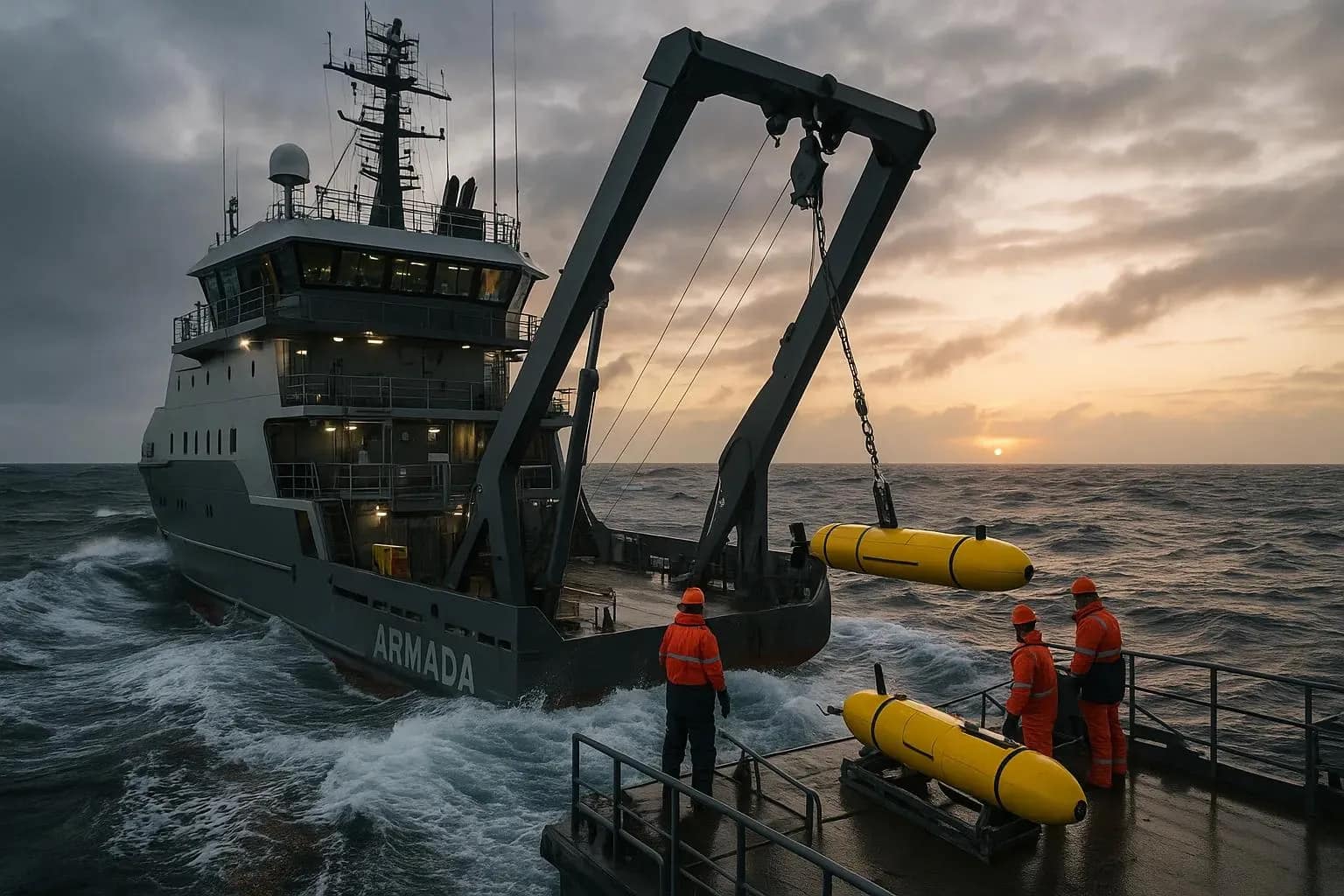
In March 2025, Malaysia signed an agreement with marine robotics company Ocean Infinity to conduct a renewed search of a new 15,000-square-kilometre area in the southern Indian Ocean.
The operation was conducted in two phases, with the second taking place between 31 December 2025 and 23 January 2026.
According to the Malaysian Ministry of Transport’s March 2026 update, the operation completed 28 days of seabed search activity and surveyed approximately 7,571 square kilometres. It did not identify the aircraft wreckage.
This illustrates the difficulty of investigating disappearances in the deep ocean. Even sophisticated autonomous underwater vehicles and advanced sonar systems cannot guarantee that a wreck will be found.
The mystery is not that an aircraft could disappear into the sea. The mystery is that, despite extensive investigation and physical evidence, its final resting place and the circumstances of its disappearance remain unknown.
For the families of the 239 people aboard, the absence of definitive answers remains deeply painful.
4. SS Waratah: The ship that vanished with 211 people
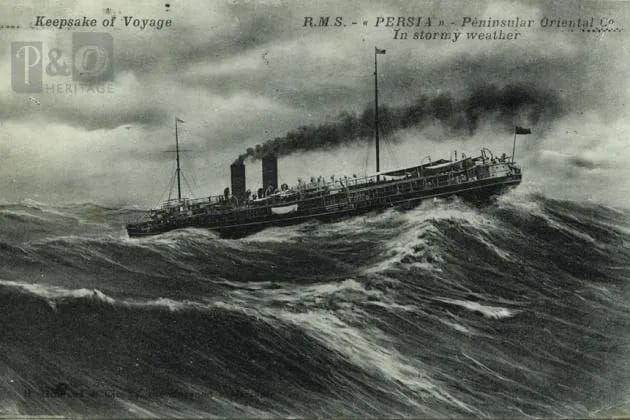
In July 1909, a large passenger and cargo steamship called the SS Waratah was travelling along the South African coast.
The vessel had departed Durban and was expected to reach Cape Town before continuing its journey.
It never arrived.
There were 211 passengers and crew aboard.
Unlike MH370, which left behind identifiable debris, the Waratah became a maritime mystery because investigators could not establish the location of its wreck.
The final reported sightings
The ship was reportedly seen by other vessels during its final days. One account described an unusually large amount of smoke coming from a steamship, followed by two bright flashes.
However, the identification of the vessel was never conclusively established.
The Waratah failed to reach Cape Town, triggering searches involving naval vessels and other ships. Extensive efforts failed to locate the missing liner or recover identifiable remains.
What could have happened?
Several explanations have been proposed.
One possibility is that the ship encountered an exceptionally dangerous storm. Another involves a rogue wave, an unusually large ocean wave capable of overwhelming even a substantial vessel under the wrong conditions.
A 2025 paper in the Journal of Maritime Archaeology reconsidered the Waratah’s disappearance using historical accounts, maritime engineering, weather reconstruction and oceanographic analysis. It identified a possible wreck location off Algoa Bay, near present-day Gqeberha, South Africa.
However, this is a proposed search location, not a confirmed discovery of the wreck.
The ship’s disappearance remains unresolved.
The case demonstrates how difficult it can be to investigate a maritime disaster when the vessel itself has not been conclusively identified on the seabed.
5. Why do some disappearances leave almost no evidence?
The four cases reveal something important: not every disappearance is mysterious for the same reason.
Sometimes the evidence was never created. Sometimes it existed but was destroyed. In other cases, the evidence survives but cannot tell investigators exactly what happened.
Several scientific and environmental processes help explain this.
The ocean can hide enormous objects
Deep oceans are among the most difficult environments to investigate.
A wreck can rest thousands of metres below the surface, where darkness, pressure, sediment and difficult terrain complicate recovery.
Ocean currents can also transport debris over enormous distances. What eventually washes ashore may be separated from the original wreck by hundreds or thousands of kilometres.
Nature gradually destroys physical evidence
Wood decays. Metal corrodes. Organic remains decompose. Buildings collapse and become covered by vegetation or sediment.
In coastal regions, erosion and changing shorelines can even place archaeological sites underwater.
This means that an event from several centuries ago may leave behind very little recognizable evidence, even if it involved hundreds of people.
Human memory is not a perfect recording system
Witness accounts are valuable, but memory changes.
People can misremember dates, locations, sequences and details, particularly when an event becomes famous and repeated stories begin influencing how it is remembered.
Investigators therefore distinguish contemporary records from accounts produced years or decades later.
The absence of evidence is not evidence of something extraordinary
This is perhaps the most important principle when examining unexplained disappearances.
If investigators cannot find a body, aircraft or shipwreck, it does not automatically mean that the object disappeared through an unknown physical process.
It may mean that the search area is too large, the remains are inaccessible or the available investigative methods cannot yet identify the evidence.
Mystery should encourage investigation, not replace it.
6. Could modern technology finally solve these disappearances?
Technology is changing how investigators approach historical and contemporary mysteries.
Some techniques are already making a difference.
Underwater autonomous vehicles: Modern underwater robots can systematically scan enormous areas of the seabed using sonar and other sensors. They can investigate depths that would be extremely dangerous for human divers.
Satellite imagery: Satellite data can help reconstruct aircraft movements, environmental conditions and changes to landscapes over time.
DNA analysis: Even small biological remains may sometimes provide genetic information that helps identify missing individuals, provided usable samples survive and can be recovered.
Ground-penetrating radar and remote sensing: Archaeologists can investigate buried settlements and structures without excavating every part of a site.
Artificial intelligence: Machine-learning systems can help examine large collections of satellite images, sonar recordings and historical records, identifying patterns that might otherwise be overlooked.
However, technology cannot guarantee a solution. It depends on the quality of available evidence, the condition of the environment and the accuracy of the underlying data.
A sophisticated machine cannot reconstruct information that has been completely destroyed.
7. The unsettling question: How many disappearances will never be explained?
The cases of Roanoke, Flannan Isles, MH370 and SS Waratah are separated by centuries, geography and technology.
Yet they share an important feature: investigators have been unable to reconstruct every detail of what happened.
In Roanoke, the possibility of migration and assimilation remains plausible, but the final fate of the settlers has not been established.
At Flannan Isles, the evidence supports a likely maritime accident, but the final moments of the three keepers remain unknown.
With MH370, satellite data and recovered debris provide substantial evidence about the aircraft’s final journey, but its main wreckage and the precise circumstances of the disappearance remain unresolved.
With the Waratah, a catastrophic loss at sea is the accepted historical explanation, but its wreck has not been conclusively identified.
Perhaps the most unsettling aspect of these stories is not that they suggest supernatural forces or mysterious dimensions.
It is that the world is still capable of hiding enormous amounts of evidence from us.
An ocean can conceal an aircraft. A changing coastline can swallow the remains of a settlement. A storm can erase the final traces of a ship. And a community can disappear from historical records without necessarily disappearing from human society.
Science has become extraordinarily powerful at reconstructing the past, but it still has limits.
Sometimes the evidence is waiting to be discovered. Sometimes it has been scattered beyond recognition.
And sometimes, despite every investigation, the final answer may never be known.




