
What if doctors could use sound waves to deliver cancer-fighting molecules directly into a brain tumour, bypassing one of the body’s most sophisticated protective systems?
It sounds like something from futuristic medicine, but researchers are now investigating precisely this possibility.
Scientists at the University of Virginia (UVA) have developed an experimental approach that combines three technologies: focused ultrasound, microscopic drug-carrying nanoparticles and tiny genetic regulators called microRNAs.
The goal is to attack glioblastoma, an aggressive form of brain cancer that remains extraordinarily difficult to treat.
The approach addresses one of the biggest problems in brain cancer medicine. Even when researchers develop promising drugs capable of attacking cancer cells, getting those drugs into the brain can be extremely difficult.
The brain has a natural protective barrier that prevents many substances circulating in the bloodstream from entering its delicate tissues. Unfortunately, this same protection can also prevent potentially useful cancer treatments from reaching their intended targets.
The UVA research team is exploring whether carefully directed sound waves can temporarily open this barrier, allowing specially designed nanoparticles carrying microRNAs to enter the brain and interfere with multiple cancer-promoting pathways.
Early experiments in laboratory and animal models have produced encouraging results, including slower tumour growth and longer survival in treated animals.
But there is an important qualification: this is experimental research, not an established treatment for people with glioblastoma.
If the approach can eventually be made safe and effective in humans, it could open an entirely new direction in the treatment of one of medicine’s most challenging cancers.
Why Is Glioblastoma So Difficult to Treat?
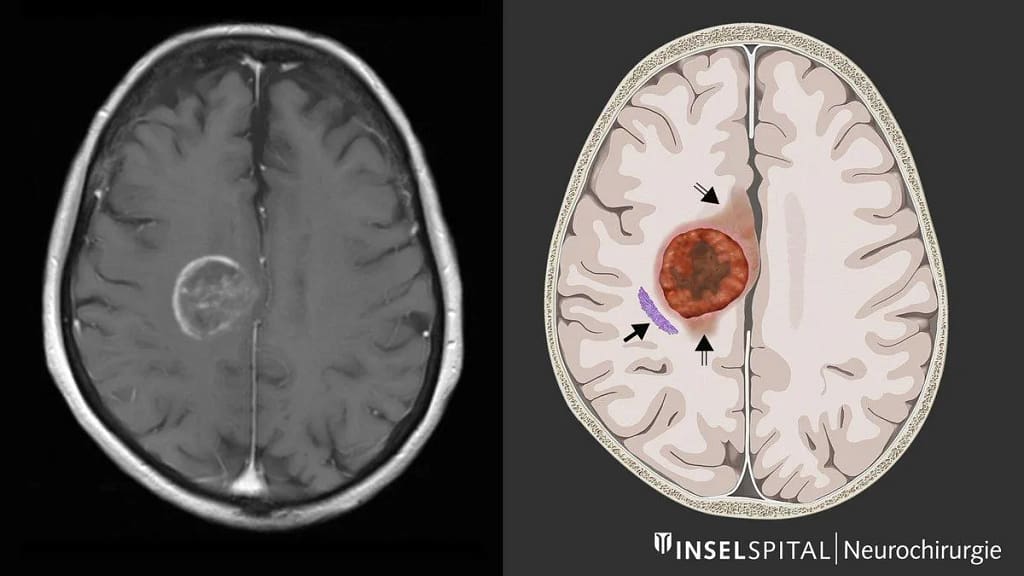
Glioblastoma, commonly abbreviated as GBM, is an aggressive malignant brain tumour that develops from cells in the brain’s supporting tissue.
It is particularly dangerous because of its ability to infiltrate surrounding brain tissue.
Unlike a tumour that grows as a clearly separated mass, glioblastoma cells can extend microscopic projections into neighbouring areas of the brain. These scattered cancer cells make it difficult for surgeons to remove every malignant cell without damaging essential brain structures.
Even after surgery, remaining cancer cells can continue growing.
Standard treatment generally involves a combination of surgery, radiotherapy and chemotherapy, often using the drug temozolomide.
Despite these treatments, glioblastoma frequently returns.
The disease also presents several biological challenges:
-
Infiltrative growth: Cancer cells spread into surrounding brain tissue, making complete surgical removal difficult.
-
Genetic complexity: Different tumour cells can contain different genetic abnormalities, allowing some cells to resist treatments that affect others.
-
Treatment resistance: Glioblastoma can adapt to therapies and activate alternative pathways that help it survive.
-
The blood-brain barrier: Many potentially useful medicines cannot reach the brain in sufficient concentrations.
According to the University of Virginia’s October 2026 research discussion, median survival for glioblastoma patients remains around 15 months, although individual outcomes vary considerably.
Researchers therefore need approaches that can reach more cancer cells while attacking several of the biological mechanisms responsible for tumour growth.
This is where the combination of microRNA and focused ultrasound becomes particularly interesting.
The Blood-Brain Barrier: The Biggest Obstacle
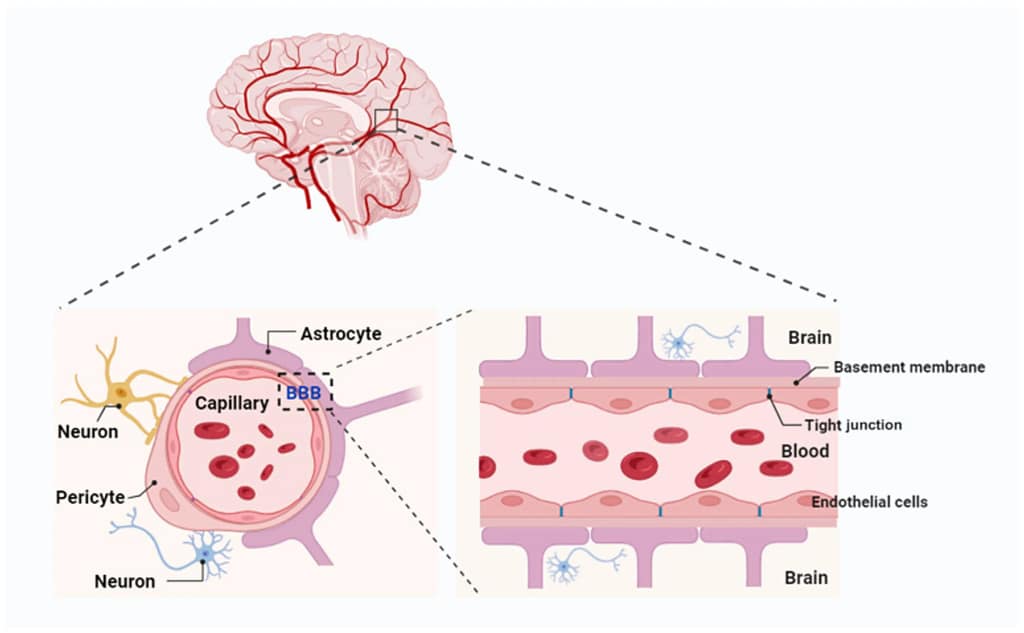
The human brain has a remarkable defence system called the blood-brain barrier.
It is a highly selective layer of cells surrounding blood vessels in the brain. These cells are joined by specialised structures called tight junctions, which regulate what can move from the bloodstream into brain tissue.
Its purpose is essential.
The barrier helps protect the brain from harmful chemicals, toxins, pathogens and other substances circulating in the blood.
However, this protection creates a major problem for medical researchers.
Many medicines that work effectively elsewhere in the body cannot cross the blood-brain barrier in sufficient quantities.
Some chemotherapy drugs struggle to reach brain tumours. Larger biological molecules, including certain gene therapies, face even greater difficulties.
Glioblastoma makes the situation more complicated.
Although the blood vessels inside parts of a tumour may become abnormal and leaky, other areas retain a relatively intact blood-brain barrier. Cancer cells can also infiltrate surrounding brain tissue beyond the main tumour mass.
This means that simply delivering a drug into the bloodstream does not guarantee that it will reach all the cancer cells.
Researchers have therefore been exploring ways to temporarily and locally increase the permeability of the barrier without causing lasting damage.
Focused ultrasound is one of the most promising technologies being investigated for this purpose.
How Focused Ultrasound Could Open the Brain’s Protective Barrier
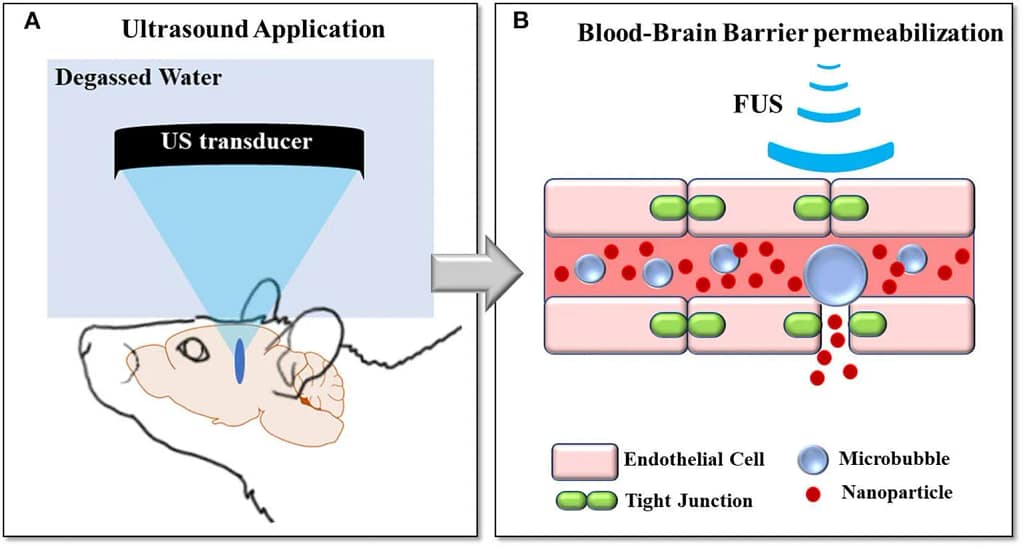
Focused ultrasound works by concentrating sound energy on a specific region inside the body.
Unlike ordinary ultrasound imaging, which uses sound waves to produce pictures, therapeutic focused ultrasound delivers energy to a carefully selected target.
For brain research, doctors and scientists can use magnetic resonance imaging (MRI) guidance to help identify the intended treatment area.
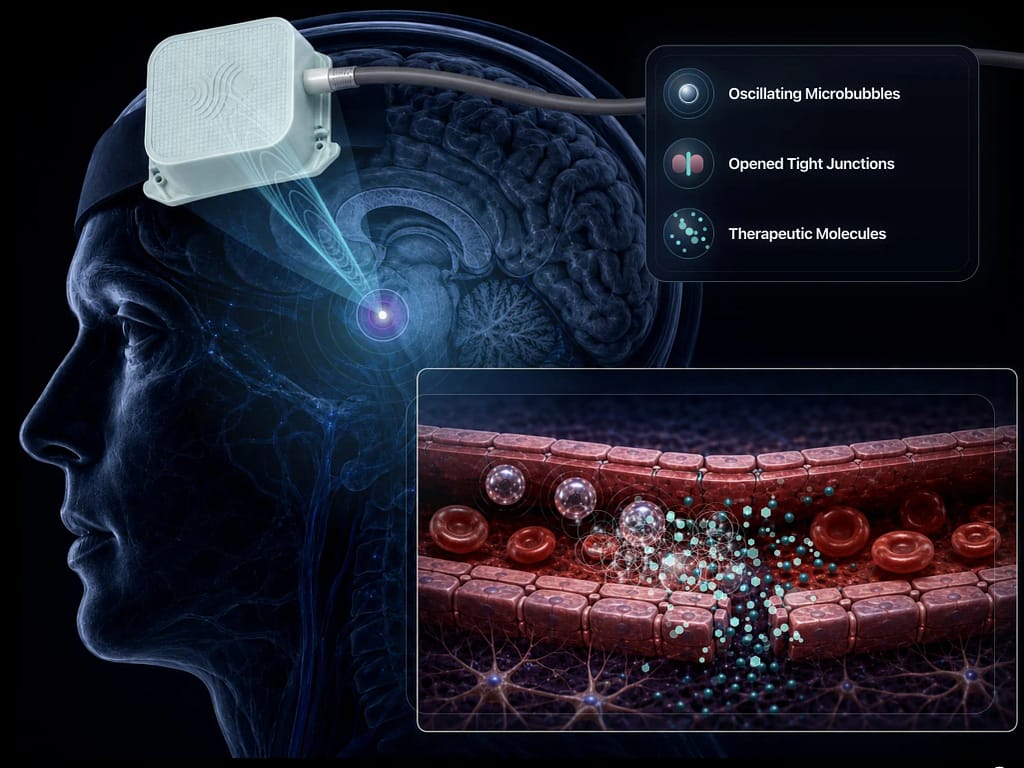
The experimental approach developed by the UVA researchers uses focused ultrasound together with tiny gas-filled structures called microbubbles.
These microbubbles are introduced into the bloodstream.
When the focused sound waves reach the selected area, the microbubbles begin to oscillate in response to the acoustic energy.
Their movement creates mechanical effects on the walls of nearby blood vessels.
Under carefully controlled conditions, these effects can temporarily increase the permeability of the blood-brain barrier.
This creates a short-lived opportunity for therapeutic molecules to move from the bloodstream into the targeted brain tissue.
The important advantage is localisation.
Rather than opening the protective barrier throughout the entire brain, researchers can direct the ultrasound towards a specific region.
Once the treatment window closes, the barrier can begin returning to its normal protective state.
However, this process requires careful control.
Excessive ultrasound exposure or uncontrolled microbubble activity can damage blood vessels and surrounding brain tissue. Researchers therefore investigate the acoustic pressure, frequency, exposure duration and microbubble behaviour to balance delivery efficiency with safety.
The technology is not entirely theoretical. Focused ultrasound-mediated blood-brain barrier opening has already been investigated in human studies involving brain tumours.
The newer UVA research builds on this foundation by combining the technique with more sophisticated genetic therapies.
MicroRNAs: Tiny Molecules With the Potential to Disrupt Cancer Growth
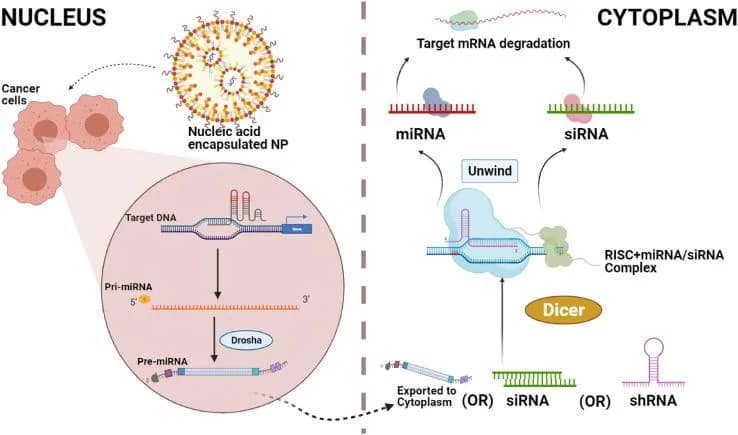
The second major component of the experimental treatment involves microRNAs, commonly known as miRNAs.
These are extremely small molecules of RNA that help regulate how genes function.
To understand their importance, it helps to consider how cells use genetic information.
Genes contain instructions that cells use to produce proteins. These proteins perform countless functions, including controlling cell growth, repairing damage and regulating normal biological activity.
But not every gene needs to remain active all the time.
MicroRNAs help control gene expression by binding to particular messenger RNA molecules. This can prevent those messages from being translated into proteins or encourage their breakdown.
In simple terms, microRNAs act like biological regulators that can reduce the activity of selected genes.
This is especially interesting in cancer research.
Glioblastoma cells frequently contain abnormal molecular pathways that encourage uncontrolled growth, survival and resistance to treatment.
Instead of attacking only one of these pathways, researchers are investigating whether carefully selected microRNAs can influence several cancer-promoting mechanisms simultaneously.
The UVA team identified microRNAs, including miR-340 and miR-382, that can target multiple deregulated pathways associated with glioblastoma.
The advantage of this approach is that it could potentially interfere with several processes that cancer cells depend on.
For a disease as genetically complex as glioblastoma, targeting multiple pathways may be more effective than relying on a single molecular target.
However, microRNA therapy also presents challenges.
These molecules must reach the correct cells, remain sufficiently stable and avoid producing unwanted effects in healthy tissue.
This is why the delivery system is just as important as the genetic material itself.
How Nanoparticles Carry the Cancer-Fighting Instructions
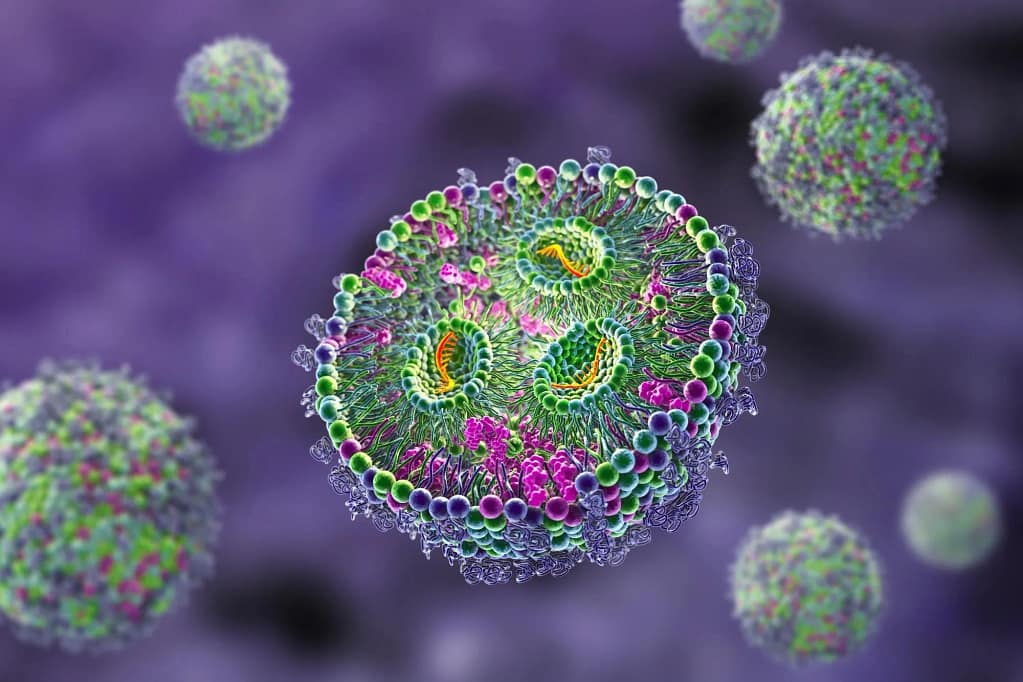
Even if scientists identify a microRNA capable of interfering with cancer growth, they still need a reliable way to transport it into the brain.
This is where nanoparticles enter the picture.
Nanoparticles are extremely small structures engineered to carry therapeutic substances through the body.
Depending on their design, they can protect delicate biological molecules from degradation, improve their stability and help deliver them to specific tissues.
The UVA research uses specially designed brain-penetrating nanoparticles to transport microRNAs.
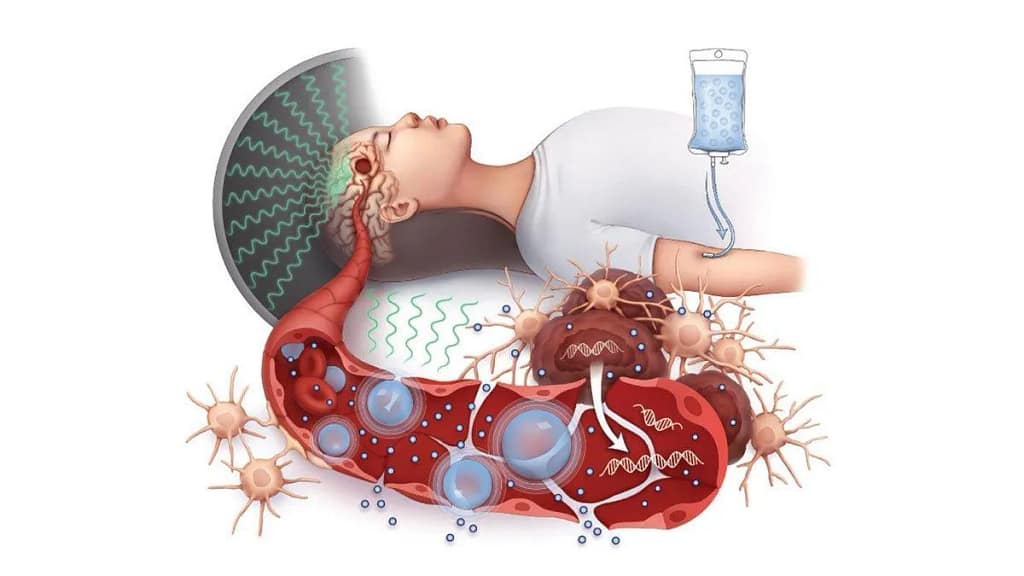
The treatment is designed to work through a sequence of coordinated steps:
-
The therapeutic microRNAs are loaded into specially engineered nanoparticles.
-
The nanoparticles are introduced into the bloodstream.
-
Microbubbles circulate through the blood vessels near the intended treatment area.
-
MRI-guided focused ultrasound activates the microbubbles in the targeted region.
-
The temporary opening of the blood-brain barrier allows the nanoparticles to enter the brain tissue.
-
The delivered microRNAs can then interfere with molecular pathways that help glioblastoma cells grow.
The combination is important because each technology addresses a different problem.
-
Focused ultrasound provides spatial control.
-
Microbubbles help temporarily increase blood-brain barrier permeability.
-
Nanoparticles protect and transport the therapeutic molecules.
-
MicroRNAs interfere with multiple cancer-associated genetic pathways.
Together, they create an experimental delivery system designed to make treatments that would otherwise struggle to reach the brain more accessible.
What Happened When Scientists Tested the Treatment?
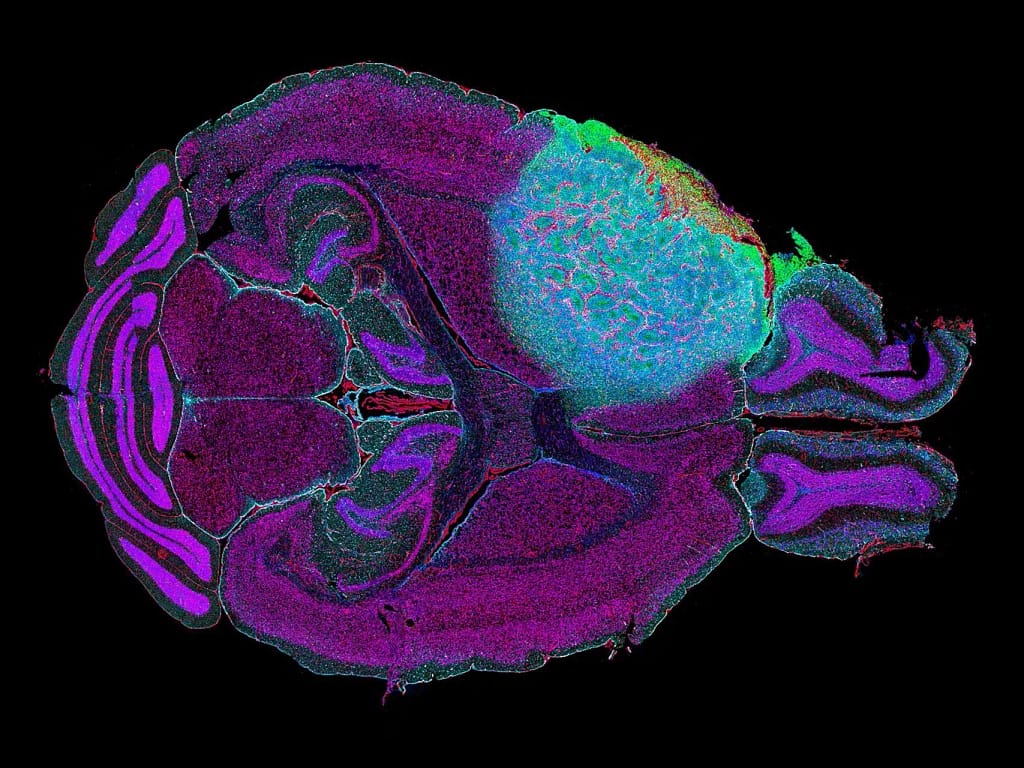
The research led by Roger Abounader and colleagues at the University of Virginia produced encouraging results in laboratory experiments and animal models.
The researchers investigated whether microRNAs could suppress several abnormal molecular pathways involved in glioblastoma.
They then combined the genetic treatment with brain-penetrating nanoparticles, microbubbles and MRI-guided focused ultrasound.
The findings showed that the delivered microRNAs could slow tumour growth in experimental glioblastoma models.
The researchers also reported improved survival in treated animals compared with control groups.
Two microRNAs were particularly important in the experiments:
miR-340: Investigated for its ability to interfere with cancer-promoting molecular activity.
miR-382: Another microRNA studied for its potential to suppress multiple pathways involved in glioblastoma development and progression.
The significance lies in the possibility of targeting several abnormal processes rather than depending on one drug acting on one molecular target.
This matters because glioblastoma is highly adaptable.
If a treatment blocks one growth pathway, cancer cells may sometimes activate alternative mechanisms that allow them to survive.
A treatment capable of influencing multiple pathways could potentially make it more difficult for tumour cells to escape its effects.
Nevertheless, results in animal models do not establish that the same treatment will work in humans.
Differences in brain anatomy, tumour biology, immune responses and drug distribution can substantially affect how an experimental therapy performs in clinical settings.
The research therefore represents an important early step rather than a breakthrough that patients can currently access.
Could Sound Waves Eventually Make Cancer Treatment More Precise?
One of the most promising aspects of focused ultrasound is its ability to deliver energy to selected regions.
Traditional systemic cancer treatments circulate throughout the body. Although they can reach tumours, they may also affect healthy tissues.
A more localised delivery method could potentially increase the amount of treatment reaching a tumour while reducing unnecessary exposure elsewhere.
This does not automatically eliminate side effects.
Nanoparticles may accumulate in unintended tissues, microRNAs can affect biological pathways beyond the intended target, and ultrasound can damage blood vessels if incorrectly controlled.
Nevertheless, researchers believe the ability to combine localised ultrasound with engineered therapeutic carriers could improve precision.
The technology may eventually be useful beyond glioblastoma.
Researchers are investigating focused ultrasound as a potential delivery platform for:
-
Gene therapies targeting neurological disorders.
-
RNA-based medicines.
-
Treatments designed to stimulate anti-tumour immune responses.
-
Certain therapies for Alzheimer’s and Parkinson’s disease.
-
Targeted treatments for other brain tumours.
The possibility of repeatedly opening the blood-brain barrier in carefully controlled regions is particularly interesting.
If researchers can establish safe and reliable delivery protocols, it may become possible to administer certain therapies that were previously difficult to transport into the brain.
The Challenges Scientists Must Overcome Before Human Trials
Despite the encouraging findings, several major obstacles remain.
1. Delivering the correct dose
MicroRNA treatments must reach enough cancer cells to produce a meaningful biological effect. Too little may be ineffective, while excessive exposure could interfere with normal cellular functions.
2. Reaching cancer cells beyond the main tumour
Glioblastoma spreads microscopic extensions into surrounding brain tissue. Even if ultrasound successfully delivers treatment to the main tumour, cancer cells elsewhere may remain untreated.
3. Preventing damage to healthy blood vessels
The blood-brain barrier must be opened temporarily without causing bleeding, inflammation or lasting injury to delicate brain structures.
4. Avoiding unintended genetic effects
MicroRNAs can regulate multiple genes. This is an advantage when targeting complex cancer pathways, but it also creates a risk of affecting genes that should remain active in healthy cells.
5. Demonstrating safety in humans
The encouraging animal results must be followed by further laboratory work, safety assessments and carefully designed clinical studies before researchers can determine whether this approach benefits patients.
There is also a broader challenge: glioblastoma differs significantly between individuals. A treatment that works well against one tumour’s molecular characteristics may not produce the same results in another patient.
Personalised treatment strategies may therefore become important if microRNA-based therapies eventually reach clinical practice.
Is This the Beginning of a New Era in Brain Cancer Treatment?
Focused ultrasound research is advancing rapidly, and the UVA work is part of a much broader effort to make the brain more accessible to modern medicine.
Scientists are no longer thinking only about developing stronger cancer drugs.
They are also investigating how to deliver those drugs more effectively, how to target specific cells and how to interfere with the biological mechanisms that allow tumours to survive.
The combination of ultrasound, microbubbles, nanoparticles and microRNAs represents an especially interesting example of this approach.
It brings together physics, nanotechnology, molecular biology and cancer research in a single experimental treatment strategy.
If further research confirms its safety and effectiveness, it could help address one of the most difficult problems in treating glioblastoma: delivering the right therapeutic molecules to the right cells inside the brain.
But the distance between successful animal experiments and an approved human treatment remains substantial.
For patients and their families, established treatment options remain the standard of care. This experimental approach should not be interpreted as a replacement for surgery, radiotherapy or chemotherapy.
The real significance of this research is that it offers another possible way to overcome the barriers that have limited brain cancer treatment for decades.
Perhaps the future of fighting brain cancer will not depend only on discovering more powerful medicines. It may also depend on learning how to use something as seemingly simple as sound to deliver those medicines precisely where they are needed.
What This Could Mean for the Future of Cancer Medicine
The most important development is not simply the discovery of another molecule that can slow cancer growth.
It is the possibility of combining several technologies to overcome a delivery problem that has frustrated brain cancer research for decades.
Focused ultrasound could provide the precision. Microbubbles could temporarily open the blood-brain barrier. Nanoparticles could transport genetic instructions, while microRNAs could interfere with multiple cancer-promoting pathways.
If these components can eventually be optimised for human treatment, researchers may gain a new way to approach glioblastoma and potentially other neurological diseases.
For now, the findings offer scientific promise rather than a proven cure.
The next stage will involve determining how safely the treatment can be delivered, how long its effects last and whether the benefits seen in experimental models can translate into meaningful improvements for patients.
The idea that sound waves could help deliver genetic treatments into one of the most difficult-to-reach organs in the human body is remarkable.
And it may represent an important step towards a future in which brain cancer treatments become more precise, more targeted and potentially more effective.




