
The year displayed on your phone, computer, and calendar says 2026. According to a controversial historical hypothesis known as the Phantom Time Theory, however, the true year could be much earlier—closer to 1729.
The claim is based on the idea that nearly three centuries of European history were added to the historical timeline and never actually occurred. If those years were removed, modern civilization would still exist exactly as it does today, but the date used around the world would be off by approximately 297 years.
Few historical theories have generated as much curiosity while receiving as much criticism from experts. Historians, archaeologists, astronomers, and dating specialists overwhelmingly reject the Phantom Time Hypothesis, citing extensive evidence that the disputed centuries were real. Yet the theory continues to attract attention because it challenges one of the most fundamental assumptions people make every day: that humanity’s historical timeline is accurate.
The debate is not really about changing the date on a calendar. It is about how historians reconstruct the past, how scientific dating methods work, and whether centuries of recorded history could somehow have been inserted into the timeline without anyone noticing.
What Is the Phantom Time Theory?
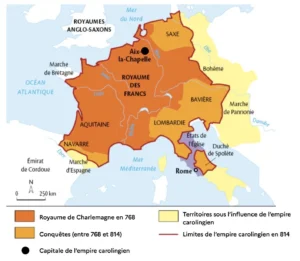
The Phantom Time Hypothesis was proposed in 1991 by German historian and publisher Heribert Illig. His central argument was simple but extraordinary: approximately 297 years of history, spanning from 614 AD to 911 AD, were allegedly fabricated and inserted into the historical record.
According to the theory, the current calendar includes years that never actually existed. If those years were removed, the present year would be around 1729 instead of 2026.
Illig suggested that medieval rulers and religious authorities manipulated chronology to place themselves closer to the symbolic year 1000. Under this interpretation, historical figures, events, and even entire periods of European history may have been exaggerated or invented.
The hypothesis quickly attracted attention because it appeared to offer an explanation for perceived gaps in historical records from the Early Middle Ages. Supporters argued that the period contains fewer surviving documents and archaeological remains than many other eras.
For critics, however, these observations were not evidence of missing centuries. They were simply the result of a period in history that produced fewer surviving records than later ages.
Why Does the Theory Focus on 297 Years?
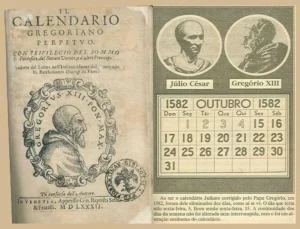
The number 297 is not random.
Supporters of the Phantom Time Theory argue that there is a discrepancy involving the transition between the Julian and Gregorian calendars. The Gregorian calendar was introduced in 1582 to correct accumulated inaccuracies in the older Julian calendar.
Illig claimed that the adjustment made during the Gregorian reform was smaller than expected. From this observation, he concluded that nearly three centuries may have been inserted into the historical timeline.
The argument became one of the most widely discussed aspects of the theory because it appeared to involve mathematics rather than interpretation. However, historians and astronomers point out that the calculation relies on assumptions that do not accurately reflect how calendar systems evolved over time.
As a result, most specialists consider the calendar argument insufficient evidence for removing nearly 300 years from recorded history.
The Historical Figures at the Center of the Mystery
One reason the theory gained attention is that it places several famous historical figures under scrutiny.
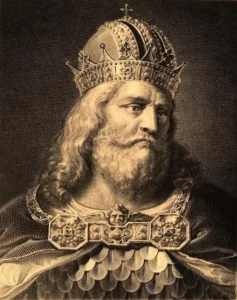
Among them is Charlemagne, the ruler who united much of Western Europe and became one of the most influential leaders of the early medieval period.
According to the Phantom Time Theory, Charlemagne may never have existed at all.
This is one of the most controversial claims associated with the hypothesis. Supporters argue that records from the era are limited and that later generations may have exaggerated his achievements.
Mainstream historians strongly disagree. Charlemagne appears in numerous independent sources across Europe, and archaeological evidence from sites associated with his reign continues to be studied today.
If the theory were true, historians would need to explain how a fictional ruler left behind extensive documentary, architectural, and cultural evidence across multiple regions.
That challenge represents one of the biggest obstacles facing the hypothesis.
Why the Theory Became Popular Online
The Phantom Time Theory emerged long before social media, but the internet helped transform it into a global phenomenon.
Part of its appeal comes from its simplicity. Many alternative-history theories require complicated scientific concepts or obscure historical details. Phantom Time asks a straightforward question:
“What if nearly 300 years of history never happened?”
That question is easy to understand and naturally encourages curiosity.
The theory also appeals to people who enjoy historical mysteries. Missing records, disputed chronologies, lost civilizations, and unanswered questions have fascinated readers for generations.
Online discussions often focus on apparent gaps in medieval documentation, unusual architectural timelines, and debates about historical dating methods.
While these conversations can be engaging, historians caution that gaps in surviving records do not automatically indicate that centuries were fabricated.
History is rarely preserved perfectly. Wars, natural disasters, political upheaval, and simple decay have destroyed countless documents throughout human history.
What Archaeology Reveals
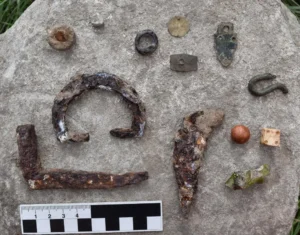
One of the strongest arguments against the Phantom Time Theory comes from archaeology.
Archaeologists study physical evidence left behind by past societies, including buildings, coins, pottery, tools, and human remains. These materials create chronological sequences that can be traced across centuries.
If nearly 300 years never occurred, archaeologists would expect to find a massive discontinuity in the historical record.
Instead, evidence from excavations across Europe, the Middle East, and Asia shows gradual cultural and technological development throughout the disputed period.
Coins change over time. Construction techniques evolve. Trade networks expand and contract. Settlements grow, decline, and transform.
These patterns do not suggest that centuries suddenly disappeared.
Rather, they indicate continuous historical development across the very years that the Phantom Time Theory claims were fabricated.
The Scientific Evidence
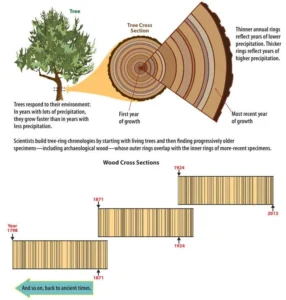
Modern science provides additional tools for examining the past.
Radiocarbon dating allows researchers to estimate the age of organic materials. Tree-ring analysis, known as dendrochronology, creates precise chronological records extending back thousands of years. Ice cores preserve environmental data from different periods in Earth’s history.
These independent methods consistently align with the conventional historical timeline.
Tree-ring sequences, for example, do not contain a mysterious gap of nearly 300 years. The rings form year by year, creating continuous records that overlap across generations of trees.
Similarly, astronomical observations recorded by ancient and medieval civilizations can be compared with modern calculations. Eclipses, planetary alignments, and other celestial events often occurred at specific dates that can be verified today.
These records provide another line of evidence supporting the traditional chronology.
Could the Theory Ever Be Proven?
Science and history remain open to new evidence. If compelling data emerged that fundamentally challenged existing chronology, researchers would investigate it.
However, extraordinary claims require extraordinary evidence.
To overturn the accepted timeline, supporters of the Phantom Time Theory would need to explain archaeological records, scientific dating methods, astronomical observations, written documents, and historical developments across multiple continents.
So far, the available evidence has not convinced the broader academic community.
That does not mean the theory lacks value as a topic of discussion. On the contrary, its popularity highlights the importance of questioning assumptions and understanding how historical knowledge is constructed.
Why the Phantom Time Theory Still Fascinates People
Even though most experts reject the hypothesis, it remains one of the most famous alternative-history theories ever proposed.
Part of its appeal lies in the scale of the claim. Few ideas challenge accepted history as dramatically as removing nearly three centuries from the calendar.
The theory also encourages people to think critically about evidence. How do historians determine dates? How reliable are ancient records? What role do archaeology and science play in reconstructing the past?
These questions are far more important than the theory itself.
In many ways, the Phantom Time Theory survives not because people are convinced it is true, but because it transforms ordinary calendar dates into a historical mystery.
The Bottom Line
The Phantom Time Theory proposes that approximately 297 years of history were added to the timeline, meaning the current year would be closer to 1729 than 2026. Since its introduction in the early 1990s, the hypothesis has attracted curiosity from readers interested in historical mysteries and alternative explanations of the past.
However, the overwhelming consensus among historians, archaeologists, astronomers, and scientists is that the disputed centuries were real. Evidence from written records, archaeological discoveries, dendrochronology, radiocarbon dating, and astronomical observations supports the conventional historical timeline.
While the theory remains a fascinating thought experiment, current evidence does not support the conclusion that humanity is living in 1729 rather than 2026.
What the Phantom Time Theory does offer is a reminder that history is an ongoing investigation—one that relies on evidence, testing, and continual re-examination of the past. And sometimes, the most intriguing mysteries are the ones that force us to ask how we know what we know.
Sources & Further Reading
- NASA Science – History of Eclipses
https://science.nasa.gov/eclipses/history/ - University of Arizona Laboratory of Tree-Ring Research
https://www.ltrr.arizona.edu/dendrochronology.html - University of Göttingen – Dendrochronology Research
https://www.uni-goettingen.de/en/72856.html - Springer Nature – Dendrochronology: Fundamentals and Innovations
https://link.springer.com/chapter/10.1007/978-3-030-92698-4_2 - Cambridge University Press – Historical Eclipses and Earth’s Rotation
https://www.cambridge.org/core/books/historical-eclipses-and-earths-rotation/
