
After weeks of uncertainty, additional safety reviews, and mission schedule changes, NASA and SpaceX have finally set a new target launch date for Crew-13, the next astronaut mission to the International Space Station (ISS).
NASA announced that Crew-13 is now targeting liftoff on October 1, 2026, from Cape Canaveral Space Force Station in Florida. If all goes according to plan, four astronauts representing NASA, the Canadian Space Agency (CSA), and Russia’s Roscosmos space agency will begin a journey that will carry them to humanity’s permanently occupied outpost in orbit.
The announcement ends weeks of speculation surrounding the mission after technical concerns forced NASA and SpaceX to delay the flight more than once. While launch postponements are common in human spaceflight, the delays highlighted just how seriously modern space agencies take astronaut safety.
Crew-13 may look like another routine rotation mission on the surface, but it represents something much larger. The flight is part of a system that keeps the International Space Station continuously staffed, supports dozens of scientific investigations, and strengthens international cooperation in space at a time when geopolitical tensions remain high on Earth.
For NASA, SpaceX, and their international partners, the stakes are significant.
Why Was Crew-13 Delayed?
Human spaceflight operates under a simple principle: if there is uncertainty, the launch waits.
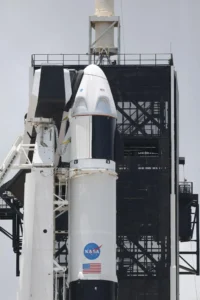
NASA and SpaceX originally planned an earlier launch timeline, but mission teams identified issues that required additional evaluation before astronauts could board the spacecraft. One of the primary concerns involved an oxidizer leak discovered in the Dragon spacecraft’s propulsion system during prelaunch processing. Engineers initiated further inspections, testing, and data reviews before approving the spacecraft for flight.
An oxidizer is a critical component of a spacecraft’s propulsion system. It enables fuel to burn and allows the spacecraft to perform important maneuvers in orbit. Because the Dragon capsule must safely transport astronauts to and from the ISS, even a relatively small issue receives intense scrutiny.
NASA’s approach reflects decades of lessons learned throughout the history of human spaceflight. From the Mercury and Gemini programs to Apollo, the Space Shuttle, and today’s Commercial Crew Program, engineers have consistently emphasized caution when human lives are involved.
The delay may have frustrated space enthusiasts eager to watch another launch, but mission managers viewed it differently.
Every additional day spent investigating a problem on the ground is preferable to discovering one in orbit.
Following repairs, testing, and a series of readiness reviews, NASA and SpaceX confirmed that preparations were moving forward and identified October 1 as the earliest launch opportunity.
Meet the Crew Heading to the Space Station
Crew-13 will carry four astronauts representing three different space agencies.
NASA astronaut Jessica Watkins will serve as spacecraft commander. Watkins previously made history as one of NASA’s most prominent astronauts and has extensive experience preparing for long-duration missions.
NASA astronaut Luke Delaney will serve as pilot.
Joining them will be Joshua Kutryk of the Canadian Space Agency and Sergey Teteryatnikov of Roscosmos, Russia’s space agency. Together, the four astronauts will travel aboard a SpaceX Crew Dragon spacecraft and become members of Expedition 75 aboard the International Space Station.
The multinational makeup of the crew reflects one of the defining characteristics of the ISS program.
While governments often disagree on Earth, the station continues to serve as a rare example of sustained international cooperation in space.
For more than two decades, astronauts from multiple nations have lived and worked together aboard the orbiting laboratory, conducting research that would be impossible under Earth’s gravity.
What Exactly Is Crew-13?
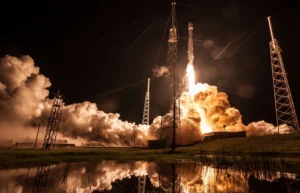
Crew-13 is the thirteenth operational crew rotation mission flown under NASA’s Commercial Crew Program using SpaceX’s Crew Dragon spacecraft. The program was created to restore America’s ability to launch astronauts from U.S. soil following the retirement of the Space Shuttle fleet in 2011.
For nearly a decade after the shuttle era ended, NASA relied on Russian Soyuz spacecraft to transport astronauts to the ISS.
That changed in 2020 when SpaceX successfully launched Crew-1, marking the beginning of regular operational crew flights using privately developed spacecraft under NASA oversight.
Since then, Crew Dragon missions have become the backbone of NASA’s astronaut transportation system.
Each mission follows a carefully choreographed sequence:
- Launch aboard a Falcon 9 rocket.
- Reach orbit.
- Perform automated rendezvous maneuvers.
- Dock with the International Space Station.
- Transfer crew responsibilities.
- Return the previous crew to Earth.
Although the process has become increasingly routine, each launch remains a major technical achievement involving thousands of engineers, technicians, scientists, and support personnel.
Why the International Space Station Still Matters
Some people assume the ISS is yesterday’s project.
After all, NASA is preparing for Artemis missions to the Moon while private companies discuss future missions to Mars.
Yet the International Space Station remains one of the most important scientific facilities ever built.
Orbiting roughly 400 kilometers above Earth, the station functions as a laboratory where researchers can study how living organisms, materials, fluids, and technologies behave in microgravity.
Many experiments conducted aboard the ISS have practical applications on Earth.
Researchers investigate bone loss, muscle atrophy, cardiovascular health, pharmaceuticals, plant growth, and advanced manufacturing techniques. Other studies focus on preparing astronauts for future missions beyond low Earth orbit.
Every new crew brings fresh expertise and helps continue experiments that often run for months or even years.
Without regular crew rotations, much of that research would simply stop.
That is why missions like Crew-13 remain essential despite increasing attention on lunar and Martian exploration.
The Final Days Before Launch
As launch day approaches, astronauts enter one of the most unusual phases of mission preparation.
Crew-13 members recently entered preflight quarantine, a longstanding NASA practice designed to minimize the risk of illness before launch. Most interactions become restricted, and anyone coming into close contact with the astronauts must follow strict health protocols.
The procedure dates back to earlier eras of spaceflight.
Even a minor illness that would be insignificant on Earth could create serious complications in orbit, where medical resources are limited.
Before entering quarantine, the astronauts completed extensive training exercises.
These included spacecraft familiarization sessions, communications testing, emergency procedures, spacesuit checks, and simulated mission operations. NASA reported that the crew also participated in a Crew Equipment Interface Test, which allowed them to verify seating positions, equipment placement, and operational procedures inside the Dragon spacecraft.
By launch day, every major task will have been rehearsed repeatedly.
The Technology Behind Crew Dragon
One reason Crew Dragon has become central to modern human spaceflight is its blend of automation and safety systems.
Unlike earlier spacecraft that required extensive manual control, Dragon performs many operations autonomously.
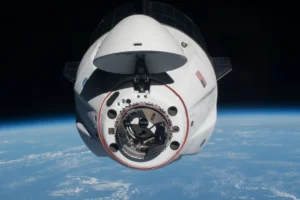
The spacecraft can navigate to the station, execute rendezvous maneuvers, and dock automatically while astronauts monitor system performance.
The capsule also includes sophisticated life-support systems, touchscreen interfaces, redundant flight computers, and integrated emergency escape capabilities.
When paired with the Falcon 9 rocket, Dragon has established one of the strongest operational records in commercial human spaceflight. NASA’s continued reliance on the system reflects confidence built through multiple successful crewed missions.
Still, recent delays demonstrate that no spacecraft is immune from technical challenges.
Spaceflight remains inherently difficult.
Every launch requires engineers to verify thousands of individual systems before approving liftoff.
What Happens After Liftoff?
If Crew-13 launches on schedule, the mission timeline moves quickly.
NASA says the crew could arrive at the station less than nine hours after launch, with docking planned later the same day. Once aboard, the astronauts will participate in a handover period with the current ISS crew before assuming operational responsibilities.
The transition is designed to ensure continuity.
Outgoing crew members share updates on ongoing experiments, station maintenance tasks, equipment status, and operational priorities.
For a brief period, the station population increases, creating one of the busiest times aboard the orbiting laboratory.
Eventually, the departing astronauts return to Earth, leaving Crew-13 to begin its own long-duration mission.
Why This Mission Matters Beyond Space
Crew-13 arrives at an important moment for the future of human spaceflight.
NASA is simultaneously pursuing multiple major initiatives.
The agency is preparing Artemis missions aimed at returning humans to the Moon, supporting development of commercial space stations, and continuing research aboard the ISS. SpaceX, meanwhile, is advancing both Crew Dragon operations and its larger Starship program.
Missions like Crew-13 provide practical experience that informs future exploration efforts.
Every docking, repair, scientific experiment, and long-duration stay contributes data that helps planners prepare for more ambitious journeys.
The lessons learned aboard the ISS today may ultimately help astronauts travel deeper into the solar system tomorrow.
Looking Ahead to October 1
Assuming weather conditions cooperate and final reviews are completed successfully, Crew-13 will soon join the long history of missions that have kept humanity’s presence in space uninterrupted for more than two decades.
The delays may have pushed the schedule back, but they also underscored a reality of modern spaceflight: safety always comes first.
For NASA and SpaceX, the goal is not simply to launch on time.
The goal is to launch safely.
Now, after weeks of additional testing, reviews, and preparation, Crew-13 finally has a launch date.
And if all goes according to plan, four astronauts will soon leave Earth aboard a Falcon 9 rocket, carrying science experiments, international partnerships, and the next chapter of life aboard the International Space Station into orbit.
The Crew Dragon spacecraft has become one of the most important vehicles in modern human spaceflight. Watch a previous crewed Dragon launch and see how NASA and SpaceX send astronauts from Earth to the International Space Station.
