
Nobody has ever stayed awake for 30 days. Not a record-holder, not a monk, not a lab volunteer. The longest documented case of voluntary sleeplessness is about 11 days, and the few people who truly lose the ability to sleep through disease don’t survive many months.
So we can’t watch a human go through all 30 days. But decades of sleep-deprivation experiments, case reports, brain imaging, and animal research let us build a surprisingly detailed picture of what would happen. Here is that timeline, with a clear line between what has been observed and what scientists can only infer.
The Teenager Who Stayed Awake for 11 Days

In December 1963, 17-year-old Randy Gardner of San Diego decided to break the world record for staying awake as part of a science fair project. Two classmates helped keep him up. Partway through, Stanford sleep researcher William Dement heard about the attempt and joined to monitor his health.
Gardner stayed awake for 264 hours, just over 11 days, ending in January 1964. His case is still the most famous in sleep science and our best window into extreme deprivation in a healthy human. Guinness later stopped tracking the category because of the health risks, and sleep scientists strongly discourage anyone from trying it.
Gardner’s story is the backbone of this timeline. Everything beyond day 11 is where evidence thins out and inference begins.
Day 1 (Hours 0-24): The Fog Rolls In
Within the first 24 hours, nothing dramatic happens, but your brain is already struggling.
Throughout the day, a chemical called adenosine builds up in your brain. It’s a byproduct of your cells burning energy, and it creates “sleep pressure,” the growing feeling that you need to sleep. Caffeine works by blocking adenosine’s receptors, which is why it masks tiredness without removing it.
By hour 17 to 19 without sleep, studies show performance on attention and reaction tests drops to the level of someone with a blood alcohol concentration of about 0.05%. After 24 hours awake, impairment is comparable to roughly 0.10%, above the legal driving limit in most countries, including India (0.03%).
On day 1 you would notice:
- Slower reaction times and lapses in attention
- Irritability and mood swings
- Difficulty with memory and decision-making
- Increased appetite, especially for sugar and fat, because sleep loss disrupts the hunger hormones leptin and ghrelin
The first night is the hardest emotionally. Your body clock, the circadian rhythm, is pushing you hard toward sleep between roughly 2 and 6 a.m.
Day 2 (Hours 24-48): The First Microsleeps
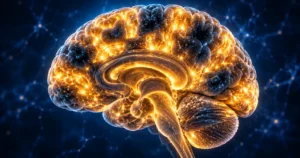
By the second day, your brain begins to take sleep without asking permission.
Microsleeps are involuntary episodes of sleep lasting from a fraction of a second to about 30 seconds. Your eyes may be open, but your brain has briefly gone offline. You won’t always notice them. This is one reason drowsy driving is so deadly: a microsleep at highway speed means traveling the length of a football field with no one at the wheel.
Other changes at 48 hours:
- Your ability to focus wanes sharply, especially on boring or repetitive tasks
- Your immune system starts to dip, with reduced activity of some infection-fighting cells
- Body temperature regulation becomes less stable, so you feel cold more easily
- Your emotions become exaggerated, since the amygdala (the brain’s alarm center) becomes more reactive when the prefrontal cortex (the rational “brake”) is under-supported
Brain imaging studies show that after sleep loss, the amygdala can respond far more strongly to negative images than in rested people. Small annoyances feel enormous.
Day 3 (Hours 48-72): Hallucinations Begin
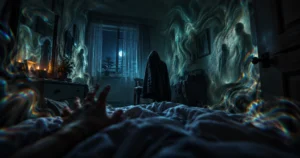
Day 3 is where sleep deprivation starts to feel strange.
Most people reach the point of visual distortions and hallucinations somewhere between 48 and 72 hours. These are often simple at first: objects seem to shimmer, walls seem to breathe, or you see shapes moving at the edge of your vision. Some people experience “illusions,” where a coat on a chair becomes a person.
In 1959, New York radio DJ Peter Tripp stayed awake for 201 hours (about 8 days) for a charity “wakeathon,” broadcasting from a glass booth in Times Square. Doctors monitored him. By his third day, he reported seeing cobwebs in his shoes and imagining tiny animals. Later he became convinced that a doctor examining him was an impostor, and he grew increasingly paranoid. Tripp’s case is one of the clearest early records of how sleep loss can mimic psychosis.
Gardner also had trouble with focus by day 3, along with nausea, memory lapses, and slowed speech. Dement tested him with simple tasks, and he struggled with concentration, though he could still be briefly pulled back to sharpness by novelty or competition, like playing basketball or pinball.
That detail matters: motivation and stimulation can temporarily push through impairment, but the underlying performance is badly degraded.
Days 4-5: Paranoia and a Brain at War With Itself
Between days 4 and 5, the symptoms deepen.
Cognitive decline is severe. Basic tasks like counting, remembering a short sentence, or following instructions become hard. Gardner, who was a bright teenager, struggled to complete simple serial subtraction (counting backward by sevens) around day 10, a task he could do easily when rested. Researchers noted he lost his train of thought mid-sentence.
Paranoia and delusions can emerge. During his deprivation, Gardner reportedly believed at one point that he was a famous football player, and that a street sign was a person. Tripp, as mentioned, developed delusions. These are not signs of mental illness in the usual sense. They’re the result of a brain that can’t properly separate perception from imagination without sleep.
Your body is also reacting. Stress hormones like cortisol stay elevated when they should drop at night. Blood pressure and heart rate become harder to regulate. Blood sugar control worsens, and studies of just a few nights of restricted sleep show that healthy people can show insulin resistance resembling pre-diabetes.
Days 6-8: The Wall of Exhaustion
By the end of the first week, a person who has avoided sleep for 150 to 200 hours would be in serious trouble, even though the body can still, remarkably, function.
At this stage, you’d likely experience:
- Persistent hallucinations, visual and sometimes auditory
- Severe disorientation, losing track of where you are and what day it is
- Emotional flatness or volatility, swinging between agitation and numbness
- Tremors and coordination problems
- Speech problems, including slurred or slowed speech
Much of the brain still works in a patchy way. Researchers describe sleep-deprived brains as showing “local sleep”: individual patches of neurons switch into sleep-like states while the person appears awake. Rat studies have shown this directly, with groups of neurons going silent while the animal is awake and active. In humans, this likely explains why a sleep-deprived person can seem fine one second and baffled the next. Different parts of the brain are dropping in and out.
Days 9-11: Record Territory
This is the stretch Randy Gardner actually lived through.
By day 9 or 10, he was struggling to complete tasks, and his speech and memory were noticeably impaired. His eyes had trouble focusing. He experienced moments of paranoia and hallucination. Yet, strikingly, at the end of the 11 days, he was able to give a press conference and speak coherently, and when Dement tested him on a basketball court, he performed better than expected.
Then he slept. Gardner slept about 14 hours on the first night. He did not “pay back” the full 264 hours. Over the next few days his sleep returned to normal, although studies of recovery sleep show that the brain prioritizes deep, slow-wave sleep and REM sleep first, getting back the most critical stages rather than every lost hour.
Gardner reportedly had no lasting damage from the experiment in the immediate aftermath. In later life, however, he said he experienced chronic insomnia, and he warned others not to try what he had done. Whether his later insomnia was connected is unclear, but it’s a sobering footnote.
Here is where direct human evidence runs out. Everything after day 11 is inference.
Days 12-20: What Animal Studies Suggest
Because no ethical study can keep a human awake this long, scientists turn to animal research, and the findings are stark.
In classic experiments in the 1980s, researchers at the University of Chicago, led by Allan Rechtschaffen, kept rats awake using a rotating platform over water. When the rat started to fall asleep, the platform moved, nudging it awake. The rats that were totally deprived of sleep died within roughly two to three weeks, typically between 11 and 32 days in those studies.
What was surprising was how they died. There was no obvious single organ failure. Instead the animals showed:
- Massive increases in food intake, but they lost weight anyway because their metabolism went into overdrive
- Unusually high energy expenditure, essentially burning calories at an unsustainable rate
- Ragged, unkempt fur and skin lesions, particularly on their paws and tails
- Falling body temperature, as their thermoregulation failed
- Bacteria entering the bloodstream, suggesting the immune system and gut barrier were breaking down
A later study found that gut bacteria had spread into the animals’ bodies, causing systemic infection. In fact, a 2020 study in mice found that sleep-deprived animals accumulated harmful reactive oxygen molecules in their gut, and that removing those molecules with antioxidants prevented death. That suggests sleeplessness may be lethal at least partly through a toxic buildup in the body, rather than the brain alone.
Humans are not rats, and extrapolation has limits. But if the pattern holds even loosely, a person kept fully awake for 15 to 20 days would be entering the danger zone for organ stress, infection, and metabolic collapse.
Days 21-30: Could a Human Even Make It?
This is the most uncertain stretch, and honesty matters here. We don’t know. But there are reasons to think a healthy human could not voluntarily stay awake for 30 days at all.
Your brain would stop you. Microsleeps increase relentlessly as sleep pressure grows. Past a certain point, you can’t prevent your brain from shutting off for moments at a time, no matter how stimulated you are. In Gardner’s case, he needed constant physical stimulation from his friends to keep going. Eventually, even that would fail. Your brain would likely cobble together fragments of sleep through microsleeps and “local sleep,” blurring the line between awake and asleep.
If a person somehow were fully deprived, the best guess from animal data is that the body would be in a state of multi-system failure: severe immune collapse, extreme cognitive breakdown, potential psychosis, cardiovascular strain, and a body that can no longer regulate temperature or energy.
There is, however, one real-world condition that shows what happens when sleep truly becomes impossible.
The Real-Life 30-Day Scenario: Fatal Familial Insomnia
Fatal familial insomnia (FFI) is an extremely rare inherited prion disease, caused by a mutation in the PRNP gene. A prion is a misfolded protein that spreads damage through the brain. In FFI, the damage hits the thalamus, a region critical to sleep regulation.
People with FFI progressively lose the ability to sleep. Early on, they might experience a few weeks of worsening insomnia, panic attacks, and phobias. Then comes a stage of near-total sleeplessness, with vivid dream-like states while awake, hallucinations, weight loss, sweating, and loss of coordination. Eventually, they develop dementia and stop responding to the world. The illness typically kills within about 7 to 36 months of onset, averaging around 18 months.
One famous case involved an Italian man, a doctor, studied in the 1980s, whose family had a history of the disease. He experienced a progressive loss of sleep and ultimately died. His family became central to identifying the condition.
FFI also teaches us something important: death does not come from “not sleeping” on a particular day. It comes from the brain’s slow collapse. And treatments don’t exist, because even sedatives don’t work. The brain damage prevents natural sleep from occurring at all.
FFI is not a perfect model for 30 days of voluntary wakefulness, because the disease also damages other brain functions. But it’s the clearest proof that humans cannot live without sleep.
Why Does Sleeplessness Cause All This?
Scientists still don’t have one complete answer for why we sleep, but several leading explanations help explain why losing it is so catastrophic.
1. The brain’s cleaning system. In 2013, researcher Maiken Nedergaard and colleagues described the glymphatic system, in which cerebrospinal fluid flushes waste out of the brain, particularly during deep sleep. In mice, this clearance appeared to increase dramatically during sleep. Waste products like beta-amyloid, the protein linked to Alzheimer’s disease, were cleared faster. In humans, even a single night of lost sleep has been linked to higher beta-amyloid levels in the brain.
2. Memory consolidation. During sleep, the brain replays and strengthens memories, moving information from short-term storage into long-term networks. Without it, you can’t learn well, and you can’t hold information.
3. Metabolic and hormonal repair. Sleep regulates growth hormone, insulin, cortisol, and appetite hormones. Chronic loss pushes the body toward inflammation and metabolic disease.
4. Immune function. Sleep boosts immune memory and supports vaccination response. Rested people show stronger antibody responses to vaccines than sleep-deprived people.
5. Emotional regulation. REM sleep appears to help process emotional experiences, and without it, emotional reactivity runs unchecked.
Taken together, sleep is not a luxury. It is maintenance the body cannot skip.
Could Anyone Train for This? What About “Short Sleepers”?
You may have heard of people who sleep only 4 hours and feel fine. A small number of people carry a rare mutation, such as in the DEC2 gene, that allows them to function on markedly less sleep, around 4 to 6 hours. These “natural short sleepers” are genuinely rare, and they still sleep. They aren’t proof that humans can do without it.
Nor do tricks like polyphasic sleep schedules hold up well in research. Reducing total sleep this way generally leads to measurable impairment.
What Happens When Someone Finally Sleeps?
If a person came out of a long sleep-deprivation stretch, recovery would begin with rebound sleep. The brain prioritizes slow-wave (deep) sleep first, followed by REM sleep. The first night might last 12 to 15 hours, as it did for Gardner. Over the next days, sleep patterns normalize, though many people don’t recover all the lost hours. The brain makes up for the most vital stages rather than the whole debt.
Cognition tends to rebound relatively fast. But after prolonged deprivation, full recovery of mood, memory, and metabolic health would likely take longer, and the effects of extreme deprivation on long-term health, especially the brain, are not well understood.
The Takeaway
Here’s the summary of what we know and don’t know:
| Timeframe | What happens |
|---|---|
| 24 hours | Impairment similar to being over the legal alcohol limit |
| 48 hours | Microsleeps, mood swings, immune dip |
| 72 hours | Hallucinations and paranoia can begin |
| 4-7 days | Severe cognitive decline, delusions, metabolic disruption |
| 8-11 days | Record territory (Gardner): extreme impairment but survival |
| 12-30 days | Unknown in humans; rats die in 2-3 weeks; FFI shows fatal outcome |
The 30-day question ends where science itself runs out. Humans have never done it, and the evidence suggests we couldn’t. Our brains would force microsleeps long before then, and if sleep were truly impossible, the outcome would be fatal.
If you take only one thing from this timeline, make it this: the human body treats sleep as non-negotiable. You can postpone it, but you can’t cancel it.
FAQs
Can a human survive 30 days without sleep?
There is no evidence anyone has. The longest documented voluntary case is about 11 days (264 hours), and total sleep deprivation in rats was fatal within weeks.
What is the longest anyone has stayed awake?
Randy Gardner stayed awake for 264 hours (11 days) in 1963-64 under observation by sleep researchers.
When do hallucinations start without sleep?
Visual distortions and hallucinations typically begin between 48 and 72 hours without sleep.
What is fatal familial insomnia?
It is a rare inherited prion disease that destroys the brain’s ability to sleep and is typically fatal within months to a few years.
This article is for educational purposes only and is not medical advice. If you’re struggling with chronic insomnia, speak to a doctor.