
A tiny cluster of human brain cells, grown in a laboratory, may look insignificant beside the complexity of a living brain. Yet when scientists introduce this tissue into an animal’s brain and discover that it can form connections with the host’s neural circuits, the experiment opens a remarkable new chapter in neuroscience.
The implications go far beyond growing brain tissue in a dish. Researchers are investigating whether laboratory-grown human brain organoids can help explain neurological disorders, reveal how damaged neural circuits might be repaired, and eventually improve treatments for conditions that remain difficult to manage.
But there is another side to this research. If human-derived neural tissue becomes integrated into an animal’s brain, what exactly has been created? Could the transplanted cells influence how the animal processes information? And how should scientists approach the ethical questions that emerge as these technologies become more sophisticated?
The answers require separating what experiments have already demonstrated from what remains hypothetical. Connecting human brain tissue to another brain is not the same as creating a second human brain, transferring consciousness, or merging two minds. Nevertheless, the science is important enough to deserve careful attention.
The breakthrough: A living bridge between two brains
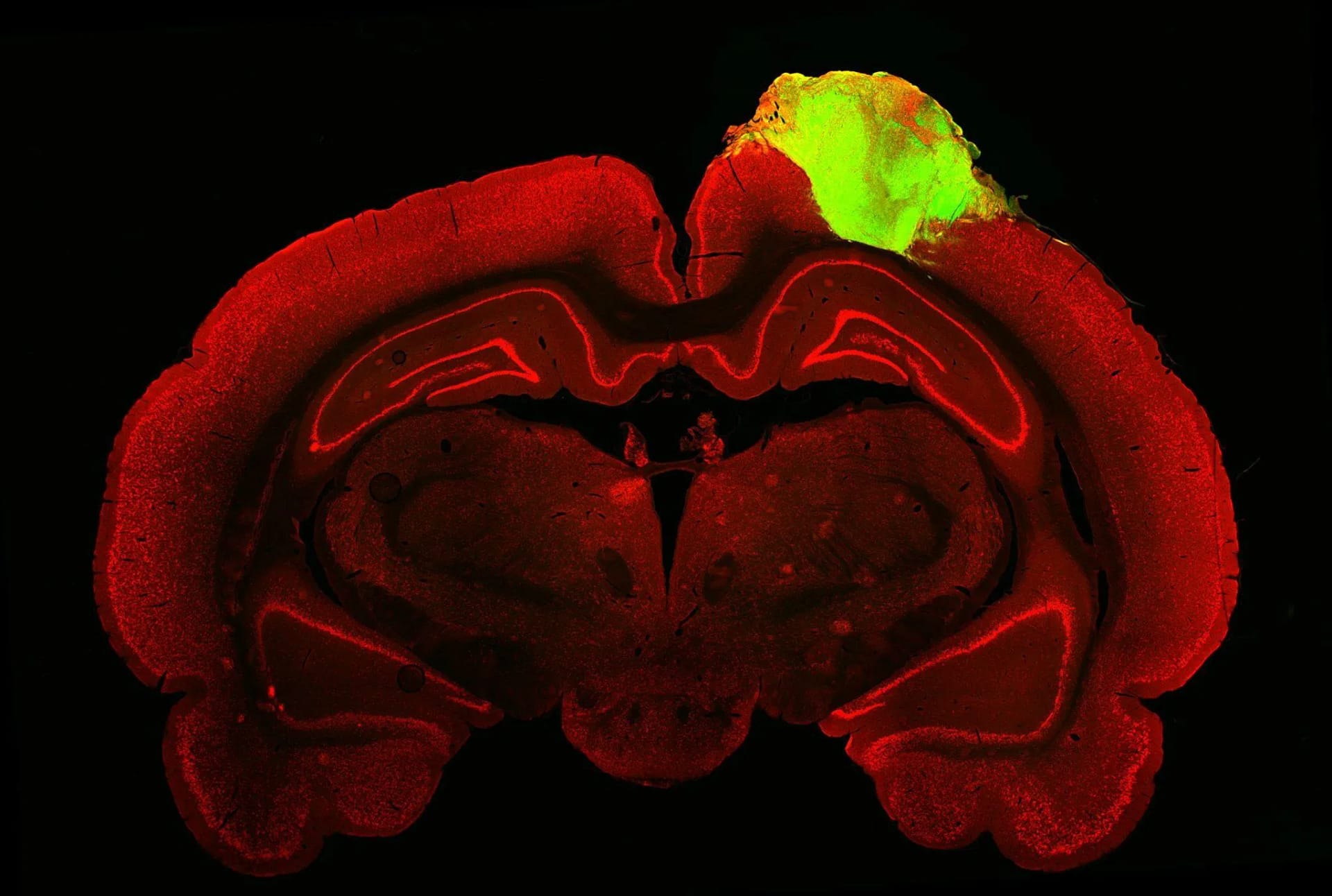
The field behind this research is known as brain organoid science. An organoid is a three-dimensional cluster of cells grown to reproduce selected features of an organ. Brain organoids are usually produced from human stem cells that researchers guide into developing particular types of neural tissue.
These structures can develop neurons, supporting cells and rudimentary patterns of electrical activity. However, they are not miniature versions of a complete human brain. They lack many features of an intact brain, including its full organization, blood supply and extensive connections between specialized regions.
In a laboratory dish, an organoid can reveal how neurons develop and communicate. But it cannot reproduce the full environment in which a living brain receives sensory information, adapts to experience and coordinates behaviour.
That limitation has motivated scientists to investigate what happens when human-derived neural tissue is placed inside a living animal brain.
The results have been striking.
In October 2022, researchers reported in the journal Nature that human cortical organoids transplanted into the brains of newborn rats matured and connected with the animals’ existing neural circuits. The transplanted human neurons received signals from the host brain, responded to sensory stimulation and extended projections into other brain regions. Researchers also demonstrated that stimulating the graft could influence reward-seeking behaviour.
This was not simply a case of human cells surviving inside an animal. The cells had become part of a functioning biological network.
The distinction matters. A collection of living neurons is one thing; neural tissue that exchanges signals with an existing nervous system is something considerably more complex.
A more ambitious experiment in 2026
The research has advanced further.
In September 2026, a team led by researchers at Stanford University published a study in Nature describing a method called xenocortication. Rather than placing a small organoid into an otherwise intact mouse cortex, the scientists created mice with most of the neocortex and hippocampus absent and transplanted human-derived cortical organoids into the resulting space.
The human tissue grew to occupy much of the available cortical space. It developed a variety of human cortical cell types, showed organized electrical activity and formed connections with the remaining mouse nervous system, including pathways extending toward the spinal cord.
The researchers also observed differences in some behavioural measures between the experimental groups. The results suggest that the grafts may help support certain functions, although the contribution of the human tissue to particular behaviours still requires further investigation.
This is a substantial advance in how scientists can study human neural development in a living system. It is not evidence that the mice acquired human consciousness or human-like intelligence.
The experiment instead offers a way to investigate how human neural cells develop, connect and respond to injury when they have access to a biological environment that laboratory dishes cannot fully reproduce.
What exactly happens when human brain tissue connects to another brain?
To understand the significance, it helps to follow the process at the cellular level.
1. Scientists grow human neural tissue
Researchers can begin with induced pluripotent stem cells, which are adult cells reprogrammed into a stem-cell-like state. Under carefully controlled conditions, these cells can be directed to form neural tissue resembling aspects of the developing cerebral cortex.
The resulting organoids contain populations of developing neurons and other cells. Their composition and maturity depend on the method used to grow them.
2. The tissue is transplanted into a living brain
Scientists surgically introduce the organoid into a selected region of an animal’s brain. The host provides an environment that includes blood vessels, chemical signals, nutrients and connections to other neural structures.
These conditions can help the transplanted tissue survive and mature beyond what is possible in a conventional laboratory culture.
3. Neurons establish connections
Neurons communicate through specialized junctions called synapses. As transplanted cells develop, their extensions can connect with neurons in the host tissue, while host neurons can send signals into the graft.
In the 2022 rat experiments, scientists demonstrated that sensory inputs could activate neurons in the human-derived tissue. The 2026 mouse study reported extensive anatomical integration and organized activity within the transplanted cortical tissue.
4. The connected tissue becomes experimentally useful
Once human-derived neurons function within a living circuit, scientists can examine how genetic changes, injury or experimental treatments affect their activity.
This offers something that a dish of isolated neurons cannot easily provide: an opportunity to study human neural cells in the context of a larger, functioning nervous system.
The result is not a merger of two complete brains. It is an experimental biological system containing human-derived neural tissue connected to an animal’s existing neural networks.
Why scientists are pursuing this research
The central motivation is medical. Many neurological and neurodevelopmental conditions involve networks of neurons rather than isolated cells. Researchers need better ways to understand how those networks develop, malfunction and respond to treatment.
Brain organoids offer one route, and transplantation may help overcome some of their limitations.
Understanding disorders that begin during development
Conditions such as autism spectrum disorder, certain forms of intellectual disability and rare genetic neurological syndromes can involve changes in how neural circuits develop. Studying the relevant processes in living humans is difficult, and animal models do not always reproduce human-specific biology.
Researchers can create stem-cell lines from people with particular genetic conditions and develop organoids from those cells. The resulting neural tissue can be examined for differences in cell development, electrical activity and connectivity.
In the 2022 Nature study, researchers used transplanted organoids derived from individuals with Timothy syndrome, a rare genetic condition, to identify abnormalities in neuronal development and function that became more apparent as the cells matured.
This illustrates an important possibility: a disease-related defect that is difficult to detect in an immature laboratory culture might become easier to identify when human neurons develop in a more supportive biological environment.
Improving the search for treatments
A drug may appear promising in a dish but behave differently in a living nervous system. Neural activity depends on interactions among cell types, incoming signals and wider networks.
Transplanted organoids could help researchers test how experimental treatments affect human-derived neurons while observing selected consequences at the circuit or behavioural level in animals.
The 2026 xenocortication study also explored whether this model could help investigate injury to developing human cortical cells. The researchers observed changes associated with hypoxia, a condition in which tissue receives insufficient oxygen, demonstrating one potential use for studying injury-related effects.
However, these models are research tools, not established clinical treatments. A promising laboratory result does not establish that a therapy will be safe or effective in people.
Investigating what makes the human brain different
Human brains differ from rodent brains in their developmental timing, cellular diversity and organization. Some human cortical cell types and developmental processes are difficult to investigate using rodents alone.
Placing human-derived tissue within a living host offers researchers a way to examine some of these differences directly.
It may also reveal why certain human neurological disorders cannot be fully explained by conventional animal models. That knowledge could eventually improve the selection of treatments for clinical testing.
Could human brain tissue change an animal’s behaviour?
This is where the research becomes especially intriguing—and where careful interpretation is essential.
The 2022 rat study showed that stimulating the transplanted human-derived neurons could influence reward-seeking behaviour. The 2026 mouse study found differences in aspects of spontaneous behaviour and motor coordination among experimental groups. Together, these findings indicate that transplanted human neural tissue can participate in biological systems associated with behaviour.
But three separate ideas must not be confused.
Influencing behaviour is not the same as controlling an animal. Neural circuits normally operate through networks of interacting cells. Stimulating one part of a network can change the likelihood of a response without determining every action that follows.
Human cells do not automatically produce human abilities. The properties of a neuron depend on its connections, developmental stage and surrounding environment. A human-derived neuron operating inside a mouse brain remains part of a system shaped by mouse anatomy and physiology.
Complex electrical activity does not establish consciousness. Neurons can produce coordinated electrical patterns without researchers being able to conclude that a subject has subjective awareness of those patterns.
The distinction is particularly important because headlines about human brain tissue in animals can suggest that scientists are creating human-animal minds. The experiments demonstrate something more specific: human-derived neural tissue can integrate into host circuits and influence selected biological outcomes.
Whether future experiments could produce substantially different effects is a legitimate scientific question. It is not a conclusion that can be drawn from the existing results.
The ethical questions scientists cannot ignore
The technical achievement is only half the story. As researchers create more sophisticated neural models, they must consider the moral status of the tissue, the welfare of the animals and the responsibilities associated with using human biological material.
A 2024 perspective in Nature Reviews Bioengineering examined issues including informed consent, animal transplantation, the possible moral status of organoids, commercialization and responsible research oversight. These concerns become more significant as organoids acquire greater cellular complexity and more extensive functional connections.
Could a brain organoid become conscious?
This is among the most widely discussed questions in the field, but it remains unresolved.
Consciousness is not simply the presence of electrical activity. Scientists do not yet have an agreed, validated method for determining whether a brain organoid has subjective experiences.
Current organoids lack many of the structures, long-range connections and developmental features of a complete human brain. Their coordinated activity should not, by itself, be interpreted as evidence of pain, awareness or a human-like inner life.
Nevertheless, the ethical debate concerns what researchers should do if future systems become more sophisticated and uncertainty about their possible experiences increases.
Responsible research should not wait for absolute certainty before considering safeguards. Researchers can establish monitoring criteria, independent ethics reviews and procedures for reassessing experiments as the science develops.
What about the animal receiving the human tissue?
Animal welfare presents a more immediate concern.
Transplantation requires surgery, and experiments may involve animals with substantial alterations to their brain development. Scientists must evaluate pain, distress, mobility, learning, social behaviour and general health throughout the study.
The 2026 xenocortication experiment is particularly important in this respect because the host mice were deliberately developed without most of the neocortex and hippocampus before receiving the human-derived tissue. The researchers investigated behavioural outcomes and discussed the need for continued ethical oversight as this model evolves.
Such models may offer valuable scientific insights, but their potential benefits must be weighed against the consequences for the animals involved. Independent review, clear welfare standards and a commitment to reducing unnecessary animal suffering are essential.
Who owns the cells, and what did donors agree to?
Human-derived organoids raise questions that begin long before transplantation.
People whose cells are used for research should receive appropriate information about how their biological material may be used, including whether researchers intend to create organoids or transplant derived tissue into animals.
Consent can become complicated when a project develops beyond its original scope. A donor may agree to research on neurological disease without anticipating future applications involving complex neural systems or commercial drug development.
There are also questions about privacy, intellectual property and the distribution of benefits from medical discoveries.
A 2026 consensus paper from the Asia Pacific Neuroethics Working Group examined regulatory and ethical considerations surrounding human brain organoid research, reinforcing the importance of multidisciplinary oversight as the field advances.
These issues are not reasons to abandon the science. They are reasons to ensure that the people whose cells make the research possible are treated fairly and that the public can understand what researchers are doing.
Could this technology eventually repair a damaged human brain?
The possibility is scientifically compelling, but the distinction between experimental promise and medical reality is crucial.
If human-derived neurons can survive, mature and establish useful connections in an animal brain, researchers may learn how to improve cell-based approaches to neurological injury and disease.
Potential areas of investigation include:
-
Developmental brain disorders: Understanding how genetic or environmental disruptions affect the formation of neural circuits.
-
Brain injury: Examining how oxygen deprivation or other damage affects developing human-derived neurons.
-
Neurodegenerative disease: Investigating cellular mechanisms that contribute to dysfunction, although cortical organoid transplantation alone does not reproduce every feature of disorders such as Alzheimer’s or Parkinson’s disease.
-
Cell-replacement strategies: Studying whether appropriately developed neural cells might eventually help restore functions lost through injury or disease.
Yet there are formidable obstacles.
A transplanted cell population must survive without disrupting existing circuits. Researchers must understand whether its connections are appropriate, whether its activity is stable and whether unwanted growth or other complications occur. The immune response, long-term safety and precise integration of transplanted cells also matter.
Most importantly, a successful experiment in a mouse cannot establish that the same intervention will work in a human patient.
Clinical application would require extensive additional research, safety testing, regulatory review and carefully designed human trials. It is too early to promise that these experiments will lead to brain repair therapies, even though they offer a valuable platform for investigating the possibility.
What happens next?

The next stage of research will involve determining how reliably these models reproduce human neural development, how transplanted cells affect host circuits over time, and whether the systems can reveal disease mechanisms that existing approaches miss.
Researchers will also need to distinguish the effects of the human graft from those of the host brain and the surgical or genetic procedures used to prepare the animal. Better methods for measuring neural activity and behaviour will be essential.
The ethical framework must evolve alongside the experimental techniques. A model that begins as a relatively simple cluster of developing neurons may become more biologically complex as scientists improve its maturation, connectivity and functional integration. Oversight should account for those changes rather than assume that all organoids present the same risks.
The central scientific question is no longer merely whether human neural cells can survive outside the human body. Researchers have demonstrated that they can develop and communicate within another species’ nervous system. The harder questions concern what those connections accomplish, how much they can teach us about human disease, and what limits should govern future experiments.
The bigger picture: Where do we draw the line?
Imagine a future in which researchers can grow neural tissue from a patient’s own cells, observe how it responds to a disease process, and test experimental treatments in a living biological system before deciding which therapies deserve further investigation.
That future is not guaranteed. But the recent advances in brain organoid transplantation offer a clearer route toward studying aspects of human neural development that have long been difficult to access.
The ethical challenge is to pursue those opportunities without allowing scientific ambition to outrun evidence or responsibility.
Human brain tissue connecting to another brain does not mean that two minds have merged. It means that cells originating from one species can become integrated into the neural networks of another—and that this integration may provide researchers with new ways to investigate the biology of the human brain.
The most consequential discovery may ultimately be what this research reveals about neurological disorders, not how extraordinary the experiments sound.
For patients and families waiting for better treatments, that distinction matters. So does ensuring that every step toward those treatments is supported by rigorous evidence, humane research practices and transparent ethical oversight.




