
Imagine buying a jacket that began its life not in an oil refinery or a cotton field, but inside a controlled chamber where fungi quietly spread through agricultural waste. Over several days, a network of microscopic threads grows into a dense material. Scientists harvest it, process it, and transform it into something that resembles leather.
It sounds like science fiction. Yet materials made from fungi are already being developed for fashion, packaging, furniture and other applications.
The secret lies in mycelium, the branching network of thread-like structures that forms the vegetative part of a fungus. Under the right conditions, this network can bind organic particles together, producing materials with properties that researchers can tailor through cultivation and processing.
For an industry that relies heavily on petroleum-derived synthetic fibres, the possibility is intriguing. Polyester, nylon and other synthetic textiles can persist in the environment, shed microplastic fibres and depend on energy-intensive manufacturing. Could a material grown by a fungus offer a different path?
The answer is promising, but not as simple as replacing every synthetic fabric with something biological. Fungal materials have limitations involving strength, flexibility, water resistance, manufacturing scale and cost. Their environmental benefits also depend on how they are grown, treated, transported and ultimately discarded.
The real question is not whether fungi can make materials. They can. It is whether scientists and manufacturers can turn those materials into reliable, affordable products without recreating the environmental problems they are intended to solve.
What is mycelium, and how can it become fabric?
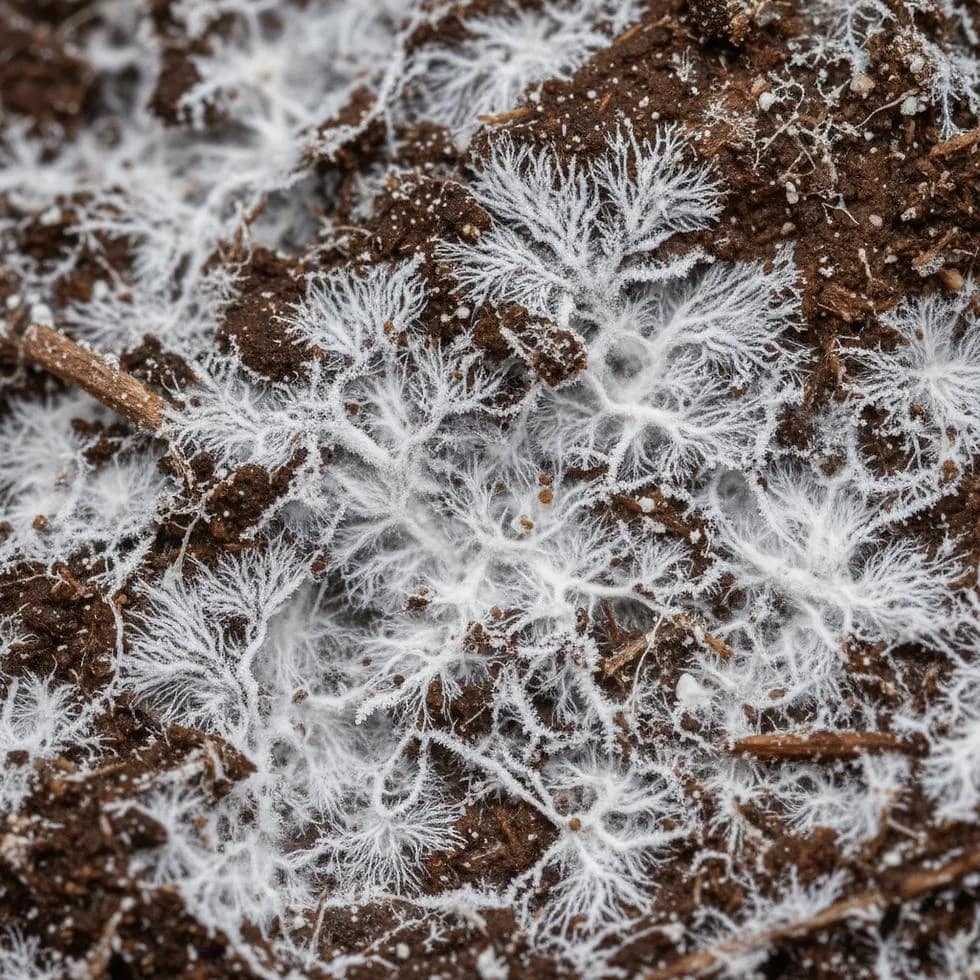
Scientists have learned to use this growth process as a manufacturing tool.
Instead of weaving individual fibres into cloth or synthesizing polymers from petroleum, researchers can cultivate fungal networks on selected substrates. Depending on the fungus and production method, the resulting material can form a dense sheet, a flexible composite or a lightweight structure.
The process generally involves four stages:
-
Selecting the fungus and feedstock. Researchers choose a suitable fungal species and a substrate, which may include agricultural residues, cellulose fibres or other plant-derived materials.
-
Controlling growth. Temperature, moisture, nutrients and airflow are managed so that the fungal network develops in a predictable way.
-
Shaping the material. The growing mycelium can be encouraged to colonize a mould, sheet or fibrous scaffold.
-
Processing the finished material. Heat treatment, pressing, drying, coatings or other treatments may be needed to achieve the required texture, flexibility, strength and stability.
The final material is not necessarily made from fungus alone. Some products combine mycelium with cotton, hemp, cellulose or other fibres, while others use coatings and binders to improve performance.
That distinction is crucial. A material described as mushroom-based or fungal leather may contain several ingredients, and its environmental properties depend on the complete formulation rather than the fungal component alone.
The latest research is moving beyond mushroom leather
For years, one of the most visible applications of mycelium has been leather-like sheets for bags, footwear and accessories. But scientists are now exploring a different possibility: incorporating fungal networks directly into textiles.
A particularly interesting study published in Advanced Functional Materials in October 2025 demonstrated a method for integrating mycelium with cellulose fibres to create stronger, more water-resistant bio-textiles. The researchers developed a network in which fungal filaments grew among and adhered to the fibres, strengthening the structure without completely replacing the original textile scaffold.
The reported material achieved water contact angles of up to 139 degrees, indicating substantial water repellency under the study’s test conditions. The research also reported tensile-strength improvements of up to sixfold in nonwoven material and 56% in woven material, compared with the corresponding unmodified textile structures. These results are encouraging, although they should not be interpreted as proof that the material outperforms every conventional fabric in everyday use.
Another relevant development appeared in ACS Sustainable Chemistry & Engineering in 2026. Researchers investigated mycelium-based composites using the fungus Pleurotus fossulatus and substrates including hemp fabric, applewood and cardboard. Their findings showed that both the fungal species and the underlying material can influence the resulting composite’s properties.
These studies point toward an important shift in biomaterials research. Rather than expecting fungi to replace every textile fibre by themselves, scientists are learning how to use fungal growth to reinforce existing natural fibres and create materials with more useful combinations of properties.
Could fungi make fashion more sustainable?
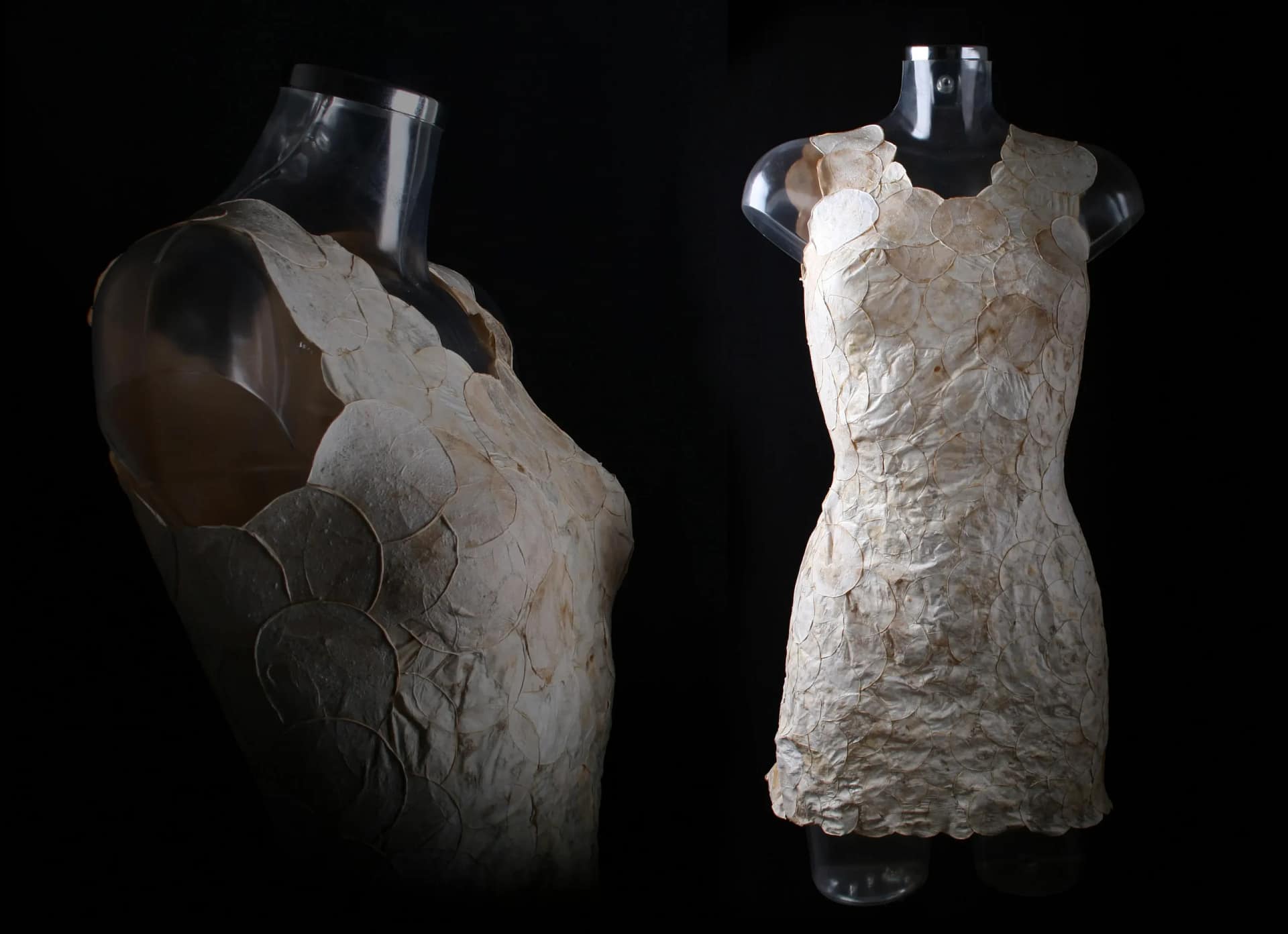
The environmental case for fungal textiles begins with their potential feedstocks.
Conventional polyester is derived from fossil resources, while nylon production also depends heavily on petrochemical inputs. Mycelium can instead grow on certain plant-based materials and agricultural by-products, potentially turning low-value biological waste into something useful.
This could create an alternative manufacturing pathway in which the raw material is renewable and some of the feedstock comes from waste streams that would otherwise require disposal.
There are several potential benefits.
Less dependence on fossil fuels
If a fungal textile replaces a petroleum-derived material without requiring equally intensive chemical processing, it may reduce demand for fossil feedstocks.
The size of that benefit depends on the product being replaced, the electricity used during cultivation and processing, and the chemicals required to make the final material functional.
A 2025 study in the World Journal of Microbiology and Biotechnology examined flexible mycomaterials grown using lignocellulosic waste. The researchers found promising potential for leather-like applications, particularly accessories, while also identifying strength limitations and the need for coatings in some formulations.
Making use of agricultural residues
Crop residues and other plant-derived materials can provide carbon and nutrients for fungal growth. Depending on the process, these resources may reduce the need for newly produced raw materials.
This is particularly relevant to regions with large agricultural sectors. In India, for example, researchers could investigate whether locally available crop residues and textile waste can serve as economical feedstocks for fungal composites.
However, a residue is not automatically a waste with no other use. Some agricultural by-products already serve as animal feed, soil amendments or sources of industrial materials. Sustainable manufacturing must account for those competing uses rather than assuming all biomass is freely available.
Potentially reducing persistent waste
Many conventional synthetic fabrics are slow to break down in natural environments. Materials made predominantly from suitable biological components may offer a different end-of-life pathway.
But biodegradability is not a universal property of every mycelium product. It depends on the fungal material, the substrate, the coatings, the dyes, the adhesives and the conditions in which the product is discarded.
A composite containing plastic coatings may not be suitable for ordinary composting, even if its fungal component is biodegradable.
A 2026 systematic review of fungal mycelium materials highlighted this trade-off: treatments that improve durability can also affect biodegradation, and performance varies considerably across formulations and test conditions.
The environmental benefit, therefore, must be demonstrated for the finished garment or product—not inferred from the fact that fungi were involved in its manufacture.
The biggest obstacle: Making fungal fabric last
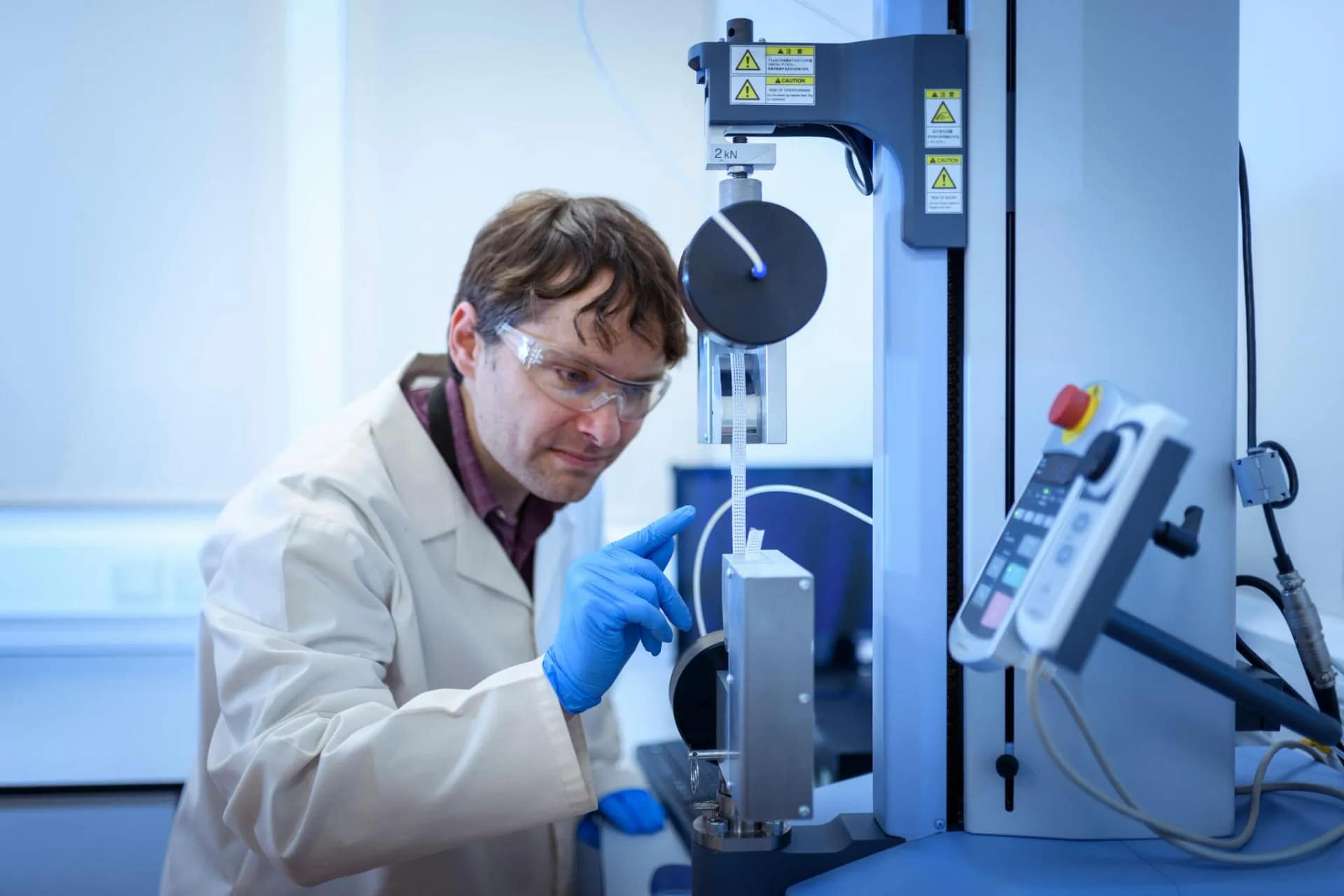
This is the central engineering challenge facing mycelium textiles.
Strength and tear resistance
A jacket must withstand friction, stretching, bending and the repeated stress placed on seams. A shirt needs to survive routine movement and laundering. A pair of trousers must resist abrasion over months or years.
Pure mycelium structures do not automatically deliver the mechanical performance needed for these applications. Researchers are exploring ways to reinforce them with natural fibres, alter their structure and use chemical treatments to improve their strength.
The 2025 mycelium-cellulose study is significant because it uses existing fibres as a structural framework. Rather than relying on fungal tissue to do everything, it combines the characteristics of two materials.
This hybrid approach could prove more practical than attempting to create an entirely fungal replacement for conventional woven fabric.
Water, sweat and repeated washing
Clothing must cope with rain, perspiration, humidity and detergent. These conditions can affect biological materials differently depending on their composition and processing.
Some fungal structures have water-repellent surface properties, and researchers have demonstrated improvements in water resistance through material engineering. But a high water-contact angle in a laboratory test does not establish that a finished garment is waterproof, breathable, washable or comfortable.
Manufacturers must evaluate how the material behaves after repeated wetting and drying, laundering, exposure to sunlight and ordinary wear.
They must also determine whether the coatings and finishes that improve performance introduce environmental disadvantages.
Comfort and flexibility
A material suitable for a handbag may be unsuitable for a shirt.
Leather-like mycelium sheets can be relatively thick, while woven fabrics need to bend naturally around the body and allow heat and moisture to escape. A successful textile must balance softness, weight, breathability, durability and appearance.
Fungal composites that work well for footwear panels, jacket details or accessories may therefore reach the market sooner than materials intended to replace lightweight everyday clothing.
Could living clothing actually remain alive?
The phrase living materials raises an intriguing possibility: fabrics that retain biological activity after they have been manufactured.
Researchers are exploring engineered living materials in which microorganisms remain viable and may produce pigments, alter surfaces or perform other functions. In 2026, research on programmable fungal textiles investigated living fungal structures and potential functions such as pigmentation and surface modification. The researchers also identified significant challenges involving mechanical durability, environmental sensitivity and practical wearability.
In principle, future textiles might respond to changes in their environment or develop selected properties after fabrication.
But there is an important distinction between a material grown by a living organism and a garment that remains biologically alive.
Many mycelium-based leather alternatives are harvested and processed to stop further fungal growth. They are biological in origin, but they are not intended to remain alive when worn.
Keeping fungi alive inside everyday clothing would introduce additional questions about moisture, temperature, contamination, stability and skin contact. Any proposed product would need appropriate safety testing and clear controls over its biological activity.
For the foreseeable future, processed fungal materials and fungal-reinforced textiles are more practical prospects than garments that actively grow on their wearers.
Could fungal fabrics become affordable enough for mass production?
Even if researchers solve the material-performance problems, commercial adoption will depend on economics.
Traditional textile manufacturing benefits from enormous production volumes, established supply chains and decades of process optimization. Polyester fibres can be produced at scale, spun into yarn and processed using highly developed industrial systems.
Mycelium production requires controlled biological growth. Manufacturers must manage contamination, maintain consistent quality, provide suitable growth conditions and process the material after cultivation.
Growth speed alone does not determine production cost. The yield of usable material, the size of the growth chambers, the time required for each batch, energy consumption and post-processing requirements all influence the economics.
There is also the challenge of consistency. Natural biological systems can vary with fungal strain, feedstock composition and cultivation conditions. Fashion manufacturers need materials that behave predictably from one production run to the next.
A 2026 review of fungal mycelium materials found that commercial applications are expanding, but industrial validation and standardized testing remain important gaps.
For manufacturers, the next breakthrough may therefore be less dramatic than a self-growing jacket. It may be a reliable production process that produces thousands of metres of consistent material at a competitive price.
What would it take for mycelium to replace synthetic fabrics?
The most realistic future is likely to involve several material technologies working alongside one another rather than a single universal replacement.
Leather-like sheets could be used in bags, wallets, selected footwear components and decorative fashion elements, where the material does not need to behave exactly like lightweight woven cloth.
Combining mycelium with cotton, hemp, flax or other cellulose fibres could improve selected material properties while preserving a familiar textile structure.
More advanced fungal composites may eventually serve demanding applications if they demonstrate reliable strength, comfort, washability, safety and environmental performance.
Before these materials can compete widely with conventional fabrics, manufacturers will need standardized tests for tensile strength, tear resistance, abrasion, colourfastness, wash durability, breathability and skin-contact safety.
Independent life-cycle assessments will also be essential. They should compare products with equivalent functions and lifetimes, accounting for cultivation, electricity, water, chemicals, transport, garment care and end-of-life treatment.
A fabric that requires frequent replacement may not offer a meaningful environmental advantage, even if its production uses renewable ingredients. Conversely, a durable material made with fewer fossil resources and responsibly managed end-of-life options could provide a substantial benefit.
The most convincing evidence will come from finished products assessed over their entire life cycle, rather than from laboratory measurements alone.
The future of fashion may begin in a growth chamber
Fashion has traditionally depended on materials harvested from plants and animals or manufactured through industrial chemical processes. Mycelium introduces another possibility: using the growth of an organism as part of the manufacturing system itself.
That shift could be consequential. Fungi can help transform plant-derived feedstocks into structured materials, and researchers are finding ways to combine fungal networks with established fibres to improve strength and water resistance.
But nature does not automatically produce materials that are sustainable, affordable or suitable for every application. Those properties must be engineered, measured and verified.
The most promising path may not involve throwing away every polyester garment and replacing it with mushroom-derived clothing. It may involve identifying the applications where fungal materials perform particularly well, improving their durability, and integrating them into supply chains that reduce reliance on fossil resources and unnecessary waste.
A future wardrobe could contain conventional fabrics, plant-based fibres and materials reinforced or partly formed by fungi. Their relative importance will depend on performance, price, consumer acceptance and independently demonstrated environmental benefits.
The surprising possibility is that the next generation of textiles may be shaped not only by machines weaving fibres, but also by biological networks growing through them.
The challenge now is to make those networks strong enough, consistent enough and sustainable enough to earn a place in everyday life.




