El Dorado: The Lost City That Drove Men to Madness

For more than 400 years, the legend of El Dorado has captivated explorers, treasure hunters, historians, and dreamers. It inspired dangerous expeditions into some of the most unforgiving landscapes in South America, emptied fortunes, claimed lives, and fueled one of history's greatest obsessions.
Yet despite centuries of searching, no one ever found the legendary city.
The story of El Dorado is not merely about gold. It is a tale of ambition, greed, misunderstanding, and the powerful grip that myths can have on the human mind. What began as a real Indigenous ceremony eventually transformed into a global legend of a lost city overflowing with unimaginable wealth. Along the way, men crossed mountains, navigated deadly rivers, and marched into dense jungles, convinced that just beyond the horizon lay a kingdom made of gold.
The tragedy is that many of them never returned.
The Real Origin of El Dorado
[caption id="attachment_14313" align="aligncenter" width="483"]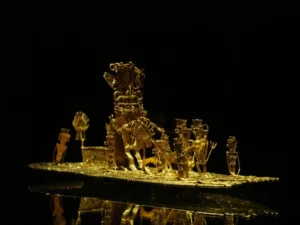 The famous Muisca Raft artifact is considered one of the strongest archaeological links to the original El Dorado ceremony described by Spanish chroniclers.[/caption]
Contrary to popular belief, El Dorado was never originally described as a city.
The legend appears to have originated among the Muisca people, who lived in the highlands of present-day Colombia. Historical accounts describe a ceremonial ritual in which a newly appointed ruler would be covered in gold dust before traveling by raft to the center of Lake Guatavita. There, gold objects and precious offerings were cast into the water as gifts to the gods. The ruler would then immerse himself in the lake, washing away the gold and symbolically beginning his reign.
Spanish explorers heard stories of this "golden man" and referred to him as El Dorado, meaning "The Golden One." Over time, however, the story changed. The golden ruler became a golden city. The city became a kingdom. Eventually, it evolved into an entire empire supposedly overflowing with riches.
This transformation would trigger one of the longest treasure hunts in human history.
Gold Fever Arrives in the New World
When Spanish conquistadors arrived in South America during the 16th century, they had already witnessed astonishing wealth among Indigenous civilizations.
The Aztecs and Incas possessed vast quantities of gold and silver. Stories of temples decorated with precious metals spread rapidly throughout Europe. It seemed entirely plausible that another wealthy civilization existed somewhere beyond the territories already explored.
As conquistadors encountered Muisca gold artifacts and heard rumors of sacred ceremonies involving gold dust and offerings, many became convinced that an even greater treasure awaited discovery.
Soon, El Dorado became more than a legend.
It became an obsession.
The Dangerous Search Begins
[caption id="attachment_14312" align="aligncenter" width="367"]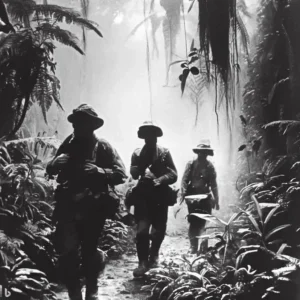 Explorers crossed mountains, rivers, and dense rainforest searching for El Dorado, often at tremendous human cost.[/caption]
The first major searches for El Dorado focused on Colombia.
Spanish explorers quickly learned about Lake Guatavita and became convinced that enormous treasures rested beneath its waters. Several attempts were made to drain the lake.
In 1545, workers formed human chains to remove water from the lake. Later expeditions dug channels and attempted large-scale engineering projects to lower the water level. Small quantities of gold were recovered, encouraging further efforts, but no massive treasure hoard was ever found.
The lack of success did little to discourage explorers.
Instead, many concluded they were simply searching in the wrong place.
As stories spread across the continent, the location of El Dorado seemed to move farther and farther away.
A City That Kept Moving
One of the strangest aspects of the El Dorado legend is how its supposed location constantly changed.
Whenever explorers failed to find the city, new rumors emerged placing it elsewhere.
At various times, El Dorado was believed to exist:
- Deep within the Amazon rainforest
- In the Andes Mountains
- Beyond the Orinoco River
- In the Guiana Highlands
- Near the mythical Lake Parime
- Somewhere in modern Venezuela, Guyana, Brazil, or Colombia
Maps of the 16th and 17th centuries frequently included imaginary lakes and cities based on secondhand reports and speculation. One of the most famous examples was Lake Parime, a vast body of water that appeared on European maps for centuries despite lacking evidence of its existence. Eventually, explorers confirmed that no such lake existed.
Yet belief in El Dorado persisted.
Sir Walter Raleigh's Fatal Obsession
Few individuals became more closely associated with El Dorado than English explorer Sir Walter Raleigh.
In the late 1500s, Raleigh became convinced that a wealthy kingdom existed somewhere in the interior of South America. He believed this kingdom, often called Manoa, stood beside the legendary Lake Parime.
Raleigh organized expeditions into the Guiana region, enduring disease, starvation, hostile terrain, and immense logistical challenges. Despite his determination, he found no evidence of the golden city. Nevertheless, he returned to England claiming the kingdom existed and could eventually be conquered.
His claims generated excitement among investors and political leaders.
Years later, Raleigh launched another expedition.
It ended in disaster.
The mission failed, Spanish forces were attacked against royal instructions, and Raleigh ultimately lost favor with the English crown. He was later executed in 1618, with his obsession with El Dorado contributing significantly to his downfall.
Why Men Risked Everything
Modern readers may wonder why so many intelligent people devoted their lives to chasing a city that never appeared.
The answer lies partly in the extraordinary economic value of gold.
During the Age of Exploration, gold represented power, influence, and survival. European kingdoms competed fiercely for wealth. Explorers who discovered valuable resources could achieve fame and fortune beyond imagination.
But there was another factor at work.
Human beings have always been drawn to stories of hidden worlds and untold riches.
The possibility that a lost civilization might exist somewhere beyond the known horizon proved irresistible. Each failed expedition seemed only to strengthen the myth.
The logic was simple:
If nobody had found El Dorado yet, perhaps they simply had not searched in the right place.
The Human Cost of the Legend
The pursuit of El Dorado came at a staggering price.
Thousands of people participated in expeditions that crossed jungles, rivers, mountains, and swamps. Many died from disease, starvation, accidents, or attacks. Entire expeditions vanished without leaving detailed records behind.
The Amazon rainforest, in particular, proved deadly.
Extreme heat, tropical diseases, venomous animals, and difficult terrain created enormous challenges for European explorers unfamiliar with the environment.
Many returned home with nothing.
Others never returned at all.
Historians note that the search for El Dorado consumed enormous amounts of money and manpower while producing little tangible reward. What it did produce was geographical knowledge. Explorers mapped rivers, documented Indigenous cultures, and expanded European understanding of South America's interior.
Ironically, the city that never existed helped reveal parts of a continent that Europeans knew almost nothing about.
Was There Ever Any Truth to the Story?
Surprisingly, yes.
While there is no evidence that a golden city existed, archaeological discoveries support parts of the original Muisca tradition.
Artifacts such as the famous Muisca Raft, displayed at Bogotá's Gold Museum, depict a ceremonial scene remarkably similar to descriptions of the Lake Guatavita ritual. These discoveries suggest that the core story of a ruler covered in gold was based on real cultural practices.
Researchers studying Muisca history argue that Spanish explorers misunderstood the significance of gold within Indigenous society.
For the Muisca, gold was primarily spiritual and ceremonial rather than monetary. Sacred offerings represented devotion to deities and ancestral traditions. European visitors, however, viewed gold largely as wealth and power. This cultural misunderstanding helped transform a religious ritual into a legend of limitless treasure.
[caption id="attachment_14315" align="aligncenter" width="441"]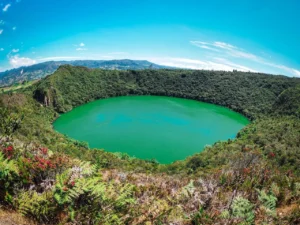 Today, Lake Guatavita remains one of Colombia's most important historical sites and a lasting symbol of the El Dorado legend.[/caption]
The Psychological Power of a Myth
El Dorado's lasting appeal reveals something important about human nature.
Throughout history, people have chased dreams that seemed just out of reach.
Whether searching for hidden treasure, seeking eternal youth, or pursuing revolutionary discoveries, humans often become fascinated by the possibility that extraordinary rewards await those willing to venture into the unknown.
El Dorado became a symbol of that desire.
The legend survived because it spoke to something universal: the hope that somewhere, beyond the obstacles and hardships of life, unimaginable riches might be waiting.
Even today, the phrase "El Dorado" is used metaphorically to describe any place or opportunity believed to offer great wealth or success.
The Legacy of El Dorado
Although no city of gold was ever discovered, the legend continues to influence popular culture.
Books, films, television programs, video games, and documentaries regularly revisit the mystery. Historians and archaeologists continue to study the Muisca civilization, uncovering new insights into the real events that inspired one of the world's most famous legends.
Meanwhile, Lake Guatavita remains one of Colombia's most important historical and cultural landmarks.
Visitors standing on its shores today often imagine the ceremony that may have started it all—a ruler covered in gold dust, drifting toward the center of a sacred lake while priests and spectators watched from the shore.
That image has endured for centuries.
Final Thoughts
El Dorado was never merely a lost city.
It was a story powerful enough to reshape maps, launch expeditions, bankrupt fortunes, and drive men into some of the world's most dangerous wilderness.
The city itself may have been imaginary, but its impact was undeniably real.
In the end, El Dorado's greatest treasure was not gold.
It was the enduring reminder that human beings are willing to risk almost anything in pursuit of a dream.
And sometimes, the dream itself becomes more powerful than reality.
How an 18-Million-Year-Old Ape Fossil in Egypt Could Change What We Know About Human Evolution
Read story →
Could Entire Ecosystems Still Exist on Earth That Scientists Have Never Discovered?
Read story →
Trees Have Their Own Biological Muscles. Scientists Discover How They Straighten Themselves
Read story →