
About 45 minutes north of the mountain town of Røros, there’s a valley with a church, some farms and a river. Nothing about Hessdalen suggests a place that would end up with its own research observatory. And yet, since the early 1980s, people there have reported balls of light hanging over the trees, drifting along the slopes, and sometimes just sitting in one spot for minutes at a time.
The interesting part is what happened next. Instead of the sightings fading into local legend, a Norwegian university college started measuring them. It’s been at it for four decades, with radar, magnetometers, cameras and, more recently, a permanent observatory on a mountaintop. The lights are documented. They are not explained.
That combination is what makes Hessdalen worth writing about carefully. It isn’t a ghost story, and it isn’t a solved case. It’s a real, ongoing scientific problem, and the honest version is more interesting than either the UFO version or the dismissive one.
The valley that became famous by accident
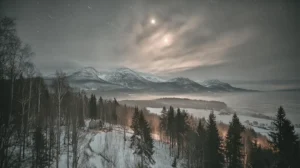
Hessdalen is isolated and sparsely populated. According to Life in Norway, the first sighting the outside world heard about came on 8 December 1981, when a couple looking out their kitchen window described what they called a burning fireball in the evening sky. More reports followed, and the story spread quickly across Norway.
The timing matters. The lights weren’t a one-off. Between 1982 and 1984, researcher Erling Strand of Østfold University College reports there were up to 20 observations a week in the valley. That’s not a rare flash that a few people happened to catch. For a stretch of two or three years, it was something you could go and wait for.
Norwegian engineers took an interest, and a group of researchers began to organize what became Project Hessdalen. Over the years it has drawn in physicists, geophysicists, chemists and data engineers, and it has attracted attention from Italian research groups too. If you want the project’s own material, start with hessdalen.org, which is the site Strand’s presentations point to.
What people actually see
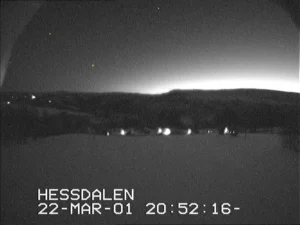
The word “lights” undersells how varied the reports are. In a conference presentation at the European Geosciences Union, Strand sorted the observations into three broad types.
The first is a brief white or blue flash lasting a couple of seconds at most, often a fraction of one. These are easy to miss, which is part of why they’re hard to study.
The second is much more dramatic: a big yellow light that can hang in place for minutes or drift around the valley. Strand describes sizes up to roughly ten meters across and lifetimes measured at up to two hours. Some are bright enough to light up the ground more than 20 meters below.
The third is a group of lights that seem organized together, moving as though tied to one object, while each one switches on and off on its own schedule.
Two details from that same summary stand out to me. First, no heat has ever been recorded, and there are no burn marks on the ground or trees. Whatever these things are, they don’t seem to scorch what they pass over. Second, the lights don’t fit the usual habits of aircraft or the northern lights: they tend to appear at low altitude, in a small valley, in the middle of winter nights.
The 1984 expedition
The most concrete early evidence came from a five-week field investigation in January and February 1984, again per Strand’s summary. The team brought a serious pile of instruments: a spectrographic camera, a seismograph, radar, a spectrum analyzer, a magnetometer, a Geiger counter, a laser and an infrared viewer.
They logged 53 lights of unknown origin in that period. That number is a big part of why the phenomenon is taken seriously. It means the team wasn’t relying on eyewitness memory or a single blurry photo. They had instrument data on dozens of events.
Two findings from the expedition have been quoted ever since. The phenomena showed up on radar, including at times when nothing was visible to the eye. And about 40% of the sightings occurred during magnetic pulsations, with magnetic storms seeming to raise the odds of a sighting. That’s Strand’s account rather than a settled statistical result, so I’d treat it as a lead, not a law. But it points toward the Earth’s magnetic and electrical environment, and that shaped a lot of the theorizing that followed.
From field trip to permanent station
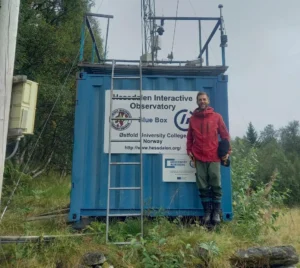
The problem with a phenomenon you can’t schedule is that you can’t bring your equipment to it. So the researchers did the opposite: they left the equipment there.
An automatic measurement station went up in the valley in 1998, as Life in Norway and other sources describe. It records around the clock with cameras and other sensors, so that when a light appears at 2 a.m. on a Tuesday, something is already watching.
In 2018, the project went further with the Hessdalen Observatory, built on a mountaintop close to 1,000 meters above sea level. It runs on solar cells and methanol fuel cells and has room for four researchers year-round.
Decades of continuous monitoring produce something a one-off expedition can’t: patterns. A recent review in a scientific preprint on unidentified phenomena, posted to arXiv, notes that after roughly 30 years of observation the lights tend to peak in winter and mostly appear between about 10 p.m. and 1 a.m. They show up all over the sky and on the ground, and they don’t follow established flight paths. The same paper describes Hessdalen as a kind of prototype for anomalous atmospheric light, and says the project is being relaunched with newer sensors.
One more number is worth pausing on. The intense years of the mid-1980s saw up to 20 sightings a week. By the time of Strand’s 2011 summary, the figure was closer to 20 a year. Nobody has offered a confident explanation for that drop, and it’s one of the strangest parts of the whole story. A change in the local environment, in how people report, or in the underlying cause are all possible. The honest answer is that we don’t know.
The main theories, and what’s wrong with each
There is no consensus explanation, so every candidate below is a hypothesis. I’ve tried to give each one fairly, along with the obvious objection.
1. Burning dust
One proposal, described by Life in Norway, comes from a 2007 paper. It found the lights sit very low, possibly only a few tens of meters above the treeline, and suggested the cause could be the scandium-rich deposits in the valley. The idea is that dust ignites as scandium reacts quickly with acids and air, and the burning cloud then rises and hovers until its fuel runs out.
It’s a neat mechanism because it ties the lights to the local geology, which is unusual. The obvious question is whether it can account for lights that last up to two hours and appear in organized groups without leaving any heat or burn marks.
2. A radon-driven plasma
A more recent hypothesis, also reported by Life in Norway, suggests the lights could be clusters of charged dust particles in a plasma, produced when radon decay ionizes the air and dust. It fits with the fact that the lights look like plasma in some analyses, and with earlier findings of higher radioactivity on rocks near one large sighting.
The trouble is confinement. The arXiv review lists this as one of the main open physics problems: how would a plasma hold together in a small volume for that long without losing energy? A ball of hot ionized gas in open air should disperse quickly, and the lights don’t.
3. Rock stress and piezoelectricity
Another idea points at the ground. Many rocks in the valley contain quartz, and quartz generates electric charge when squeezed. The proposal is that strain in the rock could produce strong electric fields that light up the air. A summary of this and the other models appears on the Wikipedia page for the lights, which is a useful overview if you want to chase down the original papers.
A hypothesis like this is at least testable in principle, since it predicts a link between rock movement and sightings. But it needs a plausible source of enough strain, and the lights’ behavior, drifting and hovering and switching on and off, is hard to map onto stress in the ground.
4. A natural battery
This one got the most media attention. Italian engineer Jader Monari proposed that the whole valley acts like a battery. As ScienceNorway explained, the two sides of the valley would be the electrodes and the river Hesja the electrolyte. An abandoned mine puts sulfur-rich water into the river, which makes it conductive, and gas bubbles rising from it could become electrically charged and glow.
The Local Norway reported that Monari connected each side of the valley to the river and generated enough current to power a light bulb. Bjørn Gitle Hauge, who runs the project, called it one of many hypotheses rather than the answer.
Norwegian physicist Bjørn Samset was blunter. He told the science site that the distances are too large and the natural charge too weak to explain how bright the lights are, and said he hadn’t seen convincing calculations for Hessdalen. He added that he’d rather see thorough documentation before more theories are launched. To me, that’s the healthiest reaction in the whole debate.
What the lights probably aren’t
Since this is a topic that attracts a lot of wild claims, it’s worth being direct.
They aren’t well-supported evidence of aliens. The idea has followed Hessdalen from the beginning because “unidentified lights” sounds like “UFO.” But researchers on the project have treated it as a physical phenomenon to be explained, and nothing in the instrument data requires an extraterrestrial explanation. “Unexplained” and “alien” are not the same word.
They aren’t a fraud or a trick of the camera, at least not in general. Radar returns, a five-week instrumented campaign and decades of continuous monitoring make it hard to argue that nothing is there. That doesn’t mean every single photo is genuine. Blurry pictures of car headlights, aircraft and stars get misidentified everywhere, and Hessdalen is no exception. But the core phenomenon has been recorded by instruments, not just people.
They aren’t solved. This is the mistake skeptics sometimes make in the other direction. Explaining a few individual sightings as mundane is not the same as explaining the pattern. Until a theory predicts what the instruments record, the case stays open.
Why it’s so hard to crack
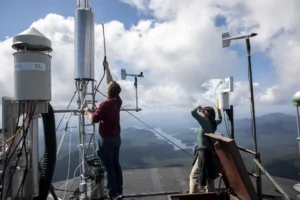
It’s tempting to say scientists just need better cameras. But the obstacles are structural.
Rarity and unpredictability. With around 20 sightings a year now, and no reliable way to know when, most nights the equipment records nothing. Every measurement is a lucky catch.
Poor imagery. ScienceNorway’s own coverage of the project notes that most of the pictures and videos are rather unclear. Lights at night, at a distance, in the cold, are hard to photograph well, and a blurry orb supports almost any theory.
No lab replication. Monari lit a bulb, but nobody has made a floating, hovering orb on demand. A hypothesis that can’t produce the thing it’s meant to explain remains a hypothesis.
Overlapping causes. It’s possible that more than one thing is happening. The three types Strand describes, brief flashes, long-lived yellow balls and coordinated groups, might have different origins. Lumping them into one “Hessdalen phenomenon” may be part of why single-cause theories struggle.
There’s also a quieter obstacle: funding and attention. A phenomenon that produces occasional pretty lights in a remote valley isn’t an obvious priority, and it’s exactly the kind of subject that’s easy to dismiss and hard to sustain. The fact that a small Norwegian university has kept a project going for four decades is, frankly, the impressive part.
Similar lights elsewhere
Hessdalen isn’t the only place with reports of strange lights over the ground. The arXiv review argues that comparable areas around the world could be used as natural laboratories, studied with the same kind of multi-instrument setup. If the underlying cause is geological or atmospheric rather than exotic, other valleys with the right conditions might produce similar effects.
It’s also worth separating Hessdalen from a phenomenon like ball lightning, which we’ve covered in our piece on ball lightning and why science can’t fully explain it. Ball lightning is generally associated with thunderstorms and lasts seconds, while the Hessdalen lights show up on calm winter nights and can last much longer. They’re different problems, though both involve glowing spheres that resist a tidy lab explanation.
Can you see them yourself?
Possibly, but don’t plan a trip around a guarantee. With roughly 20 reported events a year, the odds on any given night are low, and winter in central Norway is cold and dark. If you’re curious, the sensible approach is to check the project’s own site and local information for current conditions and any public data before you go. I haven’t verified visitor arrangements, so treat this as a pointer, not travel advice.
The better way to follow the story is from home. The project publishes images and videos, and new findings, when they come, will likely appear in the research literature first.
Frequently asked questions
What are the Hessdalen lights?
They’re unexplained balls and flashes of light reported in the Hessdalen valley in central Norway since the early 1980s. They’ve been recorded on radar and cameras and studied by researchers at Østfold University College.
Are the Hessdalen lights real?
Yes, in the sense that instruments have recorded them. What they are is still unknown.
Are they UFOs?
“Unidentified” is accurate, but there’s no evidence in the published data that they’re extraterrestrial. Researchers have treated them as a physical phenomenon.
How often do they appear?
In the mid-1980s there were up to 20 sightings a week. More recent summaries put it closer to 20 a year.
What causes them?
Nobody knows. Leading hypotheses include burning dust, a radon-driven plasma, electrical effects from stressed quartz-bearing rock, and a natural battery formed by the valley’s geology and river. None has won consensus.
Is there a research station?
Yes. An automatic measurement station has operated since 1998, and a mountaintop observatory opened in 2018.
The bottom line
The Hessdalen lights sit in an uncomfortable middle ground, which is exactly why they deserve attention. They’ve been measured too well to dismiss and studied too long to call a hoax, yet nobody has produced an explanation that predicts what the instruments see.
I find the human side of it as striking as the physics. A handful of engineers and scientists have kept watching one small valley for forty years, without a guarantee of an answer. If the solution turns out to be ordinary geology and chemistry, that’s still a discovery. If it turns out to be something stranger, we’ll be glad somebody kept the cameras running.
