Can Rocks Produce Electrical Signals Before Earthquakes?
Why do some rocks produce electrical signals before earthquakes? Explore the science of stressed minerals, electromagnetic anomalies and the debate over earthquake prediction.
Why Do Some Rocks Produce Strange Electrical Signals Before Earthquakes?
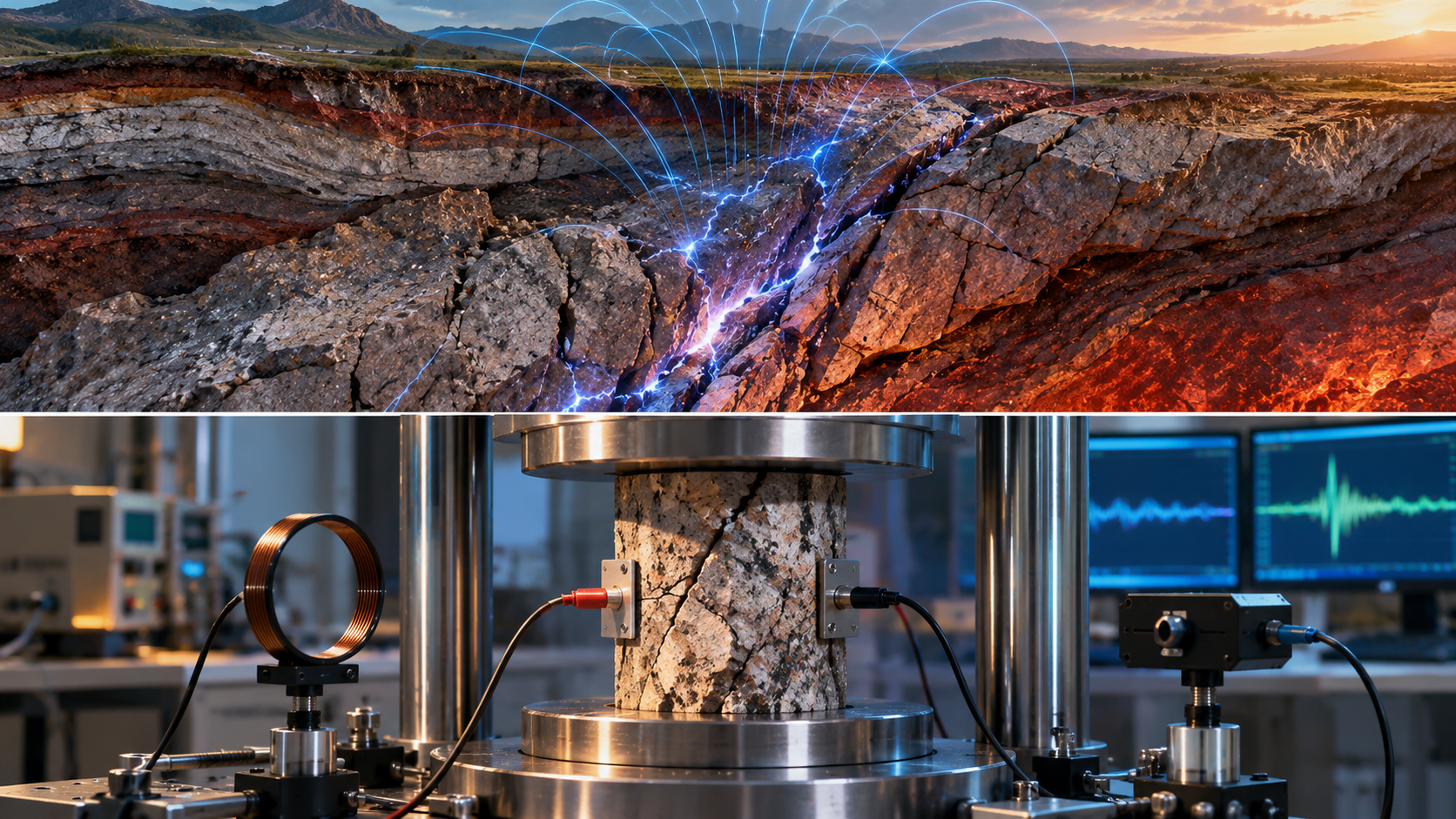
Scientists have discovered that stressed rocks can generate electrical charges and electromagnetic disturbances. Could these mysterious signals offer clues about earthquakes before the ground begins to shake? The physics is intriguing, but researchers are still debating whether these signals can genuinely reveal an approaching earthquake.
Earthquakes usually arrive without warning. One moment, the ground appears completely still; the next, buildings shake, roads crack and entire landscapes can change within seconds.
But what if the rocks beneath our feet begin behaving differently before an earthquake happens?
For decades, scientists have investigated reports of unusual electrical and magnetic disturbances around active fault zones. Some researchers believe that rocks under increasing pressure may generate electrical charges as microscopic cracks develop. These charges could potentially produce electromagnetic signals detectable by sensitive instruments at the surface.
The possibility is fascinating because it raises an important question: could the Earth's crust reveal something about an approaching earthquake before the first seismic waves arrive?
There is genuine laboratory evidence that stressed rocks can generate electrical effects. Some field studies have also reported unusual electromagnetic measurements before earthquakes. However, establishing a reliable connection between these signals and future earthquakes has proved considerably more difficult.
The mystery lies somewhere between solid-state physics, geology and one of the biggest unsolved challenges in Earth science.
Can rocks actually generate electricity?
It sounds unusual, but certain rocks can produce measurable electrical effects when subjected to mechanical stress.
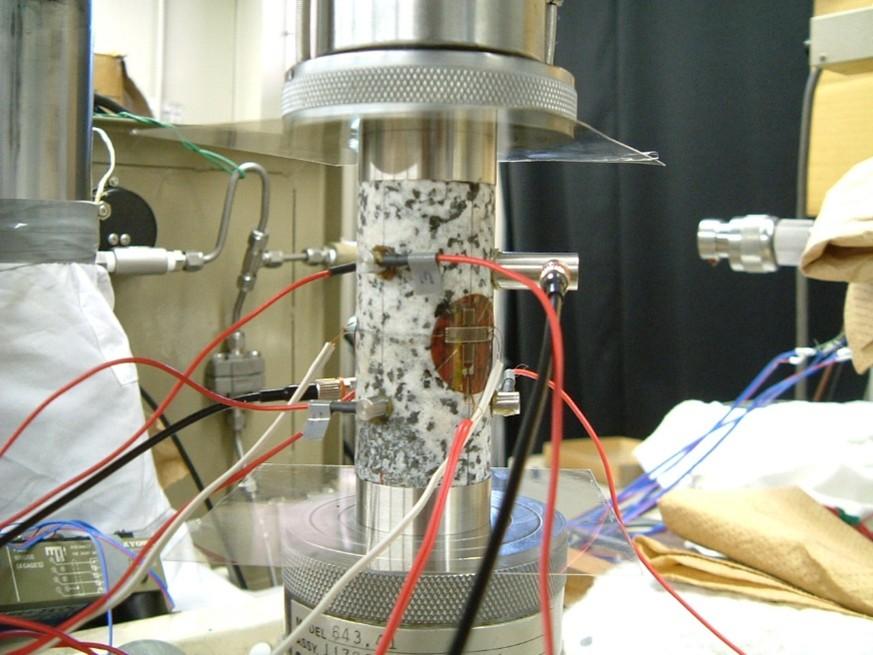
Scientists have investigated this phenomenon using laboratory experiments in which rock samples are compressed until they develop cracks or eventually fracture.
During these experiments, researchers have sometimes detected electrical currents, voltage changes and electromagnetic pulses.
One explanation involves a phenomenon called the piezoelectric effect.
Piezoelectric materials generate electrical charges when mechanical pressure is applied. Quartz is a familiar example because it has a crystal structure that allows mechanical stress to produce an electrical response.
Since quartz occurs naturally in many rocks, scientists have investigated whether pressure-related electrical effects could develop inside Earth's crust.
However, there is an important complication: not every rock behaves like a piezoelectric crystal. Many rocks contain several minerals, and their electrical properties depend on their composition, structure, temperature and surrounding fluids.
A 2021 paper published in Geophysical Journal International explored how stress-related piezoelectric effects might generate electromagnetic precursors along geological faults.
The study proposed a theoretical framework connecting mechanical stress, fault movement and electrical fields. It also identified geological conditions that could influence whether such signals develop.
The strange electrical behaviour of stressed rocks
Piezoelectricity is not the only proposed explanation.
Another intriguing hypothesis comes from research into microscopic defects inside common rock-forming minerals.
Physicist Friedemann Freund has investigated how certain oxygen-related defects in rocks may become electrically active when rocks experience mechanical stress.
These defects are associated with peroxy bonds, unusual oxygen-oxygen linkages within mineral structures.
According to Freund's proposed mechanism, stressing a rock can activate mobile positive charge carriers known as positive holes. These charges may move through the surrounding mineral structure and, under suitable conditions, travel beyond the initially stressed region.
If enough charges move together, they could produce an electrical current and associated magnetic disturbances.
The hypothesis is particularly interesting because it suggests that electrical activity might extend beyond the immediate location of a developing fracture.
Freund has argued that this mechanism could help explain reports of electrical and electromagnetic disturbances associated with earthquake activity.
His research was discussed in the Journal of Asian Earth Sciences in a paper examining possible physical processes behind pre-earthquake signals.
Read: Pre-earthquake Signals – Underlying Physical Processes.
However, this remains a proposed mechanism, not an established explanation for all reported earthquake-related electromagnetic signals. Scientists still need to demonstrate that the process operates at the necessary scale under real geological conditions.
Could underground electrical signals travel to the Earth's surface?
Even if rocks generate electrical charges deep underground, another problem remains: how could instruments detect them?
Earth's crust is not an empty space. It contains minerals, groundwater, fractures and different geological layers, all of which influence how electrical currents move.
Water is particularly important.
Groundwater containing dissolved minerals can conduct electricity. Its movement through cracks and pores can alter the electrical properties of surrounding rocks.
When underground stress changes, fractures may open or close, changing fluid pressure and movement. These changes can produce electrical potential differences that researchers can measure using ground-based electrodes.
Scientists also monitor magnetic fields using sensitive magnetometers. Because moving electrical charges generate magnetic fields, underground electrical activity could potentially leave a measurable magnetic signature.
The difficulty is distinguishing a genuine earthquake-related signal from ordinary environmental variations.
Electrical equipment, power lines, industrial machinery, lightning and even natural geomagnetic disturbances can produce electromagnetic interference.
A signal recorded near an earthquake fault is therefore not automatically evidence that the earthquake caused it.
The mysterious signals scientists have reported before earthquakes
Over the years, researchers have published studies describing unusual electromagnetic measurements before certain earthquakes.
One frequently discussed example concerns the 1989 Loma Prieta earthquake in California.
Researchers reported unusual ultra-low-frequency magnetic fluctuations before the magnitude 6.9 earthquake struck the San Francisco Bay Area.
The observations attracted considerable attention because the monitoring equipment was relatively close to the eventual earthquake region.
However, subsequent investigations questioned whether the measured disturbances were genuinely connected to the earthquake or influenced by other electromagnetic sources.
Similar debates have surrounded reported signals before major earthquakes in Japan, China and other seismically active regions.
The scientific challenge is that earthquakes are relatively infrequent compared with the number of electromagnetic disturbances recorded every day.
If researchers search through enough historical measurements after an earthquake, they may identify unusual fluctuations that appear significant in retrospect. But that does not prove the signals could have been recognised beforehand.
A landmark review published in Reviews of Geophysics in 1993 examined decades of electromagnetic earthquake precursor research.
It found that laboratory experiments demonstrated electrical effects associated with stressed rocks, but field observations were inconsistent. Some reported signals were much larger than expected from laboratory measurements, while other earthquakes occurred without detectable precursors.
Read the review: Electromagnetic Precursors to Earthquakes in the ULF Band.
A more recent study found a possible magnetic signal
One of the more interesting developments came from a study published in Journal of Geophysical Research: Solid Earth in September 2022.
Researchers examined more than a decade of ground-based magnetometer measurements from California.
Their dataset included over 330,000 site-days of observations and measurements surrounding 19 earthquakes with magnitudes of 4.5 or greater.
Rather than relying on individual unusual readings, the researchers used statistical techniques to compare magnetic measurements from periods before earthquakes with measurements from earlier, quieter periods.
They reported a modest statistical association between certain magnetic-field characteristics and earthquakes occurring approximately 24 to 72 hours later.
The finding was important because the study attempted to reduce the possibility of identifying meaningless patterns through retrospective analysis.
However, the researchers were careful about their conclusions. The observed effect was not strong enough to provide useful earthquake predictions, and the physical mechanism behind the association remained uncertain.
This is an important distinction. A statistical relationship worth investigating is not the same as a dependable warning system.
Why scientists remain divided about earthquake electromagnetic signals
The disagreement is not necessarily about whether rocks can generate electrical signals. Laboratory experiments have demonstrated that they can.
The bigger question is whether those signals provide a consistent and measurable indication that a significant earthquake is approaching.
Several difficulties make this exceptionally challenging.
1. Every geological fault behaves differently.
The mineral composition, temperature, pressure and water content of rocks vary from one fault system to another. A mechanism that produces measurable electrical effects in one geological environment may not work in another.
2. Signals can become weaker underground.
Electrical currents and electromagnetic fields are affected by the conductivity of surrounding rocks. Some signals may be absorbed or distorted before reaching surface monitoring equipment.
3. The Earth has a naturally noisy electromagnetic environment.
Lightning, solar activity, geomagnetic storms, power infrastructure and industrial equipment can all produce disturbances that resemble potential earthquake-related signals.
4. Earthquakes do not always provide detectable warning signs.
Even when an unusual electromagnetic signal is recorded before an earthquake, researchers must establish whether it occurs consistently enough to be useful.
A particularly important assessment comes from the US Geological Survey (USGS). Its Geomagnetism Program has investigated claims involving magnetic and ionospheric earthquake precursors. The agency reports that many claimed signals were either unreliable measurements or part of normal magnetic-field variations unrelated to earthquakes.
Read the USGS assessment of geomagnetic earthquake prediction.
This is why the subject remains controversial despite decades of laboratory and field research.
Could these signals eventually help predict earthquakes?
This is where the research becomes particularly interesting.
Scientists are increasingly interested in combining electromagnetic measurements with other monitoring technologies rather than relying on a single signal.
For example, researchers could compare:
-
Electrical changes recorded by electrodes buried near active faults.
-
Magnetic-field fluctuations measured by ground-based magnetometers.
-
Small ground movements detected by GPS instruments.
-
Changes in underground water pressure and chemistry.
-
Microearthquakes and other subtle seismic activity.
If several independent measurements show consistent changes before earthquakes, researchers may gain a better understanding of the physical processes occurring inside fault zones.
Artificial intelligence could also help analyse enormous datasets and identify patterns that might be difficult to recognise through conventional analysis.
However, any proposed warning system would need to be tested prospectively, meaning it must identify signals before earthquakes happen rather than finding patterns afterwards.
It would also need to demonstrate that its predictions are accurate enough to be useful, without producing excessive false alarms.
The USGS earthquake science programme provides further information about how scientists monitor seismic activity and investigate earthquake hazards.
What this mystery tells us about the Earth's hidden physics
The idea that rocks could generate electricity under pressure challenges the traditional image of Earth's crust as an electrically inactive mass of solid stone.
Minerals contain complex atomic structures. Their electrical properties can change under mechanical stress, temperature variations and interactions with surrounding fluids.
A developing earthquake fault is therefore potentially more complicated than a simple fracture waiting to happen.
It is an evolving physical environment in which rock deformation, fluid movement, chemical reactions and electrical processes may interact.
Scientists have already demonstrated some of these individual effects in laboratories. What remains uncertain is whether they combine in nature to produce reliable signals that consistently precede earthquakes.
The next breakthrough may come from better underground monitoring networks, more realistic laboratory experiments or improved methods of separating genuine geological signals from electromagnetic background noise.
For now, the possibility that Earth's rocks might reveal subtle electrical changes before a major rupture remains an intriguing scientific question.
The rocks beneath our feet may be capable of generating electricity when stressed. Whether those signals can tell us when an earthquake is coming is a very different question — and one scientists have yet to answer.

Earth's Missing Nitrogen Mystery: Where Did It Go?
Read story →
How an 18-Million-Year-Old Ape Fossil in Egypt Could Change What We Know About Human Evolution
Read story →
Could Entire Ecosystems Still Exist on Earth That Scientists Have Never Discovered?
Read story →