
Russia wants to build its own version of Starlink, a satellite internet network capable of connecting remote regions and supporting military communications. But its ambitious Rassvet project has encountered an increasingly difficult problem: some of its satellites are struggling to climb into their intended orbits, and two have already fallen back to Earth.
The idea sounds straightforward. Put hundreds of satellites into low Earth orbit, connect them to ground-based terminals and provide high-speed internet across a country where conventional infrastructure cannot reach every location.
That is essentially the model behind Starlink.
For Russia, however, building an independent satellite internet network is about much more than providing broadband to ordinary customers. It is also a matter of technological independence, national security and military communications.
The project is called Rassvet, developed by Russian aerospace company Bureau 1440. Its name translates roughly to “dawn” in Russian, reflecting Moscow’s ambition to create a new generation of domestic satellite connectivity.
But the project has suffered a series of setbacks.
On October 30, 2026, another Rassvet-3 satellite re-entered Earth’s atmosphere and burned up. It was the second satellite from the operational constellation to be lost after apparently failing to raise its orbit.
That does not mean the entire programme has collapsed. Many of its satellites remain in orbit, and testing is continuing. Nevertheless, the incidents raise important questions about Russia’s ability to manufacture, launch and operate a large satellite constellation comparable to Starlink.
So what went wrong, why are the satellites struggling, and how far behind is Russia in its attempt to challenge SpaceX?
What is Russia’s Rassvet satellite network?
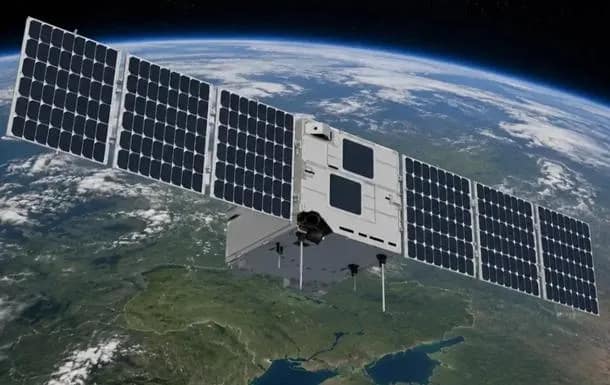
Rassvet is Russia’s planned low Earth orbit broadband satellite constellation, developed by Bureau 1440, a Russian aerospace company associated with the country’s wider satellite communications ambitions.
The objective is to create a network of satellites that can transmit internet signals between space and specialised terminals on the ground.
Unlike traditional communications satellites positioned approximately 36,000 kilometres above Earth, low Earth orbit satellites operate much closer to the planet.
This shorter distance offers several advantages:
-
Lower communication latency.
-
Faster signal transmission.
-
Smaller coverage areas that can be served by individual satellites.
-
The ability to create a large network providing connectivity across different geographical regions.
However, there is a major disadvantage.
A single low-orbit satellite cannot remain above one location continuously. It moves rapidly around Earth, meaning another satellite must take over when it passes out of range.
That requires a large constellation working together.
Starlink has already demonstrated how this model can operate at enormous scale. Russia wants to develop a comparable system, but its ability to manufacture and deploy hundreds of reliable satellites remains a significant challenge.
Bureau 1440’s plans have included hundreds of operational satellites, with longer-term ambitions extending towards a constellation of more than 900 spacecraft.
Two Rassvet satellites have already burned up
The latest setback occurred on October 30, 2026.
Rassvet-3 satellite No. 17, identified by NORAD as 100083, re-entered Earth’s atmosphere after spending approximately three months and 11 days in orbit.
It had been launched on July 19 aboard a Soyuz-2.1b rocket as part of a batch of 16 satellites.
According to orbital tracking analysis reported by Defense Express, the satellite apparently failed to activate its propulsion system or carry out the necessary orbit-raising manoeuvres.
As a result, its altitude gradually decreased.
Eventually, atmospheric drag became strong enough to pull it into the denser layers of the atmosphere, where it burned up during re-entry.
This was not the first incident.
On June 6, another Rassvet-3 satellite, No. 4, suffered a similar fate. It had been launched during the first operational deployment in March and also failed to make the required orbital corrections.
The two incidents have raised concerns about the reliability of the propulsion systems used by the new satellites.
There is an important distinction, however: the publicly available tracking information indicates that the satellites did not successfully perform the required orbit-raising manoeuvres. It does not establish the precise internal component failure responsible in either case.
Why are the satellites struggling to reach their intended orbit?
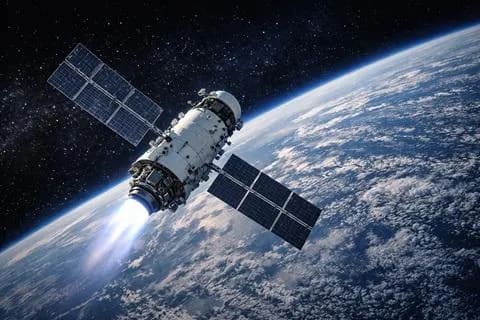
This is arguably the biggest engineering question surrounding Rassvet.
The satellites were launched into relatively low orbits and were expected to use their own propulsion systems to climb towards their planned operational altitude.
The target altitude has been reported at approximately 800 kilometres.
However, reaching that height requires more than simply releasing a satellite from a rocket.
Once deployed, each spacecraft must operate its propulsion system, adjust its trajectory and gradually raise its orbit.
If the propulsion system fails, or if the satellite cannot perform the required manoeuvres, it may remain at an altitude where atmospheric drag steadily reduces its orbital energy.
Even though space is often described as a vacuum, Earth’s upper atmosphere extends hundreds of kilometres above the surface. At sufficiently low orbital altitudes, a satellite encounters enough residual atmospheric particles to slow down over time.
This is why satellites in low Earth orbit need careful altitude management.
A spacecraft that cannot compensate for orbital decay may eventually re-enter the atmosphere.
The Rassvet incidents suggest that the propulsion and orbital-control stage deserves particular scrutiny.
It is important not to assume that every satellite remaining below 800 kilometres has failed. The latest orbital analysis indicates that some Rassvet satellites are deliberately being positioned around 500 kilometres before a coordinated ascent.
The difficulty is distinguishing planned orbital positioning from spacecraft that have genuinely lost the ability to manoeuvre.
Russia has managed to rescue another troubled satellite
There has also been a positive development for the programme.
Another Rassvet satellite, No. 23, had descended to approximately 220 kilometres, putting it at risk of atmospheric re-entry.
However, according to the latest orbital tracking reports, Russia successfully began raising its orbit around October 20.
The satellite subsequently climbed to approximately 300 kilometres and continued gaining altitude.
This suggests that at least some spacecraft experiencing orbital difficulties can still recover through propulsion manoeuvres.
It also illustrates why the entire constellation should not be described as a failure.
As of the November 1 reporting, 30 of the 32 satellites launched in the first two Rassvet-3 batches remained in orbit. Defense Express reported that 26 had reached approximately 500 kilometres, with another approaching that altitude.
The distinction matters. A satellite operating below its planned final altitude may still be functional, and the programme’s deployment strategy may involve several stages of orbital positioning.
However, the losses and uneven progress demonstrate that the process has not been as smooth as Russia would have wanted.
Why does Russia need its own Starlink?
The answer goes beyond commercial internet.
Satellite connectivity has become an increasingly important part of modern military operations.
Military units use satellite networks to exchange information, transmit video, coordinate movements and maintain communications in areas where traditional networks have been damaged or are unavailable.
The war in Ukraine has demonstrated the strategic importance of these systems.
Starlink became an important communications tool for Ukrainian forces, while Russian forces also sought to exploit access to the network through unauthorised terminals.
In February 2026, SpaceX restricted access for unregistered terminals in Ukraine following coordination with Ukrainian authorities. This highlighted the vulnerability of relying on a commercial communications network controlled by another country and company.
For Russia, developing Rassvet offers a potential way to reduce that dependency.
A domestic network could provide communications for remote civilian regions and, if sufficiently developed and integrated, military users.
But the current constellation is not yet equivalent to Starlink’s global network.
Even if individual Rassvet satellites are functioning, a relatively small number cannot provide continuous coverage across large geographical areas.
A network needs sufficient satellites distributed across multiple orbital paths to ensure that one spacecraft can take over from another.
That is why the number of satellites successfully deployed matters just as much as the performance of each individual spacecraft.
The problem is bigger than two failed satellites
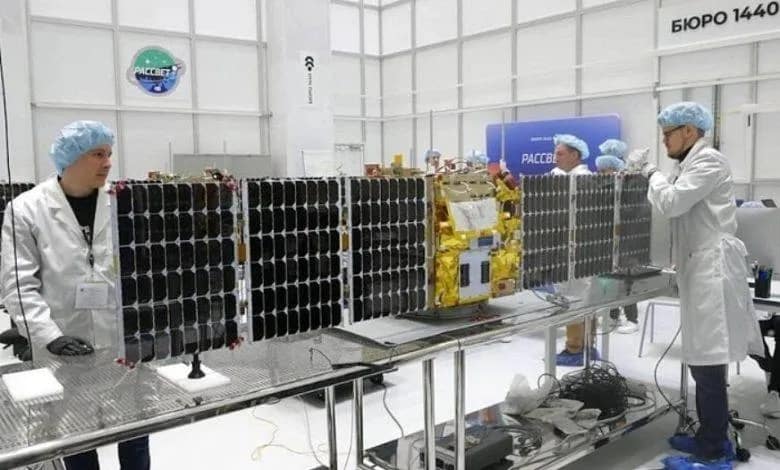
Losing two satellites does not automatically make a space programme unsuccessful.
Even established satellite operators experience failures, especially during the early stages of deploying new spacecraft designs.
However, Rassvet faces a broader set of challenges.
1. Satellite propulsion reliability
The ability to raise and maintain orbital altitude is fundamental to the project. If a significant number of satellites cannot perform their planned manoeuvres, the constellation will struggle to reach its intended configuration.
2. Manufacturing capacity
A network requiring hundreds of satellites demands a dependable industrial production system.
Manufacturers must produce spacecraft in large numbers while maintaining consistent quality, testing and reliability. Producing a handful of experimental satellites is very different from manufacturing an entire operational constellation.
3. Access to advanced components
Modern communications satellites rely on sophisticated electronics, power systems, antennas, processors and propulsion technology.
International sanctions and restrictions on access to advanced components may complicate Russia’s ability to expand production and maintain a reliable supply chain.
4. Launch capacity
Even when satellites are ready, they need rockets and launch facilities.
Russia’s Soyuz launch vehicles remain important to its space programme. Any disruption to rocket production, launch infrastructure or supply chains could delay the deployment of additional spacecraft.
5. Ground terminals
A satellite internet service needs more than satellites.
Customers must have compatible terminals capable of communicating with the constellation. These terminals need suitable antennas, electronics and software.
Producing them affordably and in sufficient quantities could prove as difficult as building the satellites themselves.
RFE/RL’s September investigation highlighted the challenges surrounding propulsion, manufacturing, launch infrastructure and the availability of ground terminals.
Why can’t Russia simply copy Starlink?
At first glance, building a Starlink competitor might seem like a matter of following SpaceX’s engineering model.
But the challenge is much more complicated.
Starlink benefits from SpaceX’s vertically integrated business model. The company designs and manufactures satellites, operates launch vehicles, manages the constellation and develops its own user terminals.
Its ability to launch large batches of satellites using reusable Falcon 9 rockets also gives it a major advantage in deployment costs and frequency.
Russia has a substantial history in space engineering, but that does not automatically translate into the ability to manufacture and deploy a modern broadband constellation at comparable scale.
The difference is between having the technological knowledge to build individual satellites and having the industrial infrastructure to produce, launch, maintain and replace hundreds of them.
Rassvet must also compete with established networks that have already spent years developing their software, ground infrastructure, customer support and operational systems.
Even if Russia succeeds in putting hundreds of satellites into orbit, it will still need to demonstrate reliable internet speeds, competitive latency, affordable terminals and dependable coverage.
That is a much larger challenge than launching a rocket successfully.
Is Rassvet already a failed project?
No. That conclusion would be premature.
The programme has experienced setbacks, but the latest available reports indicate that most of the first two batches remain in orbit and that orbital deployment and testing are continuing.
Some satellites have reached approximately 500 kilometres, while others are still climbing or undergoing orbital positioning.
Defense Express has also reported that Bureau 1440 is testing communications terminals in remote parts of Russia.
These are signs of ongoing development rather than a completely abandoned project.
However, there is a substantial difference between a constellation undergoing technical tests and a fully operational broadband network.
Russia still needs to demonstrate that it can:
-
Deploy satellites consistently without excessive losses.
-
Maintain reliable propulsion and orbital control.
-
Build enough spacecraft to provide continuous coverage.
-
Manufacture and distribute ground terminals.
-
Operate a stable communications network at commercial scale.
Until those requirements are met, Rassvet cannot realistically be considered a full replacement for Starlink.
What happens if Russia cannot fix the problem?
The consequences could extend beyond civilian internet access.
A reliable satellite network would give Russia greater independence in communications, including in remote areas and potentially in military operations.
If Rassvet deployment continues to experience delays, Moscow may have to rely more heavily on conventional communications infrastructure and other satellite systems.
That could limit its ability to provide continuous broadband connectivity to users who need it most.
It could also increase the cost of the project. Failed satellites, additional launches, engineering changes and replacement spacecraft all require money and time.
There is another challenge: the satellite internet market is becoming increasingly competitive.
SpaceX is expanding Starlink, while China is developing its own large-scale satellite constellation ambitions. Other countries and private companies are also exploring low Earth orbit broadband services.
The longer Russia takes to establish a functioning network, the more difficult it may become to catch up.
The bigger lesson: Building a satellite internet empire is harder than launching satellites
Rassvet is an ambitious attempt to give Russia a communications network that it can control independently.
But the recent satellite losses demonstrate that space engineering involves far more than getting hardware into orbit.
Every spacecraft must be manufactured, tested, launched, positioned and maintained. Ground infrastructure must support it, terminals must communicate with it, and the entire constellation must work as a coordinated system.
The loss of two satellites does not mean Rassvet is finished. The remaining spacecraft provide Russia with valuable opportunities to test its technology and improve future generations.
But the programme is facing a difficult test.
Can Russia turn a collection of experimental and early operational satellites into a reliable network capable of competing with one of the world’s most advanced satellite internet systems?
For now, the answer remains uncertain.
The real test will not be whether Russia can launch another batch of satellites. It will be whether those satellites can remain in orbit, communicate reliably and deliver uninterrupted connectivity to millions of users.




