
California’s Vandenberg Space Force Base has become one of SpaceX’s most important launch locations. But the reason isn’t simply its proximity to the Pacific Ocean. Its geography gives rockets access to valuable orbital paths that are difficult to reach efficiently from other launch sites.
When people think of rocket launches in the United States, Florida often comes to mind. Cape Canaveral and Kennedy Space Center have hosted some of the most famous missions in spaceflight history, from the Apollo programme to modern commercial launches.
Yet another location on the opposite side of the country has become increasingly important: Vandenberg Space Force Base in California.
From this coastal launch site, SpaceX regularly sends Falcon 9 rockets carrying satellites into orbit. Some missions deploy batches of Starlink satellites, while others carry scientific instruments, Earth-observation spacecraft and national security payloads.
The frequency of these launches raises an interesting question: why does SpaceX use California so often when Florida already has established launch facilities?
The answer involves Earth’s rotation, orbital mechanics, geography, safety and the growing demand for satellites.
Vandenberg is not just another rocket launch site. It provides access to orbital routes that make it particularly useful for certain types of space missions.
1. Vandenberg’s biggest advantage is its location
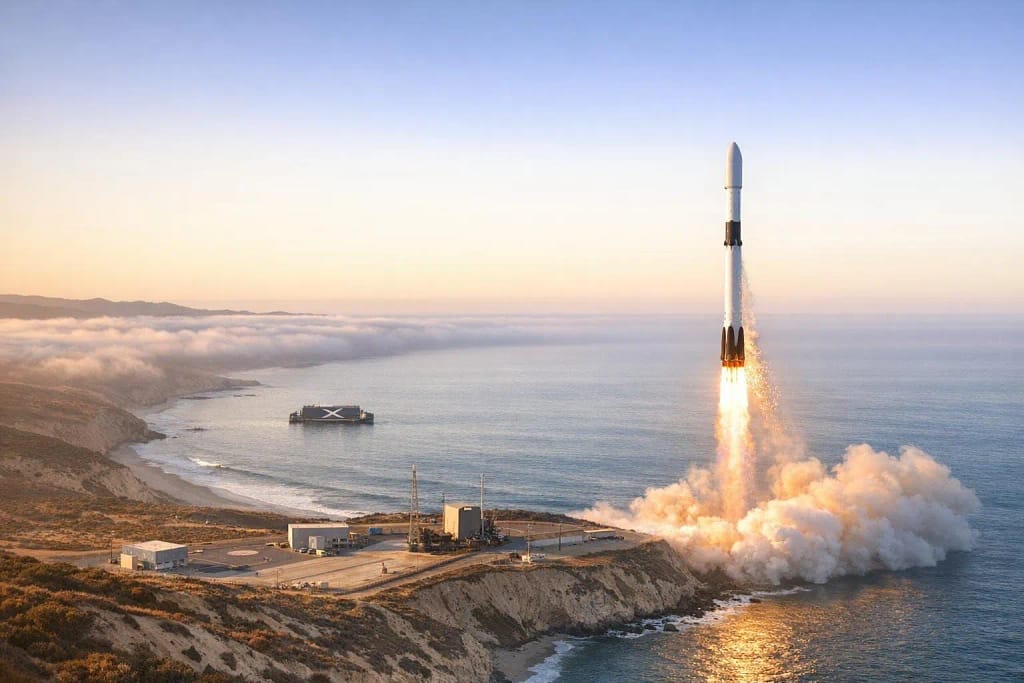
Vandenberg Space Force Base is located on California’s central coast, in Santa Barbara County, between Los Angeles and San Francisco.
Its position gives rockets a relatively clear route south over the Pacific Ocean. This is particularly important for missions that need to enter polar or high-inclination orbits.
When a rocket launches from Vandenberg on a southbound trajectory, it can travel over open ocean rather than passing over heavily populated areas. SpaceX explains that its southbound launches can continue across the Pacific towards Antarctica, reaching orbit long before getting there.
This geographical advantage is one of the main reasons Vandenberg has become so important to the American space industry.
It is not simply a convenient place to launch rockets. It is a location suited to specific orbital destinations.
2. What are polar orbits, and why do satellites need them?
To understand why California is so useful, it helps to understand how satellites move around Earth.
Most people imagine satellites travelling around the planet from west to east, following roughly the same direction as Earth’s rotation.
But not every satellite follows that path.
A satellite in a polar orbit travels approximately from north to south, passing over or near both the North and South Poles. As Earth rotates beneath it, the satellite can gradually observe different parts of the planet.
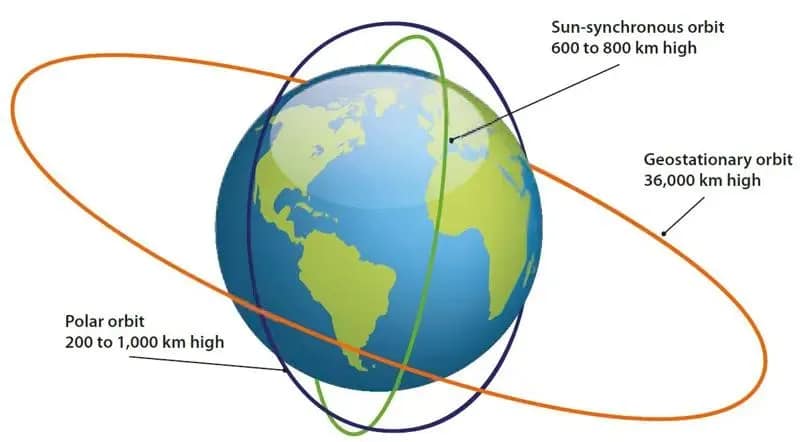
This makes polar orbits particularly useful for satellites that need to observe large portions of Earth’s surface.
For example, a satellite passing over the same region at different times can collect information about:
-
Forest cover and deforestation.
-
Ocean temperatures and changing sea conditions.
-
Agricultural land and crop development.
-
Wildfires and natural disasters.
-
Ice sheets, glaciers and polar environments.
-
Military activity and strategic locations.
A satellite in a polar orbit can eventually pass over almost every part of Earth as the planet rotates beneath it.
That is why weather satellites, environmental monitoring spacecraft, reconnaissance satellites and many Earth-observation missions use polar or near-polar trajectories.
NASA identifies Vandenberg as a preferred launch site for spacecraft requiring north-south or polar orbits.
3. Why not launch these satellites from Florida?
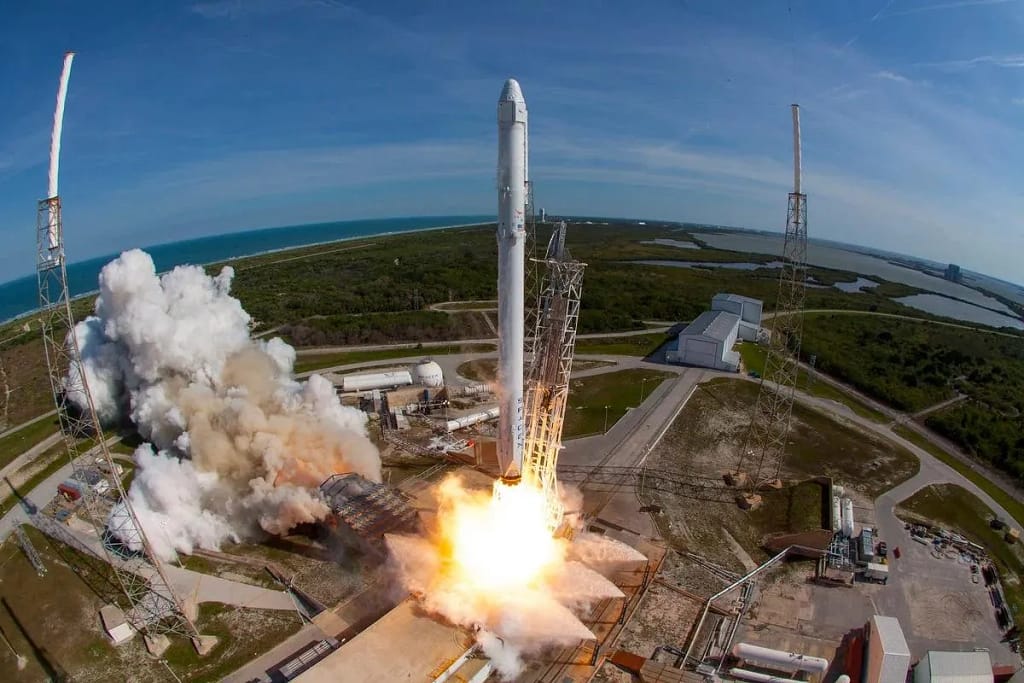
Florida is also an excellent place to launch rockets, but it offers different orbital advantages.
Cape Canaveral and Kennedy Space Center are on the southeastern coast of the United States. Rockets launching eastward can take advantage of Earth’s rotation, which gives them a useful boost in speed.
This makes Florida especially suitable for missions targeting:
-
Low-inclination orbits.
-
Geostationary transfer orbits.
-
The International Space Station’s orbital path.
-
Certain lunar and interplanetary trajectories.
However, launching a rocket from Florida into a polar orbit creates a different problem.
A southbound trajectory from the East Coast can pass over populated areas and other regions where launch safety becomes more complicated. Vandenberg provides a more suitable route for many of these missions because the rocket can head south over the Pacific.
This does not mean polar launches from other locations are impossible. It means the launch site and flight path must be selected carefully to meet orbital and public-safety requirements.
NASA’s launch guidance makes this distinction clear: Florida is generally suited to eastward and lower-inclination trajectories, while Vandenberg is preferred for north-south and polar missions.
4. Starlink has made Vandenberg even more important
One of the biggest reasons people are seeing so many SpaceX launches from California is the expansion of Starlink.
Starlink is SpaceX’s satellite internet network. Instead of relying entirely on ground-based cables and mobile towers, it uses thousands of satellites in low Earth orbit to provide internet connectivity.
To maintain and expand this network, SpaceX needs to launch replacement satellites, deploy new generations of spacecraft and increase capacity in different regions.
Many Starlink missions use inclined orbits, including high-inclination routes that can be served efficiently from Vandenberg.
SpaceX’s own launch information identifies Vandenberg as a key facility for high-inclination and polar-orbit missions, including satellite communication constellations.
This has helped turn the California facility into a major part of SpaceX’s satellite deployment operation.
There is another important factor: reusability.
SpaceX’s Falcon 9 first-stage boosters are designed to return to Earth and fly again. At Vandenberg, some boosters land back at the base, while others land on an autonomous droneship in the Pacific Ocean.
The ability to reuse boosters reduces the need to manufacture a completely new first stage for every mission.
It also helps SpaceX maintain a high launch frequency.
In August 2026, SpaceX’s launch schedule showed repeated Starlink missions from Vandenberg, illustrating how frequently the site was being used for constellation deployment.
5. Vandenberg has the infrastructure to support frequent launches
Launching a rocket is not simply a matter of transporting it to a coastal location and igniting its engines.
A modern launch facility needs an extensive support system, including:
-
Rocket assembly and integration facilities.
-
Propellant storage and loading equipment.
-
Launch towers and flame trenches.
-
Tracking and communications systems.
-
Weather monitoring equipment.
-
Safety and emergency response teams.
-
Facilities for recovering and preparing reusable boosters.
SpaceX operates its Falcon 9 launches from Space Launch Complex 4 East (SLC-4E) at Vandenberg.
The neighbouring SLC-4 West facility supports booster recovery operations, while droneships positioned offshore provide another landing option.
These facilities allow SpaceX to coordinate launches, recover hardware and prepare for subsequent missions.
The company has also invested in modernising its West Coast launch infrastructure to support a greater number of operations.
6. How many launches can Vandenberg handle?
SpaceX’s launch frequency has increased considerably, and the US government has evaluated plans to expand operations at Vandenberg.
A 2025 environmental impact statement examined increasing the authorised Falcon launch cadence from 50 to as many as 100 launches annually across the relevant Vandenberg facilities.
The proposal also included additional launch infrastructure and Falcon Heavy operations from Space Launch Complex 6.
However, there is an important distinction between environmental authorisation and actual launch activity.
Approval to conduct up to a certain number of launches does not mean every available launch slot will be used. Individual missions still require scheduling, operational readiness, range coordination and the necessary approvals.
The expansion nevertheless demonstrates how important Vandenberg has become to SpaceX’s long-term launch strategy.
7. Does launching from California make rockets faster?
Not necessarily.
The location of a launch site does not automatically make a rocket more powerful or faster. What matters is the direction of launch, the target orbit, Earth’s rotation and the amount of energy required to reach the destination.
Florida has an advantage for many eastward launches because Earth’s rotation provides additional velocity in the direction of travel.
Vandenberg’s advantage is different. It provides access to orbital inclinations that would be less convenient or more complicated to reach from some other US launch sites.
For a satellite intended to operate in a polar orbit, launching from California can be a more practical choice even if the rocket does not receive the same rotational boost available from an eastward launch near Florida.
In spaceflight, the most useful launch site is not necessarily the one that gives the rocket the greatest initial speed. It is the one that offers the most efficient and suitable route to the required orbit.
8. What about the environmental impact of frequent launches?
More launches also mean more attention to their environmental effects.
Rocket launches produce exhaust gases, noise and temporary disturbances around launch facilities. First-stage booster landings can also generate sonic booms, which may be heard over considerable distances depending on the conditions.
At Vandenberg, the Space Force has been studying the effects of rocket-generated sonic booms along California’s central coast.
A research programme described by the US Space Force monitored launches using a network of approximately 25 monitoring stations spread across 500 square miles.
The research aims to improve understanding of how rocket trajectories, vehicle size and atmospheric conditions influence the sound experienced by surrounding communities.
Frequent launches also require careful management of marine recovery areas, wildlife protections and coastal operations.
As launch activity increases, balancing space access with environmental protection and community concerns will become increasingly important.
9. Will California remain a major SpaceX launch centre?
For the foreseeable future, Vandenberg is likely to remain important because its geographical advantages cannot simply be replicated by moving a launch pad elsewhere.
SpaceX has different facilities for different purposes:
| Launch location | Main role |
|---|---|
| Vandenberg, California | Polar and high-inclination satellite launches |
| Kennedy Space Center, Florida | Crew missions, commercial launches and selected satellite deployments |
| Cape Canaveral, Florida | Satellite launches, space station missions and other orbital destinations |
| Starbase, Texas | Starship development, testing and launch operations |
The future may also bring changes as SpaceX develops Starship, its much larger next-generation launch vehicle.
The company intends to use Starship for future generations of Starlink satellites and other ambitious missions. If Starship becomes operational at the required scale, it could change how SpaceX distributes launches between its facilities.
But that does not remove the importance of orbital mechanics. Different missions will still need launch trajectories suited to their destinations.
Vandenberg’s location will continue to make it valuable for missions requiring access to polar and high-inclination orbits.
The real reason California has become a rocket-launch hotspot
The next time you see a SpaceX Falcon 9 rocket lifting off from California, remember that the launch location is not an arbitrary choice.
Vandenberg sits beside the Pacific Ocean, offering a relatively clear southbound route into polar and high-inclination orbits. Those orbits are particularly valuable for Earth-observation spacecraft, national security satellites and parts of the growing satellite communications industry.
The expansion of Starlink has increased demand for launches from this location, while reusable Falcon 9 boosters and modernised facilities have helped SpaceX operate at a much higher frequency.
Florida remains essential for other types of missions, but California has a distinct role in America’s space infrastructure.
SpaceX launches so many rockets from California because the location gives the company something every rocket operator needs: an efficient route to the exact orbit its satellites are designed to reach.




