The Kessler Cascade of 2026: The Day the Internet Dies
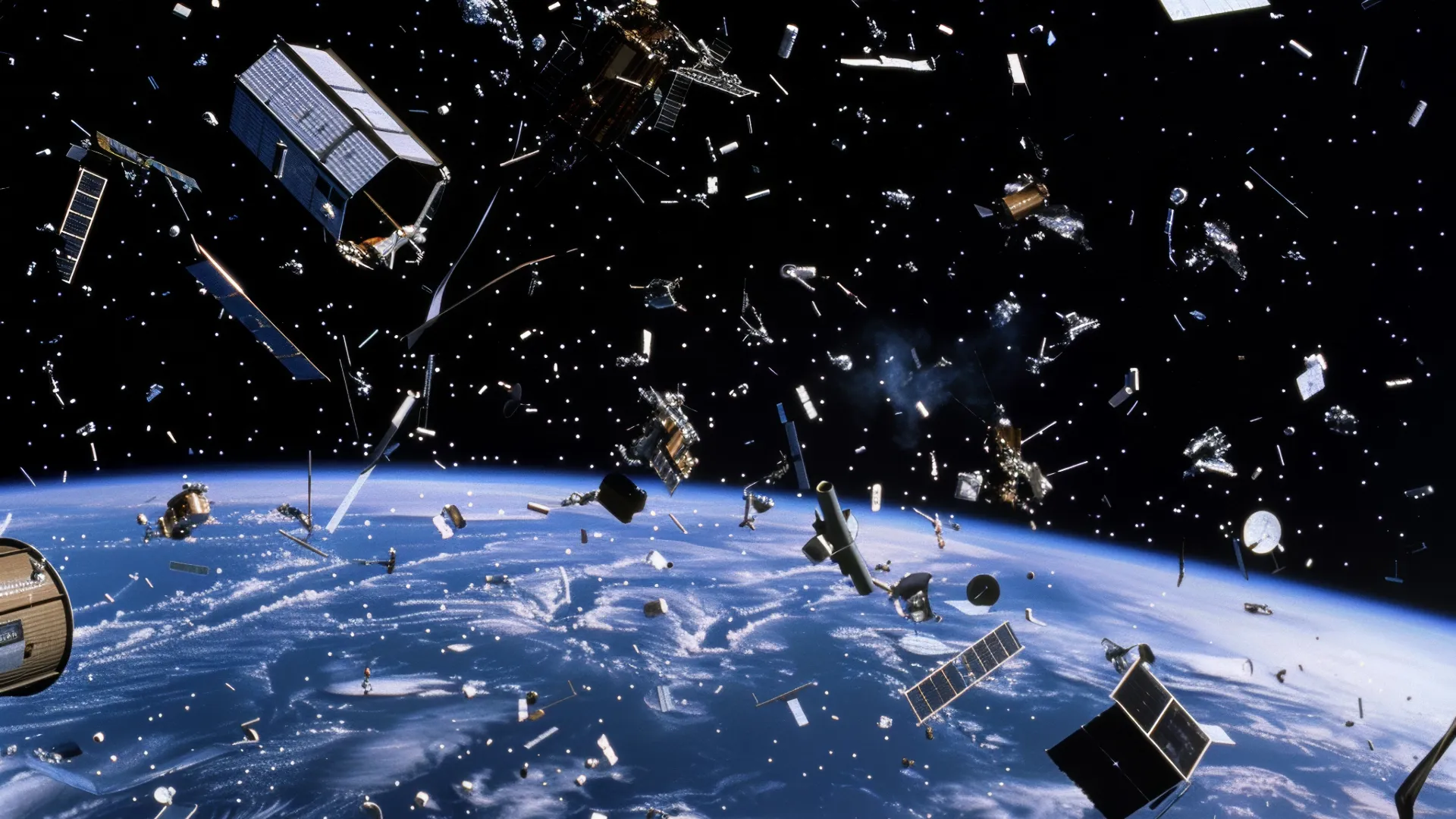
Earth's orbit is becoming increasingly crowded with satellites, abandoned rocket stages and fragments of spacecraft. Every collision can create more debris, increasing the danger to other objects travelling through space. Scientists have warned for decades that, under certain conditions, this process could become self-sustaining.
The phenomenon is known as the Kessler syndrome, and it raises an important question: could a chain reaction of collisions eventually threaten the satellite infrastructure that modern society depends on? The concern is real, but the headline requires context. The European Space Agency's 2026 Space Environment Report, published in September 2026, describes worsening long-term debris projections and warns that collisions can generate further collisions. It does not establish that the internet will collapse in 2026. Instead, the scientific concern is that certain orbital regions could become increasingly hazardous, making satellite operations more difficult, expensive and risky.What Is the Kessler Syndrome?
The Kessler syndrome is a theoretical chain reaction in which collisions between objects in Earth orbit produce debris that triggers additional collisions. The concept was introduced by NASA scientist Donald J. Kessler and Burton G. Cour-Palais in their landmark 1978 paper, Collision Frequency of Artificial Satellites: The Creation of a Debris Belt. Their research examined how the growing population of artificial objects in orbit could eventually make collisions a significant source of new debris. The mechanism is straightforward:- A satellite collides with another spacecraft or a fragment of orbital debris.
- The impact breaks the objects into smaller pieces.
- These fragments travel at high orbital speeds and can damage other satellites.
- Additional collisions generate more fragments, potentially increasing the risk of further impacts.
Why Is Space Debris Becoming a Bigger Problem?
Every satellite launch adds hardware to an orbital environment that is already shared by thousands of spacecraft and millions of smaller fragments. Some satellites stop working but remain in orbit. Rocket bodies can also remain long after their missions have ended. Collisions, explosions and other fragmentation events create additional pieces that may be difficult to track individually. The European Space Agency's 2026 report highlights the continued growth of satellite constellations, insufficient disposal of some spacecraft at the end of their missions, and worsening long-term projections for debris and collisions. The agency also identifies active debris removal as an important part of addressing the problem. The scale is significant. ESA's space debris statistics portal provides estimates for tracked objects and much smaller debris that cannot all be monitored individually. Even a small fragment can cause serious damage because objects in orbit travel at extremely high relative speeds. NASA's Orbital Debris Program Office explains the hazards posed by debris and the work being undertaken to protect spacecraft. However, a crowded orbit does not automatically mean a collision is imminent. Risk depends on factors such as an object's size, trajectory, altitude and the presence of other objects along its path.Could a Kessler Cascade Destroy the Internet?
The internet is not a single system located in space. It is a network of terrestrial cables, data centres, routers, mobile networks, satellites and other infrastructure. Submarine fibre-optic cables carry much of the world's international internet traffic. Terrestrial fibre networks and data centres also provide essential connectivity. These systems would not automatically stop functioning if satellites were damaged or lost. Nevertheless, satellites support important services that depend on reliable space infrastructure.Satellite internet
Satellite broadband services connect households, businesses, ships, aircraft and remote communities that may lack reliable terrestrial connections. A major increase in orbital collision risks could make it more difficult to operate, replace or expand satellite constellations. If a particular constellation suffered substantial losses, its customers could experience outages or reduced capacity. But the effects would depend on the constellation, the altitude at which it operates, the number of satellites affected and the availability of replacement spacecraft. A debris cascade in one orbital region would not necessarily destroy every satellite network.GPS and navigation
Navigation systems depend on satellites that transmit timing and positioning signals. These signals support smartphones, aircraft, ships, transport networks and numerous industrial applications. Satellite timing also contributes to the operation of some telecommunications and financial systems. If a relevant navigation constellation suffered serious disruption, users could face degraded positioning accuracy or service interruptions. Alternative navigation systems and terrestrial timing sources could provide some resilience, depending on the circumstances. However, GPS satellites operate in medium Earth orbit, while many communications constellations occupy low Earth orbit. The consequences of a debris cascade would therefore depend on which orbital regions were affected. A problem in one region would not automatically disable all navigation satellites.Weather forecasting and emergency communications
Weather satellites collect observations used to monitor storms, track hurricanes and support forecasting. Communications satellites can also provide connectivity during disasters when terrestrial infrastructure is damaged. Losing some of these capabilities could complicate emergency response, particularly in remote areas or regions affected by natural disasters. Even so, weather observations also come from ground-based instruments, aircraft, ocean buoys and other sources. The loss of particular satellites would create gaps and reduce capability rather than necessarily eliminating all weather forecasting.What Would a Severe Orbital Debris Crisis Look Like?
A serious debris problem would more plausibly develop through accumulating risks than through one sudden, planet-wide shutdown. Satellite operators might have to perform more collision-avoidance manoeuvres, spend more on tracking and monitoring, and accept greater risks when operating in crowded regions. Some missions could become more expensive to insure. Operators might face difficulties replacing satellites, while spacecraft designers could need additional shielding or more sophisticated systems for avoiding debris. In an extreme long-term scenario, particular orbital regions could become so hazardous that operating spacecraft there would be impractical or economically unattractive. This is the central concern behind the Kessler syndrome: not that all satellites suddenly explode, but that the orbital environment could become progressively harder to use. The Organisation for Economic Co-operation and Development's 2026 analysis of space-economy risks also examines the wider vulnerabilities created by society's growing dependence on space infrastructure. The precise consequences of a severe cascade would depend on where it developed, how rapidly debris accumulated, and whether mitigation measures succeeded. There is no scientific basis for claiming that a Kessler cascade will cause the global internet to die in 2026.Can Scientists Prevent a Kessler Cascade?
Preventing further debris is one of the most important ways to reduce the risk. Space agencies and satellite operators can adopt several measures: Responsible end-of-life disposal: Satellites should be moved out of operationally important orbits or disposed of according to appropriate end-of-mission plans. Collision avoidance: Operators can use tracking data to identify potential close approaches and adjust spacecraft trajectories when necessary. Preventing explosions: Properly managing leftover fuel and stored energy can reduce the risk of abandoned spacecraft or rocket stages breaking apart. Active debris removal: Specialised missions could capture or otherwise remove selected large pieces of debris that pose significant long-term risks. International coordination: Shared tracking information, common technical standards and cooperation among operators can help reduce avoidable collisions. The ESA's Space Environment Report 2026 stresses that mitigation measures alone may not be sufficient to stabilise the debris population under current trends. Active removal is also needed to address existing objects that could generate future fragments. These measures are technically challenging and require sustained investment, coordination and international cooperation. Nevertheless, the future of Earth's orbital environment is not predetermined.Conclusion: A Real Space Risk, Not an Imminent Internet Apocalypse
The Kessler syndrome describes a genuine scientific concern: collisions in orbit can produce debris, and that debris can trigger additional collisions. Over time, this process could make certain orbital regions increasingly dangerous or difficult to use. The consequences could extend to satellite broadband, navigation, weather monitoring and emergency communications. Yet terrestrial fibre-optic networks, data centres and other infrastructure mean that a debris cascade would not automatically switch off the global internet. The year 2026 is important because new assessments continue to highlight the need for better debris management, responsible satellite disposal and active removal. It is not an established deadline for the collapse of satellite services. The real question is whether governments, space agencies and commercial operators can manage Earth's orbital environment before the long-term costs become much greater. Space may look vast, but useful orbital regions are limited resources. Protecting them now could determine how safely future generations can use space.
Why SpaceX's Starship May Need 22 Refuelling Missions Before It Can Carry Humans to the Moon
Read story →
NASA's 4 Volunteers Complete 378-Day Simulated Mars Mission
Read story →
Scientists Detect Ghost Particles With 10 Billion Times the Energy of Solar Neutrinos
Read story →