Imagine looking up at the night sky and discovering that the Moon appears enormous, hanging above the horizon like a giant silver world. Its familiar craters are suddenly easier to see, its light illuminates the landscape, and millions of people rush outside to witness the extraordinary sight.
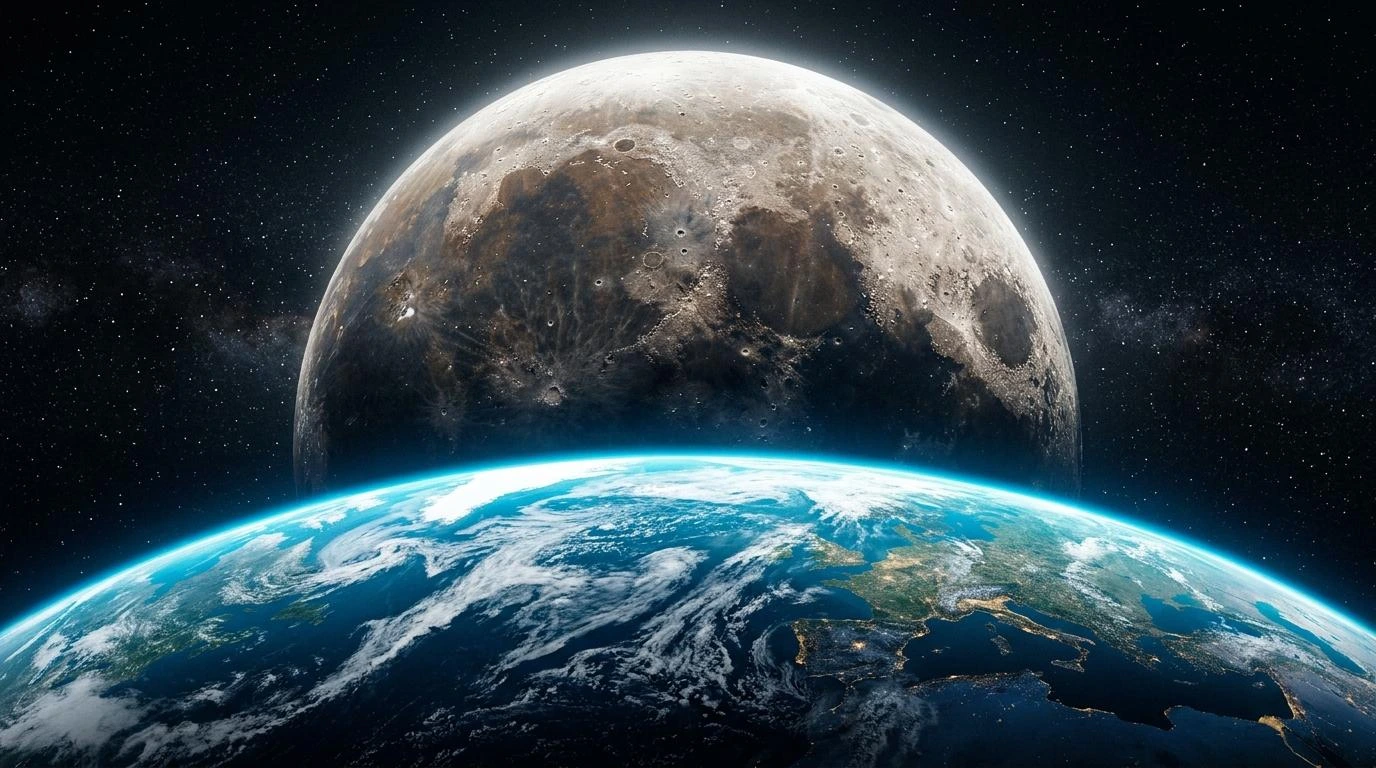
But while the world admires the view, something more serious is happening. Earth’s oceans are responding to the Moon’s increased gravitational influence.
Would coastlines flood? Could the Moon trigger catastrophic tides? And what would happen to eclipses if our nearest celestial neighbour moved dramatically closer?
Why Distance Makes Such a Difference
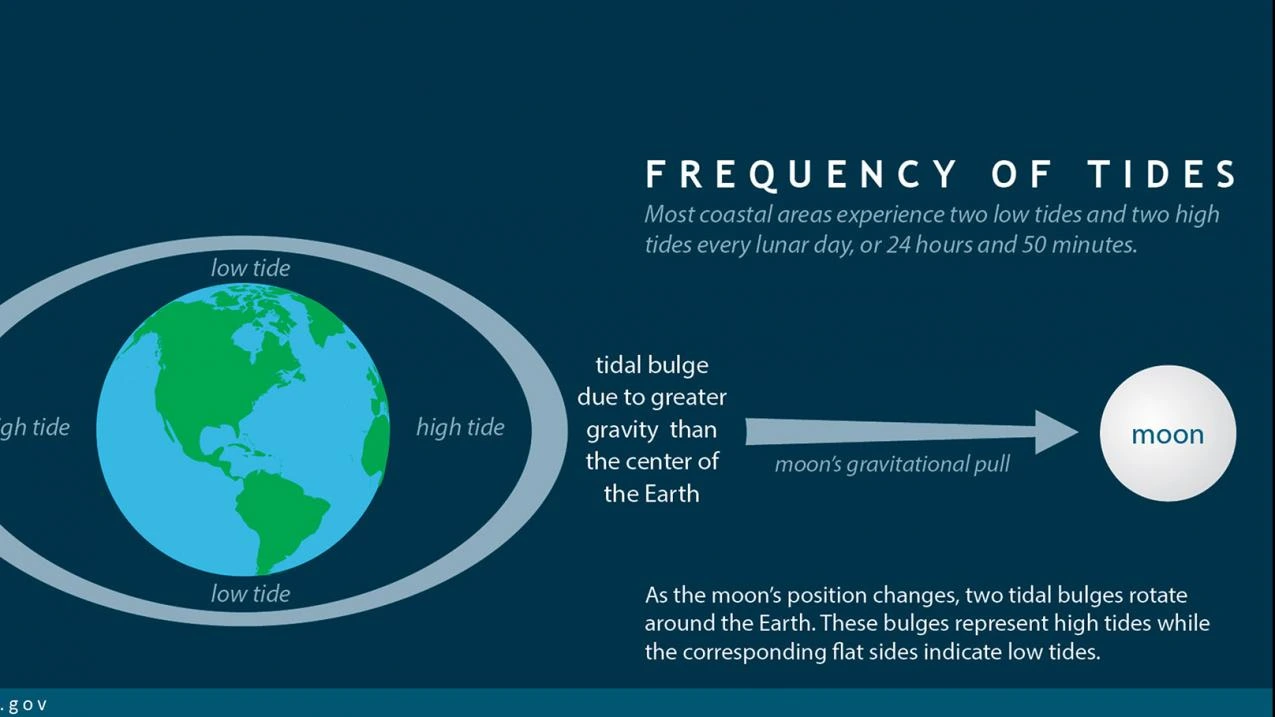
The Moon currently orbits Earth at an average distance of approximately 384,400 kilometres. Although it appears relatively small in our sky, its gravity plays a major role in producing ocean tides.
The important factor is not simply the Moon’s gravitational pull, but how much that pull differs between the near and far sides of Earth. This difference produces tidal forces that redistribute ocean water.
Here’s where things become interesting: tidal force increases roughly with the inverse cube of distance.
If the Moon moved to half its current distance, its tidal influence would become approximately eight times stronger. Even a reduction to 80% of its current distance would nearly double the tidal force.
These figures describe the change in tidal forcing, not a guaranteed increase of the same proportion in coastal water levels. Actual tides depend on ocean depth, coastlines, Earth’s rotation and other factors.
Would Earth’s Oceans Become Catastrophic?
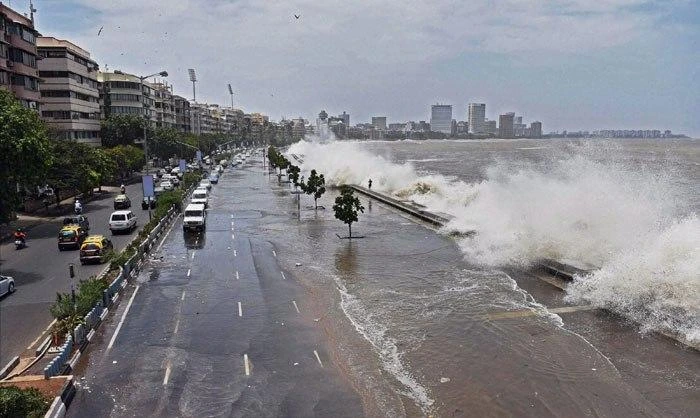
If the Moon moved substantially closer while remaining in a stable orbit, its stronger gravitational influence would change Earth’s tidal patterns.
Many coastal regions could experience significantly different high and low tides. Depending on local geography, some locations might face more severe coastal flooding, stronger tidal currents and greater erosion.
Harbours, estuaries and shallow coastal waters could be particularly vulnerable. The movement of enormous quantities of water could also affect marine ecosystems and coastal communities.
However, the outcome would not be identical everywhere. Continents and ocean basins shape tidal behaviour, so a stronger lunar tidal force would not translate into a uniform wall of water sweeping across every coastline.
The Moon also isn’t the only influence on tides. The Sun contributes its own gravitational effect, sometimes reinforcing the Moon’s influence and sometimes partially counteracting it.
If the Moon moved much closer, scientists would need to recalculate tides around the world to understand the local consequences.
What Would the Moon Look Like?
The visual transformation could be extraordinary.
Today, the Moon’s apparent size changes slightly as its distance varies throughout its orbit. Move it substantially closer, and it would appear much larger in the sky.
If its distance were halved, its apparent diameter would roughly double, assuming its physical size remained unchanged. Its illuminated surface could cover a much larger area of the night sky, making lunar features easier to distinguish with the naked eye.
The Moon would also appear brighter when viewed under comparable illumination conditions, although its apparent brightness would not increase by exactly the same factor as its tidal influence.
For observers, the night sky would become dramatically different. Photographers could capture striking lunar landscapes, while astronomers would have an extraordinary opportunity to study the Moon’s surface.
But the visual spectacle would come with a serious question: could the Moon remain in a stable orbit at such a distance?
Would Eclipses Become More Dramatic?
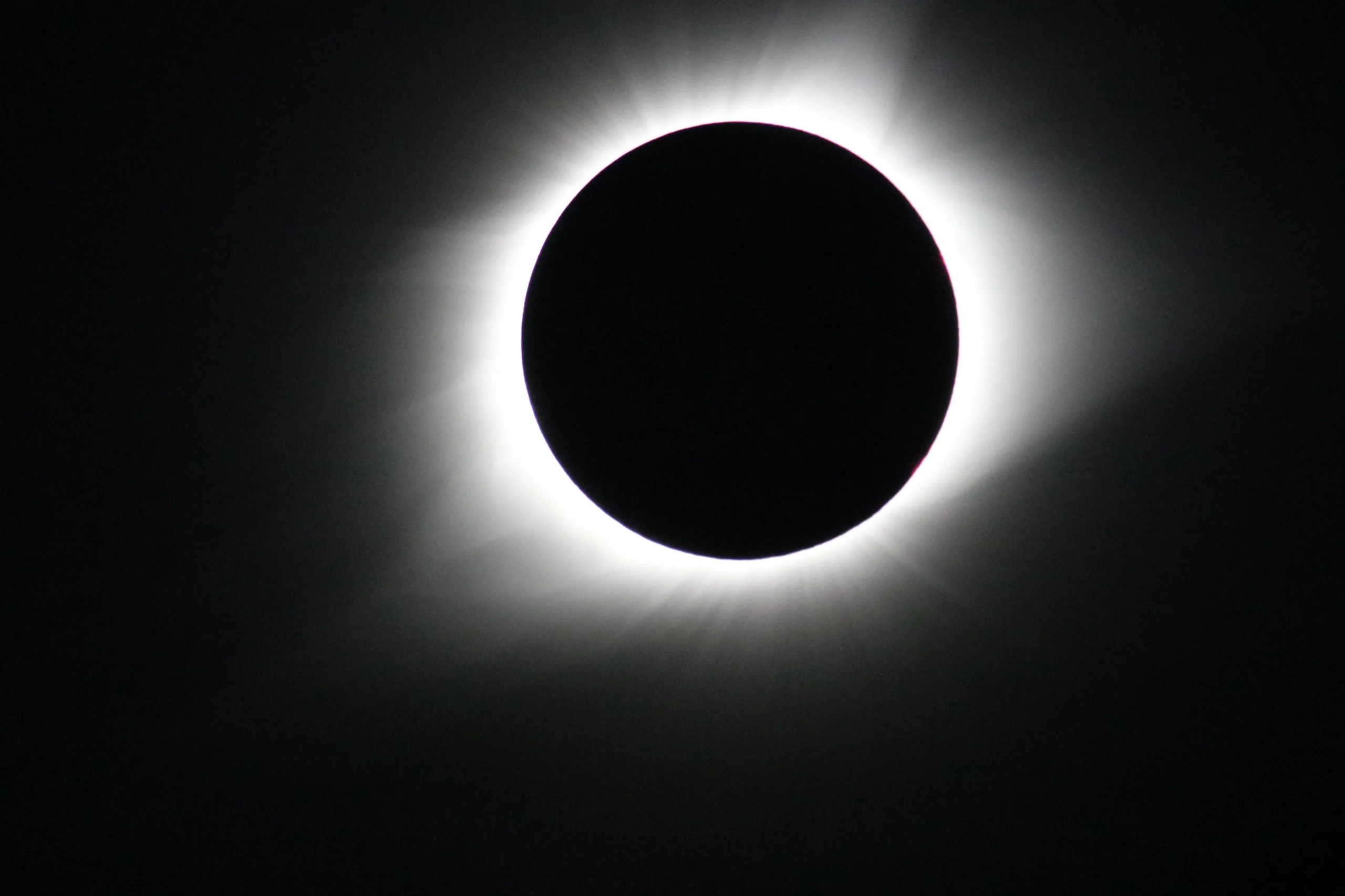
A closer Moon would appear larger relative to the Sun, changing the appearance of solar eclipses.
Today, the Moon sometimes appears large enough to cover the Sun completely, producing a total solar eclipse. At other times, it appears too small, leaving a bright ring around the Sun during an annular eclipse.
If the Moon moved closer, total solar eclipses would become possible under a wider range of orbital circumstances, and the Moon could cover a greater portion of the Sun’s apparent disk.
Lunar eclipses would also look different in some respects because the Moon’s position and orbital geometry would change.
However, eclipse frequency and visibility would depend on the Moon’s new orbit, its inclination and the alignment of Earth, the Moon and the Sun.
Could the Moon Get Too Close?
There is a limit to how close the Moon could approach without facing serious gravitational consequences.
Within a critical distance called the Roche limit, Earth’s tidal forces can overcome the structural forces holding a satellite together. For a large, self-gravitating body like the Moon, approaching this region could eventually cause substantial disruption, although the precise outcome depends on its structure and orbital conditions.
A Moon that moved closer but remained safely outside this region would not automatically break apart.
There is another complication: a sudden relocation is not a realistic natural event. Changing the Moon’s position without appropriately changing its velocity could place it on a radically different orbit, potentially leading to further close approaches or a collision. Its eventual fate would depend on the details of that change.
Would Earth Survive a Closer Moon?
A moderately closer Moon in a stable orbit would not automatically destroy Earth, but it could significantly alter tides, coastal environments and the appearance of the night sky.
The danger would increase as the distance decreased, particularly if the Moon approached a region where its orbit became unstable or tidal forces threatened its structure.
Our Moon is far more than a beautiful object illuminating the night. It is a gravitational partner that influences Earth’s oceans and participates in the long-term evolution of our planet.
If it suddenly moved much closer, the first thing we might notice would be its breathtaking size in the sky. The more consequential changes, however, would unfold in the oceans below.
And the closer it came, the more important one question would become: how close is too close?