Where Is Voyager 1 Now? How Far Away It Is and How Long a Signal Takes
Where is Voyager 1 now? See its distance from Earth, why a radio signal takes about 24 hours each way, and what NASA’s one-light-day milestone means.
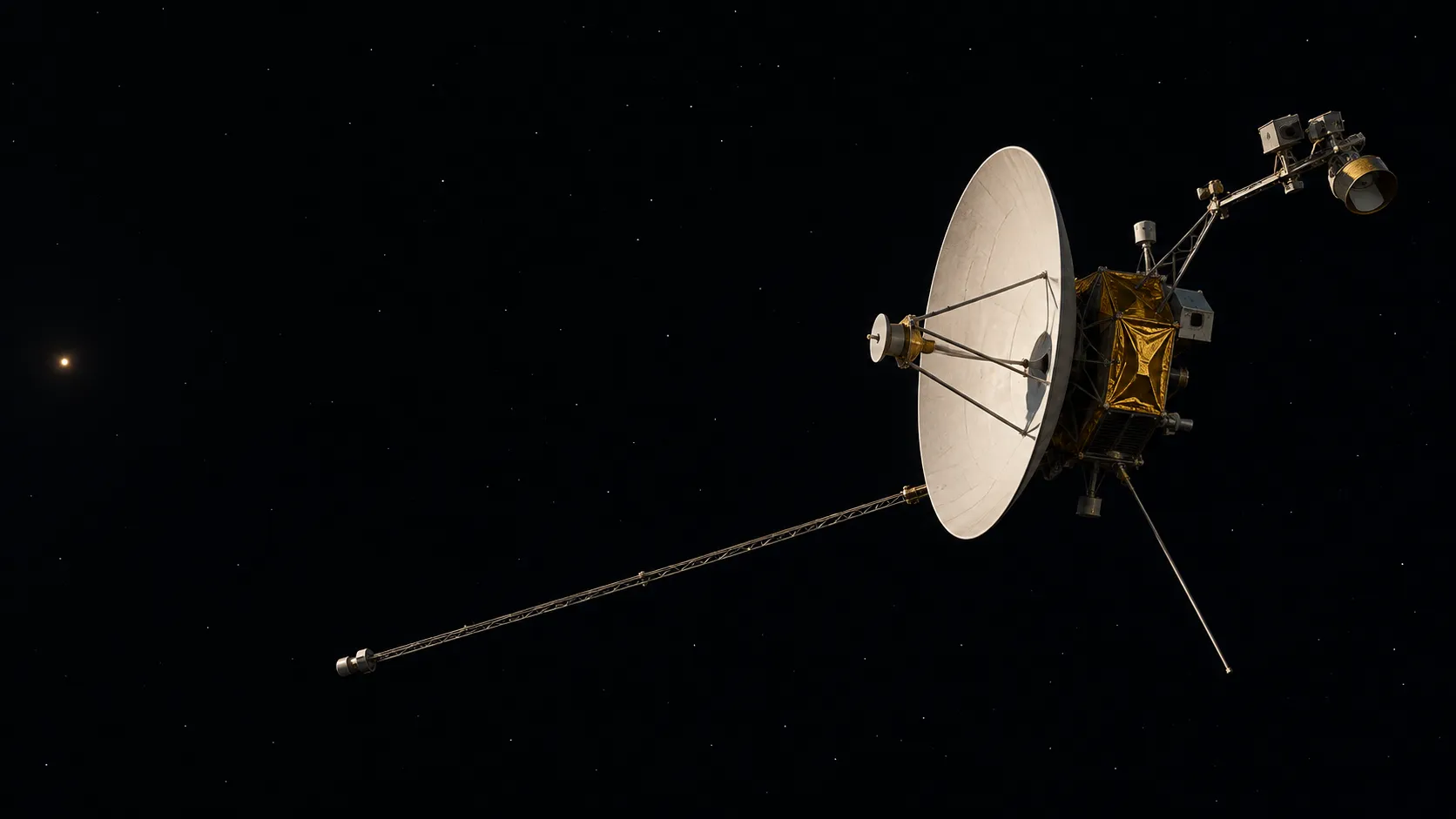
Voyager 1 at a glance · November 28, 2026
Location — Interstellar space, beyond the heliopause
Distance from Earth — About 25.9 billion kilometres (16.1 billion miles)
Signal delay — About 24 hours each way, or roughly 48 hours for an immediate reply
Milestone — Voyager 1 reached one light-day from Earth on November 18, 2026. The distance above is rounded. See NASA’s Voyager tracker for the latest estimate. www.nasa.gov
Imagine sending a message on Monday morning that arrives on Tuesday. The recipient replies immediately, and you hear back on Wednesday. That’s how long it takes to have even the shortest conversation with Voyager 1, the most distant spacecraft humans have ever sent into space. www.nasa.gov
The extraordinary part is that the message travels as fast as physics allows. Voyager 1 is so far away that even a radio wave moving at the speed of light needs about a full day to cross the distance. The spacecraft took more than 49 years to get there. www.nasa.gov
Where is Voyager 1 now?
Voyager 1 is travelling through interstellar space, the region beyond the bubble of charged particles and magnetic fields created by the Sun. That bubble is called the heliosphere. On Earth, we’re deep inside it. Voyager 1 now travels through the material outside it, measuring a part of our cosmic neighbourhood that spacecraft had never sampled directly before. www.nasa.gov
Voyager 1 crossed the bubble’s outer boundary, the heliopause, in August 2012. Its twin, Voyager 2, crossed in November 2018 along a different trajectory. Having two crossings gives scientists a way to compare what happens at different places along a boundary we can’t see with our eyes. If you’re wondering what the spacecraft encountered there, read our story on Voyager’s 90,000°F boundary and why the spacecraft didn’t melt. science.nasa.gov
The heliopause marks the end of the solar wind’s bubble. The Sun’s gravity extends much farther, so you may see Voyager described as both “in interstellar space” and “still in the outer solar system.” Those descriptions use different boundaries. The first tells us about the environment Voyager is flying through. The second takes a broader view of how far the solar system extends.
How far away is Voyager 1 from Earth?
Voyager 1 reached one light-day from Earth on November 18, 2026, about 25.9 billion kilometres away. A light-day measures distance using a familiar clock. Start a beam of light moving through a vacuum, let it travel for 24 hours, and the ground it covers is one light-day. A light-year uses the same idea over a year. www.nasa.gov
The distances become easier to picture if you compare how long light takes to cross them.
| Destination | Approximate light travel time from Earth |
|---|---|
| The Moon | 1.3 seconds |
| Neptune | 4 hours |
| Voyager 1 | 24 hours |
Neptune’s distance varies with the planets’ positions, but the comparison gives a sense of scale. Imagine a radio message passing Neptune after roughly four hours. It would still have about 20 hours of travel before reaching Voyager 1. www.nasa.gov
Why does the exact distance change? Voyager continues outward while Earth moves around the Sun. Depending on where Earth is in its orbit, our motion can briefly bring us closer to the spacecraft even as Voyager continues away from the Sun. So a tracker’s Earth-to-Voyager reading can fall for a time. When you want a precise figure, check the date and confirm that the tracker is showing distance from Earth. NASA’s tracker gives both Earth and Sun distances. science.nasa.gov
How long does a signal take to reach Voyager 1?
A radio command from Earth takes about 24 hours to reach Voyager 1. If the spacecraft sends an immediate confirmation, that signal needs about 24 more hours to reach Earth. The roughly 48-hour round trip is the travel time alone. Any onboard work or wait for another scheduled contact can stretch it further. science.nasa.gov
| Time | What happens |
|---|---|
| Monday, 9 a.m. UTC | A ground antenna sends a command to Voyager 1. |
| Tuesday, around 9 a.m. UTC | The command reaches the spacecraft. Assume it sends a reply immediately. |
| Wednesday, around 9 a.m. UTC | The reply reaches Earth. Engineers can check whether the command worked. |
That delay changes how you troubleshoot. Suppose engineers send a command on Monday to switch a piece of hardware, then have to see the result before deciding what to try next. The first response arrives around Wednesday. If they send a second command immediately, they may be waiting until Friday to see what it did. Two simple steps can take most of a working week.
NASA communicates with Voyager through the Deep Space Network, which has giant antennas in California, Spain, and Australia. Their geographic spread helps NASA keep contact with distant spacecraft as Earth rotates. With Voyager, the antennas have to pick out a signal that has spread across billions of kilometres before it reaches the receiving dish. science.nasa.gov
Is Voyager 1 still sending signals?
NASA received Voyager 1’s carrier signal when it confirmed the one-light-day milestone. A carrier is the underlying radio wave that normally carries information. Detecting it tells engineers they’re hearing the spacecraft. To learn what the instruments measured or check the spacecraft’s health, they also need to receive and decode the data carried on that wave. science.nasa.gov
NASA reported that it had stopped receiving science and engineering data on November 14, even though a ground antenna could still detect the carrier. Engineers used the carrier and trajectory calculations to confirm the milestone. NASA’s November 19 announcement said the team was still investigating the data issue. Follow NASA’s Voyager mission updates for the latest communications status. www.nasa.gov
How long can Voyager 1 keep going?
Voyager 1 gets electricity from a generator that converts heat from decaying plutonium into power. Its electrical output drops by about four watts each year. Engineers have switched off equipment and found ways to run essential systems on less power. Each decision comes down to what the mission can afford to keep running, including the instruments that measure conditions beyond the heliopause. www.nasa.gov
When Voyager eventually loses the ability to radio Earth, it will keep coasting through space. It will still carry the Golden Record, a gold-plated disc containing sounds and images from Earth. The record was made for a finder who might never come. For now, the people listening are here on Earth, where an ordinary command sent this morning can spend the whole day and night crossing the space between us.
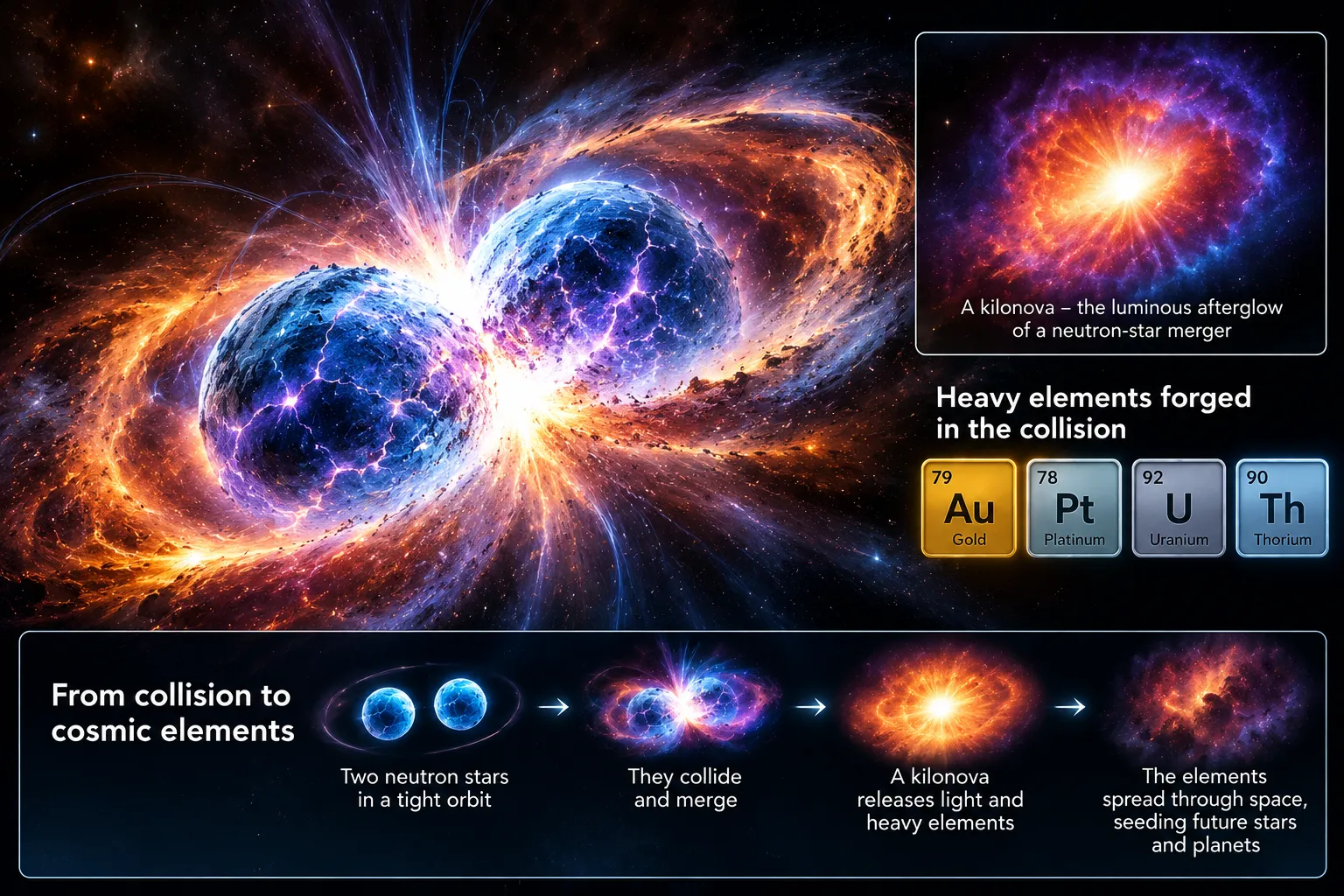
What Happens When Two Neutron Stars Collide? The Kilonova Mystery
Read story →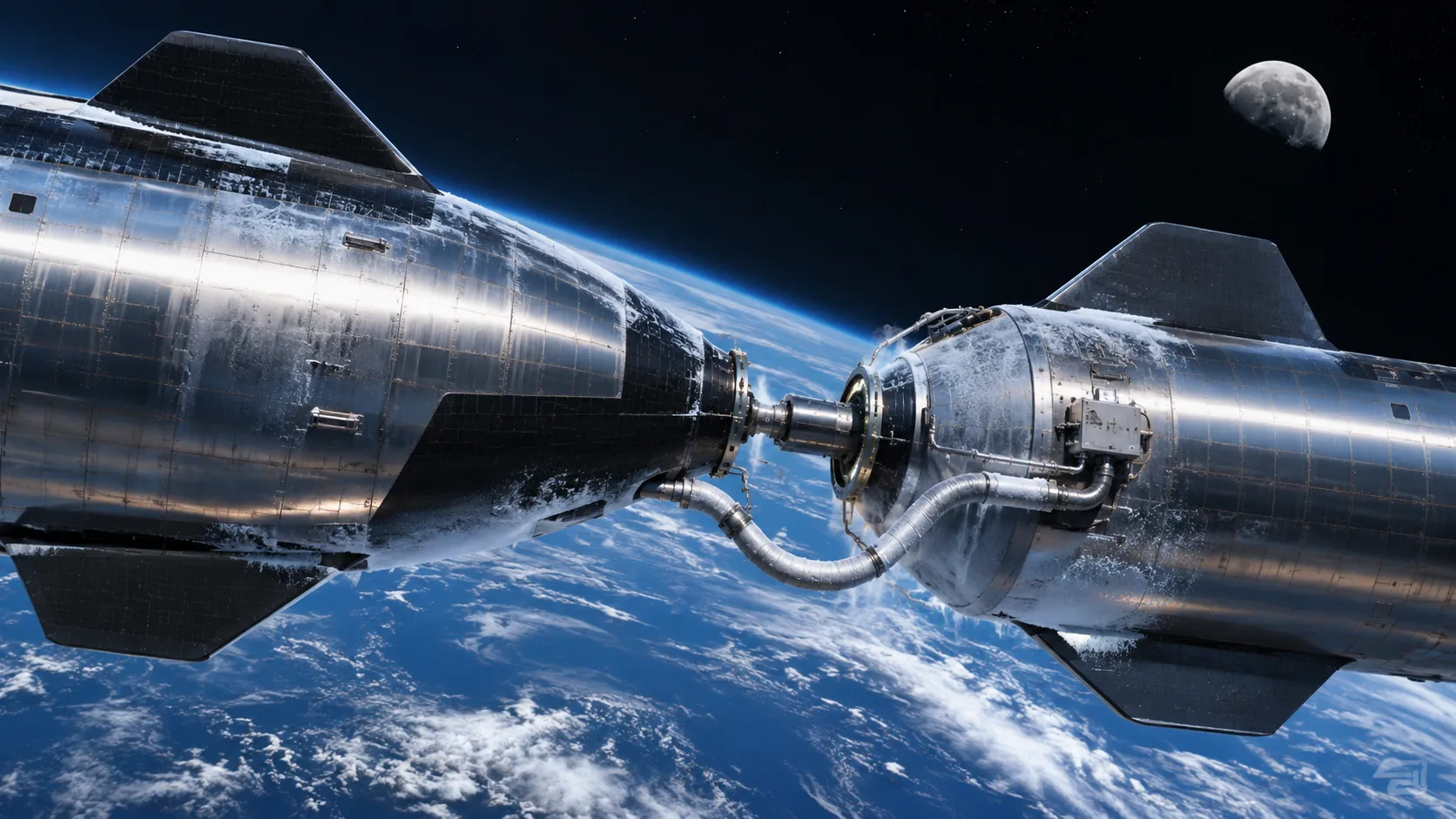
Why SpaceX's Starship May Need 22 Refuelling Missions Before It Can Carry Humans to the Moon
Read story →
NASA's 4 Volunteers Complete 378-Day Simulated Mars Mission
Read story →