

For all the stunning images returned by modern telescopes, space remains defined by one stubborn reality: distance.
Mars can appear bright enough to spot with the naked eye, yet reaching it is another matter entirely. Even the most ambitious human missions currently on the drawing board would require astronauts to spend months traveling through deep space. During that time, they would face cosmic radiation, muscle loss, psychological isolation, and the ever-present risk that something critical could fail millions of kilometers from Earth.
That is why propulsion matters.
The history of exploration has often been the story of faster transportation. Sailing ships connected continents. Steam engines compressed travel times. Aircraft made oceans seem smaller. The internet effectively erased distance for information.
Now scientists and engineers are pursuing technologies that could do something similar for space.
Several advanced propulsion concepts under development today promise to dramatically reduce travel times between worlds. Some involve nuclear reactors. Others rely on plasma accelerated by electromagnetic fields. A few aim to harness the same fusion reactions that power the Sun itself. None are ready to carry astronauts tomorrow, but together they represent something remarkable: a future in which the Solar System may no longer feel so vast.
If these technologies succeed, humanity may eventually look back on six-month journeys to Mars the way we now view crossing the Atlantic by wooden sailing ship.
The planets will remain exactly where they are.
But the distances between them may begin to feel much smaller.
The Tyranny of Distance
Space is often portrayed as an endless frontier filled with exciting destinations.
The problem is that those destinations are extraordinarily far apart.
The Moon sits roughly 384,000 kilometers from Earth. That sounds impressive until you realize Mars can be more than 400 times farther away.
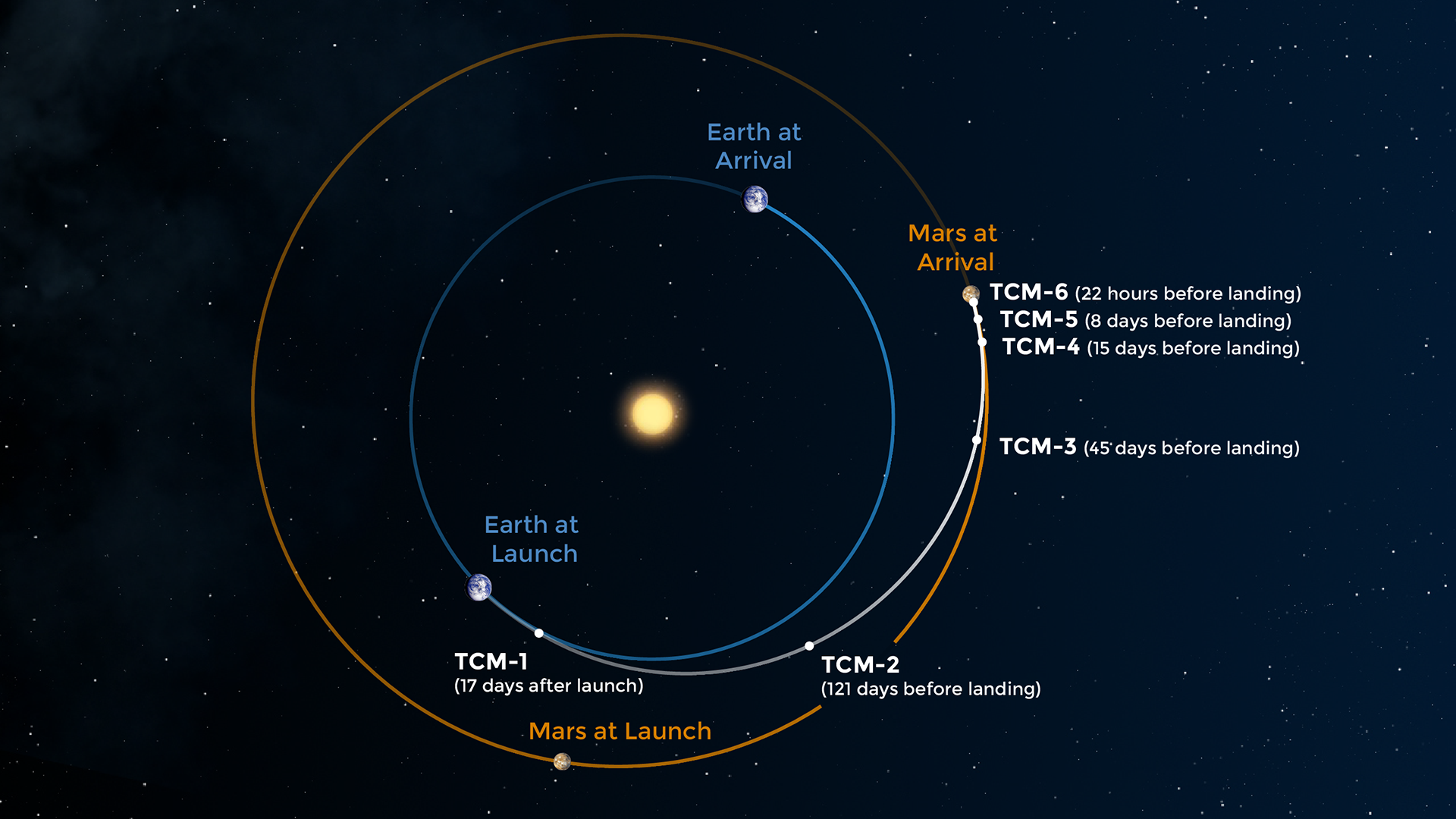
Even at favorable alignments, a mission to Mars typically takes six to nine months using conventional chemical rockets. During that journey, astronauts would spend longer in deep space than any humans in history.
The challenge grows even greater beyond Mars.
A trip to Jupiter takes years.
Saturn requires even longer.
The outer Solar System remains largely inaccessible to human exploration using today’s propulsion technology.
Current rockets are powerful, but they are fundamentally limited by chemistry.
Chemical propulsion works by releasing energy stored in molecular bonds. It is reliable and proven, but there is only so much energy that chemical reactions can provide. Researchers note that while chemical rockets can get humans to Mars, their speed is ultimately constrained by the energy available in their fuel.
For decades, scientists have searched for alternatives.
The goal is simple.
Find a way to travel faster without carrying impossible amounts of fuel.
Why Faster Matters
Reducing travel time isn’t just about convenience.
It could fundamentally change space exploration.
Every day spent traveling to Mars increases exposure to radiation from cosmic rays and solar storms. Longer missions require more food, more water, more oxygen, and larger life-support systems.
A faster journey reduces those risks.
Shorter travel times could also transform mission economics.
Imagine if cargo could reach Mars in weeks rather than months.
Imagine emergency medical supplies arriving quickly.
Imagine scientific expeditions operating on timelines measured in months instead of years.
Speed changes what becomes practical.
A future transportation system capable of reaching Mars rapidly would not merely improve existing missions. It could enable entirely new ones.
That possibility has fueled growing interest in advanced propulsion technologies.
The Plasma Engine Revolution

One of the most talked-about concepts in recent years involves plasma propulsion.
Unlike traditional rockets, which generate thrust through combustion, plasma engines use electromagnetic fields to accelerate charged particles to extremely high speeds.
The principle is elegant.
Instead of throwing large amounts of fuel out the back of a spacecraft at moderate speeds, plasma engines eject smaller amounts of propellant at tremendous velocities.
Researchers at Russia’s Troitsk Institute have been developing a magnetoplasma propulsion system designed to accelerate hydrogen plasma using electromagnetic fields. Public descriptions of the project suggest future spacecraft using similar technology could potentially shorten Mars travel times dramatically, although such projections remain theoretical and unproven.
That distinction is important.
Many headlines imply that a revolutionary engine already exists.
It doesn’t.
What exists are laboratory prototypes and engineering concepts that still face significant technical hurdles.
Yet the underlying science is real.
Electric propulsion systems already operate in space today. Modern ion engines have powered missions to asteroids and distant planets. Plasma propulsion represents a more ambitious evolution of the same idea.
If successful, it could provide the sustained acceleration needed for much faster interplanetary travel.
Nuclear Propulsion: The Technology NASA Keeps Revisiting
Another contender in the race to shrink the Solar System involves nuclear energy.
Unlike chemical rockets, nuclear propulsion systems draw power from atomic reactions.
That extra energy can dramatically improve efficiency.
Scientists generally divide nuclear propulsion into two broad categories:
- Nuclear thermal propulsion
- Nuclear electric propulsion
Nuclear thermal systems use reactors to heat propellant directly.
Nuclear electric systems generate electricity that powers advanced thrusters.
Both approaches have been studied for decades.
Interest has surged again because researchers recognize that chemical propulsion may not be sufficient for sustained human expansion beyond Earth.
According to experts studying future Mars missions, nuclear propulsion could shorten transit times while offering greater flexibility than conventional rockets.
NASA recently tested a high-powered lithium-fed electromagnetic thruster that could eventually become part of a nuclear-electric propulsion system for Mars missions. The prototype achieved power levels beyond those of electric thrusters currently flying on NASA spacecraft.
That doesn’t mean astronauts will board such spacecraft anytime soon.
But it does indicate that agencies are actively preparing for a future where nuclear power plays a larger role in deep-space transportation.

Fusion: The Holy Grail of Space Travel
If nuclear propulsion represents the next step, fusion may represent the giant leap beyond it.
Fusion is the process that powers stars.
Instead of splitting atoms, fusion combines them, releasing enormous amounts of energy.
Scientists have pursued practical fusion power for decades.
Despite significant progress, no fusion reactor currently provides a commercially viable source of electricity on Earth.
Yet engineers are already imagining how fusion could transform space exploration.
A successful fusion rocket would offer extraordinary advantages.
It could generate immense amounts of energy while requiring relatively little fuel.
It could potentially provide continuous acceleration over long periods.
And it could reduce travel times across the Solar System to levels that seem almost impossible today.
Several fusion propulsion concepts are being studied by researchers and institutions worldwide. Direct Fusion Drive, one of the best-known examples, has been proposed as a technology capable of enabling significantly faster planetary missions than current rockets.
Researchers examining fusion-powered Mars missions have described scenarios in which transit times fall below current mission durations by a substantial margin.
The challenge is obvious.
Before humanity can build fusion rockets, it must first master fusion itself.
That remains one of the greatest engineering challenges of the modern era.
The Dream of Mars in Days
Perhaps the most exciting claims involve journeys to Mars measured in days rather than months.
Such concepts often attract viral headlines.
Some are more speculative than others.
Among the most famous historical examples was Project Orion, a Cold War-era concept that envisioned spacecraft propelled by controlled nuclear explosions. Later studies explored fusion-driven spacecraft, advanced nuclear systems, and exotic propulsion architectures designed to achieve unprecedented speeds.
While many of these concepts remain theoretical, they share a common goal.
Break free from the limitations of traditional rockets.
The reality is that reaching Mars in ten days would require propulsion capabilities far beyond anything currently operational.
But that doesn’t make the goal meaningless.
History is filled with technologies that seemed absurd until they became practical.
The first transatlantic flight sounded impossible.
So did landing humans on the Moon.
The question is not whether today’s engines can reach Mars in ten days.
The question is whether future generations will view six-month journeys as primitive.

Beyond Mars
Most discussions about advanced propulsion focus on Mars.
That makes sense.
Mars is the most likely destination for future human explorers.
But the real impact of breakthrough propulsion extends far beyond the Red Planet.
Imagine reaching Jupiter in months rather than years.
Imagine regular missions to Saturn’s moons.
Imagine sending crews to the asteroid belt without committing them to decade-long expeditions.
Fusion researchers have examined mission architectures capable of dramatically improving access to destinations throughout the Solar System. Studies involving Direct Fusion Drive suggest faster travel not only to Mars but also to asteroids and distant outer-world targets.
The implications are enormous.
Today, most outer-planet missions involve robotic spacecraft because human travel would take too long.
Faster propulsion could eventually change that equation.
The entire Solar System would become more accessible.
Not easy.
Not cheap.
But accessible.

The Hidden Benefits
The most obvious advantage of advanced propulsion is speed.
Yet speed may not be the most important benefit.
Power generation could prove equally transformative.
Many proposed fusion and nuclear systems function as both engines and power plants.
That means future spacecraft could carry abundant electricity.
More power enables stronger communications, better life-support systems, enhanced scientific instruments, and even resource production on other worlds.
Some mission architectures envision using onboard power systems to manufacture fuel from Martian resources, reducing dependence on supplies brought from Earth.
In that sense, advanced propulsion isn’t merely about moving faster.
It’s about creating self-sufficient exploration systems.
The Obstacles Nobody Can Ignore
For all the excitement, realism remains essential.
None of these technologies are ready to transform human spaceflight tomorrow.
Fusion remains experimental.
Nuclear systems face engineering, safety, and political challenges.
Plasma propulsion concepts must demonstrate reliable performance in actual space missions.
Materials capable of surviving extreme temperatures remain difficult to develop.
Radiation shielding adds weight.
Power generation systems require enormous reliability.
And every breakthrough must survive the harsh reality of budgets, testing, and decades of development.
Space exploration has a long history of ambitious predictions that took much longer than expected.
The same may prove true here.
Yet that does not diminish the significance of the work being done today.
Progress often begins with concepts that seem impractical.
A Future Where the Solar System Feels Smaller
Imagine opening a travel schedule a century from now.
Earth to Mars: 12 days.
Earth to the asteroid belt: a few weeks.
Earth to Jupiter’s moons: months rather than years.
To people living in that future, today’s missions may seem astonishingly slow.
The same way modern air travelers view month-long ocean voyages.
The planets won’t have moved.
Mars will still orbit the Sun at the same distance.
Jupiter will remain hundreds of millions of kilometers away.
Yet technology changes how humans experience distance.
The world once felt vast because travel was slow.
Then ships improved.
Then trains.
Then airplanes.
Each innovation effectively shrank the map.
Advanced propulsion may eventually do the same thing to the Solar System.

The Engine That Could Change Everything
The phrase “The Engine That Could Shrink the Solar System” sounds like science fiction.
In a way, it is.
No single engine exists today that can instantly transform interplanetary travel.
Instead, there are many competing ideas.
Fusion drives.
Plasma propulsion systems.
Nuclear-electric spacecraft.
Hybrid concepts not yet fully imagined.
Some will fail.
Others will evolve.
A few may eventually reshape humanity’s future.
What matters is not which design wins.
What matters is that engineers and scientists are actively challenging one of the oldest limitations in exploration: distance.
For centuries, every transportation revolution has expanded humanity’s reach.
The next great leap may not happen on Earth at all.
It may happen in the darkness between worlds.
And when it does, the Solar System may suddenly feel much smaller than it does today.
