
Mars Just Revealed One of Its Biggest Secrets Yet
For decades, scientists have searched Mars for one thing above all else: evidence that the Red Planet once had the ingredients necessary for life.
Ancient river valleys, dried lakebeds, mineral deposits, and polar ice caps have all pointed toward a wetter Martian past. But a new discovery by NASA’s Perseverance rover is changing the conversation in a profound way.
Researchers have found evidence that a region inside Jezero Crater was influenced not by a single lake or river system, but by multiple ancient water systems that interacted with Martian rocks over long periods of time. The finding suggests Mars may have experienced a far more complex hydrological history than previously believed. Scientists now think some locations on the planet could have remained habitable for much longer than earlier models suggested.
The discovery is significant because water is one of the essential ingredients for life as we know it. Every new clue about ancient Martian water helps researchers narrow their search for signs of past microbial organisms.
And according to NASA scientists, this latest evidence could reshape how we think about Mars itself.
Why Water Matters in the Search for Life
When astronomers look for life beyond Earth, they follow a simple principle:
Follow the water.
Liquid water is essential for every known living organism on Earth. It serves as a solvent for biological reactions, transports nutrients, and supports complex chemistry.
That is why Mars has fascinated scientists for generations.
Today, Mars is a cold desert world with a thin atmosphere and average temperatures well below freezing. But billions of years ago, the planet looked dramatically different.
Evidence collected by orbiters and rovers shows that ancient Mars once hosted rivers, lakes, deltas, and possibly even shallow seas. The question has never been whether water existed.
The real mystery is how long it lasted, where it flowed, and whether it created environments where life could emerge and survive.
NASA’s newest findings bring scientists closer to answering those questions.
The Discovery Inside Jezero Crater
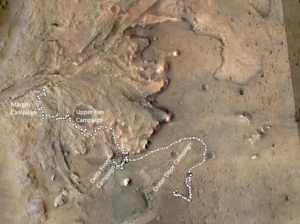
NASA’s Perseverance rover landed inside Jezero Crater in February 2021.
Scientists selected the site because orbital observations suggested it once contained a large lake fed by rivers. Ancient deltas preserved within the crater appeared to be ideal locations for preserving signs of ancient life.
What researchers expected to find were sedimentary rocks formed from lake deposits.
Instead, they found something unexpected.
As Perseverance explored a geological region known as the Margin Unit, scientists discovered rocks that recorded multiple episodes of water activity. Rather than showing evidence of a single watery environment, the rocks revealed a history of repeated interactions with different water systems over time.
The finding suggests that Jezero Crater became a geological crossroads where several water-related processes occurred across different periods of Martian history.
That complexity is what makes the discovery so important.
Watch: Explore the Ancient Martian Landscape Behind the Discovery
NASA’s Perseverance rover is exploring Jezero Crater, a region scientists believe once contained a vast lake and river delta billions of years ago. The video below offers a closer look at the terrain, geological features, and ancient water pathways that make this location one of the most promising places on Mars in the search for evidence of past life.
By seeing the crater from NASA’s perspective, readers can better understand why this remarkable discovery of ancient water systems is generating excitement among planetary scientists and astrobiologists around the world.
Rocks That Remember Ancient Mars
Rocks are more than just pieces of stone.
To planetary scientists, they are historical archives.
Every mineral crystal, fracture, and chemical alteration preserves information about the environment in which the rock formed.
The rocks examined by Perseverance contained evidence that they interacted with water on at least three separate occasions. Each episode left behind chemical signatures that scientists can still detect today.
Using the rover’s SuperCam instrument, researchers analyzed more than 185 rock targets and identified minerals including:
- Carbonates
- Silica
- Sulfates
These minerals often form when water interacts with rock. Their presence allows scientists to reconstruct ancient environmental conditions.
In some locations, the minerals filled fractures within the rock, suggesting groundwater once flowed through underground channels.
In other areas, later water activity altered the rocks again, creating a layered record of environmental change.
It’s similar to reading multiple chapters of a history book written directly into the Martian landscape.
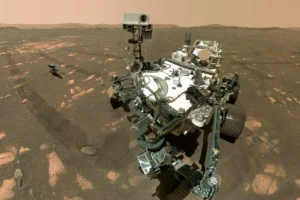
Evidence of Ancient Groundwater
One of the most exciting aspects of the discovery involves groundwater.
When people imagine water on Mars, they often picture rivers flowing across the surface.
But groundwater may have been even more important.
Underground water systems can remain stable for long periods, protected from harsh surface conditions. On Earth, groundwater environments host thriving microbial ecosystems deep below the surface.
NASA scientists found signs that carbon dioxide-rich groundwater once reacted with olivine-rich rocks inside Jezero Crater. This interaction produced carbonate minerals that remain preserved today.
The discovery indicates that underground water circulated through the region long after the rocks originally formed.
Such environments are especially interesting because they could have provided long-lasting habitats for microbial organisms if life ever emerged on Mars.
Scientists have long considered groundwater systems among the most promising places to search for evidence of ancient extraterrestrial life.
A Potential Energy Source for Life
Water alone does not guarantee life.
Living organisms also need energy.
That is where the chemistry becomes particularly interesting.
When water reacts with minerals such as olivine, it can trigger chemical processes that release hydrogen gas.
On Earth, many microorganisms use hydrogen as an energy source.
NASA researchers note that the interactions observed in Jezero Crater could have generated hydrogen, potentially creating environments capable of supporting microbial ecosystems.
This does not mean life existed there.
However, it means Mars may have possessed not only water, but also chemical energy sources that life could potentially exploit.
For astrobiologists, that combination is extremely compelling.
The Growing Case for a Habitable Mars
The latest discovery does not stand alone.
It joins a growing list of findings that suggest ancient Mars may once have been surprisingly hospitable.
Over the past two decades, NASA missions have uncovered evidence of:
- Ancient rivers
- Long-lived lakes
- Groundwater systems
- Organic molecules
- Clay minerals
- Salty environments
- Potential biosignatures
Together, these discoveries paint a picture of a planet that was once dramatically different from the frozen desert we see today.
Curiosity rover data has shown that lakes in Gale Crater may have persisted for extended periods, while Perseverance has explored an ancient river delta and collected samples containing materials known for preserving biological evidence on Earth.
The question is gradually shifting from:
“Did Mars have water?”
to
“How many potentially habitable environments existed on Mars?”
Could Mars Have Hosted Microbial Life?
Scientists remain cautious.
No mission has yet found definitive proof that life ever existed on Mars.
However, several discoveries have kept the possibility alive.
In 2025, NASA announced that a rock sample collected by Perseverance contained potential biosignatures—features that may be associated with ancient biological processes. Researchers emphasized that additional analysis is required before any conclusions can be drawn.
The newly discovered water systems add important context.
Life does not appear spontaneously.
It requires stable environments where water, chemistry, and time intersect.
Ancient groundwater networks could have provided exactly those conditions.
If microbial life ever developed on Mars, protected underground habitats may have been among the safest places for it to survive.
That possibility makes these newly identified water systems especially intriguing.
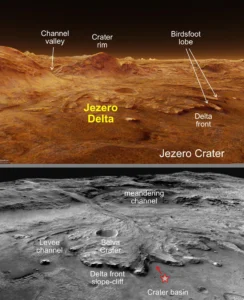
The Ancient Climate of Mars
To understand the significance of the discovery, it helps to imagine Mars billions of years ago.
Researchers believe the planet once had:
- A thicker atmosphere
- Warmer temperatures
- Active rivers
- Lakes and deltas
- Significant water circulation
Eventually, Mars lost much of its atmosphere.
Without sufficient atmospheric pressure, liquid water became increasingly unstable on the surface.
Over time, the planet transformed into the cold and arid world we know today.
Yet traces of that ancient climate remain frozen into the geology.
Each rover mission uncovers another piece of the puzzle.
The latest findings suggest Mars’ transition from wet to dry may have been more gradual and complex than scientists once believed.
Ancient Water May Have Lasted Longer Than Expected
One reason this discovery is attracting attention is that it supports a growing body of evidence suggesting water remained active on Mars longer than previously assumed.
Multiple NASA missions have identified signs of groundwater movement and water-related mineral formation that occurred after major surface lakes and rivers disappeared.
Researchers have even found evidence that some water-related environments may have persisted billions of years later than earlier estimates suggested.
If true, the window for habitability on Mars may have been significantly longer.
That dramatically increases the chances that life, if it ever arose, had time to establish itself.
The Samples That Could Change Everything
Perhaps the most important aspect of Perseverance’s mission is not what it discovers today.
It’s what the rover is preparing for tomorrow.
Perseverance is collecting carefully selected rock samples and storing them for eventual return to Earth.
Laboratories on Earth possess analytical capabilities far beyond what can fit on a robotic rover.
Scientists hope future sample-return efforts will allow them to examine Martian materials in unprecedented detail.
The rocks associated with ancient water systems are among the most scientifically valuable samples collected so far.
If traces of ancient microbial activity exist anywhere within Jezero Crater, these rocks may hold the evidence.
What This Means for Future Mars Exploration
The discovery will likely influence future exploration strategies.
Scientists now have stronger reasons to focus on locations shaped by groundwater activity.
Future missions may prioritize:
- Ancient hydrothermal systems
- Carbonate-rich regions
- Underground environments
- Water-altered igneous rocks
- Subsurface exploration targets
These environments offer some of the best opportunities for preserving signs of ancient life.
As exploration technology improves, researchers may eventually drill deeper beneath the Martian surface, where evidence of past habitability could be better preserved.
A Discovery That Rewrites Part of Mars’ Story
Scientific breakthroughs are not always dramatic.
Sometimes they arrive in the form of subtle mineral patterns hidden inside ancient rocks.
That is exactly what happened in Jezero Crater.
NASA’s Perseverance rover has revealed that Mars was not simply a world of isolated lakes and rivers. Instead, it appears to have hosted interconnected and evolving water systems that repeatedly altered the landscape over time.
Those ancient waters may have carried more than minerals.
They may have carried the ingredients—and perhaps the opportunities—needed for life.
The answer remains hidden somewhere within the rocks of Mars.
But with every drill sample, every rover traverse, and every new discovery, humanity moves a little closer to finding out whether the Red Planet was once alive.
