


Imagine waking up one morning and deciding to travel somewhere far away—not by car, train, or airplane, but by simply leaving your body behind. No passport, no luggage, no physical movement at all. Just consciousness, untethered from flesh, drifting into places that should be impossible to reach.
For most people, that sounds like science fiction. For one man, it became a lifelong claim.

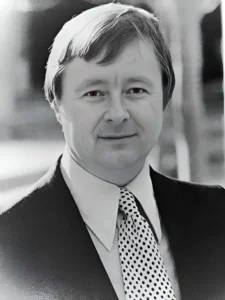
His name was Ingo Swann, and for decades he insisted that he could step outside his body whenever he wanted. Scientists studied him. Government agencies took an interest in him. Skeptics challenged him. Believers celebrated him. More than a decade after his death, Swann remains one of the most controversial figures in the history of paranormal research, a man whose claims sat at the strange intersection of science, psychology, espionage, and mystery.
Whether he was a visionary explorer of consciousness, a gifted intuitive, or simply mistaken about his experiences is still debated. Yet few individuals have inspired so much fascination by asking such a radical question: What if human consciousness is not as confined as we think?
According to Swann, everything began during childhood. He later described a medical procedure in which he suddenly felt separated from his physical body. Rather than seeing the world through his eyes, he claimed to be observing it from somewhere above. Today, such experiences are often categorized as out-of-body experiences, or OBEs. People who report them frequently describe floating near ceilings, watching events unfold below them, or perceiving their surroundings from impossible vantage points.
Modern neuroscience generally interprets these experiences as unusual brain states that can occur during trauma, illness, anesthesia, or disruptions in sensory processing. Swann, however, reached a very different conclusion. He believed the experience revealed something profound—that consciousness might be capable of existing independently of the physical body. This belief became the foundation of his life’s work.
As he grew older, Swann became increasingly interested in meditation, altered states of awareness, and the nature of consciousness itself. Unlike most people who experience an OBE only once or twice, he claimed he eventually learned to induce the state voluntarily. According to his accounts, he could separate his awareness from his body and direct it toward distant locations, gathering information without physically traveling there.


Such claims would normally be dismissed outright by mainstream science. Yet Swann emerged during a unique period in history. The 1960s and 1970s were decades of experimentation and exploration. Researchers were investigating everything from human potential and altered states of consciousness to telepathy, psychokinesis, and extrasensory perception. Universities, private foundations, and independent researchers were willing to examine ideas that today would rarely receive serious funding.
Swann soon attracted the attention of scientists interested in testing extraordinary claims. He participated in experiments conducted by researchers associated with the American Society for Psychical Research. During these studies, scientists monitored physiological responses while asking him to enter altered states and attempt to perceive hidden targets or distant locations.
The central question was straightforward: Could a person genuinely obtain information without using the normal senses?
Swann consistently answered yes. He claimed that by entering a specific mental state, he could perceive locations, objects, and events beyond the reach of ordinary observation. Some researchers considered certain results intriguing enough to justify further investigation. Others remained unconvinced. The challenge was obvious. How could anyone prove that information had been acquired through paranormal means rather than coincidence, subconscious inference, selective memory, or flaws in experimental design?
This question would follow Swann throughout his entire career.
One of the recurring themes in his experiments involved hidden targets. Researchers would place an object somewhere inaccessible and ask him to describe it. Supporters argued that some of his descriptions were remarkably accurate. Critics countered that many descriptions were vague enough to allow flexible interpretation after the fact.
This disagreement highlights one of the most persistent problems in evaluating extraordinary claims. Human beings are exceptionally good at finding patterns. When a prediction partially matches reality, we tend to remember the successful elements and overlook the inaccuracies. As a result, even an ambiguous statement can seem astonishingly precise once the outcome is known. Swann’s supporters viewed the experiments as evidence of unusual abilities, while skeptics saw classic examples of confirmation bias.
The story took an even more dramatic turn when Swann became involved with researchers at the Stanford Research Institute, commonly known as SRI. During the early 1970s, physicists Russell Targ and Harold Puthoff were conducting experiments into what they called remote viewing—the alleged ability to describe distant locations without using conventional senses.

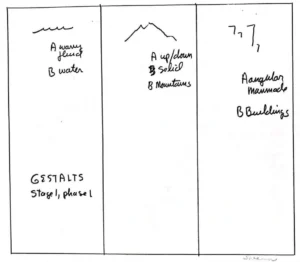
Swann became one of the most influential participants in these studies. Remote viewing differed from traditional psychic demonstrations because researchers attempted to impose structured procedures and controls. Participants were given coordinates, coded references, or limited information and then asked to describe locations they could not physically see. The goal was to determine whether useful information could be acquired through means not currently understood by science.
Supporters of the research claimed that some remote viewing sessions produced results exceeding what chance alone could explain. Critics argued that methodological weaknesses, information leakage, and subjective interpretation were responsible for the apparent successes. Yet regardless of where one stood on the issue, the experiments attracted significant attention.
Then the Cold War entered the picture.
The United States and the Soviet Union were engaged in an intense competition that extended far beyond conventional military technology. Rumors circulated that Soviet researchers were exploring psychic phenomena for intelligence purposes. Even if the odds of success were extremely low, American agencies felt compelled to investigate the possibility. No government wanted to discover too late that a rival nation had developed an unexpected advantage.
This climate eventually led to government-funded studies of remote viewing. Swann became associated with programs that would later be linked to what became known as the Stargate Project. Declassified documents confirm that intelligence agencies invested time and resources into examining whether remote viewing could have practical applications. It remains one of the most unusual chapters in Cold War history.


Among Swann’s many claims, one of the most famous involved the planet Jupiter. In 1973, before spacecraft had closely explored the giant planet, Swann participated in a session in which he attempted to perceive Jupiter remotely. He later described various features and phenomena that he believed existed there.
Years later, supporters argued that some elements of his descriptions appeared consistent with discoveries made by subsequent space missions. Critics responded that many details were inaccurate and that the similarities were being emphasized only after the fact. The debate has never been resolved, but the Jupiter session became a cornerstone of Swann’s legend. To believers, it suggested that consciousness might be capable of reaching across hundreds of millions of miles. To skeptics, it illustrated the dangers of retrospective interpretation.
As remarkable as the Jupiter claims were, Swann’s later accounts ventured even further into controversial territory. In his book Penetration, he described alleged remote-viewing experiences involving the Moon. According to Swann, he perceived structures, activity, and entities on the lunar surface that were unknown to the public.
The claims were extraordinary and remain entirely unverified. No lunar mission has produced evidence supporting the existence of hidden civilizations or secret activity on the Moon. Nevertheless, the book attracted a devoted readership because it tapped into one of humanity’s oldest fascinations: the possibility that reality contains hidden layers waiting to be discovered.
Throughout his career, Swann faced relentless criticism from scientists and skeptics. Many researchers argued that his claims lacked the rigorous, repeatable evidence necessary for scientific acceptance. Psychologists pointed to cognitive biases and the fallibility of memory. Statisticians questioned the interpretation of experimental results. Professional magicians noted that history is filled with examples of seemingly impossible feats that eventually turned out to have ordinary explanations.
The central criticism remained unchanged: extraordinary claims require extraordinary evidence. From the perspective of mainstream science, that standard was never met.
Yet the enduring fascination with Ingo Swann is not really about whether he proved his abilities. It is about the deeper questions his story raises. Human beings have always wondered whether consciousness is more than a product of the brain. We wonder whether our awareness might extend beyond physical boundaries. We wonder whether reality contains dimensions that remain hidden from ordinary perception.
Even today, neuroscience does not possess a complete explanation for consciousness itself. Researchers have identified brain regions involved in self-awareness and body perception, and experiments have demonstrated that out-of-body sensations can sometimes be induced through electrical stimulation, virtual reality, and sensory manipulation. These findings suggest that many OBE experiences arise from specific neurological processes.
However, explaining how an experience occurs is not necessarily the same as resolving every philosophical question surrounding consciousness. This distinction helps explain why debates about figures like Swann continue long after their deaths.
Ingo Swann died in 2013 without convincing mainstream science that consciousness could leave the body. He never produced the definitive proof that believers hoped for or the decisive disproof that skeptics wanted. Instead, he left behind something more unusual: a mystery.
His story occupies a curious space between science and speculation, between documented experiments and extraordinary claims. Whether viewed as an explorer of consciousness, a controversial researcher, or a symbol of humanity’s endless curiosity, Swann continues to captivate people because he challenged one of our deepest assumptions—that our minds are permanently locked inside our skulls.
Perhaps future discoveries in neuroscience will fully explain experiences like those he reported. Perhaps consciousness will prove even stranger than current theories suggest. Or perhaps the truth lies somewhere in between.
What remains undeniable is that Ingo Swann spent his life pushing against the boundaries of what people believed was possible. He claimed he could leave his body at will. Scientists tested him. Intelligence agencies studied him. Critics doubted him. Supporters admired him.
And decades later, the mystery still refuses to stay grounded.


