

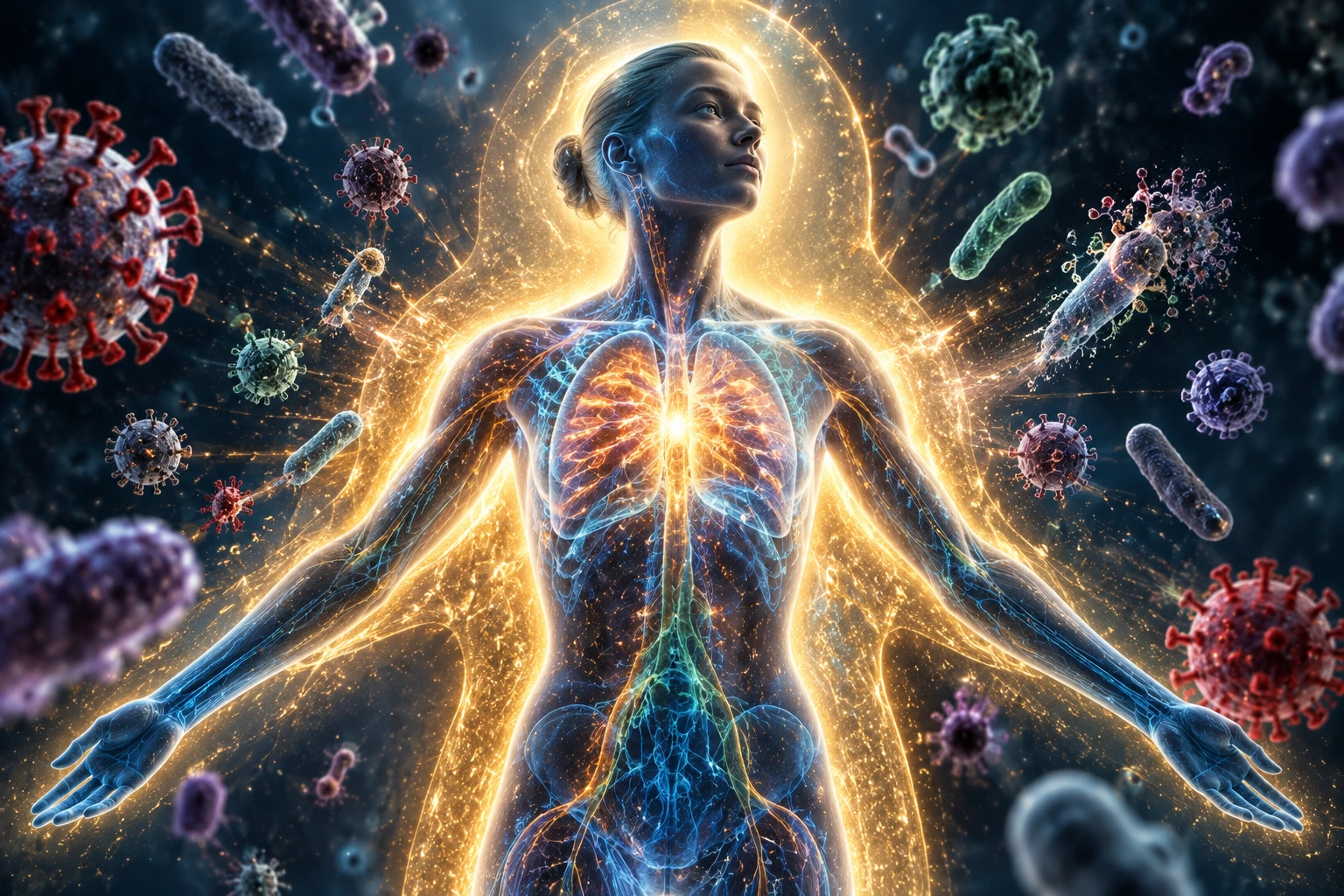
Imagine being repeatedly exposed to a dangerous virus and never becoming infected.
Or carrying a virus that normally progresses into a chronic disease, yet showing no symptoms and requiring no treatment for decades.
For a small number of people around the world, this isn’t science fiction. It is biological reality.
These rare individuals are at the center of one of the most intriguing areas of modern medical research: the study of the so-called super-immune cohort—people whose genes, immune systems, or unique biological traits appear to provide extraordinary protection against infectious diseases. Scientists are particularly interested in individuals who naturally resist HIV infection, suppress HIV without medication, or show unusual resistance to other pathogens. Their biology may hold clues that could transform future treatments and vaccines.
Researchers are not looking for superheroes.
They are looking for answers.
And those answers may help explain why some people become severely ill while others seem almost naturally protected.
The Discovery That Changed HIV Research
The search for naturally resistant individuals accelerated during the HIV epidemic.
In the 1980s and 1990s, doctors noticed something puzzling.
Some people were repeatedly exposed to HIV but never became infected. Others became infected yet maintained extremely low viral levels without antiretroviral drugs. These individuals appeared to break the normal rules of HIV infection.
At first, researchers suspected luck.
But as more cases emerged, a pattern became clear.
Biology was playing a role.
Scientists began examining the genetics of these unusual individuals and soon discovered one of the most important findings in infectious disease research: a mutation known as CCR5-Δ32.
The Gene That Blocks HIV’s Entry
HIV infects immune cells by attaching to specific receptors on their surfaces.
One of the most important of these receptors is CCR5.
In some people, however, a genetic mutation called CCR5-Δ32 alters the receptor so dramatically that HIV struggles—or completely fails—to enter cells.
Individuals who inherit two copies of this mutation can be highly resistant to the most common forms of HIV infection. Those with one copy often experience slower disease progression after infection.
The discovery was groundbreaking.
For the first time, researchers identified a specific human genetic change capable of providing substantial protection against one of the world’s most feared viruses.
Its importance extended beyond HIV research.
It demonstrated that natural genetic resistance to infectious diseases was not merely theoretical—it existed.
Not Everyone Is Protected the Same Way
As scientists expanded their studies, they discovered that the story was far more complex than a single gene mutation.
Many people with extraordinary resistance to HIV do not carry the CCR5-Δ32 mutation at all.
Instead, researchers found a range of protective biological mechanisms.
Some individuals possess specific variants of HLA genes, which help the immune system recognize infected cells more efficiently. Others exhibit unusual immune responses that suppress viral replication before it can spread extensively through the body.
In other words, there may not be a single “super-immunity gene.”
There may be many biological pathways that lead to the same outcome.
That realization has dramatically broadened the scope of ongoing research.
Meet the Elite Controllers
Among the most studied members of the super-immune cohort are individuals known as elite controllers.
These are people living with HIV who naturally suppress the virus to extremely low or even undetectable levels without medication.
Elite controllers are extraordinarily rare, representing less than 1% of people with HIV. Yet they challenge one of the fundamental assumptions of HIV medicine—that lifelong drug therapy is always required to control the virus.
Some elite controllers have maintained viral suppression for decades.
Even more remarkable are a tiny subset known as exceptional elite controllers, individuals who show no disease progression and maintain near-complete viral control for more than 25 years without treatment.
For HIV researchers, these individuals are living proof that long-term viral control is biologically possible.
The challenge is understanding how they do it.
What Makes Elite Controllers Different?
Recent genetic and immunological studies suggest that elite controllers combine several protective advantages simultaneously.
Some carry beneficial HLA variants such as HLA-B57 or HLA-B27, which appear particularly effective at helping immune cells identify HIV-infected targets. Others possess unusual patterns of immune-cell activity that rapidly suppress viral replication.
Researchers have also discovered cases where elite controllers exhibit unusually low expression of CCR5, reducing the virus’s ability to infect cells even without the classic CCR5-Δ32 mutation. In some families, this trait appears to be inherited.
Rather than relying on a single defense mechanism, many elite controllers seem to possess multiple layers of protection working together.
That complexity is one reason scientists remain fascinated by them.
The New Era of Genetic Hunting
Advances in genome sequencing have transformed the search for super-immune individuals.
Twenty years ago, identifying disease-resistant genes required years of painstaking research.
Today, scientists can compare entire genomes across thousands of individuals and search for patterns associated with resistance.
Recent studies have identified new genetic regions linked to HIV control beyond the classic HLA and CCR5 pathways. Researchers are uncovering evidence that resistance may involve networks of genes affecting immune-cell communication, inflammation, viral recognition, and cellular defense mechanisms.
The result is a growing understanding that resistance is often polygenic.
Instead of one gene providing immunity, multiple genes may collectively create an unusually effective immune response.
HIV Is Not the Only Example
The lessons from HIV have inspired scientists to search for natural resistance across many diseases.
COVID-19 provided a striking example.
During the pandemic, millions of people were exposed to SARS-CoV-2. Some became severely ill. Others never developed symptoms despite confirmed infection.
Researchers eventually identified genetic variations associated with asymptomatic infection, suggesting that inherited immune-system differences may influence how effectively the body clears the virus.
Similar investigations are underway for influenza, tuberculosis, malaria, norovirus, and other infectious diseases.
In each case, scientists are asking the same question:
Why do some people appear naturally protected?
The answers could reveal biological defenses that conventional medicine has not yet learned to replicate.
Learning From Nature’s Experiments
Many researchers describe super-immune individuals as nature’s experiments.
Instead of inventing new therapies from scratch, scientists can study biological systems that already work.
This approach has produced major breakthroughs before.
The discovery of CCR5 resistance directly inspired the development of HIV drugs designed to block the same receptor used by the virus to enter cells.
Today, researchers hope that studying elite controllers and naturally resistant individuals may lead to:
- More effective HIV vaccines
- New antiviral therapies
- Gene-editing strategies
- Improved immune-based treatments
- Better pandemic preparedness tools
The goal is not merely understanding resistance.
It is reproducing it.
The Challenges of Studying Rare People
Despite their scientific value, super-immune individuals present a practical challenge.
They are extremely rare.
Finding enough participants for meaningful research can take years.
Some cohorts contain only dozens of individuals worldwide. Others are identified only after researchers analyze thousands of medical records and genetic profiles.
There is also another complication.
Not all resistance lasts forever.
Some elite controllers eventually lose their ability to suppress HIV naturally. Others maintain protection for decades. Understanding why these outcomes differ has become a major focus of current research.
Scientists are increasingly interested not only in how resistance begins, but also how it is maintained.
Could “Super Immunity” Exist Against Future Diseases?
The broader implications extend beyond known pathogens.
Human populations contain enormous genetic diversity.
Every generation produces new combinations of immune-related genes.
Researchers believe that some forms of natural resistance may exist for diseases not yet fully understood. Rare protective genetic variants could help explain why outbreaks affect people differently even when exposure levels are similar.
This possibility has made the study of naturally resistant individuals increasingly important in global health planning.
Future pandemics may reveal entirely new forms of resistance that scientists have never encountered before.
The Real Story Behind People Who “Never Get Sick”
Popular discussions often portray these individuals as possessing invincible immune systems.
The reality is more nuanced.
Most members of the super-immune cohort are not immune to everything.
They still catch colds, experience infections, and face ordinary health challenges.
What makes them extraordinary is that they possess specific biological advantages against particular pathogens.
Those advantages can arise from genetics, immune regulation, cellular biology, or combinations of all three.
And that may be even more remarkable than the myth.
Because it means nature has already solved problems that medicine is still trying to understand.
A Blueprint Hidden in Human Biology
The search for super-immune individuals is ultimately a search for biological blueprints.
Every elite controller, HIV-resistant individual, and naturally protected person represents a living example of successful disease defense.
They show researchers what is possible.
Their immune systems provide clues about how viruses can be blocked, controlled, or eliminated without conventional treatments. Their genes reveal pathways that future therapies may one day mimic.
For decades, medicine focused primarily on studying disease.
Now, increasingly, scientists are studying the people who escape it.
And hidden within that rare super-immune cohort may be some of the most important medical discoveries of the twenty-first century.


