
Science has transformed humanity’s understanding of reality. We have mapped the human genome, landed spacecraft on distant worlds, detected gravitational waves, and peered deep into the history of the universe. Yet despite these extraordinary achievements, some of the most fundamental questions about existence remain unanswered.
In many cases, scientists have gathered mountains of evidence but still lack a complete explanation. In others, the mystery has only grown deeper as new discoveries challenge long-standing assumptions. These unresolved questions are not failures of science—they are the frontiers where future breakthroughs may emerge.
Here are 15 scientific mysteries that continue to defy explanation.
1. What Is Dark Matter?
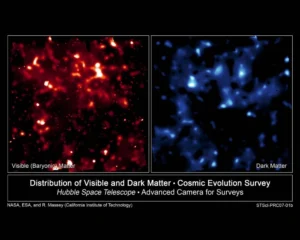
Astronomers estimate that everything humans can see—stars, planets, gas clouds, and galaxies—accounts for only a small fraction of the universe. Observations suggest that a vast amount of invisible matter exerts gravitational influence throughout the cosmos. This mysterious substance is known as dark matter.
Dark matter appears to hold galaxies together and shape the large-scale structure of the universe. Yet despite decades of experiments, no one has directly detected a dark matter particle. Scientists have proposed candidates such as WIMPs and axions, but none have been confirmed.
The fact that dark matter appears to make up a significant portion of the universe while remaining invisible makes it one of the greatest puzzles in modern physics.
2. What Is Dark Energy?
As if dark matter were not mysterious enough, astronomers discovered in the late 1990s that the universe is expanding at an accelerating rate.
Something appears to be pushing galaxies apart faster and faster over time. Scientists call this unknown phenomenon dark energy. According to current cosmological models, dark energy may account for most of the universe’s total energy content. Yet researchers still do not know what it actually is.
Some theories suggest dark energy is an inherent property of space itself. Others propose entirely new physics may be involved. Until its nature is understood, the ultimate fate of the universe remains uncertain.
3. How Did Life Begin?
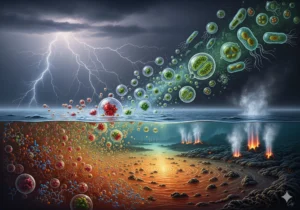
Every living organism on Earth can trace its origins back billions of years. However, scientists still do not know exactly how life first emerged from non-living chemistry.
Researchers have identified many of the ingredients necessary for life. Organic molecules can form naturally under the right conditions, and some experiments have shown how simple chemicals can become increasingly complex.
Yet the precise transition from chemistry to biology remains elusive. How did the first self-replicating molecules arise? What was the first living system? Was life inevitable or extraordinarily rare?
Despite decades of research, the origin of life remains one of science’s greatest unsolved mysteries.
4. What Is Consciousness?
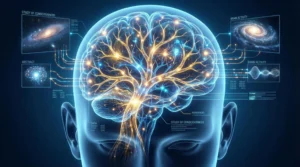
Every human experiences consciousness firsthand. We think, feel, remember, and perceive the world around us.
But explaining how subjective experience arises from physical brain activity remains one of the hardest challenges in science. Neuroscientists can identify brain regions involved in awareness and track neural activity associated with thoughts and emotions. Yet understanding why these processes produce conscious experience remains difficult.
Why does the firing of neurons create the feeling of being “you”? Why should biological matter produce awareness at all?
Some researchers believe the answer will eventually emerge from neuroscience. Others argue that entirely new theories may be required.
5. Why Does the Universe Exist?
Modern cosmology suggests the observable universe began approximately 13.8 billion years ago with the Big Bang.
But what caused the Big Bang?
What existed before it?
Was there a “before” at all?
Current physics struggles to answer these questions. Some theories propose quantum fluctuations, others suggest cyclical universes or multiverse models. Yet no explanation has achieved scientific consensus.
The deeper scientists investigate cosmic origins, the more profound the mystery becomes.
6. Where Are All the Aliens?
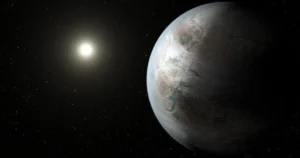
The Milky Way contains hundreds of billions of stars, many with planets. Observations suggest potentially habitable worlds may be common throughout the galaxy.
Given those numbers, many scientists wonder why humanity has found no confirmed evidence of extraterrestrial civilizations.
This contradiction is known as the Fermi Paradox. If intelligent life is common, why is the universe seemingly silent?
Possible explanations range from civilizations being extremely rare to technological societies destroying themselves before spreading across the stars.
For now, the question remains unanswered.
7. Why Is There More Matter Than Antimatter?
The laws of physics suggest the Big Bang should have produced matter and antimatter in equal amounts.
If that happened, matter and antimatter would have annihilated each other, leaving behind mostly energy.
Yet the observable universe is dominated by matter. Stars, planets, galaxies, and people exist because something created a tiny imbalance in the early universe.
Scientists know this imbalance occurred, but they still do not know exactly how or why.
Without that asymmetry, none of us would be here.
8. Can Quantum Mechanics and Gravity Be Unified?
Two pillars support modern physics.
Quantum mechanics describes the microscopic world of particles and atoms.
General relativity explains gravity and the large-scale structure of the universe.
Both theories are extraordinarily successful. Yet they do not fit together.
Physicists have spent decades searching for a theory of quantum gravity that unifies both frameworks. Candidate ideas include string theory and loop quantum gravity, but definitive evidence remains elusive.
Solving this problem could revolutionize our understanding of reality.
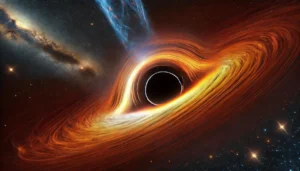
9. What Happens Inside Black Holes?
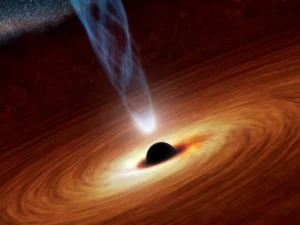
Black holes rank among the most extreme objects in the universe.
Their gravity is so intense that nothing—not even light—can escape once it crosses the event horizon.
Scientists can study black holes indirectly through observations and mathematical models. However, what happens inside them remains unknown.
Current theories break down at the singularity, where density becomes effectively infinite.
Resolving this mystery may require a successful theory of quantum gravity.
10. Why Do We Dream?
Humans spend roughly one-third of their lives asleep, and dreams are a universal part of that experience.
Scientists have identified connections between dreaming, memory formation, emotional processing, and learning. Yet there is still no universally accepted explanation for why dreams occur.
Some theories suggest dreams help organize memories.
Others propose they simulate possible future situations.
The true purpose of dreaming remains uncertain.
11. What Lies Beneath the Deepest Oceans?

The ocean covers more than 70% of Earth’s surface, yet vast regions remain unexplored.
Some parts of the deep sea are harder to investigate than the surfaces of Mars or the Moon. Extreme pressure, darkness, and remoteness make exploration difficult.
Scientists continue discovering new species, ecosystems, and geological features in the ocean depths.
What else remains hidden beneath kilometers of water is still largely unknown.
12. What Causes Aging?
Aging affects every human being, yet researchers continue debating its fundamental causes.
Scientists have identified numerous mechanisms involved in aging, including DNA damage, cellular senescence, inflammation, and telomere shortening. However, no single explanation fully accounts for the process.
Understanding aging could transform medicine and dramatically extend healthy lifespans.
The question is not merely academic—it may directly shape humanity’s future.
13. What Is the Hubble Tension?
One of the most intriguing modern mysteries emerged from precision measurements of the universe.
Different methods of calculating the universe’s expansion rate produce conflicting results. Measurements based on nearby galaxies disagree with measurements derived from the early universe.
This discrepancy is known as the Hubble Tension.
Scientists are still investigating whether the disagreement stems from hidden measurement errors or entirely new physics.
Either possibility would have major implications for cosmology.
14. How Did Intelligence Evolve?
Life existed on Earth for billions of years before humans appeared.
Why did intelligence evolve to such extraordinary levels in our species?
Was advanced intelligence an inevitable outcome of evolution, or a highly improbable accident?
Scientists understand many aspects of evolutionary biology, yet the emergence of language, abstract reasoning, creativity, and technological civilization remains an active area of research.
Understanding our own origins may help explain whether intelligent life exists elsewhere in the universe.
15. Is Reality Fundamentally Different Than It Appears?
Perhaps the deepest mystery of all concerns reality itself.
Quantum mechanics has repeatedly challenged human intuition. Particles behave like waves. Entangled particles appear connected across vast distances. Observation plays a surprising role in measurements.
Some physicists wonder whether space, time, and matter are emergent phenomena arising from deeper underlying principles.
Others speculate about multiverses, hidden dimensions, or entirely new frameworks for understanding existence.
At present, nobody knows whether reality is exactly what it seems—or something far stranger.
Why These Mysteries Matter
The history of science shows that today’s mysteries often become tomorrow’s breakthroughs.
A century ago, scientists did not know that galaxies existed beyond the Milky Way. They had never detected black holes, decoded DNA, or discovered exoplanets. Questions that once seemed impossible eventually yielded to evidence, experimentation, and persistence.
The same may prove true for the mysteries on this list.
Dark matter may finally be detected. Consciousness may one day be understood. The origin of life could become clearer through future discoveries. Humanity may even find evidence of life beyond Earth.
Until then, these questions remain powerful reminders that science is not merely a collection of answers. It is an ongoing process of exploration.
Every mystery represents a boundary between what humanity knows and what remains hidden. And history suggests that some of the most astonishing discoveries are waiting just beyond that boundary.


