
Thirty thousand years ago, Europe was a very different place. Vast glaciers covered parts of the continent, temperatures were brutally cold, and enormous herds of mammoths and other Ice Age animals moved across landscapes that would eventually become forests, plains and modern cities.
Human communities lived in this unforgiving environment, often in small groups of hunter-gatherers. They hunted animals, gathered plants, manufactured sophisticated stone tools and found shelter in caves and temporary settlements.
For a long time, researchers imagined that many of these prehistoric communities were relatively isolated. Mountains, glaciers, rivers and enormous distances appeared to make regular contact difficult.
But ancient DNA is changing that picture.
Genetic evidence from people who lived tens of thousands of years ago is helping scientists reconstruct connections between prehistoric populations that occupied different parts of Europe. It suggests that some communities were linked through population movements, shared ancestry and repeated contact across considerable distances.
The implications reach beyond human migration. These discoveries offer a window into how people survived climate instability, maintained social relationships and exchanged knowledge during one of the most challenging periods in human prehistory.
The surprising possibility is that Ice Age Europe was not simply a collection of isolated settlements. It may have contained far-reaching human networks long before the development of agriculture, permanent towns or written communication.
The Gravettian People: A Prehistoric European Network

The people at the centre of this discovery belonged to a prehistoric cultural tradition known as the Gravettian.
The Gravettian period flourished approximately 34,000 to 25,000 years ago, spreading across large parts of Europe. Its people lived through significant environmental changes and developed distinctive technologies, artistic traditions and hunting practices.
Archaeologists have discovered evidence of Gravettian communities in areas that are now France, Spain, Italy, Central Europe and beyond.
Their archaeological remains include:
-
Carefully manufactured stone blades and points.
-
Bone and ivory tools.
-
Personal ornaments made from animal teeth, shells and other materials.
-
Figurines and other forms of prehistoric art.
-
Evidence of organised hunting and repeated occupation of caves and shelters.
The similarities between some archaeological objects from distant regions had already suggested that these populations were not completely disconnected.
However, similarities in tools and artwork do not automatically prove that the people who made them shared the same ancestry.
That is where ancient genetics becomes particularly important.
The new research, published in Science Advances, combines genomic evidence with archaeological information to investigate whether the apparent cultural connections also existed at the biological level.
A 30,000-Year-Old Woman Holds an Extraordinary Genetic Clue
One of the most important pieces of evidence came from Isturitz Cave in southwestern France.
Researchers examined the remains of a woman who lived approximately 30,000 years ago.
Her remains provided an exceptionally valuable genetic dataset. According to the University of Vienna, it represents the oldest genome-wide dataset obtained from a modern human in southwestern Europe to date.
What scientists discovered was unexpected.
Most of the woman’s ancestry was associated with western European populations. However, her genome also contained genetic ancestry related to populations from central and eastern Europe.
This combination suggested that her ancestors were not confined to a single isolated geographical region.
Using genetic modelling, the researchers estimated that the population mixing responsible for this ancestry occurred approximately 32,500 to 31,500 years ago.
That is an extraordinary timescale.
It means that genetic connections between eastern and western European populations existed thousands of years before the woman herself lived.
The researchers also identified a similar genetic signal in another previously studied individual from Ormesson in France.
Together, these findings provide evidence that prehistoric populations had connections extending across much larger geographical areas than some earlier genetic models suggested.
How could people have travelled such distances?
The genetic evidence does not reveal the precise journeys taken by these ancient individuals.
It cannot tell scientists whether particular ancestors travelled directly from eastern Europe to southwestern France, moved through several intermediate communities or were connected through generations of population mixing.
However, it establishes that genetic material associated with different European populations eventually came together.
There are several possible explanations.
Small groups may have moved seasonally in search of animals, shelter and resources. Individuals could have joined neighbouring communities through marriage or other social relationships. Families may also have migrated gradually across generations.
These possibilities are not mutually exclusive.
Rather than imagining one enormous migration, researchers can consider a more complicated picture involving repeated movements and contacts between populations over long periods.
This is one of the most interesting implications of the research: ancient human connectivity did not necessarily require large cities, organised transport systems or permanent settlements.
It could emerge through relationships maintained by relatively small communities.
Scientists Found Human DNA Without Finding Human Bones
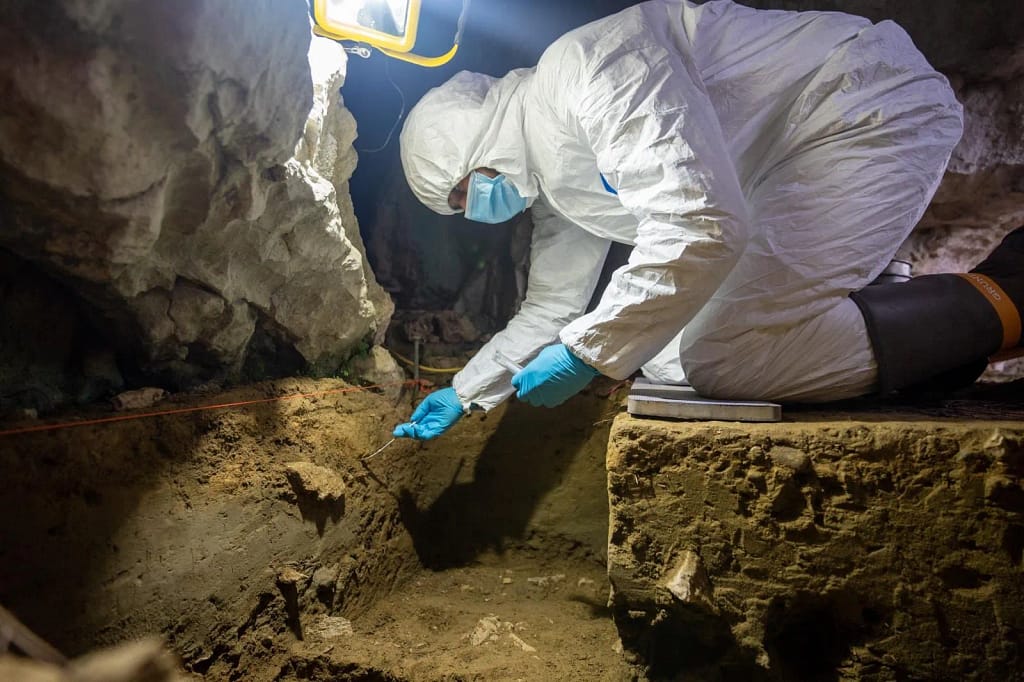
Perhaps the most remarkable part of this research involves something that was not found.
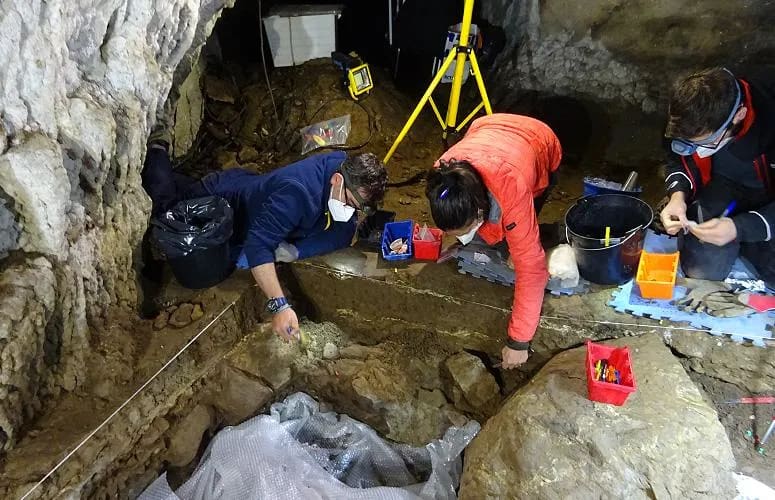
At El Mirón Cave in Cantabria, northern Spain, researchers recovered ancient human DNA from a sediment layer dating back approximately 22,000 years.
There was no identifiable human skeleton in that particular layer.
No human teeth were required either.
Instead, the researchers recovered tiny traces of genetic material preserved in the cave sediment.
This technique is known as sedimentary ancient DNA analysis, often abbreviated as sedaDNA.
It is changing how archaeologists investigate prehistoric populations.
Humans constantly leave behind microscopic biological material. Skin cells, bodily fluids, hair and other biological traces can become incorporated into surrounding environments.
Under favourable conditions, fragments of DNA can survive in sediment for thousands of years.
Researchers collect carefully selected samples, extract the genetic material and analyse the resulting DNA sequences.
By comparing them with reference genetic data, they can investigate which organisms were present in a particular archaeological layer.
When enough human nuclear DNA survives, researchers may also obtain information about the ancestry of people who occupied the location.
The discovery at El Mirón demonstrates why this approach is so valuable.
Traditional archaeological investigations depend heavily on finding physical remains. But prehistoric people did not always leave bones or teeth behind, and organic materials can disappear over time.
Sedimentary DNA offers another route into the human past.
It allows researchers to investigate periods and locations where conventional human fossils are missing.

How Did Some Ice Age Europeans Survive the Deepest Cold?
The El Mirón findings also contribute to another major question: how did human populations survive during the Last Glacial Maximum?
The Last Glacial Maximum was the coldest phase of the most recent major glacial period. Huge ice sheets covered extensive parts of northern Europe, while temperatures and environmental conditions changed dramatically across the continent.
For prehistoric hunter-gatherers, survival depended on access to food, water, shelter and suitable hunting grounds.
Some regions became extremely difficult to inhabit.
However, not every part of Europe experienced the same environmental conditions.
The Iberian Peninsula, covering modern-day Spain and Portugal, is considered one of the important southern refugial regions where human populations could persist during periods of severe glacial conditions.
The genetic evidence from El Mirón supports the idea that western European ancestry persisted in southwestern Europe through the Last Glacial Maximum.
This suggests that some populations maintained a regional presence despite the dramatic environmental changes taking place elsewhere.
It also raises interesting questions about how communities adapted.
Did people change their hunting strategies as animal populations shifted? Did they move between coastal and inland environments? Did established social relationships help them find resources during particularly difficult periods?
Genetics alone cannot answer all these questions, but it provides an important framework for investigating them.
The archaeological record, environmental reconstructions and ancient DNA must be studied together to understand how these communities survived.
A Prehistoric Mother and Her Unborn Son Reveal Another Secret
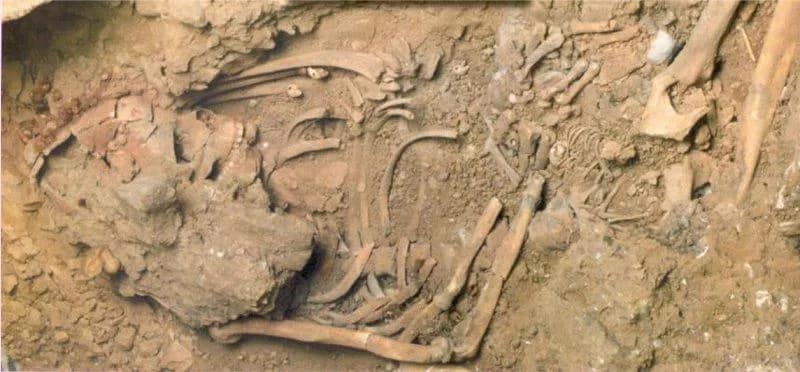
Another fascinating part of the investigation comes from southern Italy.
Researchers examined genetic material from an individual known as Ostuni1b, a male fetus associated with a previously studied woman called Ostuni1.
The remains provide an unusually rare opportunity to investigate biological relationships in prehistoric populations.
Genetic analysis confirmed the relationship between the fetus and the woman, identifying him as her son.
But the researchers were interested in something else as well: what the genetic evidence could reveal about his father and the mating patterns of the community.
The analysis suggested that the father probably belonged to a population genetically similar to that of the mother.
However, there was no evidence that the parents were closely related.
This is significant because prehistoric communities were often relatively small. When populations remain small for extended periods, close-relative reproduction can become more common, potentially increasing the risk of inherited genetic disorders.
The Ostuni findings suggest that these particular parents were not closely related, despite belonging to genetically similar populations.
It offers a glimpse into the reproductive relationships of people who lived nearly 28,000 years ago.
It also demonstrates how exceptionally preserved archaeological remains can reveal biological relationships that would otherwise be impossible to reconstruct.
Did Ice Age Europeans Exchange Knowledge and Technology?
The genetic findings raise an intriguing question.
If prehistoric communities were connected through population movements and shared ancestry, could they also have exchanged knowledge, tools and survival techniques?
There is reason to investigate this possibility.
Archaeologists have identified similarities in certain Gravettian technologies and artistic traditions across geographically distant locations.
Stone-tool manufacturing techniques, decorative objects and portable art provide clues about how ideas and practices may have travelled between communities.
For example, the appearance of similar artistic traditions in different regions can suggest cultural connections, although similarities alone cannot establish exactly how information was transmitted.
Knowledge could have spread through direct contact between groups, the movement of individuals, family relationships or generations of cultural interaction.
Consider the practical advantages of such connections.
A group living in a particularly cold region might develop effective clothing techniques. Another community might possess better knowledge of local animal migration patterns. Contact between these groups could allow useful information to spread.
However, an important scientific distinction must be made: DNA demonstrates biological ancestry and population relationships. It does not independently prove that particular tools, inventions or survival techniques were exchanged.
To reconstruct those cultural networks, researchers must combine genetics with archaeological evidence.
The exciting possibility is that prehistoric Europe contained overlapping networks of biological and cultural connections, even without the institutions and communication systems that define modern societies.
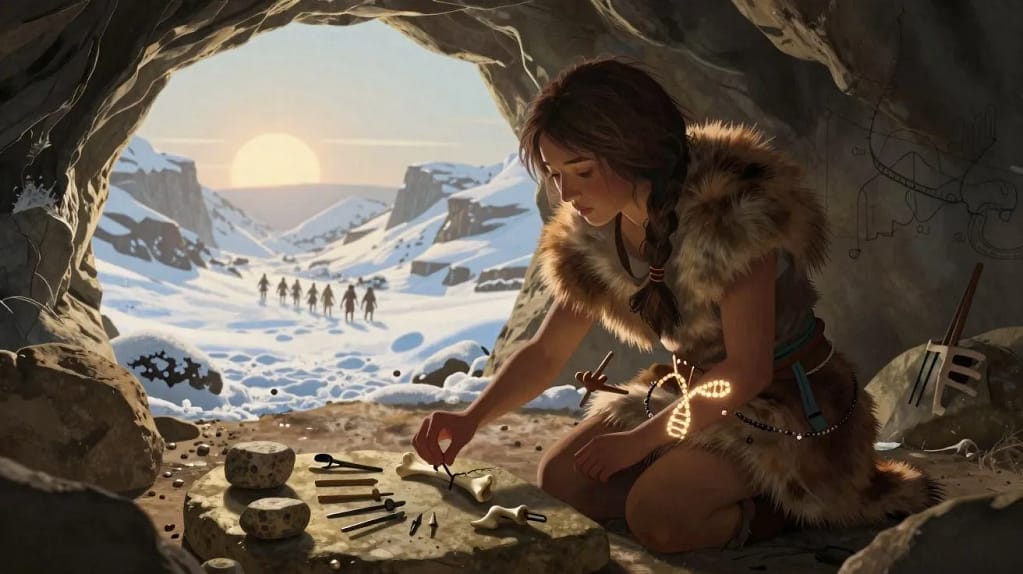
What This Discovery Changes About Human Evolution
The new research challenges a simplified picture of prehistoric Europe.
For many years, scientists have reconstructed ancient populations using limited genetic samples. As more remains become available, some earlier interpretations are being refined.
The latest findings reveal three important aspects of Ice Age population history.
First, geographical separation did not necessarily mean genetic isolation.
The woman from Isturitz Cave carried ancestry associated with both western and central-eastern European populations, suggesting that population contacts extended across substantial distances.
Second, populations could maintain regional continuity while also exchanging genes.
The evidence from southwestern Europe shows that genetic stability within a region could coexist with connections to populations elsewhere.
Third, human remains are not the only source of ancient genetic information.
The discovery of human DNA in 22,000-year-old cave sediment demonstrates that researchers can investigate prehistoric populations even when bones and teeth are absent.
Together, these findings provide a more complicated and realistic picture of how early modern humans occupied Europe.
They were not necessarily wandering independently through a frozen continent. Some populations maintained relationships and genetic connections across generations, while others remained in particular geographical refuges for extended periods.
This is an important development for researchers studying the origins and movements of modern human populations.
What Scientists Still Do Not Know
Despite the importance of the discovery, several mysteries remain.
The genetic evidence does not provide a complete map of Ice Age migration routes.
Researchers cannot yet identify every community that participated in these connections or determine precisely how frequently people travelled between distant regions.
There are also limitations associated with ancient DNA.
Genetic material degrades over time, and the survival of usable DNA depends on environmental conditions. Some geographical regions preserve ancient biological material better than others.
This means the available genetic record is incomplete.
The three newly analysed individuals and the cave sediment samples provide valuable information, but they do not represent every population that existed in Europe during the Gravettian period.
Future discoveries could reveal additional ancestral relationships, migration patterns and previously unknown population movements.
Researchers are also combining sedimentary DNA analysis with proteomics, the study of proteins, to investigate ancient biological remains and prehistoric interactions with other animals.
Such approaches could help reconstruct human history in archaeological locations where conventional fossil evidence is limited.
The Ice Age Was Not a World Without Connections
Thirty thousand years ago, Europe was a continent of ice, dangerous wildlife and constantly changing environments.
Yet the people who lived there were not necessarily separated by the enormous distances that modern maps might suggest.
A woman buried in southwestern France carried genetic ancestry connecting her to populations further east. Ancient DNA recovered from Spanish cave sediment revealed evidence of people who occupied the region thousands of years later. And the remains of a mother and her unborn son in Italy offered clues about family relationships in prehistoric communities.
These discoveries show that human history was already being shaped by migration, ancestry and connections between distant populations long before farming transformed European societies.
The research also reminds us that some of the most important chapters of human history are still hidden in places that archaeologists have barely explored.
A fragment of bone, a microscopic trace of DNA in cave sediment or a forgotten archaeological collection could reveal another missing piece of the story.
Perhaps the most remarkable discovery is not simply that Ice Age Europeans travelled across vast distances. It is that their relationships, movements and ancestry were already helping shape the human population of an entire continent tens of thousands of years ago.




